 Bellingham
 Roofing in Sehome: A Neighborhood With Its Own Weather Habits
Sehome sits close enough to Bellingham Bay that salt-laden air is a constant, and close enough to the hill and its tree cover that shade, moisture, and moss are just part of owning a home here. Add in Whatcom County's long wet season — months of driving rain pushed sideways by wind off the water — and you've got a roofing environment that punishes shortcuts. A roof that would hold up fine in a dry inland climate can fail early in Sehome if it wasn't designed and installed with this specific combination of exposures in mind.
When we talk about "new roof installation for Sehome," we're not just talking about swapping old shingles for new ones. We're talking about building a roof system — decking, underlayment, ventilation, flashing, and covering — that's matched to salt air corrosion, sustained rain volume, and moss pressure from shaded, moisture-retaining tree cover. Get any one of those wrong and you're looking at a callback in a few years instead of a roof that lasts its full rated life.
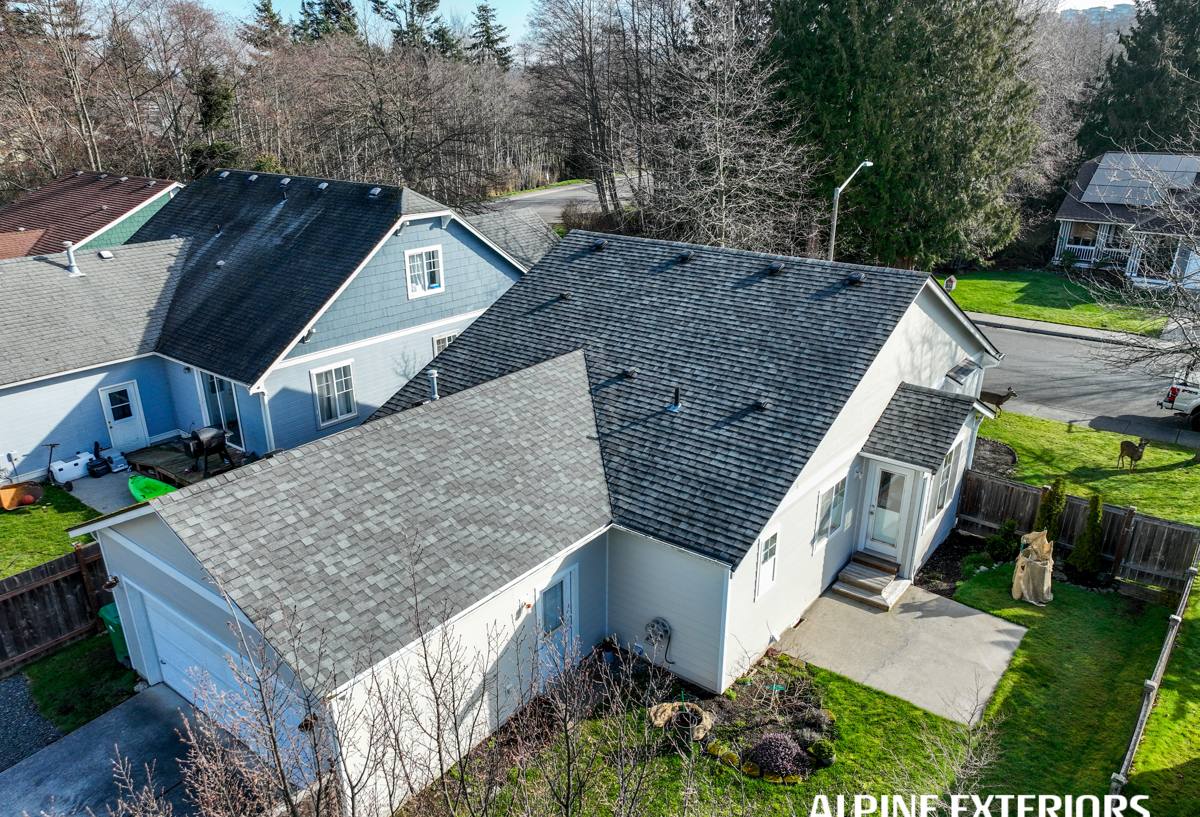
What Sehome's Climate Actually Does to a Roof
Salt Air and Metal Components
Proximity to the bay means airborne salt settles on everything, including your roof. Over years, that accelerates corrosion on unprotected or poorly rated metal — fasteners, flashing, vent stacks, and gutter hardware. It's not dramatic or sudden; it's a slow degrade that shows up as rust streaks, weakened flashing seams, and fastener failure well before the shingles themselves are worn out. The fix isn't complicated, but it does mean choosing corrosion-resistant materials up front rather than standard-grade hardware that's fine two counties inland.
Driving Rain and Wind-Driven Water
Bellingham doesn't just get rain — it gets rain pushed at an angle by wind coming off the water. That matters because wind-driven rain finds its way under shingles, around vents, and into any gap that a straight-down rainstorm would never reach. Roofs here need underlayment and flashing details built for lateral water intrusion, not just vertical runoff. This is one of the most common points where budget installs cut corners, because the difference doesn't show up until the first real storm season.
Moss Season and Shaded Roof Planes
Sehome's tree cover and the hill's microclimate mean north-facing and shaded roof sections stay damp longer after every rain. That's exactly the condition moss needs to establish. Once moss gets a foothold, it holds moisture against the roofing material, lifts shingle edges, and slowly works its way into seams — turning a cosmetic issue into a leak path. A new roof installation is the best time to build in moss resistance, because retrofitting it later is far more limited than designing for it from day one.
What a Correct New Roof Installation Involves Here
A roof that's actually built for Sehome's conditions isn't one extra step — it's a handful of decisions made correctly, in the right order, before the first shingle ever goes down.
- Deck inspection and repair: Any soft, rotted, or delaminated decking gets replaced before new material goes on — covering a bad deck with new shingles just hides a problem that will resurface as a leak.
- Ice-and-water shield at vulnerable points: Eaves, valleys, and penetrations get self-adhering waterproof membrane, not just standard felt, because these are the spots wind-driven rain exploits first.
- Synthetic underlayment across the full roof: A durable, water-resistant underlayment gives you a second line of defense under the covering material, which matters more here than in drier climates.
- Balanced intake and exhaust ventilation: Proper attic airflow keeps the underside of the deck dry and reduces the moisture buildup that feeds both rot and moss growth from below.
- Corrosion-rated flashing and fasteners: Given the salt air exposure, hardware needs to be rated for it — not the standard-grade parts that are adequate elsewhere in the county.
- Moss-resistant covering choices where appropriate: For shaded roof planes, we talk through options that resist moss growth rather than just accepting it as inevitable.
- Careful valley and penetration detailing: Valleys, chimneys, skylights, and vent boots are where most leaks originate — these get extra attention, not a rushed pass.
Roofing Material Options for Sehome Conditions
There's no single "best" roofing material for every home — it depends on your roof's pitch, sun/shade exposure, budget, and how long you plan to stay in the house. Here's how the common options stack up against Sehome's specific climate pressures.
| Material | Salt Air Durability | Moss Resistance | Typical Lifespan |
|---|---|---|---|
| Asphalt composition shingle (standard) | Good with rated hardware | Moderate — benefits from algae/moss-resistant granules | 20-30 years |
| Asphalt shingle (algae/moss-resistant line) | Good with rated hardware | Better — copper or zinc granules discourage growth | 25-30 years |
| Standing seam metal | Excellent when properly coated/rated | Very good — smooth surface sheds moss more easily | 40-60 years |
| Wood shake/shingle | Fair — needs regular maintenance | Poor without diligent upkeep | 20-30 years with maintenance |
We'll walk you through the honest trade-offs for your specific roof rather than pushing whatever's easiest to install. A shaded, low-slope section behind the house might call for a different approach than the sun-exposed front-facing plane, even on the same roof.
Our Process for a New Roof Installation
1. On-Site Assessment
We look at your existing roof's condition, deck integrity, ventilation setup, and exposure — which sides get sun, which stay shaded, where water tends to collect. This is also where we talk through material options based on your specific roof, not a generic recommendation.
2. Written Scope and Straight Pricing
You get a clear, itemized scope before any work starts — what's being replaced, what materials are being used, and why. No vague line items, no pressure to decide on the spot.
3. Tear-Off and Deck Repair
Old roofing comes off, the deck gets inspected board by board, and anything compromised gets replaced. We don't cover up problems to save a day of labor.
4. Waterproofing and Ventilation Build-Out
Ice-and-water shield, underlayment, and ventilation components go in per the plan — this is the layer that does the real work protecting your home from Bellingham's rain volume.
5. Installation and Detailing
The covering material goes on with careful attention to valleys, flashing, and penetrations — the spots where most future leaks would otherwise start.
6. Final Walkthrough
We walk the finished roof with you, confirm everything matches the agreed scope, and make sure you understand any maintenance recommendations specific to your home's exposure.
Signs Your Sehome Home May Need a New Roof
- Shingles that are curling, cracking, or losing granules faster on shaded sections than sun-exposed ones
- Persistent moss growth that comes back within a season or two of cleaning
- Rust streaking near vents, flashing, or fasteners — a sign salt air is corroding hardware
- Water stains on interior ceilings after wind-driven rain events, not just heavy downpours
- A roof that's approaching or past the 20-25 year mark, especially if the original install used standard-grade hardware
- Visible sagging along the roofline or soft spots underfoot during inspection
Why Local Experience With Sehome Roofs Matters
A crew that's worked roofs across Bellingham and Whatcom County knows which details actually matter here versus which ones are just upsells. We know that a north-facing plane under tree cover needs different moss management than a south-facing one in full sun. We know which hardware grades hold up against years of bay-adjacent salt air and which ones start showing rust in a handful of seasons. That's not knowledge you get from a general roofing manual — it's from doing the work in this specific climate, on homes with this specific exposure profile.
It also means we're not guessing at what your neighbors' roofs are dealing with, because we've likely seen the same issues a few streets over. That local pattern recognition shows up in fewer surprises during the job and a roof that's actually built for where it sits, not a one-size-fits-all install.
Maintenance After Your New Roof Goes In
A well-installed roof still benefits from basic upkeep in this climate. Keep gutters clear so water isn't backing up under the eaves. Have shaded sections checked periodically for early moss growth rather than waiting until it's established. Trim back tree branches that are keeping roof sections damp longer than necessary. None of this is intensive, but a little attention goes a long way toward getting the full lifespan out of a roof built for Sehome's conditions.
If you're weighing a new roof for your Sehome home, we're happy to take a look and give you straight answers about what your roof actually needs — no pressure, no inflated scope. Request a free estimate using the form below and we'll walk the roof with you in person.