 Bellingham
 Why Fairhaven Homes Wear Out Siding Differently
Fairhaven sits close to Bellingham Bay, and that proximity to open water shapes everything about how siding ages here. Salt-laden air moves off the bay and settles on exterior surfaces, accelerating corrosion on fasteners, trim, and any siding material that isn't built to resist it. Add in Whatcom County's long, wet fall-through-spring stretch — driving rain that comes in sideways off the water more often than it falls straight down — and you have a climate that finds every weak point in a siding installation within a few years, not a few decades.
Fairhaven's mix of mature tree cover and hillside lots also means a lot of homes sit in partial shade for large parts of the day. Shade plus near-constant moisture is exactly what moss, algae, and mildew need to take hold, and siding in this neighborhood often shows green-black staining and soft, swollen spots well before homes in drier parts of Bellingham do. None of this is unique to any one street or block — it's a neighborhood-wide pattern driven by the water, the tree canopy, and the terrain.
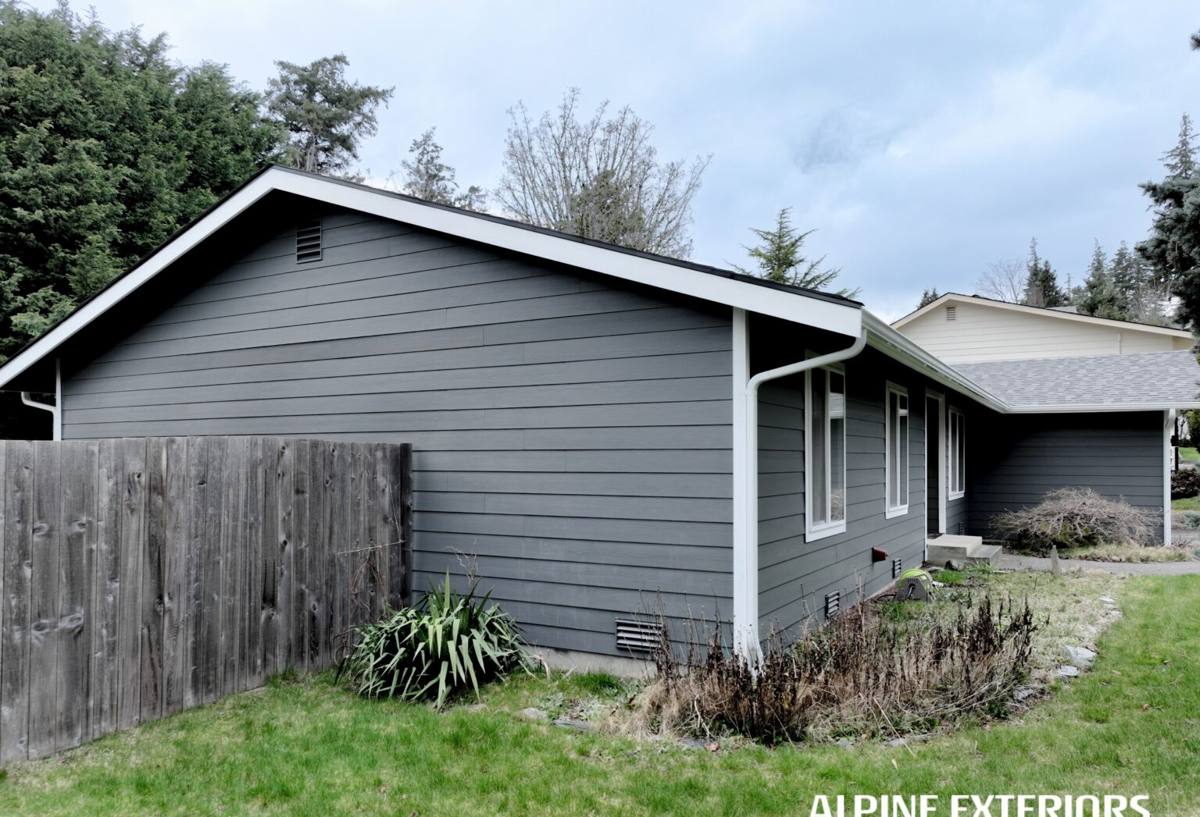
Signs Your Siding Has Reached the End of Its Useful Life
Salt air and driving rain don't cause dramatic failures overnight — they cause slow, cumulative damage that homeowners often don't notice until it's already expensive. Here's what we look for on a Fairhaven home:
- Soft or spongy spots when you press on the siding, especially near the bottom courses and around window trim
- Persistent moss or algae growth that comes back within weeks of being cleaned off
- Paint that's bubbling, peeling, or failing faster than the repaint cycle should require
- Visible gaps, cupping, or warping in board seams, particularly on the north and west-facing walls that catch the most weather
- Rust streaking below nail heads or trim fasteners
- A musty smell in an adjacent interior wall or rising utility bills that suggest air and moisture are getting past the exterior
- Cracked or crumbling caulk at butt joints and trim that hasn't been recaulked in several years
Any one of these on its own might just mean a repair. Several of them together, especially on a home more than 20 years old, usually mean the siding system as a whole has stopped doing its job and a full replacement is the more honest recommendation than another round of patching.
Why We Install Only James Hardie Fiber Cement Here
We install James Hardie fiber cement siding exclusively, and Fairhaven's climate is a big part of why. Fiber cement doesn't absorb water the way wood-based products can, it doesn't rot, and it's non-combustible — a real advantage during Pacific Northwest wildfire smoke seasons when embers can travel. James Hardie's ColorPlus factory-applied finish is baked on under controlled conditions rather than field-painted, which matters in a neighborhood where damp weather limits the number of good painting days in a year and where salt air is hard on lower-quality coatings.
James Hardie also engineers specific product lines for different climate zones. Western Washington, including Bellingham and Fairhaven, generally falls into Hardie's HZ5 zone, which is formulated for moderate, moisture-heavy climates rather than the harsher freeze-thaw cycles of HZ10 regions further inland or at elevation. That distinction isn't marketing — it affects the board's moisture management and long-term performance, and it's one of the reasons we don't treat every siding job the same way regardless of where the home sits.
What We Don't Install, and Why
We don't install vinyl, LP SmartSide, or other wood-composite siding products, and in a neighborhood this close to the water that decision matters more than it would somewhere drier. Vinyl expands and contracts with temperature swings and can warp or crack over time, and it doesn't hold up structurally the way fiber cement does in high-wind, high-moisture exposure. Wood-based composite products are engineered to resist moisture better than raw wood, but they still rely on an engineered wood core, and any breach in the surface treatment — a scratch, a poorly sealed cut end, a missed caulk joint — gives water a path into a material that can swell and deteriorate faster than fiber cement once that happens. These aren't bad products in every application, but for the salt air and sustained dampness Fairhaven sees, we don't think they're the right long-term investment, and we'd rather tell a homeowner that upfront than sell a product we don't believe will hold up.
What a Correct Siding Replacement Actually Involves
Siding replacement is not just pulling off old boards and nailing up new ones. In a wet, salt-exposed neighborhood like Fairhaven, the parts of the job you can't see after it's finished are the parts that determine whether it lasts 10 years or 40.
Tear-Off and Inspection
Once the old siding is off, we inspect the sheathing underneath for water damage, soft spots, or rot that needs to be addressed before anything new goes on. Covering up compromised sheathing with new siding just hides a problem that will resurface.
Weather-Resistive Barrier and Drainage Plane
A correctly installed weather-resistive barrier, with a drainage plane behind the siding, gives any moisture that does get past the surface a way to drain out instead of sitting against the wall assembly. This is especially important on the walls that take the most direct rain off the bay.
Flashing at Every Penetration
Windows, doors, hose bibs, vents, and any other penetration in the wall need proper flashing and integration with the weather barrier. This is one of the most common places we find shortcuts on older installations, and it's usually where interior water damage originates.
Fastening and Fastener Selection
Salt air corrodes fasteners over time, so fastener material and placement matter. Hardie's installation specifications call for specific nail types, spacing, and setback from panel edges, and following them precisely — not approximately — is what keeps boards from cupping, splitting, or working loose.
Caulking and Trim Details
Butt joints, trim intersections, and corner details need to be sealed correctly with products rated for exterior, marine-adjacent exposure. Done right, these details shouldn't need attention again for years.
How Our Process Works
- Free on-site estimate: We walk the exterior with you, look at the current siding's condition, and talk through what we're seeing and why.
- Written scope and product selection: You get a clear scope of work, the specific James Hardie product line and profile recommended for your home, and a firm price — no vague allowances.
- Scheduling around the weather: Bellingham's wet season affects what days siding work can safely happen. We plan installation windows accordingly rather than rushing work into marginal weather.
- Tear-off, sheathing check, and barrier installation: Old siding comes off, sheathing gets inspected, and the weather-resistive barrier and drainage plane go in correctly the first time.
- Installation to Hardie spec: Boards, fasteners, flashing, and joints are installed to manufacturer specification, not shortcuts.
- Final walkthrough: We go over the finished work with you before calling the job done.
Cost Factors for Siding Replacement in Fairhaven
Every home is different, but the factors that move the price on a Fairhaven siding replacement tend to fall into the same categories:
| Factor | Why It Matters Here |
|---|---|
| Home size and wall complexity | More square footage and more corners, dormers, and roof lines mean more material and labor |
| Sheathing condition | Water-damaged sheathing found during tear-off adds repair work before new siding can go on |
| Siding profile and accessories | Lap width, trim style, and corner details affect both material cost and install time |
| Site access | Hillside lots, tight setbacks, and mature landscaping common in Fairhaven can slow staging and require more careful protection of plantings |
| Existing paint or coating removal | Older homes with lead-era paint layers may need additional handling precautions |
| Window and trim work | Replacing or re-flashing trim around openings adds scope but is often the right call when siding is already off |
We give firm, written pricing after the on-site estimate — not a rough range that changes once the crew shows up.
Matching the Character of Fairhaven's Housing Stock
Fairhaven is one of Bellingham's older waterfront neighborhoods, with a mix of homes that ranges from early-1900s construction to newer infill built to take advantage of the views and walkability. That variety means siding replacement here isn't one-size-fits-all. Older homes often have trim details and proportions worth preserving even as the field siding is upgraded, while newer homes may call for a more contemporary lap width or color. James Hardie's range of siding profiles and factory colors gives us enough flexibility to match either direction without pushing every home toward the same look.
Why It Matters to Hire a Crew That Already Works in Fairhaven
A siding crew that regularly works in Fairhaven and along Bellingham Bay already knows what this specific stretch of coastline does to a wall assembly — they're not guessing or applying generic Pacific Northwest assumptions from a job across town in a drier micro-climate. That familiarity shows up in small decisions: which walls need extra attention to flashing, how much drainage capacity a shaded, moss-prone elevation needs, and which fastener and caulk products actually hold up this close to salt air. It also means a crew that understands Whatcom County permitting and can navigate site access on the tighter, hillier lots that are common in this part of Bellingham.
If your Fairhaven home's siding is showing moss, soft spots, failing paint, or just age, we'd like to take a look. We offer free, no-pressure estimates — we'll tell you honestly whether you're looking at a repair or a full replacement, and what we'd recommend either way.