 Bellingham
 Deck Repair Built Around Silver Beach's Weather, Not a Generic Checklist
Every deck in Whatcom County fights the same basic enemy: water that never really goes away for half the year. In Silver Beach, that fight is constant. Homes here sit under mature tree canopy, close to moisture-holding ground, and squarely in the path of the marine air that moves through the Bellingham area — the kind of damp, salt-tinged breeze off the Salish Sea that keeps everything from railings to fastener heads working a little harder than they would inland. A deck that looks fine from the yard can be quietly failing underneath, and by the time it's obviously bad, the repair bill has usually grown along with it.
We repair decks in this neighborhood regularly, which means we're not guessing at how Bellingham weather behaves on a structure — we're looking at the same rot patterns, the same moss lines, and the same corroded hardware on a repeat basis. That familiarity changes how we diagnose a problem and what we recommend to fix it.
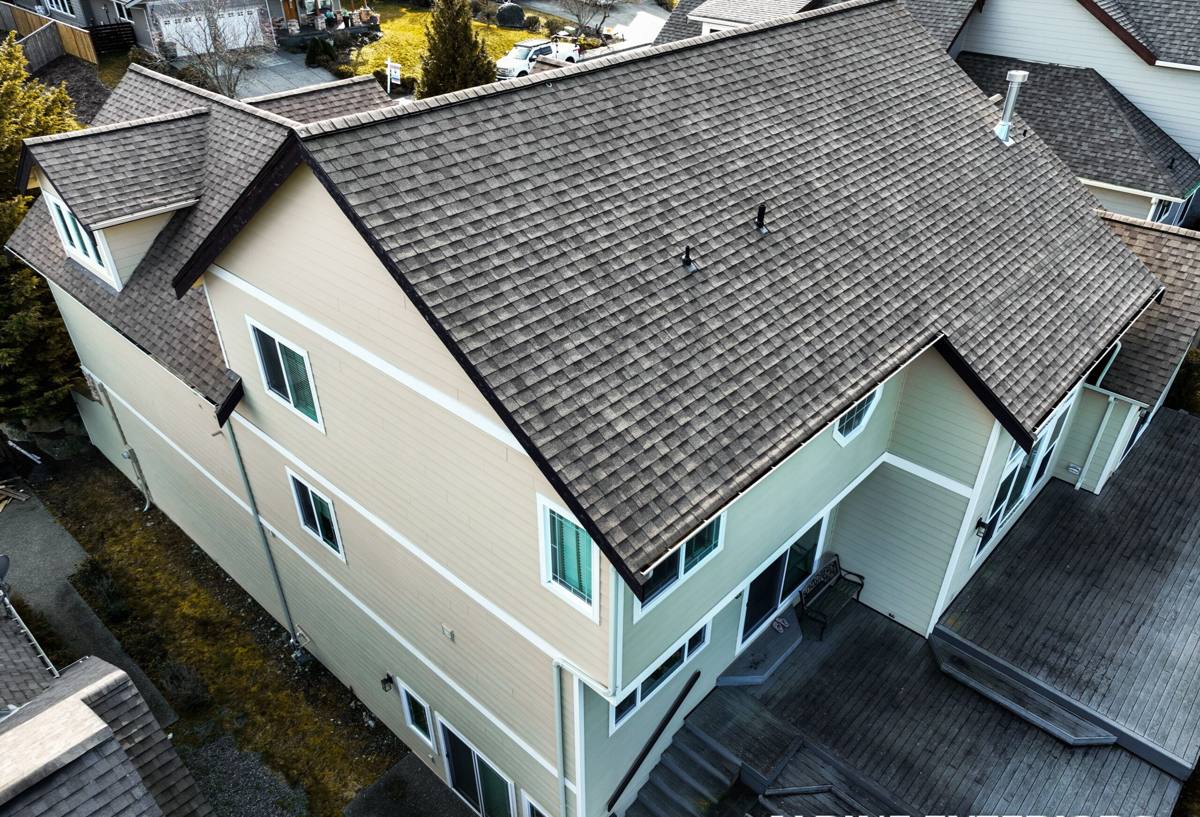
What Bellingham's Climate Actually Does to a Deck Over Time
It helps to understand the specific ways local weather attacks a deck, because it explains why some repairs hold for years and others fail again within a season.
Moisture and Slow Rot
Driving rain doesn't just fall on a deck — it gets blown sideways under railings, into end-grain cuts, and behind ledger boards where the deck attaches to the house. Wood absorbs that moisture faster at cut edges and fastener holes than anywhere else, which is why rot so often starts at board ends and screw locations rather than in the middle of a plank.
Moss, Algae, and Trapped Moisture
Whatcom County's long, wet, mild winters are ideal moss-growing conditions, and Silver Beach's tree cover adds shade that slows drying even further. Moss itself isn't just cosmetic — it holds water against the wood surface for extended periods, which accelerates decay underneath a layer that often looks green and harmless.
Fastener and Hardware Corrosion
Salt-laden coastal air speeds up corrosion on any metal that isn't rated for it. Older decks built with standard galvanized screws or nails often show rust bleed and weakening fastener heads years before the surrounding wood is actually done. A structurally sound deck can still be unsafe if the connections holding it together have corroded past their strength rating.
Freeze-Thaw and UV Cycling
Whatcom County doesn't get brutal winters, but it does get repeated freeze-thaw swings, which expand trapped moisture inside wood fibers and cracks. Combine that with UV exposure during the drier summer stretch, and you get the checking, splitting, and surface graying that shows up on decks that never see consistent maintenance.
Signs a Silver Beach Deck Needs Repair — Not Just a Cleaning
Homeowners often call us after noticing one obvious problem, but a proper inspection usually turns up two or three related issues feeding off each other. Here's what we look for and what it typically means:
- Soft or spongy decking boards — usually active rot, most common near board ends, around post bases, and where planters or furniture have sat too long.
- Rust streaking below fastener heads — a sign hardware is corroding and may no longer be holding at full strength, even if the wood around it looks fine.
- Wobbly or loose railings — often a connection failure at the post base rather than a problem with the railing itself, and a genuine safety issue.
- Persistent moss or dark staining that returns quickly after cleaning — points to a drainage or airflow problem, not just a surface cleaning need.
- Gaps opening up between the deck and the house — can indicate ledger board separation, which is one of the more serious structural issues we check for.
- Visible sagging between joists — suggests the framing underneath, not just the surface boards, needs attention.
- Stair stringers that flex or feel uneven underfoot — stairs take concentrated repeated stress and often show wear before the rest of the deck does.
Repair vs. Replacement: How We Actually Decide
Not every deck problem calls for a full rebuild, and we don't default to recommending one. The decision comes down to how much of the structure is still sound versus how much has been compromised, and where the damage sits.
| Factor | Usually Repairable | Usually Needs Replacement |
|---|---|---|
| Framing (joists, beams, ledger) | Isolated soft spots at board ends or fastener points | Widespread rot through multiple joists or a failed ledger connection |
| Decking boards | Scattered damaged or cupped boards among otherwise sound ones | Most boards soft, splitting, or moss-stained across the whole surface |
| Railings and posts | Loose connections, damaged balusters, worn caps | Rotted post bases below grade or non-code-compliant original construction |
| Hardware and fasteners | Localized corrosion caught early | Systemic corrosion across most connectors and fastener points |
| Age and prior maintenance | Younger deck, regularly cleaned and sealed | Older deck with years of neglected moss buildup and no protective finish |
We walk this assessment with the homeowner on-site rather than delivering it as a sealed quote. If a repair is genuinely the right call, that's what we recommend — a deck doesn't need to be torn out to be made safe and solid again.
What a Correct Deck Repair Actually Involves
A repair that only replaces the boards you can see is a repair that's likely to fail again. Doing it right means checking — and fixing — what's underneath.
Structural Framing First
Before any surface work happens, we check joists, beams, posts, and especially the ledger board connection to the house, since that's the single most common point of hidden failure on older decks. Any soft or compromised framing gets sistered, reinforced, or replaced before new decking goes down over it.
Decking Boards
Damaged boards are replaced individually where possible, matched to the existing material as closely as the situation allows. We also address board spacing and drainage gaps, since tight or clogged gaps are a major contributor to trapped moisture and moss growth.
Railings and Guards
Railing repair isn't just cosmetic — it's a code and safety issue. We check post connections, baluster spacing, and cap rail attachment, and we won't reattach a railing to a post base that's structurally compromised.
Fasteners and Connectors
Wherever we open up a section of deck, we replace fasteners and structural connectors with hardware rated for exterior and coastal-adjacent exposure, rather than reusing or matching corroded originals.
Stairs
Stringers, treads, and stair railings get the same structural scrutiny as the main deck — stairs see concentrated point loads and are often the first place a deck shows wear.
Our Repair Process
- On-site assessment. We inspect the full structure — framing, decking, railings, stairs, and fasteners — not just the area you called about, since related problems are common.
- Honest repair-or-replace recommendation. You get a clear explanation of what's actually wrong, what's optional, and what's a genuine safety issue.
- Written scope and estimate. No vague line items — you know what's being repaired and why before work starts.
- Structural work first. Framing, ledger, and post-base repairs happen before any cosmetic work covers them up.
- Surface repair and finish. Decking boards, railings, and stairs are repaired or replaced, and fastener locations are treated to resist future corrosion.
- Walkthrough. We show you what was fixed and what to watch for going forward, including maintenance timing suited to Bellingham's wet season.
Materials We Use — and Why
Material choice on a repair matters more than most homeowners expect, because mismatched materials expand, contract, and absorb moisture at different rates, which can create new problems at the seams.
| Material | Where It Fits a Repair | Trade-Offs to Know |
|---|---|---|
| Pressure-treated lumber | Framing, joists, structural members | Cost-effective and strong, but still needs sealing and periodic maintenance to resist local moisture |
| Cedar decking | Matching existing cedar decks, natural appearance | Naturally rot-resistant but softer — needs regular finish maintenance in a wet climate |
| Composite decking | Full board replacement sections, low-maintenance goals | Higher upfront cost, but resists moss staining and moisture absorption far better than wood |
| Stainless or coated exterior fasteners | All fastener replacement on repairs | Costs more than standard galvanized hardware but resists the corrosion this climate causes |
Our default on any repair is to match hardware and connectors to coastal-grade standards even if the original construction didn't — it's a small cost difference now against a repeat repair call in a few years.
After the Repair: Keeping Moss and Rot From Coming Back
A repair only holds as long as the deck is maintained afterward. In a climate like this, that maintenance schedule is tighter than most homeowners assume.
- Clear leaves, needles, and debris from board gaps regularly, especially through fall and into the wet winter months.
- Rinse off moss and algae growth before it establishes — once it's thick, it holds moisture underneath even after cleaning.
- Reapply sealant or stain on wood decking on the manufacturer's recommended cycle, not just when it looks worn.
- Keep planters, rugs, and furniture legs from sitting directly on boards for long stretches, which traps moisture underneath.
- Check railing and post connections once a year for looseness before it becomes a safety issue.
Why a Crew That Already Works Silver Beach Matters
Deck repair advice that works in a dry climate doesn't automatically work here. A contractor unfamiliar with Whatcom County conditions might recommend standard hardware, skip a ledger board check, or miss early moss-driven rot because they're not used to seeing it develop this fast. We work on decks throughout Bellingham and this part of Whatcom County regularly enough that the patterns are familiar before we even start the inspection — where water collects, which board ends fail first, which fastener types hold up and which don't.
That familiarity also means a faster, more accurate estimate. We're not learning the local climate on your project — we're applying what years of decks in this exact area have already taught us.
If your Silver Beach deck has soft boards, loose railings, persistent moss, or you're just not sure whether it needs a repair or something more, we're happy to take a look. Reach out for a free, no-pressure estimate using the form below.