 Bellingham
 New-Construction Windows Are a Different Job Than Replacement Windows
When people call us about "new windows," most of the time they mean replacing old ones in a house that's already standing. New-construction windows are a different animal entirely. They go into a stud-framed rough opening before the siding, house wrap, or interior finishes exist, which means the window and its flashing become part of the building's water-management system — not an add-on to it. Get that sequence wrong on a build in Silver Beach and you won't see the consequences for a year or two, when water finds its way behind the cladding and nobody can tell where it got in.
We work new-construction window packages for homeowners building in Silver Beach and the surrounding Lake Whatcom-area neighborhoods, usually alongside a builder or general contractor who's brought us in for the window and siding scope. This page covers what's different about a new-build install, what the climate here demands of it, and how we sequence the work so the windows and the siding actually protect each other instead of just sitting next to each other.
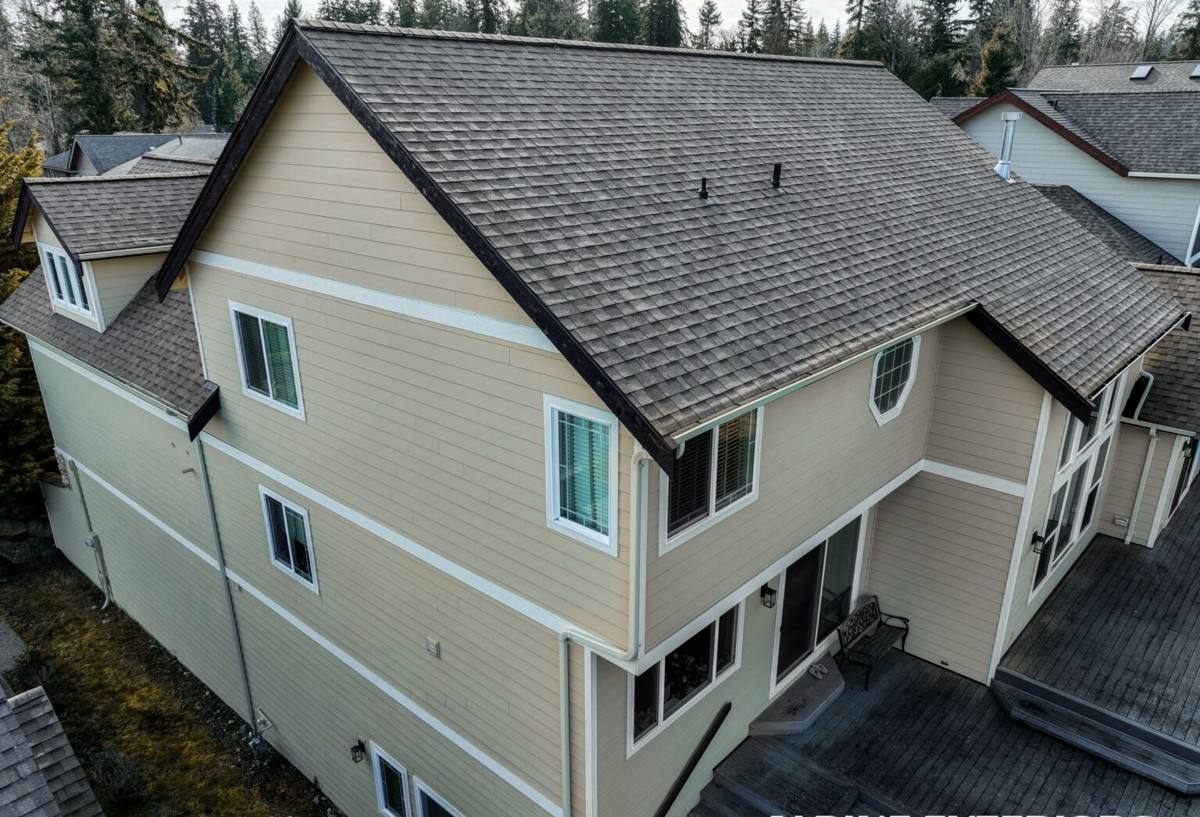
Why Silver Beach's Climate Matters for a New Window Opening
Bellingham sits on the marine edge of Whatcom County, and that shows up in every rough opening we flash. Salt-tinged air off the Sound accelerates corrosion on cheap fasteners and unprotected metal flashing. Driving rain off Pacific storm systems doesn't fall straight down here — it comes in sideways against west- and south-facing walls, which means head flashing and sill pans have to handle wind-driven water, not just gravity drainage. And the tree cover common around Lake Whatcom and Silver Beach's more wooded lots keeps window walls shaded and damp longer after a storm, which is exactly the recipe for moss and algae staining on anything that doesn't shed water cleanly.
None of this is exotic — it's just standard Pacific Northwest coastal exposure. But it means a window opening detailed for a drier inland climate will underperform here, even if the window itself is a good product. The opening has to be built for this specific mix of wind, rain, and shade from day one.
What We're Watching For on a Silver Beach Lot
- Which elevations face prevailing wind and rain — those openings get the most flashing attention
- Tree cover and shade patterns that slow drying time after storms
- Roof overhang depth (or lack of it) protecting upper-story windows
- Grade and drainage around the foundation that could push moisture back up at lower window sills
What a Correct New-Construction Install Actually Involves
A window is only as good as the opening it sits in. On new construction we're building that opening from bare framing, which is an advantage — we get to do it right the first time instead of working around whatever's already there.
The Flashing Sequence
Water management around a new-construction window follows a specific order, and skipping steps or doing them out of sequence is where most failures start:
- Sill pan flashing installed first, sloped to drain outward, so any water that gets past the window has somewhere to go besides the framing
- Window set into the opening, checked for level, plumb, and square before a single fastener goes in
- Side flanges taped or flashed next, then head flashing last, so every layer overlaps the one below it — never the reverse
- Integration with the weather-resistive barrier (house wrap), lapped correctly so the wall's drainage plane and the window's flashing work as one continuous system
Fastening and Sealant
Nail-fin windows have a manufacturer-specified fastening schedule — fastener spacing and type that's tied to the warranty. We follow it, not a shortcut version. Sealant matters just as much: the wrong sealant, or sealant used to "fix" a flashing detail that should have been solved with flashing instead, is one of the more common problems we find when we're called in to diagnose a leak on a house that's only a few years old.
Choosing a Window for a Silver Beach Build
Frame material is one of the bigger decisions on a new build, and it's worth making with the local climate in mind rather than by price alone.
| Frame Material | How It Handles This Climate | Trade-Offs |
|---|---|---|
| Vinyl | Good moisture resistance, no corrosion risk from salt air | Can expand/contract with temperature swings; fewer color options long-term |
| Fiberglass | Very stable dimensionally, holds paint well, low maintenance in wet climates | Higher upfront cost than vinyl |
| Wood-clad | Warm interior look; exterior cladding protects from weather if detailed well | Any breach in the cladding exposes wood to our rain and shade — needs consistent upkeep |
| Aluminum | Strong and slim sightlines | Poor thermal performance and more prone to condensation in our humidity unless thermally broken |
We don't push one brand or material as universally "best" — we walk through what the design calls for, how exposed the elevation is, and what maintenance the homeowner actually wants to sign up for, then match the product to that.
How We Work With Your Builder or GC
On a new-construction job, we're one trade in a sequence, and the schedule only works if we hit our window (no pun intended) at the right time. Before framing is even closed in, we're looking at the plans to confirm rough opening sizes, order lead times for the specific units, and flag anything about a particular elevation — heavy wind exposure, a shaded north wall, a low overhang — that changes how we'll detail the flashing.
Typical Sequencing
We install after the framing is inspected and the weather-resistive barrier is on, and before siding starts. That order matters: our flashing has to be integrated with the house wrap, and the siding crew then needs the windows fully set and flashed so trim and cladding can be built around them correctly rather than caulked up against them as an afterthought.
Because we also do siding work, we can carry that same crew's judgment from the window install straight into the trim and cladding install — one continuous water-management plan instead of two trades handing off a problem neither one owns.
What Drives Cost on a New-Construction Window Package
Costs on a new-build window package vary more than people expect, mostly because of factors that have nothing to do with the window brand itself.
| Factor | Why It Moves the Price |
|---|---|
| Number and size of openings | More glass and larger units mean more material and labor, plus heavier units need more crew to set safely |
| Frame material | Vinyl, fiberglass, and wood-clad sit at different price points before you even factor in glazing options |
| Glazing package | Double vs. triple pane, low-E coatings, and gas fills all add cost but also affect comfort and condensation resistance |
| Wall exposure and flashing complexity | A heavily exposed elevation or a complicated roofline detail takes more flashing labor to do right |
| Site access and story height | Second- and third-story openings need staging or lift access, which adds time |
We give homeowners a broad range early based on the plan set, then a firm number once the window schedule (sizes, styles, and glazing) is locked in with the builder.
Why It's Worth Hiring a Crew That Already Works This Area
Whatcom County's inspection process, the local building department's expectations, and the specific weather this part of Bellingham deals with aren't things you pick up from a manual — they're things you learn by doing the work here repeatedly. A crew that's already flashed openings on lake-adjacent, tree-shaded lots around Silver Beach knows which elevations need extra attention before they even walk the site, and knows what a local inspector will want to see at the rough-in stage.
That familiarity also shows up in smaller, practical ways: knowing realistic lead times for window orders so it doesn't stall your builder's schedule, and knowing which details tend to cause callbacks in this climate so we don't have to learn that lesson on your house.
Before Your Windows Go In: A Quick Checklist
- Rough openings measured and confirmed against the actual window order, not just the plan set
- Weather-resistive barrier installed and inspected before windows are set
- Sill pan flashing sloped to drain, confirmed before the window is set on top of it
- Fastening schedule matches manufacturer specs (this affects your warranty)
- Flashing sequence confirmed shingle-style — sill, then sides, then head
- Sealant used only where it belongs, not as a substitute for missing flashing
- Sequencing coordinated with your siding trade so trim details aren't installed around a problem
If you're building in Silver Beach and want the window package planned right from the framing stage on, we're happy to walk the plans with you or your builder. Reach out through the form below for a free, no-pressure estimate.