 Bellingham
 Windows in Silver Beach Take a Different Kind of Beating
Silver Beach sits close enough to open water that homes here deal with a steady mix of moist air, driving rain off the water, and long stretches of gray, low-sun weather that keeps everything damp longer than homeowners further inland ever have to think about. Add in Bellingham's moss season, which can run most of the fall through spring, and you've got a recipe for window frames that hold moisture against the house instead of shedding it. Over years, that's what actually fails windows here — not one big storm, but the slow accumulation of trapped moisture, UV-worn seals, and wind-driven rain finding its way past hardware that was never sealed quite right to begin with.
We work on homes in this neighborhood regularly, which means we're not guessing at what Whatcom County weather does to a window assembly over ten or twenty years. We've pulled out enough old sashes and rotted sills in this immediate area to know where builders typically cut corners, and we build our replacements to close those gaps rather than repeat them.
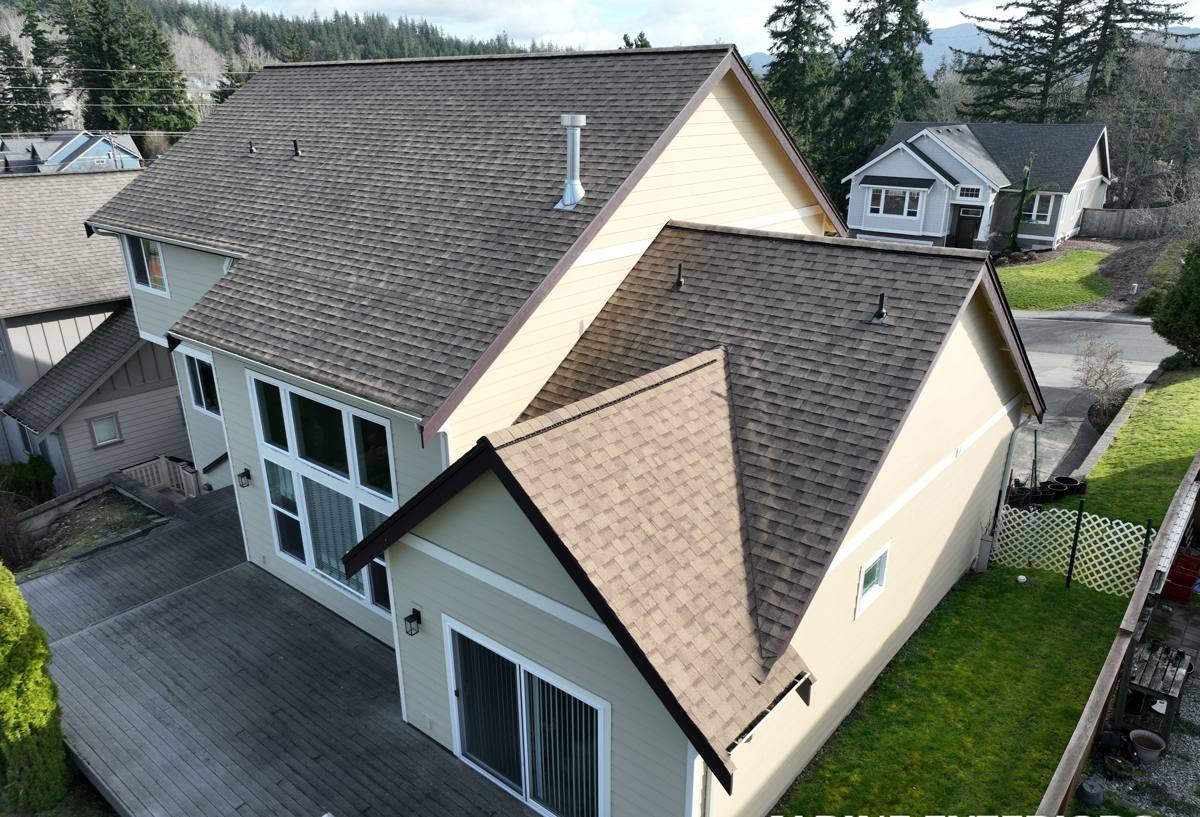
Signs a Window Is Actually Due for Replacement
Not every drafty window needs full replacement — sometimes a failed weatherstrip or a re-glazed pane is enough. But there are signs that point clearly to replacement rather than repair, especially on a home exposed to the wind and rain patterns common around Silver Beach:
- Visible fogging or a cloudy haze between panes of a double-pane unit (the seal has failed and the gas fill is gone)
- Soft, spongy, or discolored wood at the sill or lower corners of the frame
- Windows that won't stay open, won't latch fully, or have become noticeably harder to operate over the past couple years
- Visible daylight or a draft you can feel at the frame edge on a windy day
- Paint that keeps failing on the exterior trim no matter how often it's touched up
- A noticeable rise in heating costs with no other explanation
- Moss or dark streaking building up on the sill or in the corners of the frame
If you're seeing two or more of these on the same window, replacement is almost always the more honest recommendation than another repair.
Why "Just the Glass" Repairs Often Fall Short Here
A lot of homeowners ask about replacing just the failed glass unit and keeping the existing frame. That can work on a frame that's still structurally sound and reasonably square. But in a wet, moss-prone climate, if the glass seal has already failed, there's a good chance moisture has been getting into the frame itself for a while too. We'll tell you honestly if a glass-only repair makes sense, but we won't recommend it just to make a smaller sale if the frame underneath is already compromised.
What a Correct Window Replacement Actually Involves
Window replacement is one of those jobs that looks simple from the outside and hides most of its important work where you can't see it. The window unit itself matters, but the flashing, sealing, and flush-out of the rough opening are what actually determine whether that window is dry in five years or leaking behind the wall.
The Steps That Matter Most
- Removal without damaging the opening. Old windows come out carefully so the surrounding sheathing and framing aren't torn up in the process.
- Inspecting the rough opening. This is where we find out if there's hidden rot or old water damage from a prior install that was never sealed correctly — common in older Bellingham housing stock.
- Repairing any damaged framing or sheathing before the new unit goes in. A new window installed over rotten framing is a short-term fix, not a real repair.
- Flashing the opening properly, with materials and a sequence (sill pan, side flashing, head flashing) that sheds water down and out rather than trapping it.
- Setting the window level, plumb, and square, shimmed correctly so it operates smoothly and seals evenly.
- Sealing and insulating the gap around the frame with the right materials — not just a bead of caulk on the outside, but proper backer rod and sealant plus interior air sealing.
- Exterior trim and finish work that ties back into your siding cleanly, with attention to how water will run off above and around the new window.
Skip or rush any one of these steps and you can end up with a brand-new window that still leaks — the failure just moves from the glass to the installation.
Window Materials and Types: What Fits a Wet Coastal Climate
There's no single "best" window for every home, but some materials and configurations are a clearly better fit for a climate with sustained moisture exposure and a long moss season.
| Frame Material | How It Handles This Climate | Maintenance |
|---|---|---|
| Vinyl | Doesn't rot or corrode; handles moisture well; good energy performance at a moderate price | Low — occasional cleaning |
| Fiberglass | Very stable in temperature and moisture swings; strong long-term performance | Low |
| Aluminum | Durable but conducts cold and can condense moisture on the interior in our winters unless thermally broken | Low to moderate |
| Wood (unclad) | Classic look, but exposed wood exteriors need consistent upkeep to resist the rot risk from year-round dampness | High |
| Wood with clad exterior | Interior wood warmth with an exterior shell that resists moisture better than bare wood | Moderate |
For most Silver Beach homes, we lean toward vinyl or fiberglass for their moisture resistance and lower long-term upkeep, or clad-wood units for homeowners who want a wood interior look without exposing bare wood to the weather outside. We'll walk through what fits your home's style and your tolerance for maintenance rather than pushing one product line.
Glass Packages Worth Asking About
Double-pane, low-E glass with argon fill is the practical baseline for this region — it manages our mild but persistently damp winters well and cuts down on interior condensation on cold, wet days. Triple-pane is available and does add performance, but on most homes here the added cost doesn't pay back as quickly as it might in a colder, drier climate. We'll give you the honest comparison rather than upselling glass you don't need.
Our Process, Start to Finish
- On-site assessment. We look at each window individually — condition, exposure, and framing — not just a quick tape-measure visit.
- Straightforward written estimate covering materials, labor, and any framing repair we expect to need.
- Scheduling around the weather. Window openings are exposed during installation, so we plan around forecasts rather than gambling on a dry window that isn't there.
- Install, day of. Most single windows install in a matter of hours; full-house replacements are scheduled in a sequence that limits how long any one opening sits open.
- Final walkthrough. We check operation, seals, and trim with you before we call the job done.
What Drives the Cost
| Factor | Why It Matters |
|---|---|
| Frame material and glass package | Vinyl and fiberglass are generally more budget-friendly than clad wood; triple-pane adds cost over double-pane |
| Hidden framing damage | Rot found once the old window is out is the most common reason a quote changes mid-project |
| Window size and configuration | Large picture windows, bays, and custom shapes cost more than standard operable sizes |
| Number of windows | Full-house replacements typically bring a better per-window price than one-off jobs |
| Access and second-story work | Harder-to-reach windows take more time and equipment |
We'd rather give you a realistic range up front, including what happens if we find rot behind an old frame, than surprise you with change orders partway through.
Why Hiring a Crew That Already Works Silver Beach Matters
A contractor who works this part of Bellingham regularly already knows what the housing stock here tends to look like behind the wall — how older homes were flashed (or weren't), what moisture damage typically looks like once you pull a frame, and how exposure to wind and rain off the water affects certain sides of a house more than others. That's the kind of knowledge that only comes from doing the work in this specific area, not from a general contractor passing through the region once. It also means we're not learning on your house how Whatcom County's building department handles permitting or inspection for window replacement — we already know that process.
A Quick Checklist for Vetting Any Window Contractor
- Do they inspect the rough opening, or just swap the window and caulk the edges?
- Do they explain flashing and sealing steps, or only talk about the window brand?
- Are they licensed and insured to work in Washington, and willing to show it?
- Do they give a written estimate that separates materials, labor, and possible framing repair?
- Can they speak specifically to how they handle moisture and drainage, not just energy efficiency?
Permits and Local Requirements
Window replacement in Bellingham and unincorporated Whatcom County can require a permit depending on the scope of the job, particularly if the rough opening size is changing or structural framing is involved. Straight swaps into an existing opening are often more straightforward, but we handle the permit question directly with the local building department rather than leaving it for the homeowner to sort out, so nothing holds up your project or causes issues down the line.
If your windows are showing their age, or you just want an honest read on whether repair or replacement makes more sense for your Silver Beach home, we're happy to take a look. Reach out for a free, no-pressure estimate using the form below.