 Bellingham
 Siding That Can Actually Handle South Hill's Exposure
South Hill sits up above the flatter parts of Bellingham, which means homes here catch more of what comes off Bellingham Bay and the Salish Sea — wind-driven rain, salt-laden air, and long stretches of shade under mature tree cover. That combination is harder on a home's exterior than most homeowners realize until they're dealing with soft trim, streaking, or moss creeping across the wall. Siding installed on South Hill has to be chosen and installed with that exposure in mind, not just picked off a sample board.
Salt Air and Coastal Exposure
Homes with any bay-facing exposure deal with airborne salt that accelerates corrosion on fasteners, flashing, and hardware, and that dulls or degrades paint finishes faster than inland siding sees. Products and finishes that aren't engineered for coastal-adjacent conditions tend to show their age early — chalking, fading, and fastener bleed are common complaints we hear about older installations in this part of Whatcom County.
Driving Rain and Moisture Cycling
Whatcom County gets a lot of rain, but it's the wind-driven, sideways rain that does the real damage — it finds gaps in flashing, laps, and trim that vertical rain never would. Siding on South Hill goes through repeated wet-dry cycles for months at a stretch, and any weak point in the water-management details behind the siding becomes a slow, hidden problem long before it's visible from the curb.
Extended Moss and Mildew Season
Tree cover and hillside shade patterns on many South Hill lots mean parts of a home's exterior rarely get direct sun, which extends the moss and mildew season well beyond what a south-facing, open lot deals with. Siding material, surface texture, and finish quality all affect how much moss actually takes hold and how hard it is to clean off without damaging the surface underneath.
What South Hill's Housing Stock Needs From Its Siding
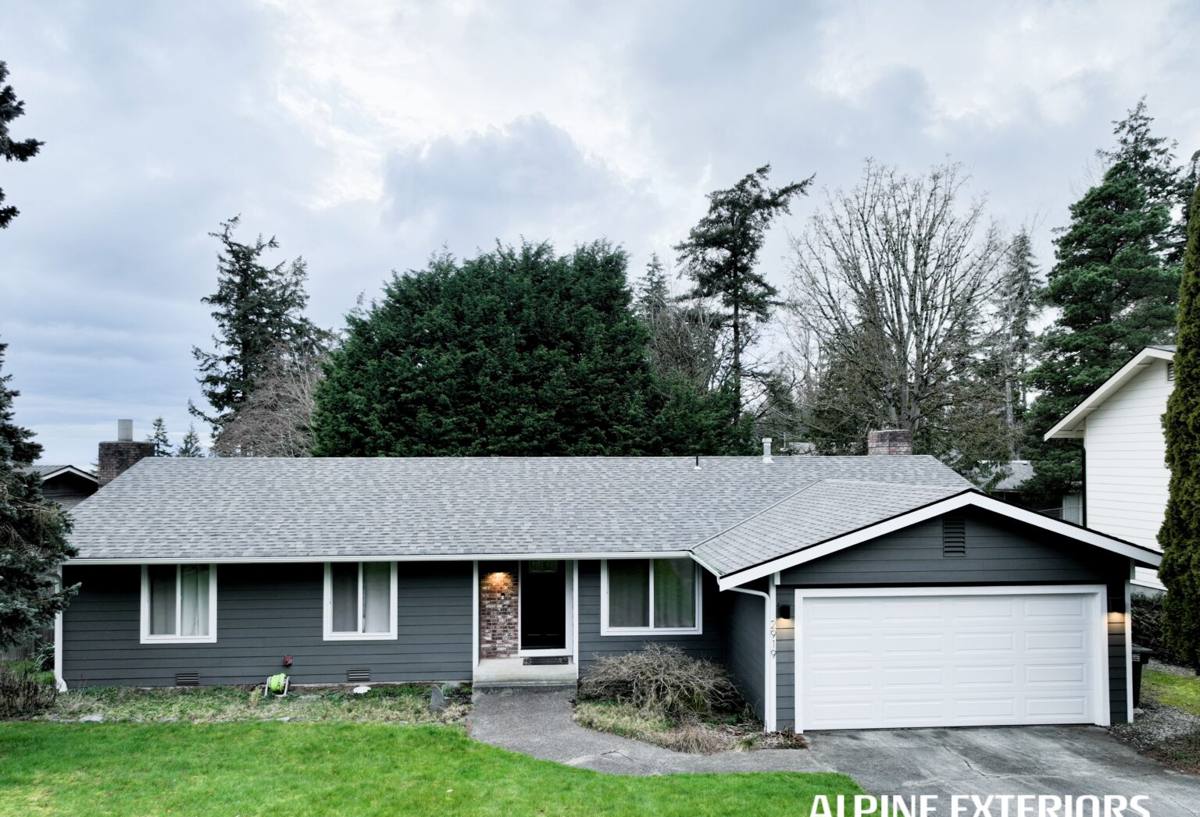
South Hill has a mix of older character homes and newer construction, and each brings its own considerations. Older wood-frame homes often have wall assemblies that were never built with a proper drainage plane, so a siding replacement is a chance to correct decades-old moisture management issues, not just swap the exterior finish. Newer builds need the installation done right the first time, because a poorly detailed install on a brand-new wall assembly can trap moisture just as easily as an old one.
In both cases, the wall assembly behind the siding matters as much as the siding itself. A weather-resistive barrier that's lapped correctly, flashing that actually sheds water away from the wall, and clearances that keep siding away from grade, roof lines, and decks are what separate a siding job that lasts decades from one that causes problems in five years.
Why We Install Only James Hardie Fiber Cement
We standardized on James Hardie fiber cement siding and don't install vinyl, LP SmartSide, cedar, primed spruce, Cemplank, or Allura. That's not a marketing position — it's a professional standard we hold because of how these products behave over years of exposure in a climate like ours.
James Hardie's HZ5 product line is engineered specifically for climates that see freeze-thaw cycling and sustained moisture, which describes South Hill's weather well. Fiber cement is non-combustible, holds paint and color far longer than wood-based products, and doesn't feed moss and mildew the way organic materials can. The ColorPlus factory finish is baked on under controlled conditions, which gives it more consistent coverage and better fade resistance than field-applied paint, and it carries a stronger, transferable warranty than most alternatives on the market. When installed to manufacturer specifications, it's simply the product we trust to hold up on this hillside, in this climate, for the long haul.
What Correct Siding Installation Actually Involves
A siding job that looks fine on installation day but fails in three years almost always traces back to skipped or rushed details underneath the surface. On South Hill, where exposure is higher than average, these details matter even more than usual.
- A continuous, correctly lapped weather-resistive barrier with all seams and penetrations properly taped or flashed
- Flashing integrated at every window, door, and roof-to-wall intersection, directing water out and away from the wall assembly
- A drainage gap or rainscreen strategy in high-exposure areas so any moisture that gets behind the siding can actually drain and dry
- Fastening that follows Hardie's specified pattern and nail placement — over-driven or under-driven fasteners are one of the most common causes of early siding failure
- Proper clearance from grade, roofing, decks, and other transitions, generally a minimum of several inches, to keep the bottom edge of the siding from sitting in standing moisture
- Caulking only where the manufacturer specifies it, using a product rated for the exposure — over-caulking can trap moisture instead of shedding it
Our Installation Process for South Hill Homes
Assessment and Planning
We start with a walk-through of the home, checking existing siding, trim, window flashing, and any signs of moisture damage. On older South Hill homes this often means pulling back a section of existing siding to check the sheathing and framing underneath before finalizing a scope of work.
Preparation and Tear-Off
Old siding and any damaged sheathing or trim come off, and we address rot or structural issues before anything new goes up — covering a hidden problem with new siding just delays a much bigger repair later.
Weather Barrier and Flashing
This is the stage that determines how the home performs for the next several decades. We install and tape the weather-resistive barrier, then flash every window, door, and penetration before a single piece of Hardie siding goes on the wall.
Installation, Trim, and Finish
Siding goes up following James Hardie's fastening and clearance specifications, with trim, corners, and transitions detailed to shed water rather than collect it. We finish with a thorough cleanup and a walkthrough so you understand exactly what was done and why.
James Hardie Compared to Other Siding Options
Homeowners on South Hill often ask how Hardie stacks up against the other materials they've seen quoted. Here's an honest comparison based on how these products actually perform under sustained coastal-adjacent moisture and shade.
| Factor | James Hardie Fiber Cement | Vinyl | Engineered Wood (LP SmartSide) | Cedar |
|---|---|---|---|---|
| Moisture and rot resistance | Excellent when installed to spec | Good, but can trap moisture behind panels | Moderate — wood-based, vulnerable if compromised | Requires ongoing maintenance to resist rot |
| Moss and mildew resistance | Strong, non-organic material | Resists organic growth but can trap moisture | More susceptible due to wood content | Most susceptible, needs regular treatment |
| Finish longevity | Factory ColorPlus finish, long fade resistance | Color molded in, but can fade and chalk | Field-applied finish, needs repainting over time | Needs regular staining or painting |
| Fire resistance | Non-combustible | Combustible | Combustible | Combustible |
| Typical warranty | Long, transferable manufacturer warranty | Varies by manufacturer | Shorter, often prorated | Little to no manufacturer warranty |
What Drives Cost on a South Hill Siding Project
Every home is different, so we don't quote broad-strokes pricing without seeing the house, but a few factors consistently move the number on South Hill jobs specifically.
| Factor | Why It Matters |
|---|---|
| Home size and number of stories | More surface area and height affect material, labor, and staging needs |
| Hillside access and staging | Sloped lots and limited driveway or street access can add setup time and equipment needs |
| Tear-off vs. new construction | Removing old siding and repairing hidden damage adds scope compared to new-build installation |
| Trim and architectural detail | Dormers, gables, and multiple roof lines common on hillside homes mean more flashing and trim work |
| Siding profile and finish | Lap, shingle, and panel profiles, plus ColorPlus versus custom colors, affect material cost |
What to Confirm Before You Hire a Siding Contractor
- Are they licensed, bonded, and insured to work in Washington State?
- Are they a certified James Hardie installer, and can they explain their fastening and flashing approach in detail?
- Does the written scope of work reference manufacturer installation specifications, not just a general description?
- Who pulls the permit, and is that included in the quote?
- Are warranty terms — both manufacturer and workmanship — spelled out in writing before work starts?
- Do they have recent experience working on homes in your specific area of Bellingham, with its particular exposure and access challenges?
Why a Crew That Already Works South Hill Matters
Siding installation isn't one-size-fits-all, and a crew that regularly works South Hill's hillside lots already understands the access and staging challenges before the first ladder goes up. They know how driving rain off the bay behaves against different wall orientations, how long moss season really runs under heavy tree cover, and how to detail flashing and clearances so the home is protected rather than just re-covered. That local familiarity, paired with correct James Hardie installation practices, is what keeps a siding job performing well through years of Whatcom County weather instead of needing attention again in a few short years.
If you're planning a siding project on South Hill, we're happy to walk the home, look at what's there now, and put together a straightforward, no-pressure estimate — just fill out the form below to get started.