 Bellingham
 Why Birch Bay Windows Wear Out Faster Than Inland Homes
Birch Bay sits right on the water, and that changes what a window has to survive. Homes a few miles inland in Bellingham deal with plenty of rain, but they don't get the same steady salt air rolling off the bay, and they're not catching wind-driven rain straight off open water during a winter storm. Add in a moss season that can stretch from fall through spring in Whatcom County, and you've got three separate forces working on every window opening at once: corrosion, water intrusion, and constant moisture sitting against wood and trim.
None of that means Birch Bay needs some exotic window system. It means the installation details that get skipped on an easier job — flashing sequence, sealant choice, hardware material — can't get skipped here. A window that's installed "fine" for a dry inland lot can fail years early on a waterfront lot, not because the window itself was bad, but because the install didn't account for what the site actually throws at it.
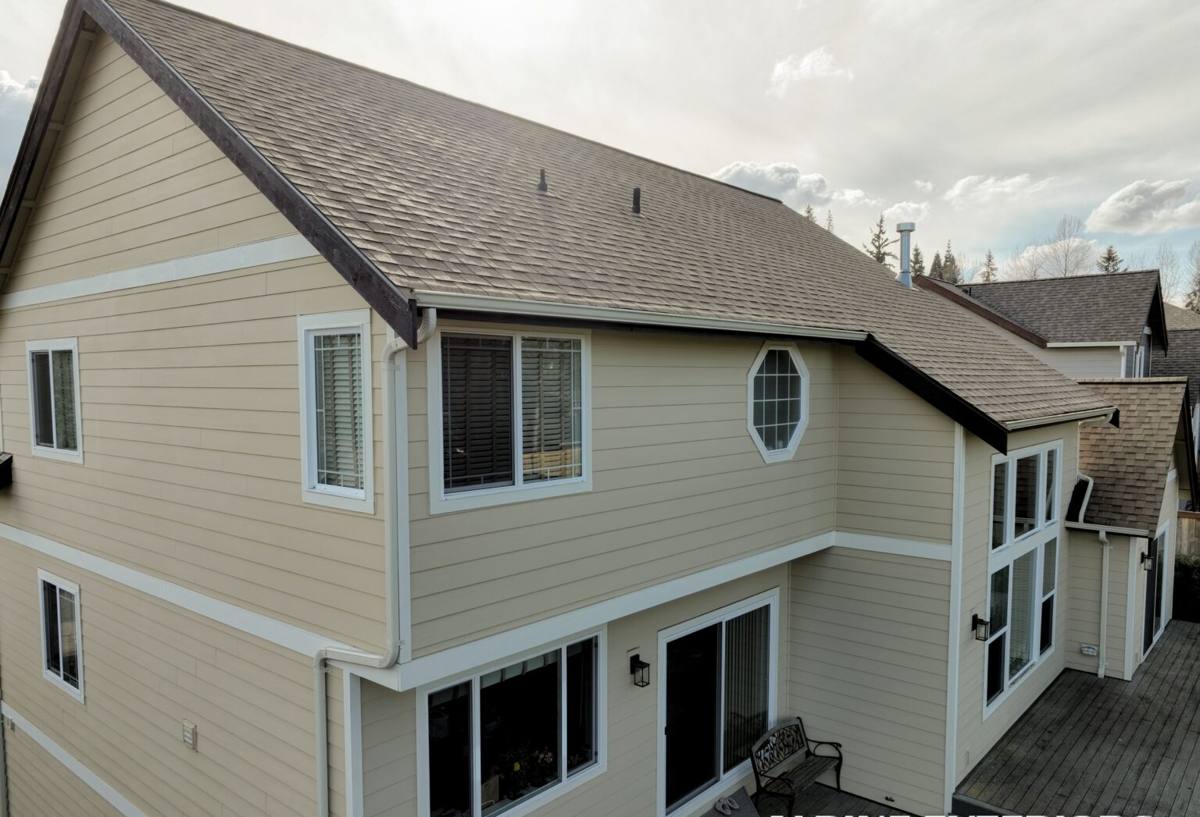
What Correct Installation Actually Involves
Most window problems we get called out to fix aren't the window's fault — they're a flashing or sequencing mistake made when it went in. Correct installation isn't complicated, but it has to be done in the right order, every time.
Flashing and Water Management
Every opening needs a sill pan to catch any water that gets past the window itself, jamb flashing that laps correctly with the weather-resistive barrier, and head flashing that sheds water out and away rather than trapping it against the sheathing. In a wind-driven rain event — which Birch Bay gets more of than sheltered inland lots — water is being pushed sideways and even slightly upward against the wall, not just falling straight down. A flashing job that would hold up fine on a calm inland wall can leak here if the laps aren't done correctly.
Sealants and Backer Rod
We use exterior-grade sealants rated for the temperature swings and UV exposure this coast sees, backed with proper backer rod so the sealant has the right joint depth to flex instead of cracking. Salt air breaks down cheap or improperly applied sealant faster than people expect — it's one of the first places we see failure on older installs.
Insulation Without Trapping Moisture
The gap between the window frame and the rough opening needs to be insulated, but packed too tight or with the wrong material, that gap holds moisture instead of letting the assembly dry. We use low-expansion foam or backer rod and insulation sized for the gap, not stuffed in.
Choosing Materials for a Marine Environment
Frame material and hardware matter more here than they would a few miles inland. Salt air accelerates corrosion on the wrong metals and speeds up degradation on finishes that aren't rated for coastal exposure.
| Material | How it holds up near the water | What to watch |
|---|---|---|
| Vinyl | Doesn't corrode or rot; handles salt air well | Lower-end vinyl can warp with sun exposure and temperature swings over time |
| Fiberglass | Very stable, resists both moisture and corrosion, holds paint well if you want color | Higher upfront cost than vinyl |
| Wood-clad | Good look, but the exposed wood interior and any exposed end grain are vulnerable to moisture over a long wet season | Needs more diligent maintenance and finish upkeep in this climate |
| Aluminum-clad | Durable cladding, but standard aluminum hardware and fasteners can corrode faster in salt air | Marine-grade or coated hardware is worth the upgrade here |
We don't push one material on every job — vinyl, fiberglass, and clad wood are all legitimate choices depending on budget and the look a homeowner wants. What we do insist on is corrosion-resistant hardware and fasteners on any window going into a Birch Bay opening, regardless of frame material. Standard-grade screws and hinges are one of the more common failure points we see on installs that weren't done with the coast in mind.
Code, Sizing, and Energy Performance
Washington's state energy code sets minimum performance requirements for replacement and new windows, and Whatcom County permitting will check that a job meets current code before it's signed off. Beyond code minimums, a few things matter specifically for this location:
- U-factor: lower is better for keeping heat in during the damp, cool months that make up most of the year here
- Egress sizing: bedroom windows need to meet minimum opening dimensions for emergency exit, which we verify before ordering, not after
- Condensation resistance: homes with poor ventilation and constant coastal humidity are more prone to interior condensation on lower-performing glass packages
We size and spec every window to the actual opening and the actual exposure of that wall — a window on the water-facing side of a house doesn't need the same spec as one on a sheltered interior wall, and treating them the same is how budgets get wasted in one place and performance gets shorted in another.
Our Installation Process
- On-site assessment of each opening, including current flashing condition and any existing moisture or rot damage behind the trim
- Accurate measurement and ordering — we don't work off assumptions or old builder specs when a wall has settled or shifted over the years
- Removal of the old window and inspection of the rough opening and sheathing for hidden water damage before anything new goes in
- Repair of any damaged sheathing or framing found during removal — this gets flagged and priced honestly before we proceed
- Installation of sill pan flashing, the new window, jamb and head flashing, and sealant, in that order
- Interior and exterior trim-out, with final sealant and finish work
- Walkthrough with the homeowner before we consider the job done
That inspection step in the middle matters more here than almost anywhere else. A lot of what we find behind an old window on a Birch Bay home is water damage that's been building for years, hidden by trim, that the homeowner had no way of seeing. Catching it during a window replacement is far cheaper than catching it later as a bigger repair.
Problems We Commonly Fix From Other Installs
Leaks at the Sill or Corners
Usually a missing or improperly lapped sill pan, or flashing installed in the wrong order relative to the weather-resistive barrier.
Moss and Staining on Trim
Wood trim with a poor finish or no drip cap will hold moisture and grow moss faster in this climate, especially on north- and west-facing walls that don't get much sun to dry out between rain events.
Stiff or Corroded Hardware
Standard-grade hinges, cranks, and locks corrode faster in salt air. This is usually a sign the original install used interior-grade hardware not rated for a coastal exposure.
Condensation and Fogged Glass
Fogging between panes means a seal has failed on a double- or triple-pane unit — not repairable, the sash or unit needs replacing. Persistent interior condensation on the glass itself is usually a ventilation or performance issue rather than a window defect.
Maintenance Checklist for Birch Bay Homeowners
- Rinse salt residue off frames and glass a couple times a year, especially on water-facing walls
- Check and clean weep holes so water can drain out instead of pooling in the frame
- Inspect exterior sealant annually for cracking or separation and have it redone before it fails, not after
- Keep gutters and downspouts clear so runoff isn't sheeting down across window openings
- Watch for moss buildup on trim and siding near windows — it holds moisture against the wall
- Test hardware (locks, cranks, hinges) periodically and address stiffness or corrosion early
Cost Factors to Expect
| Factor | Why it moves the price |
|---|---|
| Frame material | Vinyl is generally the most budget-friendly; fiberglass and clad wood cost more upfront |
| Hidden damage | Rotted sheathing or framing found during removal adds repair cost not visible until the old window is out |
| Opening size and count | Larger openings, custom shapes, or a full-house replacement change labor and material scope |
| Exposure of the wall | Water-facing walls may warrant a higher-spec window or more careful flashing detail, adding some cost |
| Access and site conditions | Second-story or hard-to-access openings take more time and equipment |
We give straightforward, itemized quotes and flag any hidden issues we find before doing the work — not as a surprise on the final bill.
Why a Crew That Already Works Birch Bay Matters
Window installation isn't a job you can do the same way everywhere and get the same result. A crew that mostly works drier, sheltered neighborhoods inland may not think twice about hardware grade or flashing sequence, because on those jobs it usually doesn't matter as much. On a Birch Bay lot, those same shortcuts show up as leaks, corrosion, and moss within a few years instead of a decade or more.
We work throughout Bellingham and Whatcom County, including the Birch Bay waterfront, so we already know what this exposure does to a window installation over time — because we're the ones who get called back to fix it when it's done without that in mind. That means fewer surprises during the job, a spec that actually matches the wall it's going on, and a finished install built for the climate it has to survive, not just for a dry day at install time.
If you're planning a window replacement or new installation in Birch Bay, we're happy to come take a look and give you a straightforward, no-pressure estimate — just fill out the form below.