 Bellingham
 Storm Damage in the Columbia Neighborhood: A Different Kind of Wear
Homes in Columbia deal with a specific combination of weather that a lot of general "storm damage" advice doesn't account for. You're close enough to Bellingham Bay to get salt-laden air working on your metal flashing and fasteners year-round, you're in the direct path of driving rain that comes off the Strait during fall and winter storms, and you sit under tree cover dense enough that moss and moisture management is a constant, not a seasonal, concern. A roof here doesn't usually fail all at once. It fails a little at a time, in the spots where wind, water, and organic growth overlap, and then a storm finishes the job that months of quiet damage already started.
That matters for how storm damage repair should actually be done. A roof that looks fine from the ground after a windstorm can already have lifted shingle tabs, compromised flashing seals, or saturated decking underneath. Treating storm damage repair as a cosmetic patch job, rather than a full look at what the wind and water actually did, is how homeowners end up calling back six months later for a leak that traces straight back to the original storm.
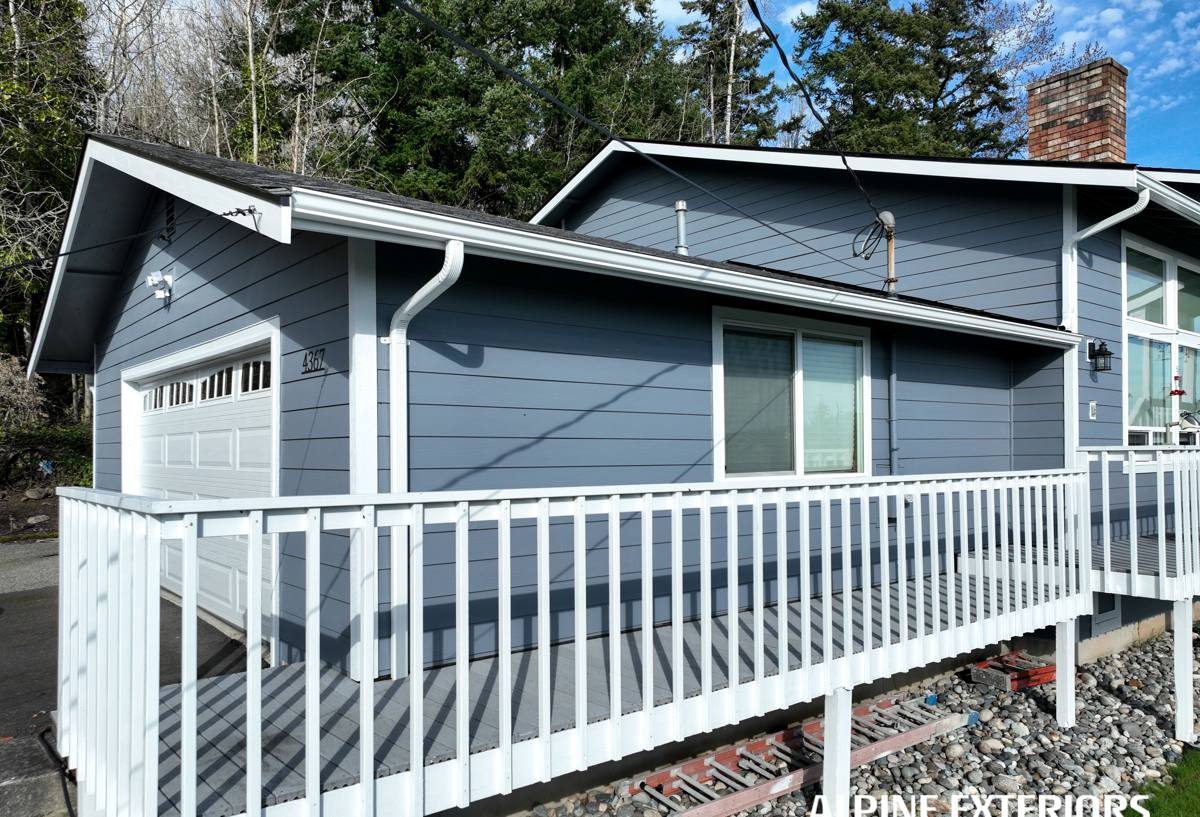
What Whatcom County Storms Actually Do to a Roof
Wind and Driving Rain
Bellingham storms rarely bring the kind of straight-line wind damage you'd see in the Midwest — what they bring instead is sustained, gusty wind paired with heavy, sideways rain. That combination is worse for roofs than a short, hard blow, because it works water up and under shingle edges and flashing laps that were never designed to handle rain moving horizontally instead of falling straight down. The result is often not missing shingles but lifted, cracked, or loosened ones that still look mostly intact until you check the seal underneath.
Moss Season
Whatcom County's long, wet, mild winters give moss and algae a huge head start on any roof with even partial shade. Moss doesn't just sit on the surface — it holds moisture against the shingle mat and works its way under tabs and around fasteners, which is exactly where storm-driven rain also wants to go. A roof that already has moss intrusion is far more vulnerable to storm damage becoming a leak, because the moss has already broken the seal the storm is trying to exploit.
Salt Air Corrosion
Proximity to Bellingham Bay means airborne salt is a slow, steady factor on metal roofing components — flashing, fasteners, vent boots with metal collars, gutter hardware. Salt air accelerates corrosion on standard fasteners and thin-gauge flashing, which is why storm damage repairs that reuse or match compromised original hardware often fail again sooner than they should.
What a Correct Storm Damage Repair Actually Involves
A Full Inspection, Not a Surface Patch
The single biggest mistake in storm damage repair is stopping at what's visible from the ground or from a quick walk of the roof edge. A proper repair starts with checking the decking and underlayment in the affected area, not just the shingles. If water has been getting under the roofing material even for a short time, the plywood decking can be soft or delaminating, and no amount of new shingles on top will fix that — it will just hide it until it fails again.
Flashing and Penetration Checks
Most storm-related leaks in this climate don't come from the open field of the roof — they come from flashing around chimneys, vent pipes, skylights, and roof-to-wall transitions. Wind and driving rain put the most stress on these transition points, and they're also where salt air corrosion does the most damage over time. A repair that only addresses the shingles and skips a real check of every penetration point is an incomplete repair.
Matching Materials, Not Just Colors
Storm damage repair should use materials compatible with what's already on the roof — same or comparable shingle profile, correct underlayment type, and flashing metal that won't set up a corrosion reaction against the existing metal. A repair that looks fine on day one but mixes incompatible materials tends to show its seams, literally, within a year or two.
Our Process for Columbia Storm Damage Calls
- Initial assessment. We look at the whole roof, not just the area you're worried about — storms rarely damage only one spot, and Columbia's tree cover means we're also checking for moss and debris buildup that's compounding the problem.
- Documentation. We photograph and note the damage in a way that's useful if you're filing an insurance claim, including anything that predates the storm so there's no confusion about what the storm actually caused.
- Honest repair-vs-replace recommendation. We tell you plainly whether this is a targeted repair or whether the damage and the roof's overall condition mean a repair won't hold.
- Decking and underlayment check. Any area we open up gets checked down to the deck before anything new goes back on.
- Repair with climate-appropriate materials. Corrosion-resistant fasteners, compatible flashing, and underlayment suited to a high-moisture, high-moss environment.
- Final walkthrough. We show you what was found and what was done — no vague "all fixed" without specifics.
Repair or Replace: How We Help You Decide
Not every storm-damaged roof needs to come off, and not every roof is worth repairing again. The honest answer depends on the roof's age, how much of it storms and moss have already worn down, and how localized the current damage is.
| Factor | Leans Toward Repair | Leans Toward Replacement |
|---|---|---|
| Roof age | Under roughly two-thirds of expected lifespan | Near or past expected lifespan |
| Damage location | Isolated to one slope or area | Spread across multiple slopes |
| Decking condition | Solid, dry decking under damaged area | Soft, delaminated, or repeatedly wet decking |
| Moss/algae history | Minimal prior growth | Heavy, long-term moss intrusion |
| Prior repairs | First or second repair on this roof | Third-plus patch in the same general area |
Materials and Fasteners We Use — and Why
For storm damage repairs in a salt-air, high-moisture environment, our standard is to use hot-dip galvanized or stainless fasteners rather than standard electroplated ones, because standard fasteners corrode faster under these conditions and a corroded fastener is a future leak point. We also favor flashing metals and underlayment products chosen for how they perform under sustained wet conditions and moss exposure, not just how they perform in a lab spec sheet. This isn't about any one brand being bad — it's about matching the product to what this specific climate does to a roof over years, not months. Where algae-resistant shingle options make sense for a repair, we'll explain the trade-offs honestly: they cost a bit more, but in a moss-heavy area like Columbia, they buy you real time before growth becomes a problem again.
Insurance and Documentation
Many storm damage repairs involve an insurance claim, and the difference between a smooth claim and a frustrating one often comes down to documentation. We photograph damage before starting work, note conditions that are clearly storm-related versus pre-existing wear, and can provide a written scope of work that adjusters can reference. We're not a public adjuster and won't promise a claim outcome, but we'll give you an honest, well-documented picture of what the storm did so you're working from accurate information.
Why Local Experience in Columbia Matters
A crew that already works in and around Columbia knows the pattern this neighborhood's roofs tend to follow — where moss builds up fastest based on tree cover and sun exposure, which roof orientations catch the worst of the driving rain off the Bay, and how quickly salt air works on unprotected metal here compared to more inland parts of Whatcom County. That's not something you get from a general storm-response crew working from a checklist written for a different climate. It shows up in smaller ways too — knowing which repair materials actually hold up here versus which ones look fine in the showroom, and being straightforward when a repair genuinely isn't worth doing.
After the Repair: Keeping Storm Damage From Coming Back
A correct repair fixes what the storm did. Keeping the roof from getting hit the same way again is mostly about staying ahead of the moss and debris that make storm damage worse in the first place.
- Have moss and debris cleared from the roof and gutters at least once a year, more often under heavy tree cover
- Check flashing around chimneys, vents, and skylights annually for lifted or corroded sections
- Walk the roofline after major windstorms and note anything that looks different, even if it's not leaking yet
- Keep gutters and downspouts clear so driving rain has somewhere to go besides under the shingle edge
- Trim back overhanging branches that shade the roof and slow drying after rain
- Address small repairs promptly — a small lifted shingle is a quick fix; the same shingle after another storm often isn't
If a recent storm has left you with damage, or you're not sure whether what you're seeing is cosmetic or something that needs attention now, we're happy to take a look. We offer free, no-pressure estimates for Columbia-area homes — just fill out the form below and we'll get a time on the calendar.