 Bellingham
 Building Decks That Hold Up in Birchwood's Marine Climate
Birchwood sits close enough to Bellingham Bay and the Puget Sound shoreline that salt-laden air is a real factor in how a deck ages, not just a talking point. Combine that with Whatcom County's driving rain and a moss season that can stretch from October well into May, and you have a climate that is genuinely harder on outdoor structures than most of the country. A deck built the same way you'd build one in a dry inland climate will show problems here in a fraction of the time — soft spots in the framing, corroded fasteners, slick moss buildup on the walking surface, and finishes that fail years ahead of schedule.
Building a deck for a Birchwood home isn't about using fancier materials for their own sake. It's about understanding which parts of a deck take the most abuse from this specific climate and detailing those parts correctly the first time, since re-doing structural work under an existing deck is far more expensive than doing it right during the original build.
What Birchwood's Site Conditions Mean for Your Deck
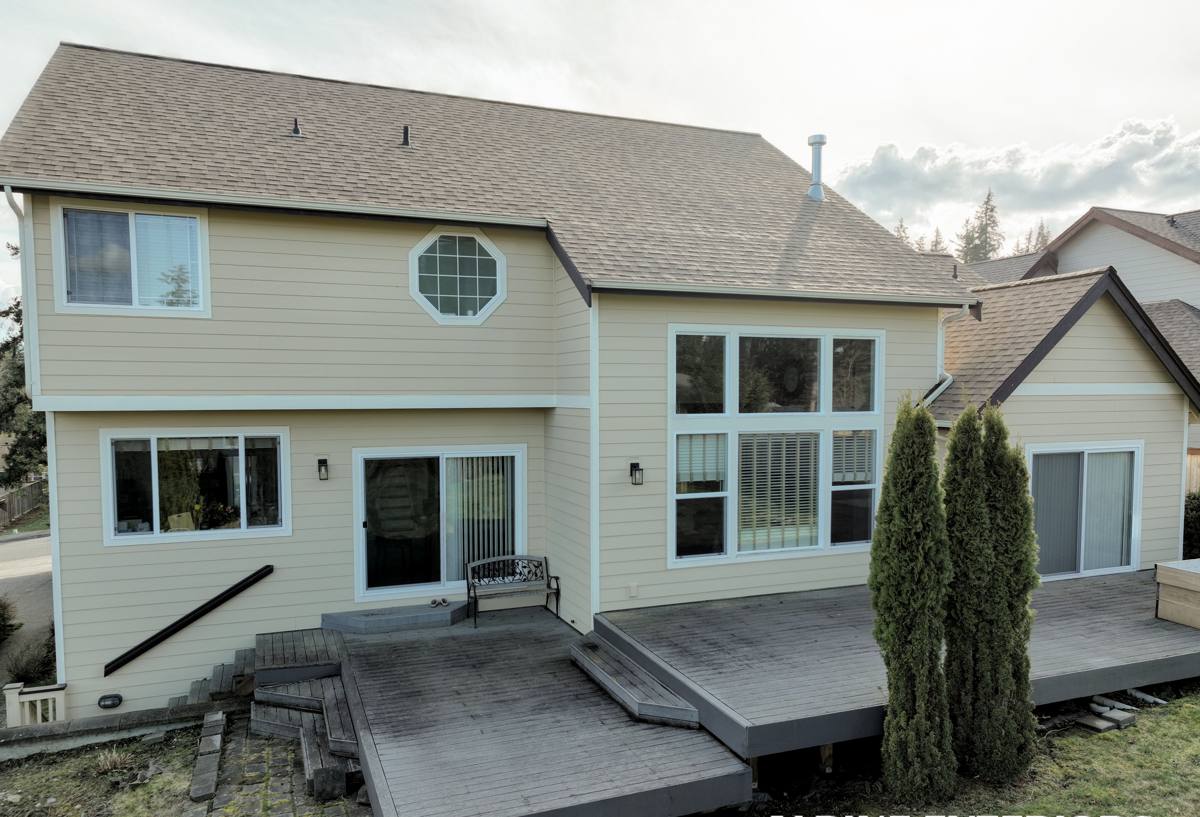
Much of Birchwood carries the mature tree cover typical of established Bellingham neighborhoods — fir, cedar, and maple canopies that shade yards for large parts of the day. That shade is pleasant to sit under, but it also means decks here dry out slower after rain than a deck sitting in full sun across town. Damp ground, needle and leaf litter, and reduced airflow underneath a low deck all add up to more time spent wet, which is exactly the condition moss, algae, and wood rot need to take hold.
Soil in this area also tends to hold moisture longer through the wet months, which matters for how footings are set and how close framing sits to grade. A deck design that ignores drainage and airflow underneath the structure is setting itself up to fail early, regardless of how nice the decking boards look on top.
Common Site Factors We Plan Around
- Shaded yards that stay damp longer after storms
- Sloped lots common in this part of Bellingham, which affect footing depth and stair layout
- Established trees whose roots can limit footing placement
- Low clearance decks that need extra attention to under-deck ventilation
Choosing Decking Material for Northwest Weather
Wood Decking
Cedar remains a popular choice for homeowners who want a natural look, and it has genuine resistance to rot and insects when properly finished and maintained. The trade-off is honest and worth stating plainly: cedar needs regular cleaning and refinishing in this climate, or it will gray, absorb moisture, and eventually support moss growth faster than a maintained composite deck would. Pressure-treated pine is a lower-cost option with good structural performance, but it moves more as it dries and requires diligent sealing to perform well through repeated wet-dry cycles.
Composite and PVC Decking
Composite and PVC boards cost more upfront but don't absorb moisture the way wood does, which matters directly for moss and mildew resistance in a climate like ours. We install composite decking as a professional standard on many Birchwood projects specifically because it removes the annual refinishing burden — not because wood decking is a bad product, but because the maintenance math changes when you're dealing with this many wet months per year.
| Material | Upfront Cost | Maintenance | Moss/Moisture Resistance |
|---|---|---|---|
| Pressure-Treated Pine | Lowest | Annual sealing recommended | Fair — needs upkeep |
| Cedar | Moderate | Cleaning and refinishing every 1-2 years | Good when maintained |
| Composite/PVC | Higher | Occasional washing only | Very good |
Framing and Substructure: Where Northwest Decks Actually Fail
Homeowners usually focus on the decking boards because that's what they see, but the framing underneath is what determines whether a deck lasts fifteen years or thirty-five. In a climate with this much sustained moisture, a few details matter more here than they would in a drier region.
Ledger Board Flashing
Where a deck attaches to the house, water intrusion behind the ledger board is one of the most common — and most serious — failure points we see. Proper flashing that sheds water away from the house sheathing, rather than trapping it against the wall, is not optional in this climate. This detail matters even more in shaded, slow-drying yards where trapped moisture doesn't get the chance to dry out between storms.
Joist Protection and Hardware
Untreated cut ends and joist tops are where rot typically starts on an otherwise sound frame. We treat cut ends and use joist tape or equivalent protection on load-bearing framing members, and we use corrosion-resistant fasteners and connectors rated for coastal and treated-lumber exposure — salt air accelerates corrosion on standard hardware faster than most homeowners expect.
Footings and Under-Deck Airflow
Footings need to be sized and set to local frost and soil conditions, and low decks need enough clearance and cross-ventilation to let air move underneath. Skimping on this is one of the most common shortcuts that leads to premature framing failure in wet, shaded yards.
Our Deck Building Process
1. Design and Site Assessment
We walk the site, assess drainage, tree cover, slope, and sun exposure, and talk through how you actually plan to use the deck — dining, grilling, hot tub, stairs to the yard. Layout decisions made here affect maintenance for decades, so this step isn't rushed.
2. Permitting
Most new decks and many significant deck replacements require a permit through the City of Bellingham or Whatcom County, depending on your property's location. We handle the permit submission and inspections as part of the project so you're not navigating that process alone.
3. Site Prep and Footings
This includes clearing, grading for drainage where needed, and setting footings to the depth and spacing the structural design calls for — accounting for the soil conditions common on Birchwood lots.
4. Framing
Ledger flashing, joist layout, hardware, and beam sizing all happen here, built to hold up under the additional moisture load this climate puts on a structure.
5. Decking, Railing, and Stairs
Boards, railing systems, and stairs are installed to code, with attention to fastener spacing and board gapping that accounts for seasonal wood movement and water runoff.
6. Final Walkthrough
We walk the finished deck with you, cover basic care for whatever material you chose, and make sure everything meets the agreed scope before calling the job done.
Permits, Setbacks, and Local Code
Deck permitting in and around Bellingham typically covers structural details like footing size and depth, guardrail height for decks above a certain elevation, stair rise and run, and setback distance from property lines. Requirements can differ slightly depending on whether a property falls under City of Bellingham or Whatcom County jurisdiction, and on lot-specific factors like slope or proximity to critical areas. We pull the correct permit for your specific address rather than assuming one-size-fits-all rules, and we build to pass inspection the first time.
Living With a Deck in a Long Moss Season
Even a well-built deck needs some ongoing care in a climate where moss has eight or nine months a year to establish itself. The good news is that the maintenance burden is manageable and predictable once you know what to watch for.
- Sweep leaves and needles off the deck regularly through fall — trapped organic debris holds moisture and feeds moss
- Rinse or lightly scrub decking surfaces before moss gets a foothold, ideally before the wettest months set in
- Keep gutters and downspouts near the deck clear so runoff isn't dumping extra water onto the structure
- Check under-deck ventilation isn't blocked by stored items, planters, or overgrown landscaping
- Inspect fasteners and railing connections annually for corrosion or looseness
- Refinish wood decking on the schedule appropriate to the product — don't wait until it's already graying and absorbing water
Cost Factors for a Birchwood Deck Project
Every deck project is different, but the same handful of factors drive most of the cost variation we see on Birchwood jobs. Rather than quoting a single number that won't fit your actual project, here's what tends to move the price up or down.
| Factor | Effect on Cost |
|---|---|
| Decking material (treated wood vs. cedar vs. composite) | Largest single driver of material cost |
| Deck height and need for stairs | Taller decks need more framing, footings, and guardrail work |
| Slope and access on the lot | Steeper or harder-to-access sites increase labor time |
| Railing style | Cable, glass, and custom railing cost more than standard baluster systems |
| Attachment to the house vs. freestanding | Ledger flashing and structural tie-in add detail work |
We give a written estimate that breaks these factors down for your specific project, so you know what you're paying for and why.
Why Hire a Crew That Already Works in Birchwood
A deck built by a crew unfamiliar with this specific area is more likely to miss the details that matter here — the ledger flashing detail that prevents the most common local failure, the footing depth appropriate to Whatcom County soil, the under-deck airflow that keeps moss and rot from taking hold in a shaded yard. Crews who already work in and around Birchwood know these conditions from repeated experience, not from a general contractor's handbook written for a different climate.
That local familiarity also means fewer surprises during permitting, since we're used to working with the same city and county review processes on similar lots nearby. For a homeowner, that translates into a deck that's built right the first time and a permitting process that doesn't stall the project.
If you're planning a new deck or replacing one that's showing its age, we're happy to walk your Birchwood property and put together a free, no-pressure estimate — just fill out the form below to get started.