 Bellingham
 Metal Roofing Built for Fairhaven's Marine Climate
Fairhaven sits right against Bellingham Bay, and that location shapes what a roof actually has to survive here. Salt-tinged air drifts off the water most of the year, rain gets driven sideways more often than it falls straight down, and a long, damp moss season settles into shaded rooflines and stays there for months at a stretch. Metal roofing has become a common upgrade for homeowners in this part of Whatcom County because it holds up well against that combination, but only when the panel system, coating, and installation details are chosen with this specific climate in mind rather than treated as a generic product going on a generic roof.
This page covers what metal roofing actually involves for a Fairhaven home: why it fits the local climate, the choices that matter most, what a correct installation looks like, and how our process works from first look to final walkthrough.
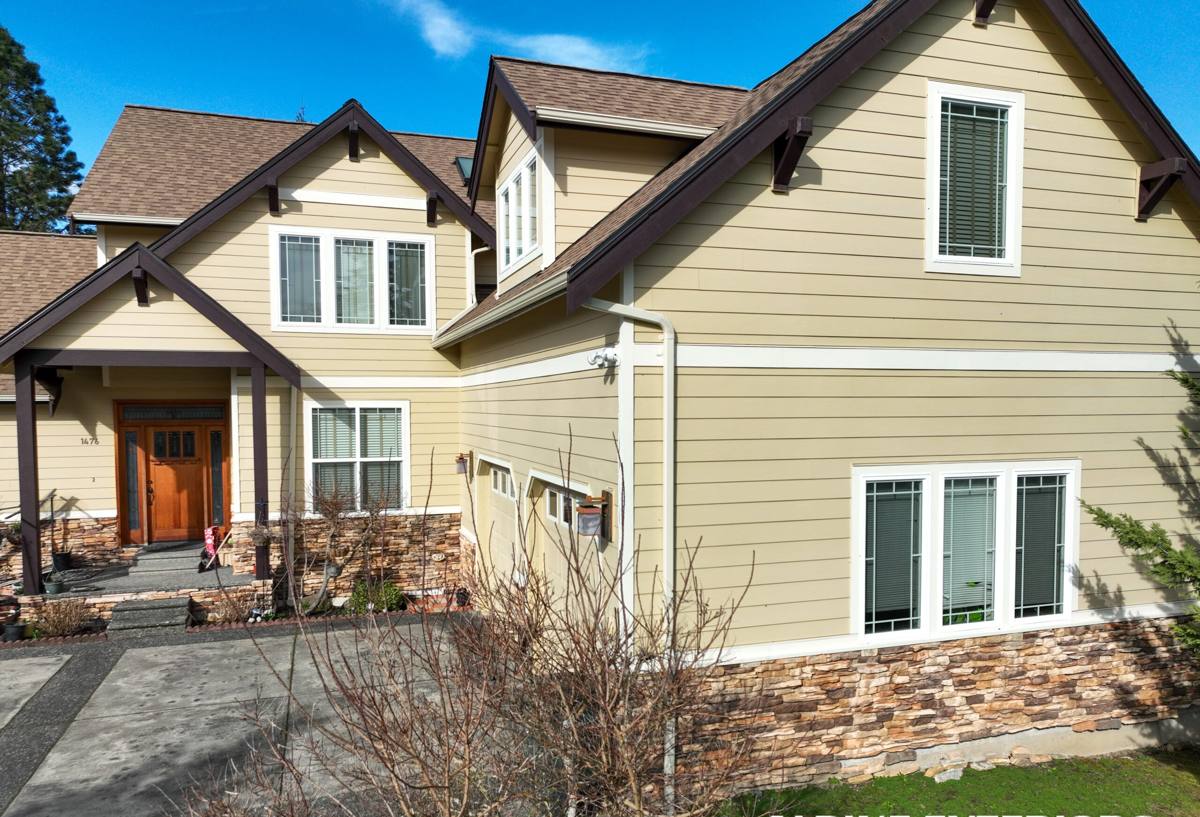
What Bellingham Bay Weather Does to a Roof Over Time
Salt Air and Corrosion
Homes close to Bellingham Bay sit in a steady drift of mildly corrosive, moisture-laden air, not just during storms but as a background condition most of the year. On a roof, that exposure works slowly on fasteners, flashing, and lower-grade finishes. It's rarely a dramatic failure. It shows up years later as rust bleed at a fastener head, a chalked and faded finish well ahead of schedule, or corrosion starting at a cut panel edge that was never properly sealed.
Wind-Driven Rain
Fairhaven's position near open water means rain doesn't just fall, it gets pushed. Wind-driven rain finds its way up under panel laps, around penetrations, and into fastener holes from angles a roof system built for a calmer, drier climate was never really tested against. A metal roof sheds water aggressively by design, which is part of why it performs well here, but that only holds true when underlayment, laps, and flashing are installed to handle wind-driven moisture rather than just gravity.
A Long Moss Season
Mild temperatures, consistent dampness, and the mature tree canopy common around Fairhaven add up to an extended moss and algae season, especially on shaded, north-facing roof planes. Metal doesn't feed moss growth the way an organic, textured surface can, but debris, needles, and standing moisture in a valley or behind a chimney can still support growth on any roof material if it's never cleared.
Hillside and Slope Considerations
A fair amount of Fairhaven's housing sits on sloped terrain rising from the waterfront, which affects roof pitch, drainage patterns, and how water moves across a roof and toward gutters during heavy rain. On these lots, panel layout and water management at valleys and eaves matter just as much as the roofing material itself.
Why Metal Roofing Fits This Climate
Metal roofing isn't automatically the right choice for every home, but for Fairhaven's combination of salt air, wind-driven rain, and long-term moss exposure, it holds up in ways a lot of other roofing materials struggle with over time.
What It Actually Delivers Here
- Aggressive water shedding: A properly lapped metal panel sheds wind-driven rain faster and more consistently than a granular shingle surface.
- Long service life: A correctly installed metal roof with a quality coating routinely outlasts an asphalt shingle roof by decades, which matters in a climate that's hard on roofing year-round.
- Non-combustible surface: Metal doesn't contribute fuel to a fire the way some other roofing materials can.
- Less surface for growth to grab onto: A smooth metal panel gives moss and algae far less to root into than a textured shingle, though it doesn't make a roof maintenance-free.
- Strong wind performance: Concealed-fastener panel systems in particular hold up well under the kind of sustained wind gusts that come off open water.
The honest trade-offs matter too. Metal roofing costs more upfront than asphalt shingles, and that gap doesn't fully close until well into the roof's service life. The old idea that a metal roof is noticeably loud in rain is mostly a myth once solid decking and proper underlayment are in place, but it's a fair question to ask about, and we'll walk through it honestly rather than wave it away. Metal also isn't the right call on every roof geometry or every budget, and we'd rather say that plainly than push a product that doesn't fit the house.
Choosing the Right Metal Roofing System
Panel Profile
Standing seam panels use raised, interlocking seams with concealed fasteners hidden underneath, so there are no exposed screw heads for wind-driven rain or salt air to work on over time. Exposed-fastener (ribbed or corrugated) panels cost less upfront but rely on gasketed screws driven through the panel face, and those fasteners are the first thing to loosen or corrode over a long service life this close to the water. Stone-coated steel panels are shaped and coated to resemble shingle or shake profiles and split the difference on cost and appearance, though they still use exposed fastening in most systems.
Metal Type and Gauge
Aluminum won't rust, which makes it a strong choice this close to Bellingham Bay, but it dents more easily under impact than steel. Steel, usually as Galvalume or galvanized coil, is stronger and more impact-resistant but depends entirely on its protective coating to resist corrosion, so coating quality isn't optional in a salt-air environment. Heavier gauge metal costs more but resists denting and oil-canning better, which is worth discussing for exposed or highly visible roof planes.
Coatings and Fasteners
A PVDF (often sold as Kynar 500) finish holds its color and chalk-resistance far longer under UV and salt exposure than a standard SMP or polyester paint system, and it's the finish we recommend for anything this close to the water. Fastener and flashing metal should match the panel material; mixing dissimilar metals, like steel screws on a copper panel or the wrong flashing against a different roof metal, sets up galvanic corrosion that can eat through a fastener or panel edge years before the roof should ever need attention.
| Panel Type | Fastening | How It Fits Fairhaven |
|---|---|---|
| Standing Seam | Concealed clips, no exposed fasteners | Best long-term match for salt air and wind-driven rain; highest upfront cost |
| Exposed-Fastener (Ribbed/Corrugated) | Gasketed screws through the panel face | Lower upfront cost; fasteners need periodic inspection and eventual replacement in this climate |
| Stone-Coated Steel | Typically exposed fastening under coated stone granules | Shingle-like appearance with metal's core durability; mid-range cost |
What a Correct Metal Roof Installation Involves
The panel and coating choice only matters if the installation underneath it is done right. This is where a metal roof either earns its long service life or falls short of it.
Deck Inspection and Prep
A metal roof installed over a deck with hidden rot or old moisture damage is starting from a compromised base no matter how good the panels are. We check the decking condition before anything goes down, and address soft spots or damaged sheathing rather than covering them up.
Underlayment and Ice-and-Water Membrane
A high-temperature synthetic or self-adhered underlayment goes down as a continuous water barrier beneath the panels, with self-adhered ice-and-water membrane at eaves, valleys, and other spots where wind-driven rain is most likely to find its way in. This layer is what actually keeps a roof dry if wind ever pushes water past the panel laps themselves.
Panel Fastening and Thermal Movement
Metal panels expand and contract with temperature swings more than shingles do, so standing seam systems use floating clips that let panels move without stressing the fasteners or panel seams. Getting clip spacing and fastening pattern right, to manufacturer specification rather than a shortcut method, is what keeps a metal roof performing correctly decades in rather than developing stress fractures or loosened seams early.
Flashing at Valleys, Chimneys, and Penetrations
Most roof leaks, on metal or any other material, start at flashing details rather than in the open field of the roof. Valleys where two roof planes meet, chimney and skylight penetrations, and wall-to-roof transitions all need flashing that's properly lapped, sealed, and integrated with the underlayment, not just caulked over as an afterthought.
Metal Roofing and Fairhaven's Moss Season
Metal roofing genuinely helps with Fairhaven's moss problem, but it doesn't eliminate it, and it's worth being straightforward about that. A smooth panel surface gives moss spores far less to take hold of than a granular shingle, so metal roofs generally stay cleaner longer with less staining. What metal doesn't fix on its own is debris buildup: needles, leaves, and standing moisture that collect in valleys, behind chimneys, or in a gutter that isn't draining freely will still support growth on any roof material given enough time and shade. Keeping gutters clear and giving shaded valleys an occasional check is still worth doing on a metal roof, even though the maintenance burden is meaningfully lower than it is with an organic-surfaced material.
Cost Factors for a Fairhaven Metal Roof
| Factor | What It Affects | Why It Matters Here |
|---|---|---|
| Panel profile choice | Material and labor cost | Standing seam costs more than exposed-fastener panels but removes the fastener corrosion point that salt air targets first |
| Roof complexity and roof planes | Labor time and flashing detail | Fairhaven's older housing stock and hillside lots often have more roof intersections where wind-driven rain can work its way in |
| Tear-off vs. layover | Labor scope and deck access | Tear-off exposes hidden deck damage that's common under decades-old roofing this close to the bay |
| Coating system | Long-term finish life | PVDF/Kynar 500 finishes outlast standard paint against salt air and UV exposure |
| Slope and site access | Labor time and equipment needs | Steeper hillside roofs common in Fairhaven can add staging and setup time |
Real numbers depend on the specific roof, which is why we walk the property in person before quoting instead of pricing off square footage alone.
Signs a Fairhaven Roof Needs Attention
- Rust streaking or corrosion spots on an existing metal roof, especially around fasteners or cut edges
- Moss or dark staining that keeps returning after cleaning, especially on shaded or north-facing slopes
- Loose, lifted, or missing fasteners on an exposed-fastener panel roof
- Water stains on interior ceilings near valleys, chimneys, or skylights
- Visible daylight or gaps at roof penetrations and flashing points
- A roof approaching or past its material's realistic service life for this climate
Why a Local Whatcom County Crew Matters
A crew that works Fairhaven regularly sees how salt air, wind-driven rain, and moss actually behave on real roofs over a full year, not just how a panel system performs on a spec sheet. That translates into practical decisions on install day: where extra flashing attention pays off, which roof planes stay damp longest, and which details are worth the extra time so a callback isn't waiting two winters down the road. Fairhaven's proximity to Bellingham Bay, its older housing stock, and its hillside terrain aren't identical to conditions elsewhere in Bellingham, and a crew with real experience in the neighborhood accounts for that instead of applying a one-size-fits-all approach.
If your Fairhaven home needs a new metal roof, a repair, or just an honest second opinion on what's actually going on up there, we're glad to take a look. Reach out using the form below to schedule a free, no-pressure estimate.