 Bellingham
 Board and batten siding has a long history along the Whatcom County coastline, and it's easy to see why homeowners in Blaine keep asking for it. The vertical lines suit the farmhouses, craftsman remodels, and waterfront-adjacent homes that make up so much of this area, and it gives a house a clean, tailored look that horizontal lap siding doesn't quite match. But board and batten is also one of the least forgiving siding styles when the wrong material or the wrong installer is behind it. In a town that sits this close to the water, that distinction matters more than it does almost anywhere else in the county.
Why Blaine Is a Tough Test for Board & Batten Siding
Blaine's location at the top of Whatcom County, right on Semiahmoo Bay and a short distance from the open water of the Strait of Georgia, means homes here deal with a combination of stresses that inland Bellingham properties see less of. Salt-laden air moves in off the water and settles on exterior surfaces year-round. Driving rain — the kind that comes in sideways during a fall or winter blow — tests every seam, joint, and fastener point on a wall. And like the rest of Whatcom County, Blaine gets a long, damp shoulder season each year where humidity sits high and surfaces don't fully dry out for days at a time.
Board and batten construction is more vulnerable to these conditions than standard lap siding for one simple reason: it has more vertical seams. Every batten strip creates a joint where water can find a way in if the material behind it isn't dimensionally stable or the installation isn't tight. On a coastal property, a siding style with more seams needs a product and a crew that can be trusted with every one of them.
What Salt Air Actually Does to Siding
Airborne salt is corrosive to exposed metal fasteners and abrasive to softer siding materials over time. It also holds moisture against a wall longer than dry inland air would, which keeps painted or coated surfaces damp and accelerates coating breakdown. Homes in Blaine that sit closer to the water see this show up first — chalking paint, rusting hardware, and soft spots in materials that weren't built to handle repeated wet-dry cycling with salt in the mix.
Moss, Shade, and the Long Wet Season
Whatcom County's moss season isn't a two-week nuisance — it's a months-long condition on any wall that doesn't get much direct sun or wind exposure. Board and batten walls with deep batten shadow lines can actually hold moisture and organic growth a little longer than a flat lap profile, especially on north-facing walls or under roof overhangs. That doesn't mean board and batten is a bad choice for Blaine — it means the material needs to resist moisture absorption on its own, because the profile itself isn't going to dry out as fast as homeowners might assume.
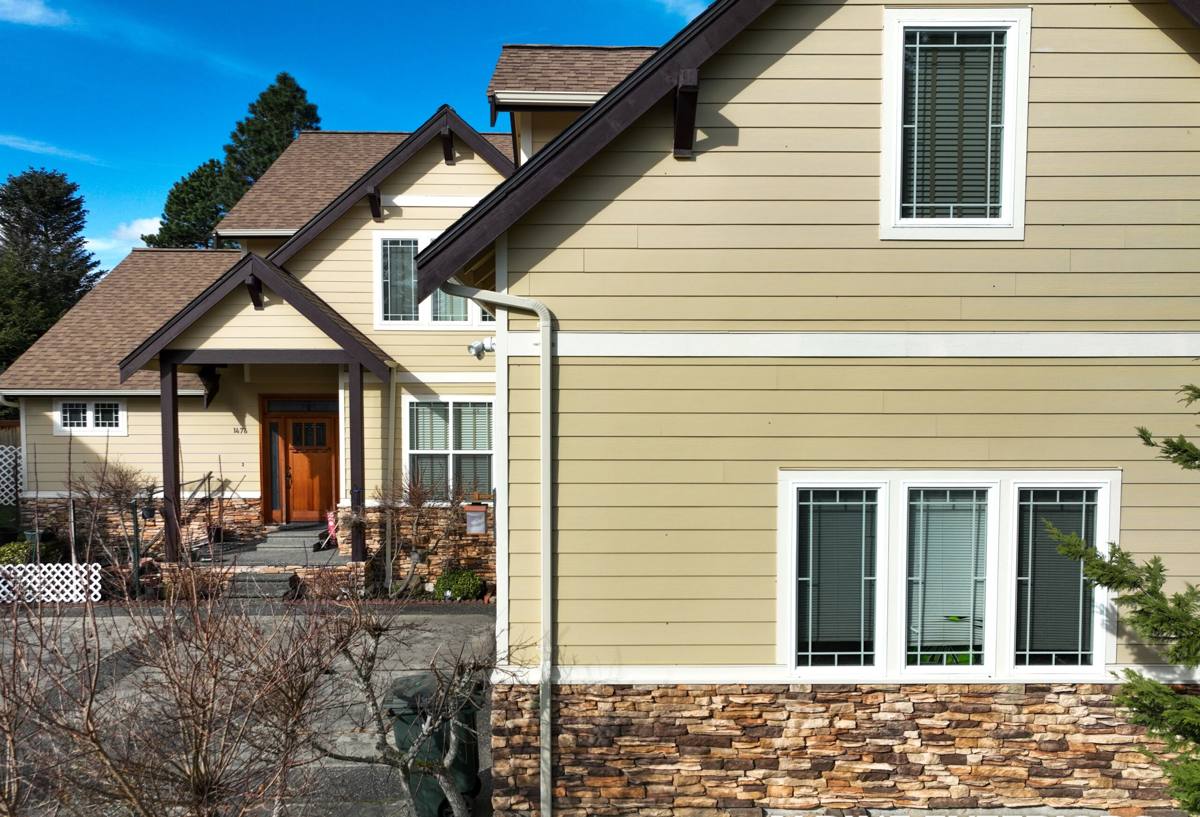
Why We Install Board & Batten Only in James Hardie Fiber Cement
We install James Hardie exclusively, and board and batten is one of the clearest examples of why. This profile depends on dimensional stability. Every batten strip needs to stay straight, stay tight to the panel behind it, and hold its line for decades — not just for the first few dry summers.
Fiber cement doesn't swell, cup, or warp with moisture the way wood-based products can. That matters enormously in a vertical-seam profile, because swelling or shrinking battens are what open up hairline gaps at the fasteners — and those gaps are exactly where wind-driven coastal rain finds its way behind the siding. James Hardie's HardiePanel and HardieTrim board and batten systems are engineered for this kind of climate, and the factory-applied ColorPlus finish holds its color and its seal far longer than field-applied paint does, which matters when a wall is going to spend half the year damp.
We won't install board and batten in primed wood, engineered wood (LP SmartSide), or vinyl for a coastal Blaine property. Each of those products has a place in the market, but each one also has a known weak point that a salt-air, high-moisture environment tends to find:
- Primed wood battens require ongoing repainting and are the most susceptible to swelling, splitting, and rot at end grain and fastener points.
- Engineered wood siding uses a resin-treated wood substrate that performs well in many climates but is more sensitive to sustained moisture exposure at cut edges and seams than fiber cement.
- Vinyl board and batten is affordable and low-maintenance, but it's a thinner, more flexible material that can warp in heat, crack in cold, and fade under UV exposure — and it simply isn't built to hold the crisp, deep shadow lines that make board and batten attractive in the first place.
James Hardie fiber cement is non-combustible, holds its shape in wet and dry cycles, and comes with a strong transferable warranty backed by a manufacturer that engineers specific product lines for different climate zones. For a Blaine home facing salt air and long wet seasons, that combination is the difference between siding that looks sharp for two years and siding that looks sharp for twenty.
What a Correct Board & Batten Installation Involves
Board and batten looks simple from the curb — vertical strips over a flat panel — but the installation details are what separate a siding job that lasts from one that fails early. This is not a profile where shortcuts are invisible; they show up as streaking, staining, or soft spots within a few wet seasons.
Water Management Comes First
Before any panel goes up, the wall needs a correctly installed weather-resistive barrier and a rainscreen or drainage plane appropriate for the wall assembly. On a coastal property, we don't treat this as optional. Board and batten's vertical seams need somewhere for incidental moisture to drain and dry, and that starts behind the siding, not at the surface.
Fastening and Batten Spacing
Battens need consistent spacing, correct fastener placement per manufacturer specification, and enough clearance to allow for the panel's normal expansion and contraction without stressing the joint. Over-nailing or fastening through the wrong zone of a Hardie panel is one of the most common causes of premature siding problems, and it's one of the easiest things for an inexperienced crew to get wrong.
Flashing at Every Transition
Windows, doors, roof lines, and horizontal trim are where board and batten siding fails if it's going to fail. Each of these transitions needs proper flashing and correct sequencing — flashing installed so water sheds down and out, never trapped behind a joint. On a home taking direct, wind-driven rain off the water, these details aren't decorative; they're the actual waterproofing system.
Cut Edge Sealing
Every field cut on a Hardie panel or batten needs to be sealed per manufacturer specification before installation. Unsealed cut edges are a common point of moisture entry, and it's a step that takes an extra few minutes per cut — which is exactly the kind of detail that gets skipped by a crew trying to move fast.
| Installation Factor | Why It Matters in Blaine |
|---|---|
| Rainscreen / drainage plane | Gives incidental moisture from wind-driven rain a path to drain and dry behind the siding |
| Correct batten fastening | Prevents the gaps at seams where salt-laden rain intrudes over time |
| Flashing at windows and trim | The actual point of failure on most siding jobs — critical on a wall facing coastal weather |
| Sealed cut edges | Blocks moisture absorption at field-cut panel and batten ends |
| Factory ColorPlus finish | Holds color and seal integrity through Whatcom County's long damp season without repainting |
Our Process for a Blaine Board & Batten Project
We start with an on-site assessment of the specific wall exposures on your home — which sides take the most wind-driven rain, which sides stay shaded and damp longer, and where the existing siding or sheathing shows signs of moisture history. That assessment shapes the water management plan before we ever talk about panel selection or color.
From there, we walk through James Hardie's board and batten options, panel thickness, batten reveal, and ColorPlus color choices, and put together a clear, written estimate. Once a project is scheduled, we handle removal of the old siding, correct installation of the weather barrier and drainage plane, and a full board and batten install to manufacturer specification — including all flashing, fastening, and cut-edge sealing described above. We stand behind the installation, and James Hardie's own warranty backs the material itself.
Why Hiring a Crew That Already Works in Blaine Matters
Siding crews that mostly work inland or in drier parts of the Pacific Northwest don't always build the same instincts around water management that a coastal Whatcom County property demands. A crew that regularly works Blaine and the surrounding Bellingham area knows which wall orientations take the worst of the weather off the water, understands how long moss season actually runs here, and doesn't treat rainscreen and flashing details as optional line items. That local pattern recognition is worth more than it sounds like — it's the difference between a siding job planned for a generic climate and one planned for the specific conditions your home actually faces.
A Quick Homeowner Checklist
- Ask whether the quote includes a rainscreen or drainage plane, not just the visible siding
- Confirm the product is genuine James Hardie fiber cement, not a look-alike engineered wood or vinyl batten system
- Ask how cut edges will be sealed and how battens will be fastened
- Ask how flashing will be handled at every window, door, and roofline transition
- Get the color and finish specified in writing — factory ColorPlus finish, not field-applied paint
If you're weighing board and batten siding for a home in Blaine, we're happy to walk your property, talk through what your specific wall exposures need, and put together a free, no-pressure estimate. There's no obligation — just a straight answer on what the job actually requires.