 Bellingham
 Blaine's Marine Climate Is Rough on Windows
Blaine sits right on the water at the top of Whatcom County, and that location cuts both ways. The same salt air and marine moisture that make the setting desirable also work against window frames, hardware, and trim year-round. Salt-laden air corrodes exposed fasteners and hinges faster than it does a few miles inland, driving rain off the Strait finds any gap in flashing or sealant, and the long stretch of grey, wet months each year keeps wood and trim surfaces damp longer than homeowners expect. None of this means windows fail quickly here — it means they fail differently, and usually at predictable points, if they aren't specified and installed with this climate in mind.
We work on homes across Whatcom County, but Blaine's exposure to open water and prevailing weather off the Strait of Georgia puts it toward the harder end of that range. A window that performs fine in a sheltered inland yard can underperform on a waterfront or wind-exposed Blaine lot, not because the window is bad, but because the install wasn't built for the exposure.
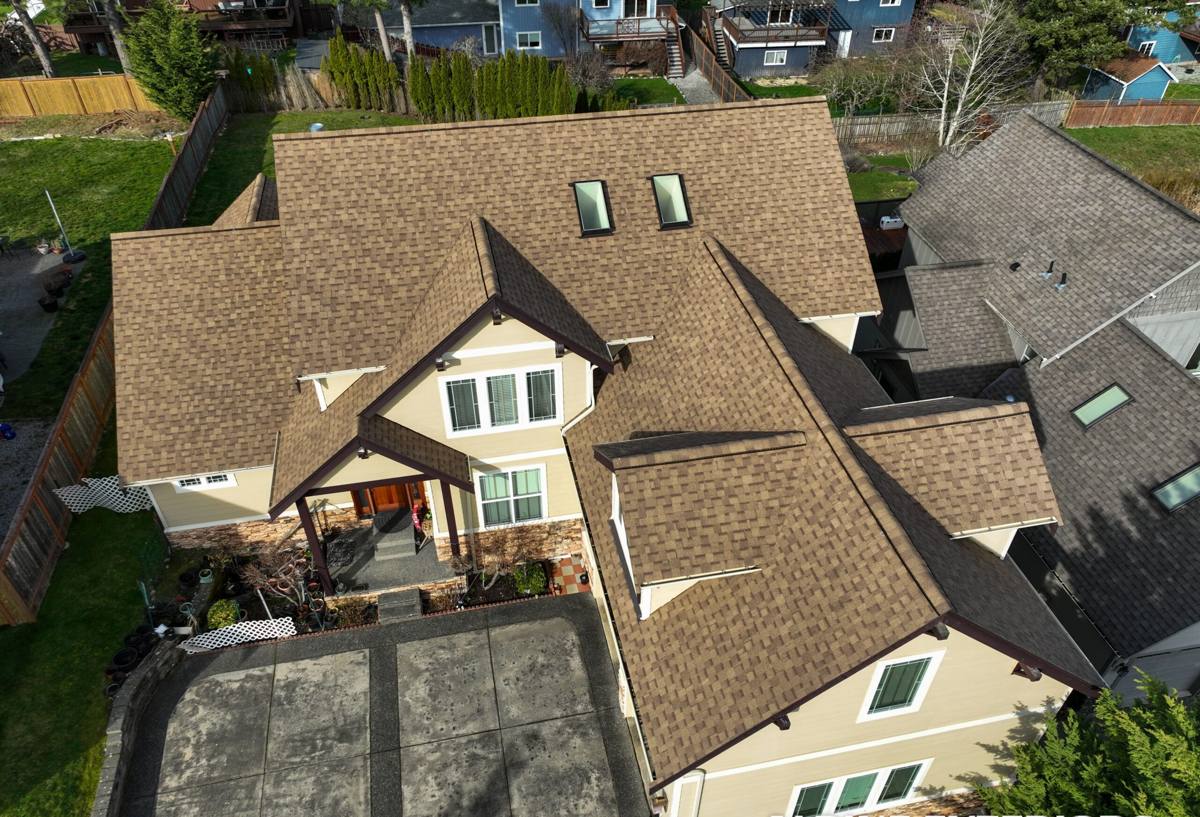
What a Blaine Home Actually Needs From Its Windows
Before talking style or brand, a correct window job for this area needs to answer three questions: how it sheds wind-driven rain, how it holds up against salt air, and how it survives a long moss and algae season without trapping moisture behind the trim. Get those three right and everything else — comfort, energy performance, appearance — falls into place.
Wind-driven rain resistance
Storms off the water don't just fall straight down — they push rain sideways into wall assemblies. Windows facing the water or open exposure need head flashing, sloped sills, and sealant details that assume rain will hit the window horizontally, not just from above.
Salt-air corrosion resistance
Exposed hardware, fasteners, and certain metal trims corrode faster in salt air. Material and hardware choice matters more here than it would on a home twenty miles inland.
Moss and moisture tolerance
Whatcom County's wet season runs long, and moss doesn't just grow on roofs — it colonizes window sills, trim, and anywhere organic debris collects moisture against wood or composite surfaces. A window detail that lets water pool or debris build up on a sill is inviting rot underneath, even if the window itself is fine.
Where Window Problems Actually Start
In our experience, it's rarely the window unit itself that fails first — it's the installation around it. The window is one piece of a wall assembly; if the flashing, sealant, and integration with the siding aren't done correctly, water gets behind the frame regardless of how good the window is.
- Flashing installed in the wrong order relative to the house wrap, so water runs behind it instead of over it
- Caulk used as the primary water barrier instead of proper flashing and drainage
- No back-dam or slope on the sill, letting water sit against the frame
- Trim and siding butted tight against the window casing with no drainage gap, trapping moisture and moss growth
- Fasteners or trim metal that aren't rated for coastal exposure, corroding and staining within a few seasons
Every one of these is an installation choice, not a product defect. It's why we treat the flashing and integration work as the real job, and the window unit itself as just the part you can see.
Material Options for This Exposure
There's no single "best" window material for Blaine — it depends on exposure, budget, and how much upkeep a homeowner wants to take on. Here's how the common options actually compare for a coastal Whatcom County home.
| Material | Salt-air / coastal behavior | Maintenance | Typical cost position |
|---|---|---|---|
| Vinyl | Won't corrode; good baseline performer | Low — occasional cleaning | Lower |
| Fiberglass | Very stable in temperature swings and salt exposure; holds paint well | Low | Mid to upper |
| Wood-clad (fiberglass or vinyl exterior, wood interior) | Good if cladding and flashing details are done right; exterior wood exposure is a liability here | Moderate — interior finish care, exterior largely maintenance-free if clad correctly | Upper |
| Aluminum-clad | Can be prone to corrosion staining in direct salt exposure unless hardware and finish are coastal-rated | Low to moderate | Mid to upper |
For homes with direct water exposure or heavy wind-driven rain, we generally steer homeowners toward vinyl or fiberglass exteriors with coastal-rated hardware. That's not a knock on other materials — it's about matching the material's known trade-offs to the site conditions, and being honest that some finishes need more attention than others in this environment.
Our Custom Window Installation Process
"Custom" means the window and the opening are built to match each other — not a stock size forced into an old rough opening, and not a rough opening hastily resized to fit whatever's on sale. Here's how we run a job:
- On-site assessment: we check the existing opening, sheathing condition, and any signs of past water intrusion before ordering anything.
- Sizing and material selection: windows are ordered to the actual opening, with material and glazing chosen for that wall's exposure.
- Removal and opening prep: old units come out carefully so we can inspect the sheathing and framing underneath — this is where hidden rot or past water damage shows up.
- Flashing and drainage detailing: house wrap, flashing tape, and sill pans go in with proper shingle-lap order so water is directed out, not in.
- Window set and fastening: unit is set level and plumb, fastened per manufacturer spec, with corrosion-resistant fasteners for this exposure.
- Sealant and trim integration: sealant is used as a backup to good flashing, not a substitute for it, and trim is set with a drainage gap rather than sealed tight against the siding.
- Final check: operation, seal, and water-shedding details are checked before we call the job done.
Windows and Siding Are One System, Not Two Jobs
Windows and siding meet at the same joint, and that joint is where most water problems start. If a window is replaced without coordinating the flashing with the siding above and beside it, or if new siding is installed around old flashing that was never rated for the job, the assembly is compromised even though both pieces individually look fine. This matters most when a Blaine home is doing both projects — new siding and window replacement — around the same time, since it's the one chance to get the whole wall assembly right at once rather than patching around an existing detail later.
Even on window-only jobs, we check the adjacent siding and trim condition, because a window installed correctly against deteriorated or poorly flashed siding will still leak.
Living With a Long Moss Season
Whatcom County's wet months bring moss and algae growth on nearly every north-facing or shaded surface, and window sills and trim are no exception. A few habits keep this from becoming a moisture problem:
- Keep sills and trim clear of leaf and debris buildup, especially heading into fall and winter
- Rinse visible moss or algae off trim and sills rather than letting it mat down and hold moisture
- Watch for soft spots or dark staining at the bottom corners of window trim — that's usually the first sign water is getting behind the casing
- Keep gutters and downspouts clear so runoff isn't sheeting directly across upper windows
None of this replaces a correct installation, but it extends the life of any window assembly, and it's the kind of thing worth a quick check once or twice a year on a coastal property.
Why a Crew That Already Works Blaine Matters
A window crew that mainly works inland doesn't always plan for this level of wind and moisture exposure by default — not because they're careless, but because it's simply not what they see most weeks. Crews who work Blaine and the surrounding waterfront and near-waterfront properties regularly build in the flashing detail, hardware choice, and drainage planning as standard practice, because they've seen what happens when it's skipped. That local pattern recognition — knowing which walls take the worst of the weather, which trim details hold up and which don't over a few seasons — is hard to get from a spec sheet alone.
If you're weighing quotes for a Blaine window project, it's fair to ask any contractor directly how they handle flashing integration with existing siding, what fastener and hardware spec they use for coastal exposure, and whether they've worked in your specific part of town before.
If you're planning a window replacement or a custom window project on a Blaine home, we're happy to take a look and give you a straight assessment of what your walls actually need — no pressure, no upsell, just an honest estimate based on your home's exposure and condition.