 Bellingham
 Blaine's Waterfront Weather and What It Does to a Roof
Blaine sits right on the water at the northern edge of Whatcom County, where wind off the Strait of Georgia and the surrounding bay meets rain systems rolling in off the Pacific. That combination is harder on a roof than most homeowners realize. It's not usually one dramatic event that causes the damage we get called out for - it's the steady wear of salt-laden air, wind gusts that catch roof edges and flashing, and driving rain that gets pushed sideways under normal weather protection instead of falling straight down.
Add in the long, wet moss season that defines this part of Washington, and you've got a roof environment that ages faster than the same roof would inland. Salt air accelerates corrosion on fasteners, flashing, and any exposed metal. Wind-driven rain finds the smallest gap in flashing or underlayment and works it wider over time. Moss holds moisture against shingles and roofing felt long after a storm has passed, which softens materials and shortens their working life. None of this means a roof in Blaine is destined to fail - it means storm damage repair here has to account for conditions a roofer working fifty miles inland doesn't deal with.
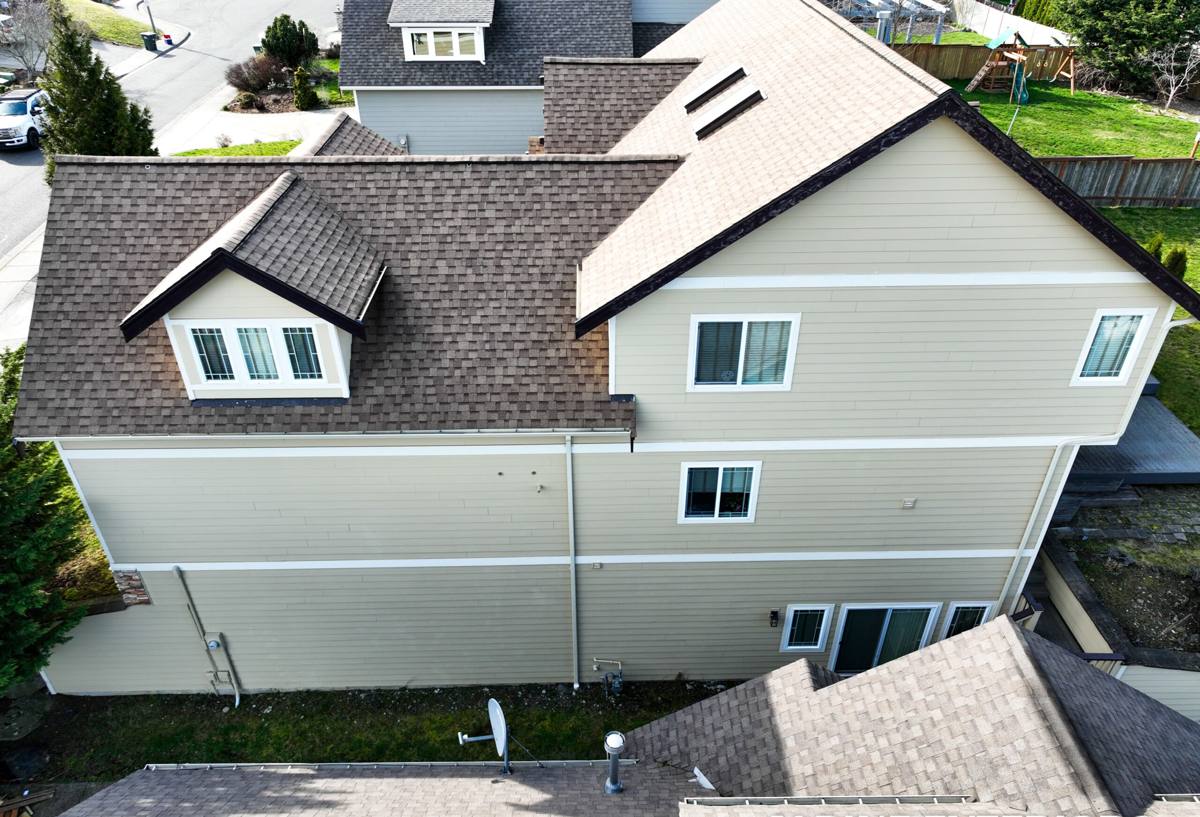
Signs Your Blaine Home May Have Storm Damage
What You Can Check From the Ground
You don't need to get on a ladder after a windstorm to get a first read on whether your roof took damage. A pair of binoculars and a walk around the house tells you a lot.
- Shingles that look lifted, curled, or missing entirely, especially along ridges and edges where wind pressure is highest
- Granules collecting in gutters or at the base of downspouts - a sign shingles are losing their protective surface
- Visible gaps or bent sections in flashing around chimneys, vents, and skylights
- Sagging or uneven rooflines, which can point to deeper structural moisture damage
- Dark streaking or thick moss growth, particularly on north-facing slopes that stay shaded and damp
- Debris - branches, needles, or larger limbs - resting on the roof after a windstorm
What Shows Up Inside
Storm damage doesn't always announce itself outside first. Water stains on ceilings or upper walls, a musty smell in the attic, daylight visible through the roof deck, or damp insulation are all signs that wind-driven rain has already worked its way past the roofing surface. By the time you see staining indoors, water has usually been getting in for a while, which is why we recommend an inspection any time a storm is strong enough to notice.
What a Correct Storm Damage Repair Actually Involves
A Full Inspection, Not Just a Patch on the Obvious Spot
Wind and rain damage is rarely confined to the spot where you see the leak. A gust strong enough to lift one shingle has usually stressed the ones around it, and water that shows up on a ceiling can have entered several feet away and traveled along the deck before dripping through. A repair that only addresses the visible symptom tends to leave the underlying weak points in place, which means the next storm reopens the same problem.
Matching Materials, Not Just Covering the Hole
A repair should blend into the surrounding roof, not just stop the leak. That means using shingles or metal that match the existing roof in type, weight, and where possible, color and age-matching within reason. It also means respecting the manufacturer's installation specs for that material - nail placement, exposure, and overlap all affect how well a repaired section holds up to the next windstorm.
Flashing, Underlayment, and the Details That Actually Leak
Most storm-related leaks trace back to flashing and underlayment, not the shingles themselves. Flashing around chimneys, vent pipes, skylights, and roof-to-wall transitions is what keeps water out of the vulnerable seams in a roof, and it's also what corrodes fastest in salt air. A correct repair checks and, where needed, replaces flashing and the underlayment beneath it - not just the shingles sitting on top.
Common Types of Storm Damage We Repair in Blaine
| Damage Type | What Causes It Locally | Typical Repair Approach |
|---|---|---|
| Wind-lifted or torn shingles | Gusts off the water catching roof edges and ridges | Remove and replace affected shingles, re-seal or reinforce surrounding tabs |
| Wind-driven rain intrusion | Rain pushed sideways under flashing or shingle laps | Repair or replace flashing and underlayment at the entry point |
| Moss and organic buildup | Long, damp season and shaded, north-facing slopes | Careful removal, treatment, and repair of any softened decking beneath |
| Corroded flashing and fasteners | Salt air off the bay accelerating metal fatigue | Replace with corrosion-resistant flashing and fasteners rated for coastal exposure |
| Debris impact damage | Fallen branches and limbs during windstorms | Repair or replace punctured or cracked roofing at the impact site, check decking |
Our Storm Damage Repair Process
- Inspection and documentation. We assess the full roof, not just the reported problem area, and photograph what we find for your records and any insurance claim.
- Written scope and estimate. You get a clear explanation of what's damaged, what needs to be repaired versus what can wait, and what it will cost.
- Temporary protection if needed. If a leak is active or more weather is on the way, we can get the roof protected before doing the permanent repair.
- The repair itself. Matched materials, correct flashing and underlayment work, and attention to the fastening and sealing details that hold up to coastal wind.
- Cleanup and walkthrough. We clear debris and old materials from the property and walk the completed work with you before we consider the job done.
Insurance Claims After a Storm
Documentation Matters More Than People Expect
If your storm damage is significant enough to involve your homeowner's insurance, thorough documentation from the start makes the claims process smoother. That's part of why our inspection includes photos and a written description of the damage and its likely cause - it gives you something concrete to bring to your insurer rather than a verbal description after the fact.
We Work Alongside Your Adjuster
We're glad to meet an adjuster at the property, answer questions about the damage and the scope of repair, and provide documentation they request. We don't control what a claim covers - that's between you and your insurer - but we can make sure the roofing side of the conversation is accurate and complete.
Why a Crew That Already Works Blaine Makes a Difference
Storm damage repair is one of those jobs where local familiarity actually changes the outcome. A crew that regularly works roofs along Blaine's coastline already knows which flashing and fastener grades hold up to the salt air here, which slopes tend to hold moss longest, and how the wind typically moves across a roof during a storm coming off the water. That's the difference between a repair built for average conditions and one built for what this specific stretch of Whatcom County actually throws at a roof year after year.
There's also a practical side to being local: when a windstorm moves through the area, a crew already working nearby can usually respond faster than one dispatching from farther away, which matters when an active leak is doing damage every hour it's exposed. Permitting and code requirements for roofing work are also handled at the county and city level, and familiarity with that process keeps a repair from stalling on paperwork.
Keeping Your Roof Ahead of the Next Storm
Storm damage repair fixes what's already broken, but a little maintenance goes a long way toward reducing how much damage the next windstorm causes. Keeping gutters and downspouts clear lets water shed properly instead of backing up under roofing edges. Periodic moss treatment on shaded slopes prevents the kind of moisture buildup that softens shingles and decking over a wet winter. And a roof inspection after any storm strong enough to notice - even if you don't see obvious damage - catches small problems like lifted shingles or stressed flashing before they turn into a leak.
Coastal exposure means a roof in Blaine is doing more work than the same roof set back from the water, and treating it that way with regular attention is usually cheaper than waiting for a storm to force the issue.
Cost Factors in Storm Damage Roof Repair
Every storm damage repair is different, but the same handful of factors drive most of the cost variation we see on Blaine jobs.
| Factor | Why It Affects Cost |
|---|---|
| Extent of damage | A handful of replaced shingles is a much smaller job than reworking flashing and underlayment across a full slope |
| Roofing material | Asphalt shingle repairs are generally more straightforward than metal or specialty roofing repairs |
| Roof accessibility and pitch | Steep or hard-to-access roofs take more time and equipment to work safely |
| Underlying deck condition | If moisture has softened the roof deck itself, that repair is separate from and larger than a surface-level fix |
| Insurance coverage | Whether a claim is covering part of the cost affects what portion falls to the homeowner directly |
Minor repairs typically run a few hundred dollars; larger repairs involving flashing, underlayment, or deck work can run into the thousands. The only way to know which category your roof falls into is an actual inspection - we're not going to guess a number over the phone.
If a recent storm has you wondering whether your roof took damage, we're happy to take a look and give you a straight answer - no pressure, no obligation. Use the form below to request a free estimate and we'll get back to you to schedule a time.