 Bellingham
 Fairhaven's Roofs Work Harder Than Most
Fairhaven sits close to Bellingham Bay, and that proximity to salt water changes what a roof has to deal with compared to a home a few miles inland. Salt-laden air accelerates the breakdown of exposed metal flashing, fasteners, and vent components. Add in the driving rain that comes off Georgia Strait during winter storms and the shade from mature evergreens that keeps north-facing slopes damp for weeks at a time, and you have a roofing environment that punishes shortcuts. A shingle roof that would hold up fine in a drier part of Whatcom County can fail early here if it wasn't built for these specific conditions.
None of this means asphalt shingles are the wrong choice for Fairhaven. They remain one of the most practical, cost-effective roofing systems available, and a properly installed asphalt shingle roof can perform well here for decades. The difference between a roof that lasts and one that doesn't usually comes down to details most homeowners never see: underlayment choice, ventilation balance, flashing quality, and moss management. This page covers what actually matters for a shingle roof on a Fairhaven home.
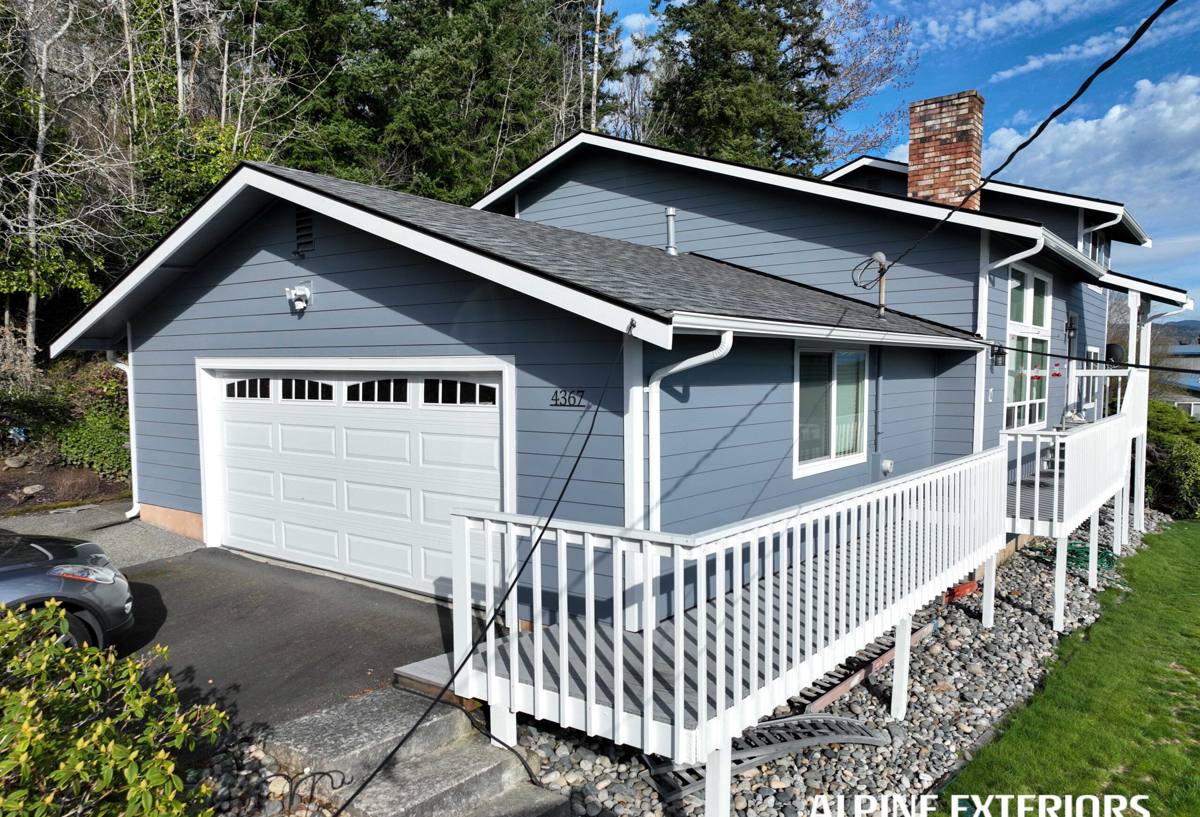
What "Correct" Looks Like Under Fairhaven Conditions
Underlayment and Water Barrier
Standard felt underlayment is not enough for a roof that sees this much wind-driven rain. We install synthetic underlayment across the full roof deck for its tear resistance and water resistance, and we add self-adhered ice-and-water membrane at the eaves, valleys, and any roof-to-wall transitions — the spots where wind can force rain sideways and uphill under the shingle courses. This is standard practice on coastal and near-coastal roofs in Western Washington, and it's not optional if the goal is a roof that stays dry through a real winter storm off the water.
Ventilation That Actually Balances
A shingle roof needs balanced intake and exhaust ventilation to let moisture escape the attic and to keep the underside of the deck from staying damp. In a humid, marine climate like Bellingham's, poor ventilation shows up as premature shingle curling, sheathing rot, and mold on the attic side of the roof — problems that have nothing to do with the shingles themselves and everything to do with airflow. We check soffit intake, ridge or box vent exhaust, and insulation baffles as part of any re-roof, not as an afterthought.
Flashing That Won't Corrode Out from Under You
Salt air is hard on unprotected metal. We use flashing materials and fasteners rated for coastal exposure at chimneys, skylights, dormers, and sidewall transitions, and we step-flash every wall intersection rather than relying on caulk or roof cement as a substitute for proper metalwork. Caulk fails; correctly lapped flashing doesn't need to be maintained every year to keep working.
Moss, Algae, and Bellingham's Long Wet Season
Whatcom County's moss season runs long — shaded, north-facing roofs and anything under tree cover can stay damp from October well into spring. Moss isn't just cosmetic. As it grows, it lifts shingle edges, holds moisture against the mat, and accelerates granule loss, which shortens the life of the roof underneath it. Fairhaven's tree canopy and marine humidity make this a bigger factor here than on more open, sun-exposed lots elsewhere in the county.
A few things make a real difference over the life of the roof:
- Zinc or copper control strips installed near the ridge, which release trace metal ions with every rain and inhibit moss and algae growth on the courses below
- Algae-resistant (AR) shingles, which have copper-infused granules built into the shingle itself for longer-term protection against the black algae streaking common in the Pacific Northwest
- Keeping overhanging limbs trimmed back so roof sections get more light and dry out faster between rain events
- Gentle, low-pressure moss removal on a normal maintenance schedule rather than pressure-washing, which strips granules and shortens shingle life
None of these steps make a roof moss-proof forever, but together they meaningfully extend the interval between cleanings and reduce the chance of moss-related shingle damage.
Choosing a Shingle for a Salt-Air, High-Wind Lot
Not every asphalt shingle product is built the same way, and the differences matter more on an exposed or coastal-adjacent lot than they do somewhere sheltered. Wind rating, algae resistance, and mat thickness are the three specs worth paying attention to for a Fairhaven home.
| Shingle Tier | Typical Wind Rating | Algae Resistance | Best Fit |
|---|---|---|---|
| 3-Tab / Economy | 60–70 mph | Limited or none | Budget re-roofs on sheltered, low-exposure slopes |
| Architectural / Laminate | 110–130 mph | Usually included (AR-rated) | Most Fairhaven homes; good balance of cost, durability, and appearance |
| Premium Laminate | 130+ mph | Enhanced AR granules | Fully exposed lots, waterfront-adjacent homes, longer warranty goals |
For most Fairhaven properties, a mid-tier architectural shingle with algae-resistant granules is the sensible choice — it costs more than 3-tab up front but holds up noticeably better against wind uplift and moss/algae staining, which matters more here than in a drier inland neighborhood. We'll walk your specific roof's exposure, pitch, and tree cover with you before recommending a tier, rather than defaulting to one product for every job.
Our Process for a Fairhaven Re-Roof or New Install
- On-site inspection. We walk the roof and attic, check deck condition, ventilation, flashing points, and any moss or moisture damage before quoting anything.
- Written estimate. You get a clear scope — tear-off or overlay, underlayment spec, flashing plan, shingle tier, and ventilation work — with no vague allowances.
- Tear-off and deck check. Old roofing comes off down to the deck so we can inspect sheathing for rot or soft spots before anything new goes down; hidden damage gets flagged and priced before we cover it up, not after.
- Water barrier and underlayment. Ice-and-water membrane at vulnerable points, synthetic underlayment across the field.
- Flashing and ventilation. New step flashing, valley metal, and vent components sized and balanced for the specific attic.
- Shingle install. Proper nailing pattern and exposure per manufacturer spec — this is what protects the wind warranty.
- Final walkthrough. We review the finished roof with you, including any maintenance recommendations specific to your lot's shade and moss exposure.
Cost Factors for a Fairhaven Roof
Every roof is different, but the variables that move the price most on Fairhaven homes specifically are worth knowing before you start collecting quotes.
| Factor | Why It Matters Here |
|---|---|
| Roof pitch and access | Steeper roofs and homes with limited street or yard access take longer and require more safety equipment |
| Deck condition | Older Fairhaven homes sometimes have sheathing that needs partial replacement once old roofing is removed |
| Layers to remove | Homes with an existing overlay (shingles over shingles) cost more to strip than a single-layer tear-off |
| Shingle tier | Algae-resistant, higher-wind-rated products cost more per square but hold up better against moss and coastal wind |
| Flashing scope | Homes with chimneys, skylights, or multiple wall intersections need more custom metalwork |
| Ventilation upgrades | Older homes often need added intake or exhaust venting to meet current balanced-airflow standards |
Broadly, a straightforward architectural shingle re-roof on an average-size Fairhaven home tends to run in the mid five figures, with steep pitches, extensive flashing work, or deck repairs pushing that higher. We give exact numbers only after seeing the roof — anyone quoting a firm price over the phone without an inspection is guessing.
Signs Your Fairhaven Roof Needs Attention Now
- Granules collecting in gutters or at downspout outlets
- Moss visible on north-facing or shaded slopes
- Curling, cupping, or cracked shingles, especially on south- and west-facing exposures
- Dark streaking that doesn't wash off with light cleaning
- Daylight visible through the roof deck from inside the attic
- Water stains on ceilings or in the attic after a heavy wind-driven rain
- Soft or spongy spots when walking the roof deck
- Missing or lifted shingles after a windstorm
Catching these early usually means a repair. Waiting until there's active interior water damage usually means a full re-roof, and often deck replacement on top of it.
Why a Crew That Already Works in Fairhaven Matters
A roofer who works Whatcom County's coastal neighborhoods regularly already knows how to spec underlayment for wind-driven rain off the bay, where moss tends to concentrate under Fairhaven's tree cover, and which flashing details actually hold up against salt air rather than looking good on install day and failing in three years. That local pattern recognition shows up in fewer callbacks and a roof that's built for the specific weather it has to survive, not a generic textbook install.
If you're weighing a repair against a full re-roof, or just want an honest read on how much life is left in your current shingles, we're happy to take a look. Request a free, no-pressure estimate using the form below and we'll walk you through exactly what your Fairhaven roof needs.