 Bellingham
 Board & Batten Siding, Built for How Barkley Actually Weathers
Barkley sits close enough to the water and open enough to the wind that its homes take a steady beating most siding was never engineered for. Salt-laden air drifts in off Bellingham Bay, driving rain comes sideways more often than straight down, and the long gray stretch from October through April keeps north-facing walls damp enough to grow moss almost year-round. Board and batten siding is a popular choice on the newer craftsman and modern farmhouse-style homes throughout Barkley, but the look only holds up if the material underneath the vertical panels and battens is chosen and installed for this exact climate.
We install board and batten in one material: James Hardie fiber cement. This page walks through what Barkley's weather actually does to siding, what a correct board and batten installation looks like, and why the details matter more here than they would in a drier part of the state.
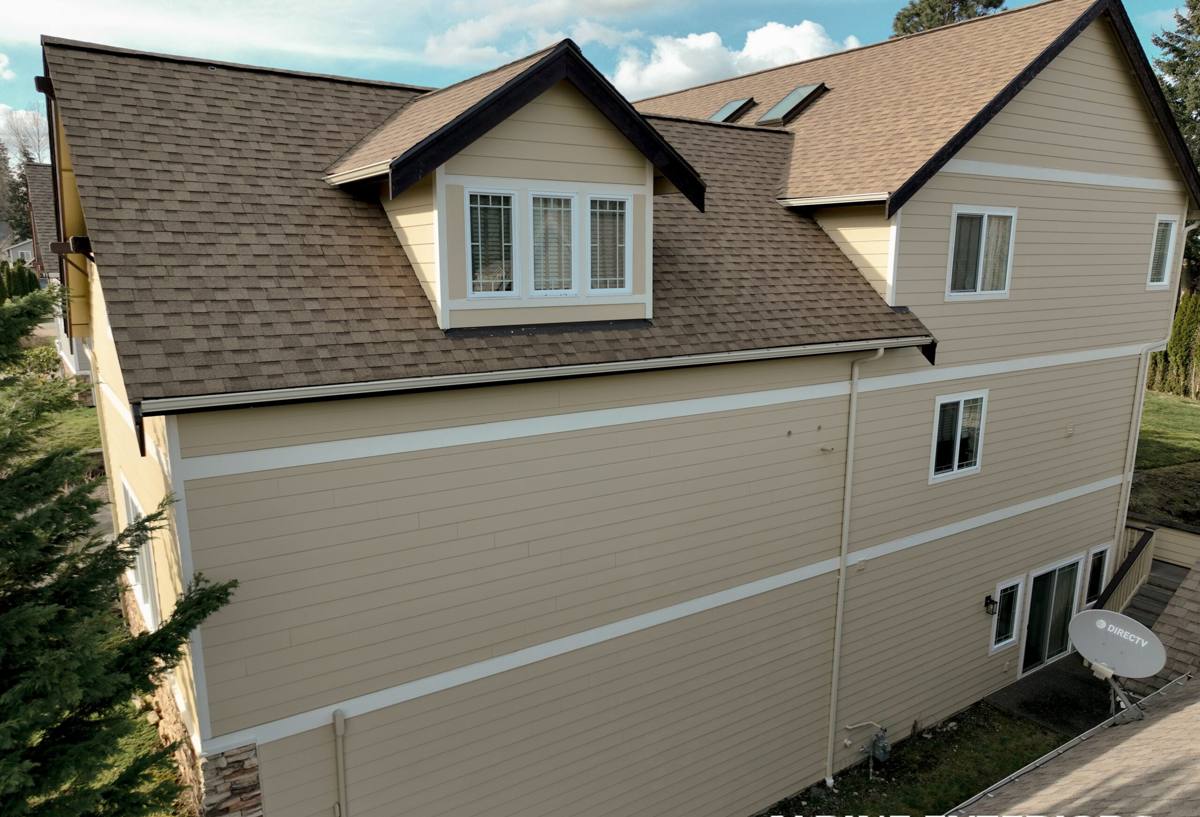
Why Barkley's Climate Is Harder on Board & Batten Than It Looks
Board and batten is a vertical siding pattern — wide flat panels with narrow strips (battens) covering the seams. That pattern creates more vertical joints and more batten-to-panel seams than lap siding, and every one of those seams is a place water can find its way behind the cladding if it's not detailed correctly. In Barkley's climate, three conditions compound the risk:
- Salt air: proximity to the bay means airborne salt settles on exterior surfaces, which accelerates corrosion on fasteners, flashing, and any metal trim that isn't rated for coastal exposure.
- Driving rain: wind off the water pushes rain horizontally into walls rather than letting it run straight down, which puts real pressure on vertical seams and batten joints that a calm-climate installation might never test.
- Extended moss season: Whatcom County's damp, mild winters keep shaded and north-facing siding wet for days at a time, which is exactly the environment moss, algae, and mildew need to take hold — especially on porous or absorbent siding materials.
None of this means board and batten is a bad choice for Barkley. It means the material, the fasteners, and the flashing details all have to be selected for this environment rather than a catalog default.
What Happens When It's Done Wrong
The failures we see on board and batten in this area almost never show up in year one. They show up in years three through eight, after repeated wet-dry cycles have worked on a weak point: a batten fastened with the wrong nail, a panel seam that wasn't flashed, or a material that absorbs moisture at the cut edge and slowly swells, cups, or delaminates. By the time it's visible from the street, the damage is usually already behind the siding.
What a Correct Board & Batten Job Actually Involves
Board and batten looks simple from the curb — vertical lines and clean shadow gaps — but the installation has more failure points than most homeowners realize. A correct job addresses each of these:
Water Management Behind the Siding
Every board and batten wall needs a drainage plane — typically a weather-resistant barrier with a rainscreen gap — so that any moisture that does get past the outer surface has somewhere to drain and dry out instead of sitting against the sheathing. This matters more in Barkley than in a drier inland climate, because the wall assembly here spends more days per year at or near saturation.
Fastener and Flashing Material
Salt air corrodes ordinary fasteners and flashing over time, which is why we use corrosion-resistant, coastal-rated fasteners and flashing on every board and batten install in this area, regardless of how far a given home sits from the water. It costs more up front and it's the difference between trim that lasts and trim that stains and rusts at the seams within a few years.
Panel and Batten Spacing
Fiber cement expands and contracts slightly with temperature and moisture. Battens and panel seams need the manufacturer-specified gaps and fastening pattern so the material can move without cracking the caulk joints or telegraphing stress cracks through the paint finish.
Bottom Edge and Grade Clearance
Board and batten's vertical panels run closer to grade on many home designs than horizontal lap siding does. Keeping the correct clearance from soil, decks, and hardscape — and flashing the bottom termination properly — keeps the lowest, most vulnerable courses from wicking moisture during Bellingham's wettest months.
Why We Only Install James Hardie for This Application
Board and batten in particular is a pattern where material choice matters more than it does with standard lap siding, because of the added vertical seams and the exposure at the battens. That's a big part of why we standardized on James Hardie fiber cement rather than offering vinyl, LP SmartSide, or cedar as alternatives.
| Material | Behavior in Barkley's Climate | Why We Don't Install It Here |
|---|---|---|
| Vinyl board and batten | Doesn't absorb water, but panels expand/contract more with temperature swings and can warp or bow over time | Seams and battens rely on overlap and clips rather than a sealed, engineered joint — harder to keep tight against driving rain long-term |
| LP SmartSide (engineered wood) | Wood-based substrate is vulnerable to moisture intrusion at cut edges and seams if any detail fails | In a climate with this much sustained dampness, a wood-based product raises the stakes on every single seam and fastener |
| Cedar board and batten | Naturally handles moisture reasonably well but needs ongoing sealing, staining, and inspection | Requires a maintenance commitment most homeowners underestimate; moss and mildew take hold quickly on shaded elevations |
| James Hardie fiber cement | Non-combustible, dimensionally stable, engineered moisture resistance, factory-cured ColorPlus finish | This is what we install — built for exactly this kind of climate |
James Hardie's HZ5 product line is engineered specifically for wetter, harsher climates like the Pacific Northwest, which is the version we spec for Barkley homes. It's non-combustible, doesn't swell or rot the way wood-based products can, and holds its factory ColorPlus finish through years of the freeze-thaw and wet-dry cycling that's normal for Whatcom County. For board and batten specifically, we use HardiePanel vertical siding paired with HardieTrim battens, which are manufactured to the same dimensional standard so the reveal lines stay straight and consistent across the whole elevation.
Our Process for Barkley Board & Batten Projects
- On-site assessment: we look at your home's exposure — which walls take the worst of the wind-driven rain, where moss has already established, and where the existing siding or sheathing shows signs of past moisture problems.
- Wall assembly check: we confirm what's underneath the current siding and whether the sheathing, house wrap, or framing needs any repair before new siding goes on. Covering up a problem is how small issues become expensive ones.
- Material and color plan: we spec HZ5 HardiePanel and HardieTrim battens and walk you through ColorPlus finish options that hold up to salt air and UV without the fading that field-painted siding often shows first.
- Installation: proper rainscreen gap, coastal-rated fasteners and flashing, manufacturer-specified batten spacing, and correct grade clearance at the base.
- Final walkthrough: we go over the finished work with you, including basic care notes for keeping moss and mildew from taking hold on shaded sides of the house.
What Board & Batten Costs Depend On
We don't quote pricing without seeing the home, but the main cost drivers on a Barkley board and batten project are usually the same handful of factors:
| Factor | Why It Affects Cost |
|---|---|
| Existing wall condition | Sheathing repair or moisture damage found during tear-off adds labor and material |
| Home height and complexity | Multi-story walls, dormers, and cut-ins increase both labor time and batten/trim material |
| Trim and batten density | Board and batten uses more linear trim than lap siding, since every seam gets a batten |
| Color and finish selection | Factory ColorPlus finishes vary slightly in cost by color and sheen |
| Site access | Tight lots, landscaping, or limited staging area can add setup and protection time |
What to Check Before Hiring Anyone for Board & Batten Work
- Ask specifically which fiber cement product line they spec for coastal Whatcom County exposure — HZ5 versus a standard climate zone product is not a minor detail here.
- Confirm they're using corrosion-resistant fasteners and flashing rated for salt air, not standard-grade hardware.
- Ask how they handle the rainscreen/drainage plane behind the siding — this is where most long-term failures start.
- Get clarity on batten spacing and fastening pattern, since this affects both appearance and long-term crack resistance.
- Ask whether they're a James Hardie-focused installer with local experience, or a general contractor who occasionally installs a few different siding brands.
Why a Crew That Already Works Barkley Matters
Board and batten installed correctly in Spokane's dry climate and board and batten installed correctly in Barkley are not the same job, even though the materials and the pattern look identical. A crew that already works this neighborhood knows which elevations take the worst wind-driven rain, how fast moss establishes on the shaded sides of these homes, and what the local building department expects for flashing and clearance details. That local pattern recognition is what keeps a board and batten install looking sharp in year ten instead of just year one.
If you're considering board and batten siding for a home in Barkley, we're happy to take a look and talk through what your specific exposure and wall condition call for — no pressure, no obligation. Fill out the form below to schedule a free estimate.