 Bellingham
 Building Decks for Columbia's Coastal Climate
Columbia sits close enough to Bellingham Bay that homes here deal with a specific combination of weather stress: salt-laden air off the water, long stretches of driving rain, and a moss season that can run from fall through spring. A deck built without that combination in mind will show problems early — soft spots at the ledger, corroding fasteners, slick moss buildup on walking surfaces, and railings that loosen years before they should. A deck built with it in mind will still need maintenance, but it will age evenly and predictably instead of failing in the spots nobody thought to protect.
We build and repair decks throughout Whatcom County, and Columbia's mix of older homes and newer infill means we see a wide range of existing conditions — from decks that were never properly flashed to sound structures that just need updated materials. This page covers what actually matters for a deck in this specific area, not generic decking advice.
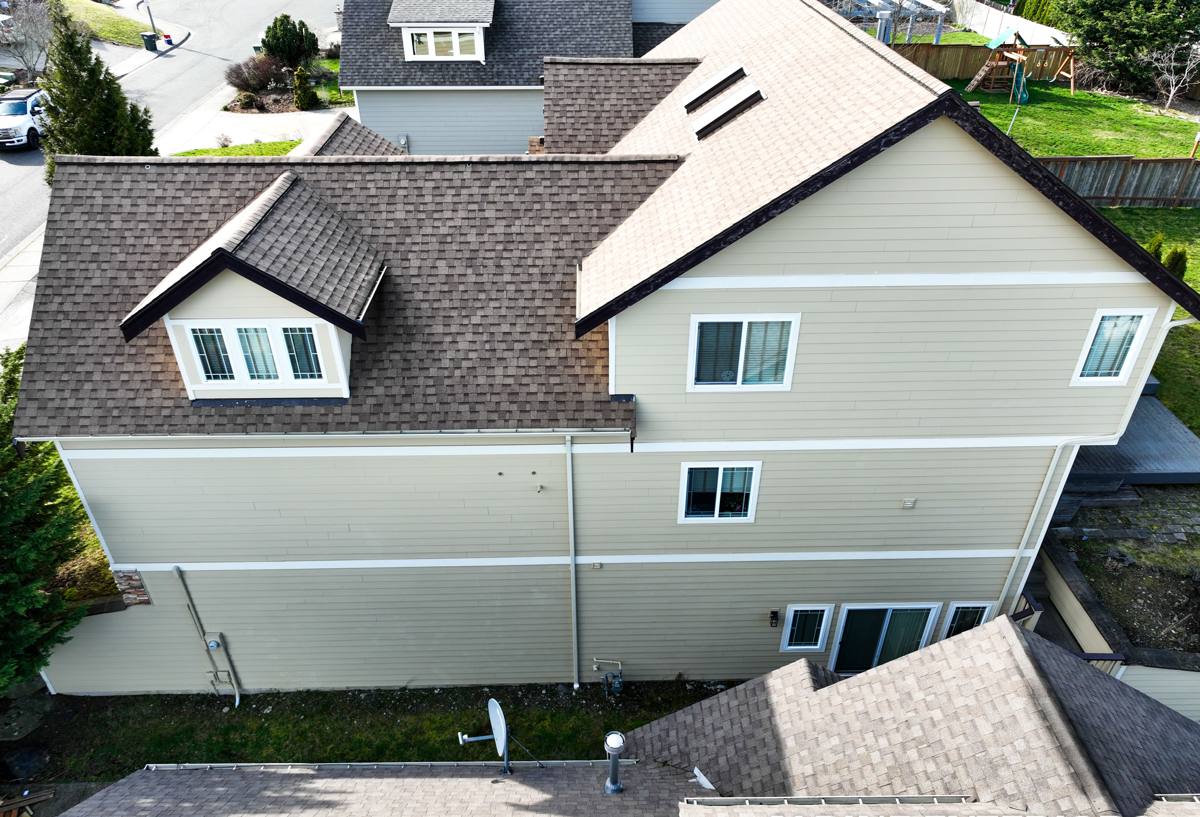
What Bellingham's Weather Actually Does to a Deck
Three climate factors do most of the damage to decks in this part of Whatcom County, and they don't act alone — they compound each other.
Driving rain
Rain here doesn't just fall straight down; wind off the water pushes it sideways into ledger connections, under railings, and into any gap where flashing was skipped or done poorly. Water that gets behind a ledger board and can't escape is the single most common cause of structural deck failure we see, and it's almost always invisible from the surface until the wood is already soft.
Salt air
Being close to the bay means airborne salt reaches fasteners, brackets, and any exposed metal hardware. Standard fasteners corrode faster here than they would further inland, and corrosion at a joist hanger or ledger bolt is a structural issue, not just a cosmetic one.
Moss and constant damp
Low winter sun angles and long wet stretches mean shaded parts of a deck — under railings, in corners, along the house — stay damp for days at a time. That's exactly the environment moss and algae need to take hold, and a mossy deck surface is a real slip hazard, not just an eyesore.
Choosing the Right Decking Material for a Columbia Home
There's no single "best" decking material — the right choice depends on how much maintenance a homeowner actually wants to do, and how exposed the deck is to sun, rain, and salt air. Here's how the common options compare for this climate specifically.
| Material | How it handles Bellingham's climate | Maintenance reality |
|---|---|---|
| Pressure-treated lumber | Affordable and structurally solid when properly sealed; needs consistent upkeep to resist moisture and moss | Refinish/reseal every 1-2 years; regular moss cleaning |
| Cedar | Naturally rot-resistant and handles damp conditions well, but still needs sealing to hold its color and resist moss | Refinish every 2-3 years; periodic cleaning |
| Composite decking | Doesn't absorb water or rot, holds up well to salt air; surface can still grow moss/algae in shaded, damp spots like any material | Periodic washing; no sealing or staining |
| PVC decking | Fully moisture-resistant, very low maintenance, good option for shaded or heavily rain-exposed areas | Occasional washing only |
For Columbia lots with significant tree cover or shaded northern exposure, we usually steer homeowners toward composite or PVC in the areas that stay damp longest, even if the rest of the deck uses wood — it's a practical trade-off, not an upsell. The goal is matching material to actual sun and moisture exposure, not defaulting to whatever's cheapest per board foot.
Ledger Attachment and Flashing: Where Most Failures Start
The ledger board — where the deck attaches to the house — is the single most important connection on the entire structure, and it's the one most often done wrong on older or DIY-built decks. Done correctly, it includes proper flashing that directs water away from the house framing, correct fastener spacing and type, and a gap or drainage path so water doesn't pool against the wall.
In a climate with as much driving rain as Whatcom County gets, a poorly flashed ledger doesn't fail quickly — it fails slowly, over years, as moisture works into the house's rim joist and framing behind the deck. By the time it's visible, there's often siding and framing repair involved, not just deck repair. This is one area where we don't cut corners, because the cost of doing it right the first time is nothing compared to the cost of fixing hidden rot later.
Footings, Framing, and Structural Support
Whatcom County's frost depth and soil conditions matter for how deep and how solid footings need to be — footings that are too shallow or undersized can shift over time, especially with our wet winters saturating the soil. We size footings and framing to the actual load and span of each deck, not a generic minimum, and we use fasteners and connectors rated for exterior, coastal-adjacent conditions rather than standard interior-grade hardware.
Joist hangers, structural screws, and post bases are all places where using the wrong-grade hardware saves a small amount of money up front and costs a lot more later, once corrosion sets in and connections weaken.
Railings, Fasteners, and Hardware That Resist Salt Air
Railings take a lot of abuse in this climate — they're the part of the deck most exposed to wind-driven rain and salt air, and they're also the part people lean on. We use corrosion-resistant fasteners and hardware throughout, not just at the ledger, because standard zinc-coated screws and brackets can start showing rust within a few seasons this close to the water.
- Stainless or coated fasteners rated for coastal/marine-adjacent exposure
- Hidden or corrosion-resistant connectors at post-to-frame and rail-to-post joints
- Properly spaced fastener patterns so no single connection carries excess load
- Post bases that keep wood off standing water
Our Deck Building Process
Every deck we build in Columbia follows the same basic sequence, adjusted for the specific lot and structure:
- Site and structure assessment — checking drainage, sun exposure, soil conditions, and (for replacements) the condition of existing framing and ledger connections.
- Design and material selection — matching decking, railing, and hardware choices to the deck's actual exposure, not a one-size-fits-all package.
- Permitting — pulling the required permits and building to code for footings, framing, and railing height/spacing.
- Framing and structural work — footings, ledger flashing, joists, and connections done to hold up under years of Whatcom County weather, not just pass inspection on day one.
- Decking, railing, and finish work — installed with attention to drainage gaps and fastener placement so water has somewhere to go.
- Walkthrough — going over the finished deck and what maintenance it'll actually need, honestly, before we leave.
Maintaining a Deck Through Moss Season
No deck material in this climate is truly maintenance-free — even composite and PVC decking benefit from periodic cleaning to keep shaded areas from building up moss and algae film. Here's what actually keeps a Columbia deck safe and sound year-round:
- Sweep debris and standing leaves off the deck regularly, especially in fall
- Clean moss and algae off the surface before it builds up traction problems, particularly in shaded corners
- Check that drainage gaps between boards and at the ledger are clear, not clogged with debris
- Inspect railings and fasteners annually for early signs of corrosion or loosening
- Reseal or refinish wood decking on the schedule appropriate to the species (see table above)
- Trim back vegetation that keeps a section of the deck shaded and damp longer than the rest
Permits and Local Building Requirements
Deck construction in Whatcom County and the Bellingham area is subject to permit and building code requirements covering footing depth, structural load, railing height, guard spacing, and stair specifications, among other things. We handle the permitting process as part of the build rather than leaving it to the homeowner, and we build to meet inspection the first time — not something that has to be corrected after the fact.
Why a Crew That Already Works in Columbia Makes a Difference
A deck built by a crew unfamiliar with this specific microclimate can still look fine on the day it's finished — the problems that come from wrong material choices, under-spec'd hardware, or poor ledger flashing don't show up right away. They show up two, five, ten years later, as soft spots, rust streaks, or a ledger that's been quietly rotting behind the house wall.
We work in Columbia and the surrounding Bellingham neighborhoods regularly, which means we're not guessing at how much rain exposure a given lot gets, how shaded a yard stays through winter, or what hardware actually holds up this close to the bay. That local, repeated experience is what separates a deck that needs major work in five years from one that's still solid in twenty, with normal maintenance in between.
If you're planning a new deck, replacing an aging one, or just want an honest look at what shape your current deck is in, we're happy to come take a look. Reach out for a free, no-pressure estimate using the form below.