 Bellingham
 Windows Built for a Bluff-Top, Bay-Facing Climate
Silver Beach sits close enough to Bellingham Bay that its homes take a different kind of weather beating than houses further inland in Whatcom County. Salt-laden air off the water accelerates corrosion on hardware, fasteners, and cheaper window frames. Wind-driven rain off the bay doesn't just fall straight down — it gets pushed sideways into wall assemblies and window openings, which means water management at the installation stage matters more here than in a sheltered neighborhood. And the long gray stretch of moss season, roughly October through April in this part of the county, keeps siding and trim damp for weeks at a time, which is exactly the environment where a poorly flashed window opening starts to rot from the inside before anyone notices from the street.
None of that means Silver Beach needs exotic products. It means the installation has to respect the site conditions — proper flashing sequence, the right sealants, and hardware that won't corrode prematurely in salt air. We've installed windows across Bellingham and the surrounding Whatcom County waterfront neighborhoods long enough to know which shortcuts show up as callbacks two winters later, and we don't take them.
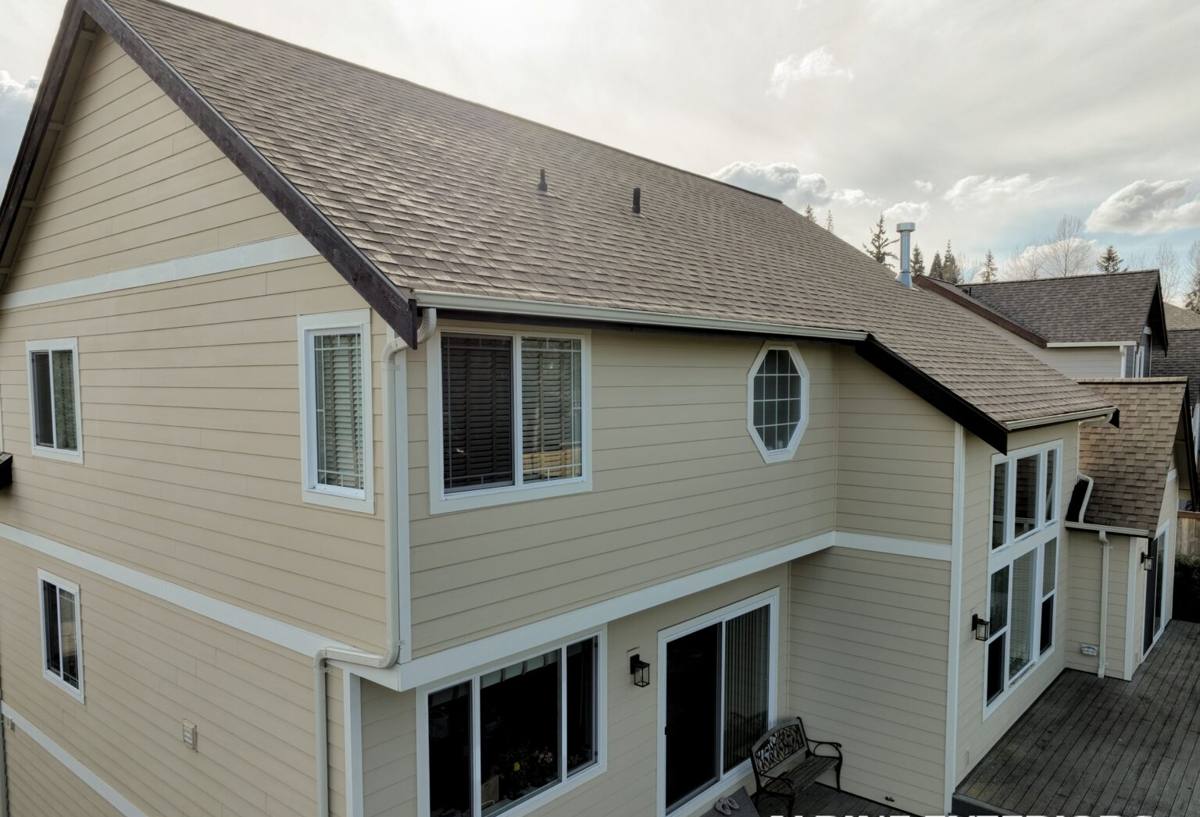
How to Tell When It's Time to Replace
Not every drafty window needs full replacement, and not every old window is actually failing. Before we recommend a replacement, we look for real evidence, not just age.
Signs that point to replacement
- Visible fog or moisture trapped between panes — the seal on the insulated glass unit has failed and can't be fixed
- Soft, spongy, or discolored wood at the sill or jamb, especially on walls that face the water or prevailing weather
- Windows that won't stay open, won't lock fully, or have swollen shut from moisture
- Noticeable cold draft at the frame even with the window latched, especially during a windy bay storm
- Paint or finish failing repeatedly in the same spot no matter how often it's touched up — usually a sign water is getting behind the trim
Signs that don't necessarily mean replacement
- A single hard-to-open window (often a hardware or paint-seal issue, not the unit itself)
- Slightly outdated style with no drafts, rot, or seal failure
- Minor condensation on the inside face of the glass on cold mornings — that's usually an indoor humidity issue, not a bad window
If we come out for an estimate and find your existing windows are sound, we'll tell you that directly. We'd rather earn the replacement job when it's actually needed than sell one that isn't.
What a Correct Window Installation Actually Involves
Window installation quality is decided almost entirely by what happens before the new window ever gets set in the opening. The window itself — vinyl, fiberglass, wood-clad — is a manufactured, tested product. What fails in this climate is almost always the site-built part: the flashing, the sealant joints, and the way the opening ties into the surrounding wall.
The parts that actually matter
- Opening prep: removing the old window cleanly, inspecting the rough opening and sill for hidden rot or water staining before anything new goes in
- Sill pan flashing: a sloped, sealed pan under the window opening so any water that does get past the glazing drains back out instead of pooling against wood framing
- Flashing sequence: integrating window flashing with the building's water-resistive barrier in the correct shingle-lap order — every layer overlaps the one below it, so water is always directed outward and down, never trapped behind the siding
- Air sealing and insulation at the gap: the small gap between the window frame and the rough opening gets sealed and insulated correctly, not just stuffed with fiberglass or foamed solid in a way that bows the frame
- Fastening and hardware: corrosion-resistant fasteners and hardware, which matters more here than it would twenty miles inland
- Sealant selection and joint design: the right exterior sealant, applied at the right joints — sealing everything shut is actually a mistake, since some joints need to stay open to let incidental moisture escape
A window that's beautiful, energy efficient, and priced right can still fail in three years if the flashing sequence was rushed. That's the part homeowners can't see once the trim goes back on, which is exactly why it's worth asking a contractor to walk you through their process before you sign anything.
Comparing Window Options for a Bay-Adjacent Home
There's no single "best" window material — the right choice depends on your home's exposure, your maintenance appetite, and your budget. Here's how the common options stack up for a Silver Beach setting specifically.
| Window Type | Salt Air / Moisture Performance | Maintenance | Typical Fit for Silver Beach |
|---|---|---|---|
| Vinyl | Won't corrode or rot; performs well in salt air | Low — no painting, occasional cleaning | Strong default choice for most homes here, especially direct water-facing walls |
| Fiberglass | Excellent — very stable in temperature swings and coastal moisture | Low | Good upgrade where budget allows, especially larger openings |
| Wood-clad (exterior-clad wood) | Good if cladding and flashing are done correctly; wood core is vulnerable if water gets behind the cladding | Moderate — cladding is low-maintenance, but any breach needs prompt attention | Workable for interior-facing walls with less direct weather exposure; we're more cautious about it on the bay-facing side |
| Bare wood | Poor without diligent upkeep — most exposed to moss, mildew, and rot in this climate | High — regular painting and inspection required | Only for homeowners committed to ongoing maintenance, typically for historic-character matching |
| Aluminum | Conducts cold and can corrode without a marine-grade finish | Low to moderate | Generally not our first recommendation for bay-facing exposures |
We don't push one brand or material on every job. We'll tell you honestly where a given product's trade-offs — maintenance burden, moisture sensitivity, installation demands — fit your specific wall and exposure, rather than what's easiest to sell.
Our Process, Start to Finish
- On-site assessment: we look at every window being discussed, check for hidden rot or moisture damage, and measure openings precisely — no assumptions from a photo or a phone call
- Honest scope and estimate: you get a clear, itemized estimate that separates the window units from labor, flashing materials, and any carpentry repair needed for damaged framing
- Product selection: we walk through material and glazing options based on your home's exposure and budget, not a one-size-fits-all package
- Scheduling around weather: in this climate, we plan installs around dry weather windows and work efficiently so openings aren't left exposed longer than necessary
- Removal and inspection: old windows come out carefully, and we inspect the opening before anything new goes in — this is where hidden problems get caught, not after the new window is already sealed in place
- Flashing and installation: sill pan, flashing integration, air sealing, and fastening done in the correct sequence
- Final sealing and cleanup: exterior trim and sealant joints finished, interior and exterior cleaned up, site left tidy
- Walkthrough: we go over the finished work with you and make sure every window operates correctly before we call the job done
What Drives the Cost
Window installation pricing varies more than most homeowners expect, and the window unit itself is only part of it. Understanding the cost drivers helps you compare estimates apples-to-apples instead of just looking at a bottom-line number.
| Cost Factor | Why It Matters |
|---|---|
| Window size and type | Larger openings, specialty shapes, or higher-performance glazing cost more than standard double-hung or slider units |
| Material | Vinyl is typically the most budget-friendly; fiberglass and wood-clad carry a higher price for different reasons — durability versus appearance |
| Condition of the existing opening | Hidden rot or water damage found during removal adds carpentry repair time before the new window can go in |
| Number of windows | Doing several windows in one visit is more efficient per-window than single, scattered replacements |
| Access and exposure | Upper-story or hard-to-reach windows on a bluff-facing wall can take longer and require more setup |
| Trim and finish work | Matching existing interior or exterior trim adds labor beyond the window swap itself |
We give a firm, written estimate before work begins, and if we find hidden damage once an opening is exposed, we stop and talk it through with you before doing anything beyond the original scope.
Permits, Codes, and Egress in Whatcom County
Window replacement in the City of Bellingham and unincorporated Whatcom County can require a permit depending on the scope of work, particularly if the rough opening size is changing or the work involves a bedroom egress window. Bedrooms are required to have a window that meets minimum egress size and sill height for safety, and if you're replacing an undersized older window, that's worth discussing up front rather than discovering it during inspection. Energy code requirements also apply to replacement windows in Washington State, which affects which glazing performance ratings qualify. We handle the permitting conversation as part of the estimate so there are no surprises mid-project.
Why Local Installation Experience Matters Here
Silver Beach isn't a generic subdivision — it's a bluff-and-shoreline neighborhood where wall exposure can vary significantly from the front of a house to the back, and where the same storm that's a non-event a mile inland can drive rain sideways into a bay-facing wall. A crew that installs windows across Bellingham and Whatcom County regularly knows which walls in this kind of setting need extra flashing attention, which sealants hold up to sustained salt air exposure, and how long moss season actually runs in this specific corner of the county. That's the difference between an installer following a generic manual and one applying judgment earned from doing this work in this exact climate.
It also means faster response if something needs attention after the install — warranty callbacks, minor adjustments, or just a question about how a new window operates are handled by a crew that's a short drive away, not someone dispatched from out of the area.
A Quick Checklist for Vetting Any Window Contractor
- Do they inspect the existing opening before quoting a firm price, or just quote off a phone call?
- Can they explain their flashing and sill pan process without you having to ask twice?
- Are they licensed and insured to work in Washington State?
- Do they give you a written, itemized estimate — not just a single lump-sum number?
- Will they tell you honestly if a window doesn't need replacing yet?
- Do they have experience with homes in exposed, coastal-adjacent settings like Silver Beach specifically?
If a window quote comes back suspiciously fast with no on-site inspection, that's usually a sign the flashing and prep work — the part that actually determines whether the install lasts — hasn't been thought through yet either.
If your windows in Silver Beach are showing signs of wear, drafting, or you're just planning ahead, we're happy to come take a look. The estimate is free, there's no pressure, and you'll get a straight answer about what your windows actually need — use the form below to get started.