 Bellingham
 Why Birch Bay Decks Take More Abuse Than Most
Birch Bay sits right on the water, and that proximity is exactly what makes decking here a different job than decking ten miles inland. Salt-laden air moves off the bay and settles on every exposed surface, wind-driven rain comes in sideways during winter storms, and the shaded, moisture-heavy stretch from late fall through spring gives moss and algae months to get established. A deck built to a generic spec, or one installed by a crew that mostly works drier inland neighborhoods, tends to show its age in Birch Bay years before it should.
None of this means composite decking is a bad fit for the area — it's usually the opposite. But it does mean the material choice, the fastening details, and the substructure underneath matter more here than they would in a low-humidity climate. This page covers what we've learned installing and repairing decks along Whatcom County's waterfront communities, and what a correctly built composite deck in Birch Bay actually requires.
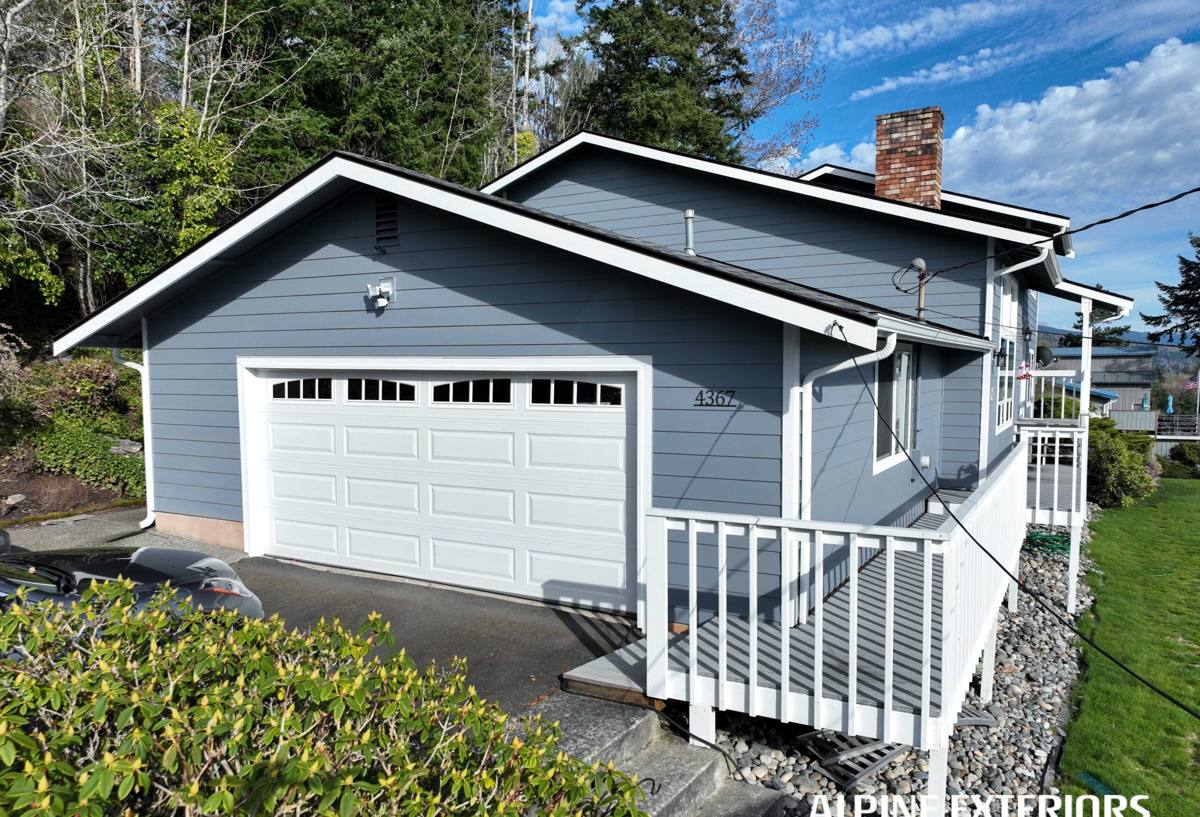
What Salt Air and Moisture Actually Do to a Deck
Salt Air
Salt doesn't just sit on the surface — airborne salt works into fastener heads, hardware, and any exposed metal connectors over time. Cheap or mismatched fasteners corrode faster near the water, and corroding hardware is one of the more common causes of deck boards working loose or railing posts loosening at the base in shoreline neighborhoods.
Driving Rain
Wind off the bay pushes rain into places a calm-weather deck design doesn't account for: under rail base plates, into end-grain cuts on fascia boards, and along ledger connections where the deck meets the house. Water that gets trapped rather than shed is what eventually causes rot in the framing underneath a deck, even when the composite decking on top still looks fine.
Moss and Algae
Whatcom County's long damp season, combined with the shade many Birch Bay lots get from mature trees or neighboring structures, gives moss and green algae film a real head start. On a deck surface, that's not just cosmetic — a moss-covered board is a slick, slippery board, and moisture held against the surface by moss growth is a long-term problem for any decking material, composite included.
Why We Recommend Composite Decking Here Specifically
For a waterfront-adjacent property like Birch Bay, composite decking earns its higher upfront cost mainly through reduced maintenance exposure. Wood decking in this climate needs regular sealing and staining to keep moisture out — skip a season or two and you're often looking at cupping, splintering, or rot starting at fastener holes. Composite doesn't absorb water the way wood does, doesn't need re-sealing, and holds up better against the freeze-thaw cycles and constant damp that define a Whatcom County winter.
That said, composite isn't maintenance-free, and we tell homeowners that plainly. It still needs to be kept clear of standing moss and algae, and the boards still depend entirely on what's underneath them — flashing, joist protection, and fastening — to actually perform over 20-30 years. A composite deck with a poorly built substructure will still fail early; the composite boards just mask the problem longer before it shows.
Composite vs. Wood vs. PVC — Honest Trade-Offs for This Climate
| Material | Salt air resistance | Maintenance | Upfront cost | Best fit |
|---|---|---|---|---|
| Pressure-treated wood | Fair — needs regular sealing | High (annual staining/sealing) | Lowest | Budget-driven projects, owners committed to upkeep |
| Composite decking | Good — doesn't absorb moisture | Low (periodic cleaning) | Mid to high | Most Birch Bay homes, especially waterfront-facing decks |
| Solid PVC | Very good | Low | Highest | Full sun/water exposure, long-term low-maintenance priority |
What a Correct Composite Deck Build Involves
The Substructure
The decking itself is the part homeowners see, but the framing underneath is what actually determines how long the deck lasts in this climate. That means joists sized and spaced to the manufacturer's composite-specific span tables (composite behaves differently than wood under load and needs tighter joist spacing in many cases), joist tape or another moisture barrier on top of every joist, and hardware rated for coastal or high-moisture exposure — not standard interior-grade fasteners.
Ledger and House Connection
Where the deck attaches to the house is the single most common failure point we see on older decks in this area, because it's the hardest spot to keep water out of. Proper flashing behind the ledger board, correctly lapped with the house's existing weather-resistant barrier, is non-negotiable — this is the detail that gets skipped most often on rushed jobs, and it's the one most likely to cause hidden rot behind the siding.
Fasteners and Hardware
Given the salt exposure, we spec stainless steel or coated fasteners rated for coastal use rather than standard galvanized hardware, which corrodes faster near the water. This applies to hidden fastener clips, structural screws, and railing hardware alike.
Board Selection and Fastening
Composite boards expand and contract with temperature more than wood, and gapping between boards has to account for that movement — too tight and boards can buckle; too loose and the deck looks and feels sloppy. Hidden fastener systems are generally preferable to face-screwing on a waterfront property, since they reduce the number of penetration points where moisture can work into the board core.
Design Choices That Matter More in Birch Bay
- Board color and finish: Darker boards absorb more heat and can amplify surface expansion; lighter or capped composite boards tend to show algae staining less readily than uncapped or darker options.
- Railing system: Metal railing components should be coastal-rated; cable rail systems in particular need corrosion-resistant hardware or they'll show rust streaks within a season or two.
- Ventilation underneath: Low decks with little airflow underneath hold moisture longer after a storm — proper skirting with vents, or enough clearance, helps the substructure dry out between rain events.
- Drainage at grade: Where the deck meets the ground, grading and drainage need to move water away from posts and footings, not toward them.
Our Process for a Birch Bay Composite Deck
- On-site assessment: We look at sun/shade exposure, prevailing wind direction off the bay, existing drainage, and the condition of any structure the deck attaches to.
- Design and material selection: We walk through composite options and hardware specs suited to the specific exposure of your lot — a fully open waterfront-facing deck gets different specs than a partially sheltered one.
- Permitting: Deck projects in unincorporated Whatcom County generally require a permit; we handle that process as part of the job.
- Demo and substructure build: Removal of any existing deck, framing built to composite-specific span and fastening standards, ledger flashing done correctly the first time.
- Decking installation: Boards, hidden fasteners, and railing installed with attention to expansion gaps and drainage detailing.
- Final walkthrough: We go over basic care — mainly periodic cleaning to keep moss and algae from establishing — so the deck stays low-maintenance rather than becoming a chore.
Maintenance Checklist for a Composite Deck Near the Water
- Sweep off debris and standing leaves regularly, especially under trees where moisture collects
- Rinse the surface periodically to clear salt residue, particularly after storms
- Clean visible moss or algae promptly with a soft-bristle brush and a cleaner rated for composite — pressure washing on high settings can damage the board surface
- Check railing hardware annually for corrosion, especially on cable or metal components
- Keep gutters and downspouts near the deck clear so runoff isn't dumping extra water onto or under it
- Inspect under-deck ventilation isn't blocked by stored items or overgrown landscaping
Why Hiring a Crew That Already Works Birch Bay Matters
A deck built to a generic regional spec and a deck built for this specific stretch of Whatcom County waterfront are not the same project, even if the materials list looks similar on paper. Crews that primarily work drier, inland areas don't always default to coastal-rated hardware, tighter moisture detailing at the ledger, or joist spacing that accounts for composite's real-world behavior in a wet climate — because they don't need to most of the time. On a Birch Bay property, those defaults aren't optional upgrades; they're the difference between a deck that looks the same in ten years and one that needs early repairs at the ledger or framing.
Working repeatedly in this specific area also means fewer surprises during permitting, a better read on how a given lot's exposure to wind and salt will affect material choices, and a track record of substructure work that's actually built for the conditions rather than assumed to be "good enough."
Getting Started
If you're weighing composite decking for a home in Birch Bay, we're happy to walk the property, talk through material and hardware options suited to your specific exposure, and give you a straightforward estimate — no pressure, no hard sell. Use the form below to request a free estimate and we'll get back to you to schedule a time.