 Bellingham
 Why Birchwood Decks Take a Beating
Birchwood sits close enough to Bellingham Bay and the surrounding tree cover that decks here deal with a specific combination of stress: salt-laden air off the water, driving rain that comes in sideways during fall and winter storms, and a moss season that can stretch from October well into April. Add in the shade from mature Douglas fir and cedar that many Birchwood lots still have, and you've got decking that rarely gets a full day of direct sun to dry out between rain events. That's a tough environment for any outdoor building material, and it's the reason a deck that looks fine in July can be slick, green, and starting to sag by the following spring.
Composite decking was developed specifically to resist the kind of moisture cycling that wood can't shrug off forever. But "composite" isn't one product — board quality, core construction, and installation detail vary a lot, and in a climate like Whatcom County's, those differences show up faster than they would somewhere dry.
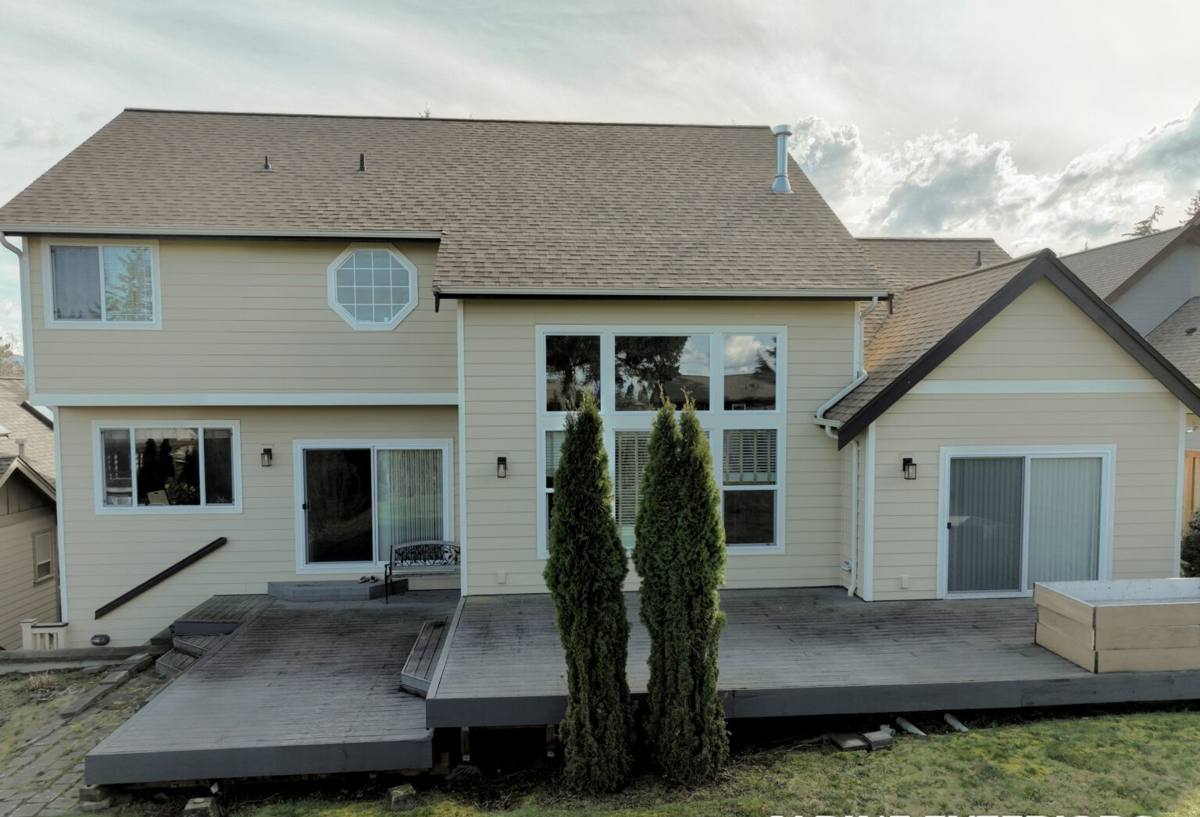
What Birchwood's Climate Actually Demands From a Deck
Constant Moisture, Not Just Rain
It isn't the rain itself that damages a deck — it's what happens between rain events. Under a tree canopy or on a north-facing elevation, a deck surface can stay damp for days at a time. That sustained dampness is what feeds moss and algae growth and what eventually finds its way into any gap in a wood deck's finish. A correct composite install accounts for this by prioritizing drainage and airflow underneath the boards, not just the wear layer on top.
Salt Air and Metal Hardware
Homes closer to the bay deal with a slow, steady corrosive effect on exposed metal — fasteners, joist hangers, railing brackets. Standard hardware can start rusting and staining a deck surface within a couple of seasons. We spec stainless or coated fasteners rated for coastal exposure on every Birchwood job, not just the ones directly on the waterfront, because salt air travels further inland than most homeowners expect.
Moss Season and Slip Resistance
A long moss season means the deck surface itself matters as much as the structure underneath. Board texture, drainage gaps between boards, and how quickly a surface sheds standing water all affect how slick a deck gets in December compared to August.
Composite vs. the Alternatives, for This Climate
There's no universally "best" decking material — there's the right material for your budget, your yard's sun exposure, and how much upkeep you actually want to do. Here's how the common options stack up for a shaded, damp Birchwood lot specifically.
| Material | Moisture Behavior Here | Typical Maintenance | Lifespan in This Climate |
|---|---|---|---|
| Pressure-treated wood | Absorbs water, prone to cupping and splintering in shade | Annual cleaning, restaining every 2-3 years | 10-15 years before major repair |
| Cedar | Better natural rot resistance, still needs sealing to fight moss staining | Sealing/staining every 1-2 years | 15-20 years with upkeep |
| Uncapped composite | Water-resistant core but surface can absorb moisture and stain over time | Periodic cleaning, no staining | 15-20 years |
| Capped composite | Sealed shell resists moisture, staining, and moss penetration | Occasional rinse/scrub | 25-30 years, often with a matching warranty |
For a shaded, damp lot like most in Birchwood, we steer clients toward fully capped composite boards. The added upfront cost over uncapped composite or wood is usually worth it in reduced maintenance and a longer functional life — but we'll walk you through the honest trade-offs for your specific yard rather than upselling a single answer.
What a Correct Composite Build Involves
Framing and Substructure
Composite boards are only as good as what's underneath them. Joist spacing has to match the manufacturer's spec for composite (often tighter than what's fine for wood decking), and any framing lumber should be properly rated for ground or moisture contact. On replacement jobs, this is where we find the most hidden problems — old framing that looks solid from above but has been quietly rotting where it meets a ledger board or post base that never drained properly.
Ledger Attachment and Flashing
Where a deck attaches to the house is the single most common failure point we see on older Birchwood decks. Without proper flashing, water works its way behind the ledger board and into the house rim joist — a slow leak that can go unnoticed for years. Any deck rebuild should include new flashing at this connection, full stop, regardless of how the decking surface itself is finished.
Fastening Method
Hidden fastener clip systems give a cleaner look and avoid the small pooling spots that face-screwed boards can develop around each screw head. In a climate with this much standing moisture risk, that detail matters more than it would somewhere dry — every screw penetration is a place water can sit.
Ventilation Below the Deck
Low-clearance decks or decks over patios need enough airflow underneath to let the substructure dry out between storms. Where clearance is tight, we'll talk through options rather than just building on top of a setup that will trap moisture for the life of the deck.
Moss, Algae, and Ongoing Care
No decking material is completely maintenance-free in Whatcom County — anyone who tells you otherwise is overselling. What composite changes is the type and frequency of maintenance, not whether it exists.
- Rinse and soft-brush the surface a few times a year, more often under heavy tree cover
- Keep gutters and downspouts near the deck clear so runoff isn't draining directly onto the surface
- Sweep debris out of the drainage gaps between boards before it composts in place and feeds moss
- Trim back overhanging branches where practical to let more light and air reach the deck
- Check railing posts and stair stringers annually for movement, even though the decking itself needs little attention
Capped composite resists moss staining far better than wood, but moss can still grow on any damp, shaded surface given enough time. Routine cleaning keeps it from taking hold rather than having to strip it out later.
Railings, Stairs, and Structural Details
The decking surface gets the attention, but railings and stairs are where most code requirements and most safety issues live. Guard height, baluster spacing, and stair rail requirements are governed by the building code Bellingham enforces, and they apply regardless of what decking material you choose. On a rebuild, we check these details even when a homeowner's only request was "replace the boards," because it's the right time to fix them and far more expensive to address separately later.
Our Process for a Birchwood Deck Project
- On-site walk-through of the existing deck or planned footprint, checking framing condition, drainage, and sun/shade exposure
- Honest assessment of what can be reused versus what needs replacing — we don't rebuild what doesn't need it
- Board and railing selection based on your budget and how much upkeep you actually want to do
- Written estimate with a clear scope, so there's no ambiguity about what's included
- Demo and framing repair, including proper ledger flashing where the deck meets the house
- Composite board installation using hidden fasteners where the product allows it
- Final walk-through covering care and cleaning specific to your deck's exposure
What Drives the Cost
Every deck is different, but these are the factors that move the price most on Birchwood jobs:
| Factor | Why It Matters |
|---|---|
| Deck size and shape | More square footage and complex angles increase material and labor |
| Framing condition | Rotted joists or a failed ledger connection add repair scope beyond the surface |
| Board tier | Uncapped composite costs less upfront than fully capped, premium lines |
| Railing type | Composite or metal railing systems cost more than basic wood rail |
| Stairs and levels | Multi-level decks and stair runs add labor and material |
| Site access | Tight side yards or elevated decks can slow demo and material staging |
We'd rather give you a real range after seeing the site than a number that doesn't hold up once we're standing on your existing deck.
Why Local Experience on This Job Matters
A crew that already works Birchwood and the surrounding Bellingham neighborhoods has seen how these lots behave through a full wet season — which framing details fail first, where salt air does the most damage to hardware, and how much shade a particular street tends to get through the winter. That's the kind of knowledge that shows up in the small decisions: fastener grade, drainage detail, board selection — the things that determine whether a deck is still solid and clean-looking in ten years or needs premature repair.
If you're weighing a deck replacement or a new build in Birchwood, we're happy to take a look and give you a straightforward assessment — no pressure, no upsell. Request a free estimate using the form below and we'll go over what your specific site needs.