 Bellingham
 Composite Decking in Edgemoor: What This Neighborhood's Weather Actually Does to a Deck
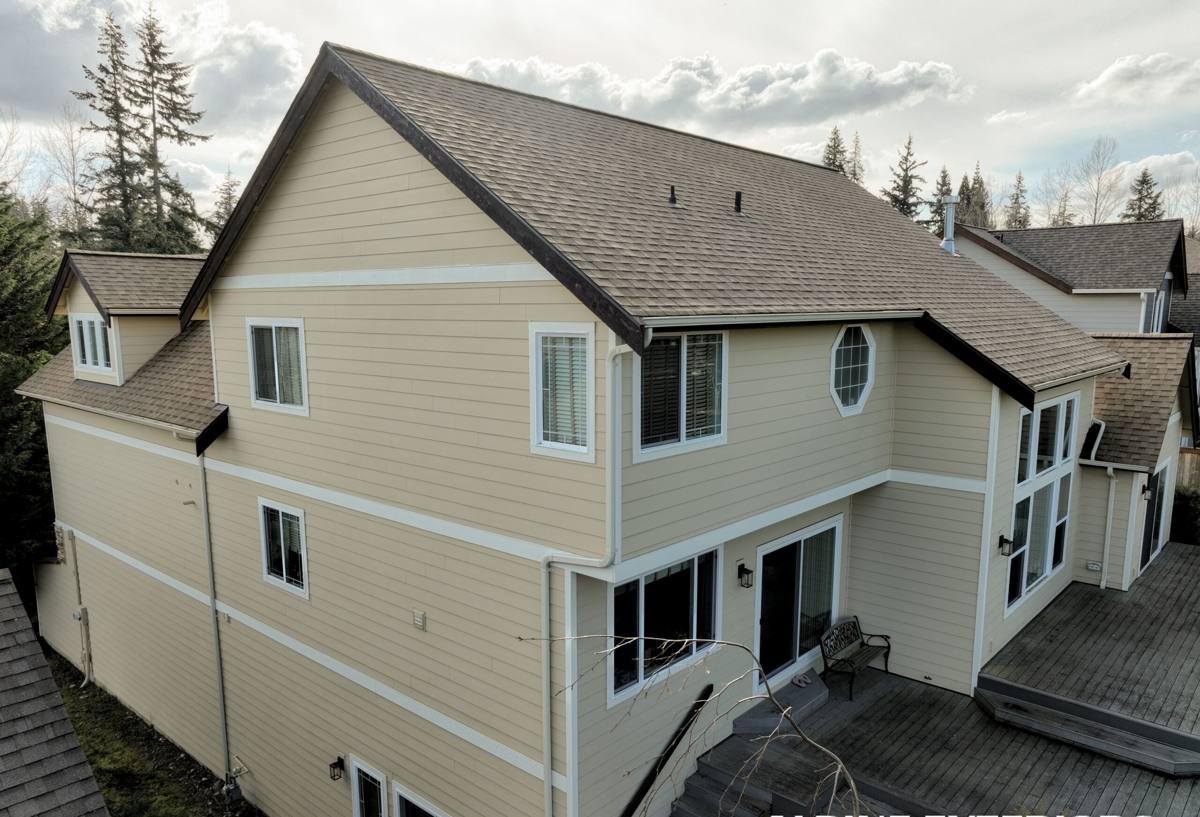
Edgemoor sits close enough to Bellingham Bay that salt-laden air is a daily fact of life, not an occasional nuisance. Combine that with Whatcom County's long wet season, driving rain off the water, and shade from mature trees on many lots, and you get a microclimate that is genuinely tougher on outdoor structures than most manufacturers' marketing photos suggest. A deck here doesn't just get rained on — it gets rained on sideways, sits under moss-friendly shade for months, and takes on a fine film of salt that most homeowners never think about until they see what it's done to fasteners and rail hardware.
Composite decking was designed to solve a lot of the problems wood decking has in exactly this kind of environment. But "composite" is a broad category, and how it's installed matters as much as which product you choose. This page is about what a composite deck actually needs to hold up in Edgemoor specifically — not composite decking in general.
Why Salt Air and Moss Season Change the Calculation
Salt air and hardware
Composite boards themselves don't corrode, but every deck has metal in it — joist hangers, structural screws, rail brackets, fascia fasteners. Standard coated hardware can start showing rust within a few years this close to the bay. We spec stainless or marine-grade coated fasteners and connectors on decks in this area as a default, not an upsell, because replacing corroded hardware under a deck surface later means pulling boards back up.
Moss season and the hidden structure
Bellingham's moss season runs long — often eight or nine months of the year with enough moisture and shade to keep growth active. Moss on the visible deck surface is a maintenance issue. Moss and algae building up underneath the deck, in the substructure, on joists that don't drain or dry properly, is a structural issue. Composite board surfaces resist moss far better than wood, but only if the framing underneath is built to shed water and let air move. A composite deck laid over a poorly ventilated substructure will still trap moisture below, even though the walking surface looks fine.
Driving rain and end grain
Wind off the bay pushes rain at angles that flat, still-air rain doesn't produce. That matters most at cut ends of composite boards, around picture-frame borders, and at fascia joints — the spots where the board's protective cap layer has been cut through and the core is exposed. Every cut end on an Edgemoor deck needs to be treated (capped, sealed, or otherwise protected per manufacturer spec) as standard practice, not as something reserved for "premium" installs.
What a Correct Composite Deck Build Actually Involves
A lot of composite decking problems homeowners run into aren't the board's fault — they're substructure and detailing problems that would have caused the same issues with any decking material. Here's what we treat as non-negotiable on every composite deck we build in this area.
Substructure and drainage
- Joist spacing matched to the specific composite board's span rating — composite typically needs tighter joist spacing than wood, and this varies by product and by whether the deck is straight or angled/picture-framed
- Joist tape or another moisture barrier on top of all framing, protecting the wood joists from the moisture that will inevitably sit on top of them under the decking
- Ledger board flashing done correctly where the deck attaches to the house, since this is the single most common source of hidden rot on any deck, composite or not
- Enough clearance and airflow beneath the deck so the substructure can actually dry between rain events, which in this climate can mean days apart, not hours
- Footings sized and placed for our soil and frost conditions, with proper hardware connecting posts to footings and beams
Fastening and surface detailing
- Hidden fastener systems where the product supports them, for a cleaner surface and fewer penetration points where water can find its way in
- Stainless or marine-rated screws anywhere fasteners are exposed, given the salt air
- Proper gapping between boards for expansion and contraction — composite moves less than wood but it still moves, and gapping it wrong causes buckling or unsightly gaps later
- Picture-framing and border details built with mitered, capped, or manufacturer-approved end treatments so cut ends aren't left exposed to weather
Comparing Composite Against the Alternatives, Honestly
We install composite because, for most Edgemoor homeowners, it's the best match for this specific climate and lifestyle — not because we think every other material is bad. Here's the honest comparison we'd walk you through in person.
| Material | How it handles this climate | Maintenance reality | Where it makes sense |
|---|---|---|---|
| Composite decking | Resists moisture absorption, doesn't rot, resists moss growth on the surface (though it can still develop surface film if never cleaned) | Occasional wash-down; no staining or sealing | Homeowners who want long-term low upkeep and are comfortable with the upfront cost |
| Pressure-treated wood | Will absorb moisture and is more prone to moss, splitting, and cupping in a wet, shaded lot | Regular sealing or staining, more frequent board replacement over time | Lower upfront budget, homeowners willing to do annual upkeep |
| Cedar or other natural wood | Attractive but softer and more moisture-sensitive; needs consistent sealing to resist this climate | Highest maintenance of the common options here | Homeowners prioritizing a specific natural look over low maintenance |
| PVC decking | Fully synthetic, very moisture-resistant, no wood core to worry about | Low maintenance, similar to composite | Budget allows for it and the homeowner prefers PVC's look and feel over composite's |
None of these is objectively wrong. What we push back on is mismatching the material to the site — putting an untreated wood deck in a shaded, moss-prone Edgemoor backyard and expecting it to look good with minimal upkeep. That's a setup for disappointment regardless of what any product's warranty says.
Cost Factors Homeowners Should Actually Weigh
We won't quote a number here because every lot and every scope is different, but these are the real variables that move the price, in roughly the order they tend to matter.
| Factor | Why it matters |
|---|---|
| Deck size and shape | Square footage is the baseline, but picture-framing, angles, and multiple levels add labor beyond simple area |
| Substructure condition | Building on an existing frame that needs rework costs more than a clean new build, and skipping needed rework costs more later |
| Height and access | Elevated decks need more substantial framing, railing, and often stairs — all of which add cost |
| Board tier and brand | Composite pricing spans a real range between entry-level and premium capped products |
| Railing and fastener system | Hidden fasteners, cable or glass railing, and marine-grade hardware all cost more than basic options |
| Site access | Some Edgemoor lots have limited equipment access or slopes that add labor time |
Our Process for an Edgemoor Composite Deck
1. On-site assessment
We look at sun exposure, tree cover, existing structure (if any), drainage patterns on the lot, and how close the deck sits to salt air exposure from the bay. This is what actually drives our hardware and substructure recommendations, not a generic template.
2. Product selection based on the site, not a sales quota
We walk through board tiers and finishes with the specific site conditions in mind — a heavily shaded, moss-prone spot gets a different conversation than an open, sun-exposed one.
3. Permitting and structural planning
Deck permitting requirements vary by jurisdiction and by whether the project is attached to the house, its height above grade, and other factors. We handle this as part of the project rather than leaving it for the homeowner to sort out.
4. Build, with inspection points along the way
Footings and framing get checked before decking goes down, since that's the stage where problems are cheap to fix and invisible once boards are installed.
5. Final walkthrough
We go over the finished deck together, including basic care guidance specific to composite in this climate — what to expect from surface film in shaded areas and how simple periodic cleaning prevents it from becoming a real problem.
Why a Crew That Already Works in Edgemoor Matters
Building codes, soil behavior, and typical lot conditions vary even within Whatcom County, and a crew that already works this specific area isn't guessing at frost depth, typical drainage issues, or how a given lot's shade pattern will behave through moss season. There's also a practical side: a local crew can respond quickly if a warranty question or minor issue comes up after the build, rather than a homeowner waiting on a company based well outside the area.
We've built and repaired enough decks around Bellingham and the surrounding Whatcom County communities to know which shortcuts show up as problems in year two or three — undersized joist spacing, skipped flashing, standard-coated fasteners near the water, decking laid straight over old framing without checking it first. None of these mistakes are visible on install day. They show up later, usually during the wettest stretch of the year, which in this region is a long stretch.
A Practical Pre-Project Checklist
- Confirm whether your project needs a permit before work begins, and don't take a contractor's word that it doesn't without checking
- Ask specifically what fastener grade will be used, given the salt air this close to the bay
- Ask how the substructure will be protected from moisture, not just what board brand is being installed
- Get the joist spacing spec for your specific composite product in writing — it's not the same across brands
- Ask how cut ends and board edges will be treated, especially on any picture-framed borders
- Clarify what the manufacturer's warranty actually covers versus what's covered by the installer's workmanship
Maintenance Reality for Composite Decks in This Climate
Composite decking is genuinely lower-maintenance than wood, but "low-maintenance" isn't "no-maintenance," especially with Bellingham's moss season and salt air. A periodic wash-down — plain water and a soft brush, or a mild cleaner for more stubborn surface film — keeps shaded areas from developing the greenish film that can build up on any decking surface left untouched through a wet Pacific Northwest winter. Homeowners who do this once or twice a year, more often in heavily shaded spots, get the low-upkeep experience composite is supposed to deliver. Homeowners who ignore it entirely for years sometimes end up disappointed, not because the board failed, but because surface buildup was never addressed.
If you're weighing a new composite deck for an Edgemoor property, or wondering whether an existing deck's substructure is holding up the way it should, we're happy to take a look and give you a straight assessment. The estimate is free, there's no pressure, and you'll get a clear answer about what your specific lot and setup actually need.