 Bellingham
 Building Decks for Birchwood's Microclimate
Birchwood sits close enough to Bellingham Bay and the surrounding waterways that homes here deal with a specific combination of weather stress most inland decks never see: salt-tinged air off the water, long stretches of driving rain, and a moss season that can run from October well into spring. A deck built without that combination in mind will look fine for a year or two, then start showing the signs — soft spots near the ledger, green film on the boards, fasteners bleeding rust through the finish. A deck built for Birchwood specifically holds up to all three at once, and that's the standard we build to on every project in this neighborhood.
None of this is exotic engineering. It's about material choices, framing details, and drainage decisions that account for how much moisture this part of Whatcom County actually sees in a given year, rather than building to a generic spec and hoping for the best.
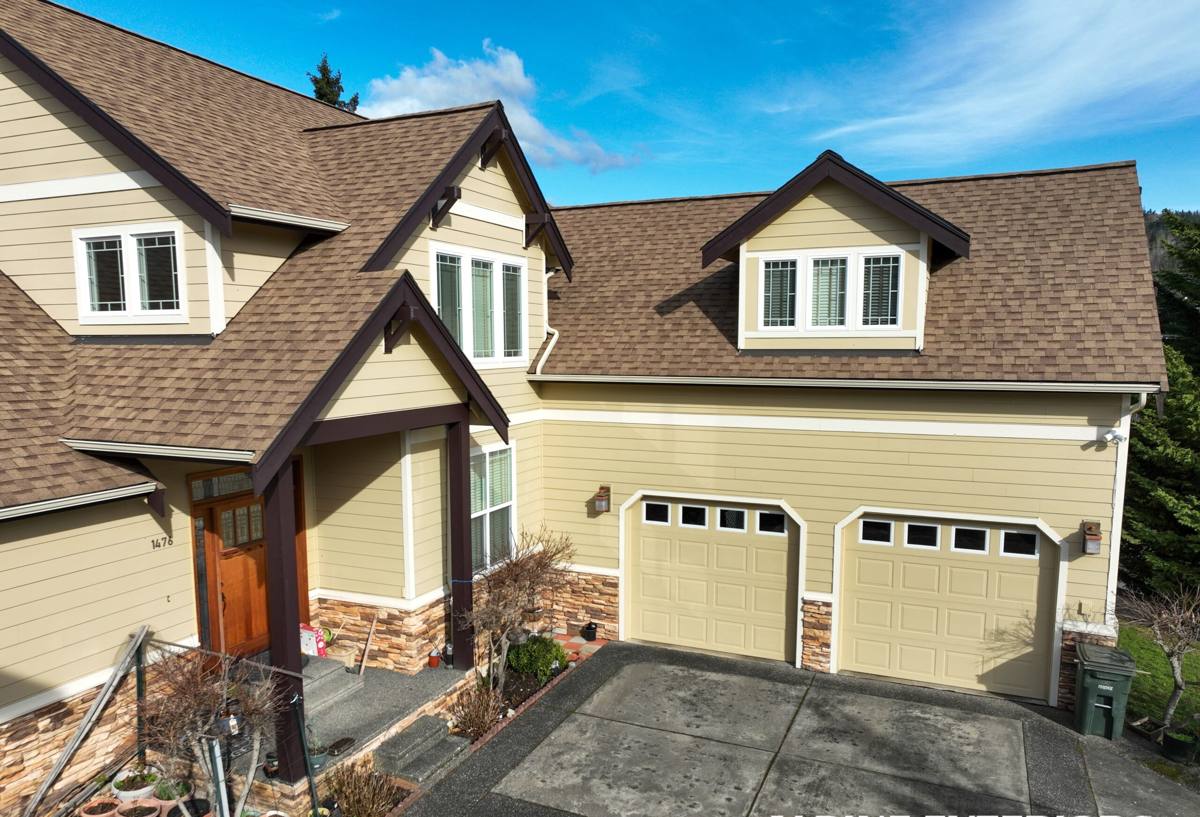
What Birchwood Homes Need From a Deck
Most homes in this part of Bellingham were built with covered or partially covered outdoor space in mind, and decks here tend to serve double duty — a dry-weather sitting area in summer and a functional extension of the house the rest of the year. That changes the design math a bit. A deck that only gets used four sunny months out of twelve doesn't need the same moisture management as one that's expected to handle rain, foot traffic, and standing water in the shoulder seasons.
Salt Air and Metal Fatigue
Proximity to the bay means airborne salt settles on exposed metal over time. Standard zinc-coated fasteners and generic hardware corrode faster here than they would twenty miles inland. We spec stainless or heavy-coated fasteners and structural hardware rated for coastal exposure on Birchwood jobs as a default, not an upgrade.
Rain Volume and Runoff
Whatcom County's rainfall isn't the heaviest in the state, but it's persistent — long, steady rain events rather than short downpours. That pattern matters for deck design because it means water sits and soaks rather than sheeting off quickly. Slope, gapping, and drainage details all need to account for sustained wet conditions, not just occasional storms.
Choosing the Right Decking Material
There's no single "best" decking material — there's the right material for how a homeowner uses the space, how much maintenance they want to do, and what budget they're working with. Here's how the common options actually perform in a Birchwood-type environment:
| Material | Moisture Performance | Maintenance | Typical Lifespan |
|---|---|---|---|
| Pressure-treated wood | Good if sealed regularly; prone to cupping if neglected | Annual cleaning + resealing every 1-2 years | 15-20 years with upkeep |
| Cedar | Naturally rot-resistant, but softer and needs finish maintenance | Cleaning + oil/stain every 1-2 years | 15-20 years with upkeep |
| Composite decking | Excellent — won't rot or absorb moisture | Periodic washing to control surface mildew/moss | 25-30+ years |
| PVC decking | Excellent, fully moisture-immune | Low — occasional washing | 25-30+ years |
Composite and PVC decking have become the default recommendation for a lot of Birchwood homeowners simply because they remove the moisture-absorption variable entirely. Wood decks are still a legitimate choice — they cost less up front and plenty of homeowners like the look and feel — but they ask for more consistent maintenance in a climate like this one. We'll walk through the honest trade-offs for your specific project rather than push one material across the board.
A Note on Ground-Contact Wood
Any wood component in contact with soil or set close to grade needs ground-contact rated treated lumber, not standard above-grade treated stock. It's a small spec difference that gets skipped more often than it should, and in a wet climate it's the difference between posts that last decades and posts that start failing in five to eight years.
Substructure and Framing: The Part You Don't See
The decking boards get all the attention, but the framing underneath is what determines whether a deck is still safe and level in fifteen years. This is where most of the real engineering happens, and it's also where corners get cut on lower-quality builds because nobody inspects it after the boards go down.
Footings and Post Bases
Footings need to be sized and set below frost depth per local code, with post bases that keep the wood post off the concrete entirely — direct wood-to-concrete contact is one of the fastest ways to introduce rot at the base of a deck. Elevated post bases with proper drainage are standard on our builds.
Ledger Attachment
Where a deck attaches to the house, the ledger board and its flashing are the single most important moisture detail on the entire structure. A poorly flashed ledger lets water track behind the siding and into the house framing — a problem that can go unnoticed for years before it shows up as rot or interior damage. Proper ledger flashing, correct fastener spacing, and a gap between the ledger and siding for drainage are non-negotiable on every deck we attach to a house.
Joist Protection
Joist tape or a comparable protective barrier over the top of each joist keeps water from sitting in fastener holes and wicking into the wood grain — a cheap step that meaningfully extends framing life in a climate that rarely gives lumber a chance to fully dry out between rain events.
Moss, Mildew, and Drainage: Designing for the Wet Season
Moss doesn't grow because a deck is old — it grows because moisture and organic debris are sitting somewhere long enough to take hold. Design choices made at the framing stage determine how much of a moss and mildew problem a homeowner deals with for the life of the deck.
- Board spacing (gapping) sized correctly for the material, so water and debris pass through instead of collecting between boards
- Deck surface sloped slightly away from the house to move water off rather than pooling near the ledger
- Under-deck drainage systems on covered or low-clearance decks, so the space beneath stays usable and dry
- Railing and post bases detailed to shed water rather than trap it against end grain
- Clearance from overhanging trees and shrubs factored into the design where site conditions allow, to reduce shade and standing debris
None of these are add-ons — they're standard details that separate a deck built for this climate from a deck built to a generic national spec.
Our Process, From Design to Final Walkthrough
Every project starts with an on-site look at the specific spot the deck will occupy — sun exposure, drainage patterns, grade, and how the space connects to the house. From there:
- Design and material selection — we go over layout, material options, and honest cost/maintenance trade-offs based on how the space will actually be used
- Permitting — we handle the permit application and coordinate required inspections so the homeowner isn't chasing paperwork
- Framing and structural work — footings, posts, ledger, and joists built to code with the moisture-management details described above
- Decking, railing, and finish work — boards, railings, stairs, and any lighting or built-in features installed
- Final walkthrough — we go over the finished deck together, including basic care guidance specific to the material chosen
We keep homeowners in the loop at each stage rather than disappearing until the job's done — decisions like railing style or stair placement are easier to get right with the actual site in front of you.
Permits and Whatcom County Considerations
Most deck construction in and around Bellingham requires a building permit, particularly for any deck attached to the house or elevated above a certain height — the exact thresholds depend on local code and the specifics of the property. Permitted work also means required inspections at key stages, including footings and framing, before the decking goes down. Skipping permits might seem like a shortcut, but it creates real problems at resale and can leave a homeowner without recourse if something was built incorrectly. We pull the permit and manage the inspection schedule as part of the build, so it's one less thing for the homeowner to track.
Maintenance Checklist for Long Deck Life
Whatever material is chosen, a little seasonal attention goes a long way in this climate. A basic yearly routine:
- Clear leaves, needles, and debris from between boards and off the surface, especially heading into fall
- Rinse or wash the deck surface at least once or twice a year to keep moss and mildew from establishing
- Check railings and stair connections for looseness, which shows up faster in freeze-thaw and wet-dry cycles
- For wood decks, inspect the finish annually and reseal or re-stain on the schedule the product calls for
- Keep gutters and downspouts near the deck clear so runoff isn't dumping directly onto or under the structure
- Look underneath the deck once a year for standing water, soft wood, or signs of pest activity
Why a Local Crew Matters for Birchwood Projects
A contractor who works this specific area regularly already knows how the local weather pattern behaves through the seasons, what the permitting process looks like for Bellingham and Whatcom County jobs, and which material and framing choices hold up here versus which ones look good on paper and fail early. That local knowledge isn't a marketing point — it shows up in fastener selection, flashing details, drainage design, and every other decision that determines whether a deck is still solid in year fifteen instead of year seven.
If you're planning a new deck or replacing an aging one in Birchwood, we're happy to come take a look at the site and talk through what makes sense for your home and how you use the space. There's no pressure and no cost to get an estimate — just a straight conversation about what a deck built for this climate actually involves.