 Bellingham
 Building a Deck That Holds Up in Blaine
Blaine sits at the northern tip of Whatcom County, right on Semiahmoo Bay and Drayton Harbor, which means homes here get a version of Pacific Northwest weather that's a notch harder on outdoor structures than what you'd see a few miles inland. Salt-laden air off the water, long stretches of driving rain, and a moss season that can run from fall through spring all work against a deck that wasn't built with this specific climate in mind. We've built and repaired decks throughout Blaine long enough to know which shortcuts show up as problems two winters later, and which details actually matter.
A custom deck here isn't just about the decking boards on top. It's about what's underneath, how water is directed away from the house, what hardware you use, and how the whole structure is going to behave after a decade of wet winters and salty wind. This page walks through what that actually looks like for a Blaine property.
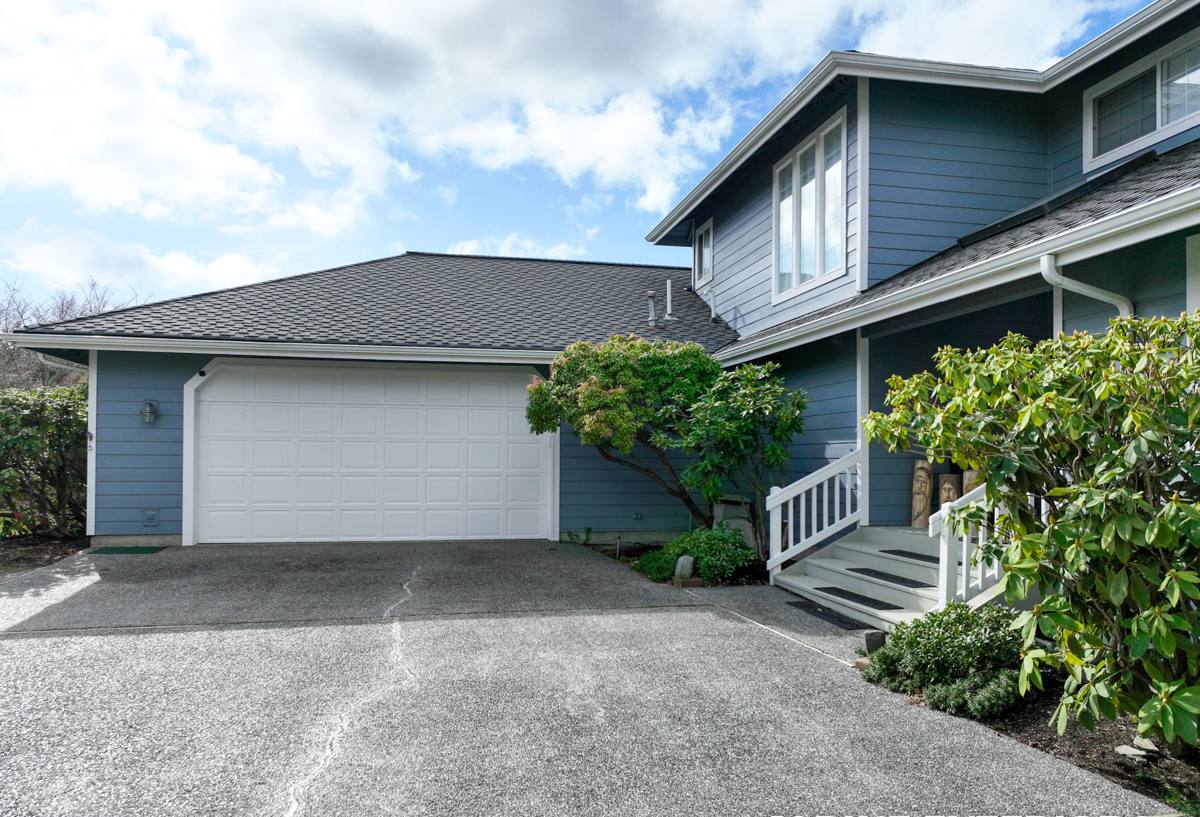
What Blaine's Climate Does to an Outdoor Structure
Salt Air and Corrosion
Being this close to the water means airborne salt is a real factor, not a theoretical one. Salt accelerates corrosion on any fastener, bracket, or connector that isn't rated for it. A deck built with standard interior-grade screws or basic galvanized hardware will show rust streaks and weakening connections well before a deck built with stainless steel or marine-grade coated fasteners. This is one of the most common corner-cutting spots we find when we're called out to look at an older deck that's started to feel spongy or loose at the railing posts.
Driving Rain and Moisture Intrusion
Blaine gets weather that comes in sideways off the water more often than a lot of inland Whatcom County towns. That matters most where a deck meets the house. The ledger board connection — the beam that attaches the deck to your home's framing — is the single most common failure point on decks in this region, and it's almost always a flashing and moisture-barrier problem, not a lumber problem. Water that gets behind an improperly flashed ledger board will rot the house framing itself, not just the deck, long before it's visible from outside.
Moss and Sustained Dampness
Whatcom County's moss season is long, and a deck surface that stays shaded and damp for weeks at a time will grow moss on wood decking, sealed or not. Beyond looking bad, moss holds moisture against the board surface and becomes a slip hazard on stairs and ramps. Board spacing, surface texture, and drainage underneath the deck all affect how much moss becomes a problem and how easy it is to deal with.
Choosing the Right Decking Material for a Blaine Property
There's no single "best" decking material — there's a best material for your budget, your maintenance appetite, and how exposed your deck is to sun, shade, and salt air. Here's how the common options actually compare for this specific climate:
| Material | Moisture/Salt Performance | Moss Resistance | Maintenance | Typical Lifespan Here |
|---|---|---|---|---|
| Pressure-treated lumber | Good if fasteners are corrosion-rated; wood itself needs sealing | Moderate — needs regular cleaning | Annual cleaning, re-sealing every 1-2 years | 15-20 years with upkeep |
| Cedar | Naturally rot-resistant but still needs sealing near salt air | Moderate — moss grows without upkeep | Cleaning and re-oiling every 1-2 years | 15-20 years with upkeep |
| Composite decking | Excellent — doesn't absorb moisture or corrode | Good — smooth-surface boards resist moss buildup | Occasional washing, no sealing/staining | 25-30+ years |
| PVC decking | Excellent — fully synthetic, unaffected by salt or moisture | Good, similar to composite | Lowest — washing only | 25-30+ years |
For a lot of Blaine homeowners, especially those closer to the water, composite or PVC decking earns its higher upfront cost back in reduced maintenance and a longer service life. That said, plenty of homeowners still want the look and feel of real wood, and cedar or pressure-treated lumber is a perfectly legitimate choice as long as you go in understanding the maintenance commitment and we detail the structure correctly underneath it. We'll give you the honest trade-offs for your specific site rather than push whatever's easiest for us to install.
The Structure Underneath Is What Actually Determines Deck Life
The decking boards are the part everyone sees, but the framing, footings, and connections are what determine whether the deck is still solid in fifteen years. This is where we spend the most attention on every Blaine project.
Footings and Frost Depth
Footings need to be sized and set to local frost depth and soil conditions, not guessed at. Undersized or shallow footings are one of the more common issues we find on older decks — they may hold for years before shifting soil or seasonal ground movement starts showing up as an uneven or bouncy deck surface.
Ledger Board Flashing
As mentioned above, this connection point is where most moisture problems start. A correct installation uses proper flashing, a moisture barrier between the ledger and the house sheathing, and structural screws or bolts rated for exterior exposure — never just deck screws driven through the ledger into the house framing.
Joist and Beam Protection
Joist tape or a comparable moisture barrier on top of framing members keeps standing water from soaking into cut lumber ends and screw holes, which is where rot typically starts even on pressure-treated wood. Combined with corrosion-resistant hangers and fasteners throughout, this is what separates a deck that ages well in this climate from one that doesn't.
Drainage Underneath
On multi-level decks or decks that create usable space underneath, how water is directed off the deck surface and away from the foundation matters. A deck that dumps runoff straight against your foundation or crawlspace vents is setting up a moisture problem somewhere else on the property.
Railings, Stairs, and Code Requirements
Railings and stairs aren't optional design flourishes — they're governed by building code for a reason, and getting them wrong is both a safety issue and a permitting problem. General requirements you should expect on a Blaine deck project include:
- Guardrails required on any deck surface roughly 30 inches or more above grade
- Baluster spacing tight enough that a 4-inch sphere can't pass through
- Stair handrails with consistent, code-compliant rise and run on every step
- Graspable handrail profile on stairs with four or more risers
- Guardrail posts anchored into structural framing, not just decking boards
Whatcom County and the City of Blaine require permits for most new deck construction and many significant deck replacements, particularly where structural framing or footings are involved. We handle the permit process as part of the job so you're not the one tracking down inspections.
Our Process, From Estimate to Finished Deck
- On-site assessment — we look at your existing structure (if there is one), the site's sun and shade exposure, drainage, and how the deck connects to your home.
- Honest material conversation — we walk through decking, railing, and hardware options with real trade-offs for your budget and maintenance preference, not a sales pitch toward the highest-margin product.
- Written estimate — clear scope, materials, and price before any work starts.
- Permitting — we pull the necessary permits and coordinate inspections where required.
- Demolition and site prep — removal of any existing structure, footing layout, and utility checks.
- Framing and structural work — footings, ledger flashing, joists, and beams built to code and to the standards we've described above.
- Decking, railing, and finish work — installation of your chosen decking and railing system, with attention to fastener patterns and drainage details.
- Final walkthrough — we go over the finished deck with you and cover any maintenance recommendations specific to your material choice.
Living With Your Deck: Maintenance in This Climate
Whatever material you choose, a Blaine deck benefits from a seasonal maintenance rhythm that accounts for the moss and moisture in this area. A basic checklist we give homeowners:
- Sweep debris and standing leaves off the deck surface regularly, especially in fall
- Wash the deck surface at least once a year with a cleaner appropriate to your decking material — pressure washing wood too aggressively can damage the surface
- Inspect and re-seal or re-stain wood decking on the schedule your product calls for, typically every one to two years
- Check railing posts and stair connections annually for looseness or corrosion at fastener points
- Clear debris from underneath the deck and around footings so water isn't pooling against structural elements
- Address any moss growth promptly rather than letting it establish, particularly on stairs
Why a Crew That Already Works in Blaine Matters
A deck built to a generic national spec sheet doesn't automatically hold up here. Crews that regularly work Blaine and the surrounding Whatcom County coastline already know to spec corrosion-resistant hardware as standard, not an upsell; they know which decking products actually resist the local moss and moisture load instead of just claiming to; and they know what the local permitting process actually requires because they've been through it repeatedly. That local track record shows up in fewer callbacks and a deck that's still solid well past the point where a corner-cut version would already be showing problems.
We also stand behind the work itself — from the footings up, not just the visible decking surface — because in a marine climate like this, the parts you can't see are usually the parts that determine whether the deck lasts.
Get a Straightforward Estimate
If you're planning a new deck or replacing one that's showing its age, we're happy to come take a look and give you a straightforward, no-pressure estimate. Use the form below to get started, and we'll walk you through what your specific site and budget call for.