 Bellingham
 Windows Built for Columbia's Coastal Conditions
Columbia sits close enough to Bellingham Bay that salt-laden air, wind-driven rain, and long stretches of low winter sun all show up in how windows age here. Homes in this neighborhood range from older single-pane originals that have never been touched to mid-generation vinyl replacements installed decades ago that are now fogging, sticking, or letting in drafts. Whatcom County's climate is not harsh in the way a hail-prone or hurricane-prone region is harsh — it's harsh in a slower, cumulative way. Moisture works into gaps, wood trim swells and shrinks with the seasons, and any flashing or sealant mistake made at install time eventually shows up as a stain, a soft spot, or a window that won't latch square anymore.
Custom windows, done correctly, address all of that at once: the right glass package for our light and temperature swings, frame materials that actually hold up to marine air, and installation detail that keeps water moving out and away from the wall assembly instead of into it.
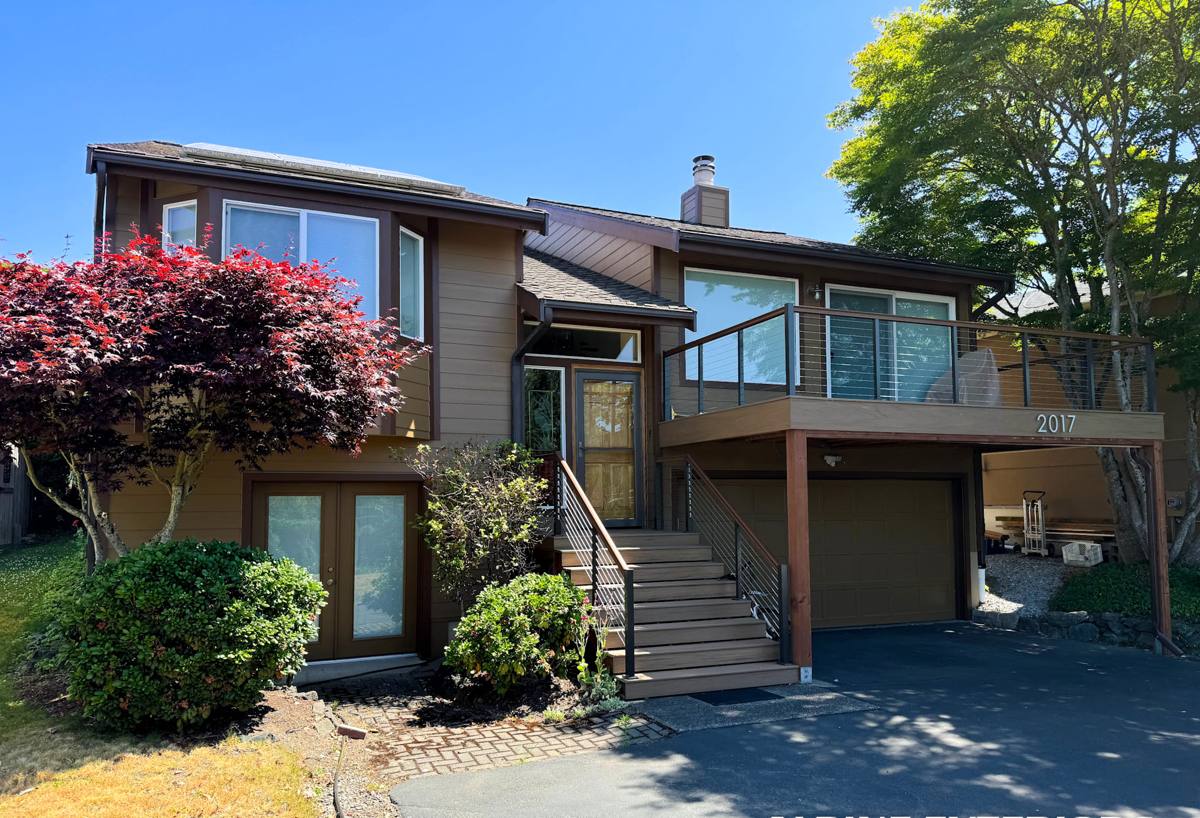
What "Custom" Actually Means Here
Custom doesn't mean unusual shapes or high-end finishes, although we do that work too. For most Columbia homes, custom simply means the window is built to the exact rough opening rather than force-fit from a limited stock size. That distinction matters more in older Bellingham housing stock than people expect — many homes built before standardized window sizing became common have openings that are slightly out of square, slightly undersized, or slightly larger than any off-the-shelf unit. Forcing a stock window into an opening it wasn't made for is one of the most common causes of the drafts and water intrusion we get called out to fix.
Common Custom Scenarios We See in Columbia
- Replacing a single, oddly-sized window in a room addition or older kitchen
- Matching a new window to existing sightlines when only some windows on the house are being replaced
- Bay, bow, or picture window units that need to be built rather than stocked
- Basement or daylight-level windows with tighter clearances
- Full-house replacement projects where consistent sizing and sightlines matter for resale value
Why Local Climate Drives Product Choice
We don't recommend the same window package for a Columbia home that we might for a drier, inland Washington climate. Three regional factors shape our recommendations every time:
Salt Air and Corrosion
Homes closer to the bay see accelerated corrosion on hardware, screens, and unprotected metal components. We steer clients toward corrosion-resistant hardware finishes and frame materials that don't rely on paint alone to resist salt exposure.
Driving Rain and Wind-Loaded Water
Bellingham's rain rarely falls straight down. Wind pushes it sideways into wall assemblies, which means flashing detail and sill pan design matter as much as the window unit itself. A premium window installed without proper flashing will leak; a mid-grade window installed correctly usually won't.
Moss Season and Prolonged Dampness
Long stretches of damp, shaded conditions during moss season keep exterior surfaces wet longer than in sunnier climates. Wood-clad exteriors and any exposed wood trim around window openings need finishes and detailing that account for that extended moisture exposure, not just occasional storms.
Frame Material Comparison for This Climate
| Material | Coastal Performance | Maintenance | Typical Fit for Columbia Homes |
|---|---|---|---|
| Vinyl | Good — resists corrosion, doesn't rot | Low | Strong value option, wide color range |
| Fiberglass | Very good — stable in temperature swings, low expansion/contraction | Low | Good fit for larger or custom-shaped openings |
| Wood (clad exterior) | Fair — needs consistent maintenance near salt air | Higher | Best for historic-style homes where interior wood look matters |
| Aluminum | Fair — prone to condensation and corrosion without thermal breaks | Moderate | Limited use; mainly commercial or specific architectural needs |
We don't push one material as universally "best." The right call depends on the home's age, exposure to wind and salt air, budget, and whether the goal is long-term low maintenance or matching a specific architectural style.
Glass and Performance Packages
Glass selection matters as much as frame material in our climate. Double-pane, low-E glass with argon gas fill is the standard baseline we recommend for Columbia homes — it balances upfront cost against real performance gains in heat retention and condensation resistance. For homes with more direct sun exposure or street noise, we'll walk through upgraded low-E coatings or triple-pane options, but we're upfront when a triple-pane upgrade isn't worth the added cost for a given room or orientation. Condensation resistance is worth asking about specifically here — our damp winters and temperature swings between inside and outside air are exactly the conditions that expose a poorly sealed or aging insulated glass unit.
Our Installation Process
The window unit itself is only part of the job. Installation detail is where most long-term problems either get prevented or get built in.
- On-site measurement and assessment — we measure the actual opening, check for square, and inspect the surrounding wall for existing moisture damage or rot before ordering anything.
- Custom order to exact dimensions — units are built to the opening, not forced to fit a stock size.
- Removal and opening prep — old units are removed carefully, and we inspect sheathing and framing underneath for hidden damage, which is common in older Bellingham homes near the water.
- Sill pan and flashing installation — this is the step that determines whether wind-driven rain stays out over the next twenty years. We use sill pan flashing and properly lapped water-resistive barrier integration, not just caulk.
- Window setting and shimming — the unit is set level, plumb, and square, and shimmed correctly so it operates smoothly and doesn't bind under seasonal frame movement.
- Insulation and air sealing — gaps around the frame are insulated and air-sealed without over-packing, which can bow the frame.
- Exterior trim and sealant — trim is finished and sealed with materials rated for continuous exterior exposure, not general-purpose caulk that breaks down in a season or two.
- Final operation check and walkthrough — every window is opened, closed, and locked to confirm smooth operation before we consider the job done.
Signs a Columbia Home Needs Window Replacement
- Visible fog or moisture trapped between glass panes
- Windows that are difficult to open, close, or lock
- Cold drafts near the frame even when the window is fully closed
- Soft or discolored trim and sill areas — a common sign of long-term moisture intrusion
- Visible gaps between the frame and siding or trim
- Noticeably higher heating costs without another clear cause
- Single-pane glass original to a home built before energy codes required insulated glass
Cost Factors Homeowners Should Understand
We don't publish flat per-window pricing because too many variables change the real cost, but the main factors are consistent across almost every project:
| Factor | Why It Affects Cost |
|---|---|
| Frame material | Vinyl, fiberglass, and wood-clad options carry different material and labor costs |
| Opening condition | Rot or framing damage found during removal adds repair scope before the new window can go in |
| Glass package | Standard low-E double-pane vs. upgraded coatings or triple-pane changes unit cost |
| Window size and shape | Custom shapes, bay/bow units, and oversized openings require more material and labor |
| Number of units | Full-house projects typically see better per-unit pricing than single replacements |
| Trim and siding tie-in | Matching existing trim profiles or siding material adds finishing work |
We provide a written, itemized estimate before any work begins so homeowners can see exactly what's driving the number, not just a bottom-line total.
Why Local Experience in Columbia Matters
A contractor who works regularly in Columbia and greater Bellingham already knows how the local building stock tends to be framed, what kind of moisture issues show up behind older siding, and how far homes near the bay sit from direct salt exposure. That experience shortens the assessment phase and reduces surprises during the removal step. It also means we're not guessing at flashing details for our climate — sill pan installation and water-resistive barrier integration are done the same careful way on every job because we've seen what happens in Whatcom County when they're skipped. A crew unfamiliar with coastal Pacific Northwest conditions may build to a generic standard that works fine in a drier climate and fails here within a few winters.
What to Expect From Us
We measure carefully, order to the actual opening, and install with flashing and sealing detail suited to driving rain and salt air — not shortcuts that look fine on move-out day and fail two winters later. We'll tell you honestly if a premium glass package isn't worth it for a shaded north-facing room, and we'll tell you just as honestly if your existing frames have hidden rot that needs addressing before new windows go in. That's the standard we hold every Columbia project to, whether it's one window or a full-house replacement.
If you're noticing drafts, fogged glass, or sticking windows on a Columbia home, we're happy to take a look and walk you through your options. Reach out for a free, no-pressure estimate using the form below.