 Bellingham
 Windows Built for Happy Valley's Weather, Not Just Its Style
Happy Valley sits close enough to Bellingham Bay that salt-laden air, wind-driven rain, and long stretches of damp, shaded weather are simply part of owning a home here. That combination is harder on windows than most homeowners realize. It's not one dramatic storm that causes trouble — it's the slow, repeated cycle of moisture finding its way into places it shouldn't be, month after month, year after year. A window that looks fine from the curb can still be failing quietly behind the trim.
When we talk about "custom windows" for a Happy Valley home, we mean windows sized, built, and installed to match the specific openings, framing, and exposure of that house — not a stock size forced into place with extra caulk and hope. Older homes in this part of Bellingham often have settled or slightly out-of-square openings, original trim worth preserving, and wall assemblies that were never designed for today's high-performance glass. Custom work accounts for all of that instead of fighting it.
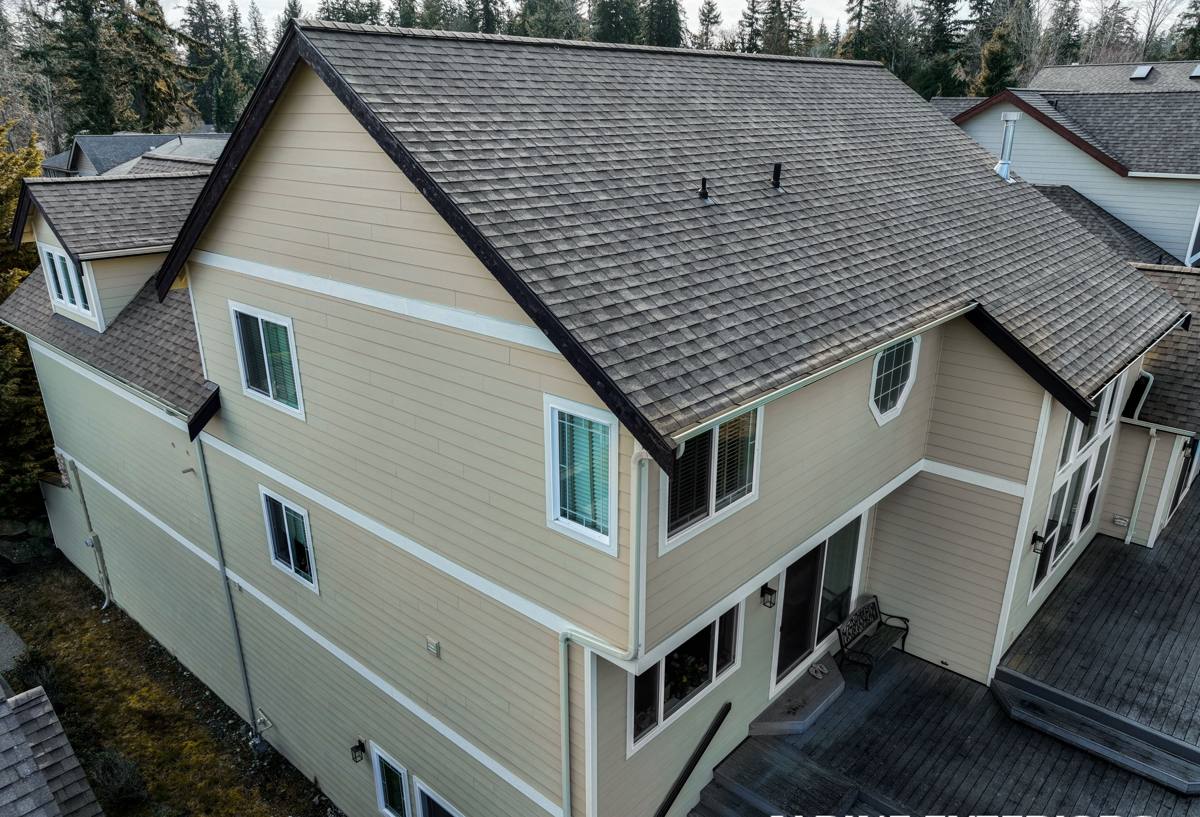
What Salt Air, Driving Rain, and Moss Season Actually Do to Windows
Three climate factors show up again and again in the window problems we see around Happy Valley and the rest of Whatcom County:
Salt Air
Proximity to the bay means airborne salt settles on exterior surfaces, including window hardware, cladding, and fasteners. Over time it accelerates corrosion on lower-grade metal components — hinges, cranks, and screws — and can dull or pit certain aluminum finishes faster than manufacturers' inland warranty testing accounts for.
Driving Rain
Wind off the water doesn't just drop rain straight down — it pushes it sideways into window faces, sills, and the joints where window units meet siding or trim. A window that would be perfectly fine in a calm climate can leak here if the flashing and sealant details weren't done correctly the first time. This is the single biggest cause of the water damage we find during window replacements.
Moss and Extended Damp Season
Bellingham's long wet season keeps wood, caulking, and even some composite trim materials damp for extended stretches. That moisture retention is what allows moss and mildew to establish on horizontal surfaces like sills and mulled window trim, and it's also what slowly breaks down old glazing putty, wood sills, and failing weatherstripping. A window system that can't shed water quickly is fighting an uphill battle for most of the year.
Signs a Happy Valley Home Needs Window Attention
Because these problems develop slowly, most homeowners don't notice until there's a visible issue. Here's what we tell people to watch for:
- Fogging or a permanent haze between panes (failed seal on double- or triple-pane glass)
- Soft or spongy wood at the sill, especially on the south or west-facing sides that catch the most wind-driven rain
- Windows that are difficult to open, close, or lock — often a sign of frame swelling or hardware corrosion
- Visible moss, black staining, or persistent green growth on sills or bottom trim
- Drafts or a noticeable temperature difference near the window even when it's fully closed
- Paint that's bubbling, peeling, or cracking specifically around the window perimeter rather than the whole wall
- Interior sill or drywall discoloration below or beside the window
Any one of these on its own might be minor. Two or more on the same window usually means moisture has been getting past the seal for a while, and it's worth having someone look before it spreads into the wall framing.
Choosing Materials That Hold Up in This Climate
There's no single "best" window material for every home — it depends on the home's age, exposure, and how much upkeep the owner wants to take on. Here's how the common options compare specifically against Whatcom County's coastal, wet conditions:
| Material | How It Handles Salt Air & Rain | Maintenance | Best Fit |
|---|---|---|---|
| Vinyl | Won't corrode or rot; performs consistently near the water | Low — occasional cleaning | Budget-conscious replacements, rental properties, most standard openings |
| Fiberglass | Excellent — dimensionally stable in temperature and moisture swings, resists corrosion | Low | Larger openings, homes wanting a tighter long-term seal |
| Wood-clad | Good if detailed correctly, but the interior wood core is vulnerable if any water gets past the cladding | Moderate to high | Historic-style homes prioritizing interior wood appearance |
| Aluminum | Weakest match for salt air unless it's a marine-grade or well-finished product; prone to condensation without thermal breaks | Moderate | Modern designs where thin sightlines matter more than climate performance |
For most Happy Valley homes, we steer people toward vinyl or fiberglass for straightforward performance, or a well-detailed wood-clad unit when matching original trim and character is the priority. We're honest about the trade-off with wood-clad: it looks great and can absolutely last, but only if the cladding and flashing details are installed correctly, since any breach lets moisture reach the wood core where it's hardest to detect.
What a Correct Installation Actually Involves
The window unit itself is only part of the job. Most window failures we're called to fix trace back to installation details, not the product. Here's what has to happen correctly.
Flashing and Water Management
Every window opening needs a flashing sequence that directs water down and out, layered so each piece overlaps the one below it — sill pan, side flashing, and head flashing integrated with the building's weather-resistive barrier. In a climate with sustained wind-driven rain, this is the detail that matters most, more than the window brand itself. Skipping or shortcutting flashing is the single most common cause of the "mystery leaks" we diagnose in older replacements.
Insulation and Air Sealing
The gap between the window frame and the rough opening needs to be filled with an appropriate low-expansion foam or backer rod and sealant — not stuffed with fiberglass insulation alone, which does nothing to stop air and moisture movement. Done right, this stops the draft and condensation complaints that often get blamed on the window itself.
Trim and Finish
Exterior trim and caulking are the last line of defense and the first thing exposed to weather. We use sealants rated for exterior, high-moisture use and make sure every joint sheds water rather than trapping it — especially at the bottom corners of the trim, which is where we most often find moss and rot starting on older homes.
How Our Process Works
- On-site assessment. We look at each window opening individually — condition of the framing, exposure to wind and rain, existing trim style, and any signs of past water intrusion.
- Measurement and ordering. Custom sizing means the unit is built for the actual opening, not an estimate. We also confirm material and glass package based on that window's specific sun and weather exposure.
- Installation day. Removal of the old unit, inspection of the framing underneath (this is often when hidden water damage is found and addressed before it's covered back up), correct flashing sequence, window setting, insulation, and exterior finish work.
- Final inspection and walkthrough. We check operation, seals, and exterior finish before calling the job done, and walk the homeowner through anything they should know about care or warranty.
What Affects the Cost of a Window Project
Every home is different, so we don't quote sight-unseen, but these are the main factors that move the price up or down:
| Factor | Why It Matters |
|---|---|
| Number and size of openings | Larger and more numerous windows increase material and labor |
| Material choice | Vinyl is generally the most economical; fiberglass and wood-clad cost more upfront |
| Condition of existing framing | Rot or water damage found during removal requires repair before a new window can be set correctly |
| Access and height | Second-story or hard-to-reach windows take more time and equipment |
| Trim and finish complexity | Matching existing historic or custom trim profiles takes more labor than standard trim |
| Glass package | Upgraded glass (extra panes, coatings) improves comfort but adds cost |
Broadly, homeowners should expect standard vinyl replacement windows to run in the low-to-mid thousands per opening installed, with fiberglass and custom wood-clad units running higher. The only way to get an accurate number is to see the actual openings, which is exactly what a free estimate is for.
Why It Matters to Hire a Crew That Already Works in Happy Valley
A crew that regularly works this specific area already knows what to expect before they open the wall — how homes in this part of Bellingham were typically built, which exposures take the worst of the wind-driven rain off the bay, and what moisture damage tends to look like once it's found. That familiarity shows up in fewer surprises during the job and fewer callbacks after it. It also means we're not guessing at flashing details or material choices based on a generic climate — we're applying what actually holds up through a Whatcom County wet season, because we've seen what doesn't.
We also stand behind the work with a straightforward warranty and are reachable locally if anything needs a follow-up look — not a call center for a national installer that may not have a crew back in the area for months.
Ready for a Straight Answer on Your Windows?
If you're noticing drafts, fogging, sticking sashes, or moss creeping onto your sills, it's worth having a local set of eyes on it before it becomes a bigger repair. We offer free, no-pressure estimates for Happy Valley homeowners — use the form below and we'll take a look at what your home actually needs.