 Bellingham
 Building a Deck That Actually Belongs in Sehome
Sehome sits close enough to Bellingham Bay and the surrounding waterways that a deck here lives a different life than one built inland or in a drier climate. Salt-tinged air, long stretches of driving rain off the Sound, and a moss season that can run from late fall clear into spring all work against a deck the moment the last screw goes in. A deck built for Sehome isn't just a deck built to code — it's a deck built with drainage, material choice, and fastener selection that account for what this specific neighborhood throws at it year after year.
We've framed and finished decks across Bellingham and Whatcom County long enough to know that the decks which fail early almost never fail because of bad lumber or a lazy crew. They fail because of decisions made before the first board was cut — where water was allowed to sit, what fasteners were used against pressure-treated lumber, or how close boards were spaced when nobody accounted for swelling. This page covers what a correctly built deck for Sehome actually requires.
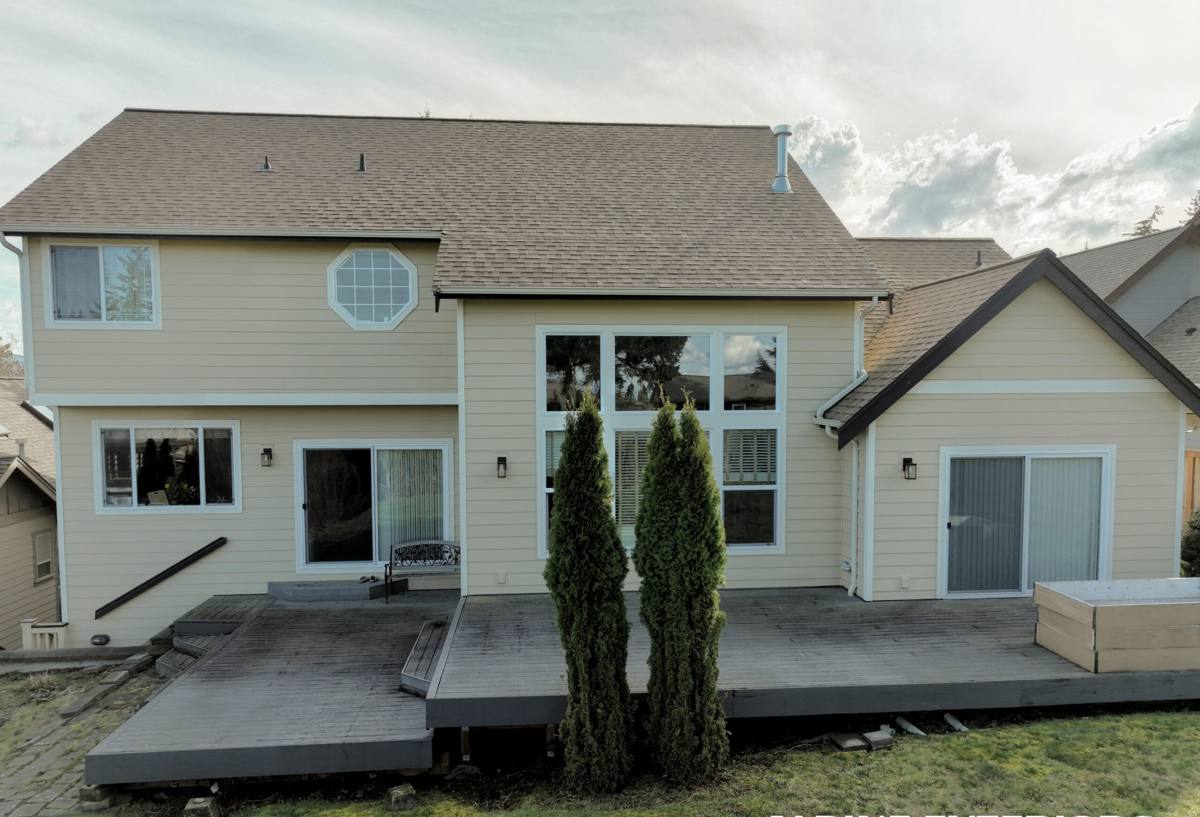
What the Local Climate Does to a Deck Over Time
Whatcom County's marine climate is mild, which is part of why people love living here — but mild and dry are not the same thing. Sehome gets a steady diet of moisture nearly nine months of the year, punctuated by short, intense dry spells in summer. That cycle of saturation and drying is harder on wood and hardware than constant dampness or constant dryness would be on their own.
Three specific stressors we design around
- Driving rain: Wind-driven rain off the Sound doesn't just fall straight down — it gets pushed sideways under railings, into ledger connections, and along the underside of decking boards, so flashing and gapping matter more here than in calmer climates.
- Salt air: Even a few miles inland from the bay, airborne salt accelerates corrosion on fasteners, brackets, and any exposed metal hardware that isn't rated for it.
- Moss and algae: Shaded, north-facing, or tree-covered lots in Sehome grow moss on decking surfaces almost year-round, which retains moisture against the wood and makes boards dangerously slick.
None of these problems are dramatic on their own. They're slow. That's exactly why they get overlooked during a build and show up as soft boards, rusted fasteners, or a slippery walking surface two or three years later.
Choosing Decking Material for a Wet, Mossy Climate
There's no single "best" decking material — there's a best material for this lot, this budget, and this level of maintenance the homeowner actually wants to do. We walk every Sehome customer through the real trade-offs instead of pushing whatever's easiest for us to install.
| Material | How it handles our climate | Maintenance reality |
|---|---|---|
| Pressure-treated fir/hem-fir | Handles moisture well when properly sealed and gapped; needs attentive detailing at cuts and fastener holes | Annual cleaning and re-sealing to prevent moss growth and graying |
| Cedar | Naturally moisture- and insect-resistant, ages gracefully, but softer and more prone to surface checking in freeze-thaw swings | Periodic cleaning and oiling if you want to keep the color; fine left to gray naturally |
| Composite decking | Excellent moisture resistance and won't rot, though moss and algae can still grow on the surface film in shaded, damp spots | Occasional washing; no sealing or staining ever needed |
| PVC decking | Fully moisture-proof and the most resistant to mold and algae staining of the common options | Lowest maintenance, highest upfront material cost |
For heavily shaded Sehome lots — under mature trees or on the north side of a house — we often steer homeowners toward composite or PVC specifically because wood in constant shade in this climate is fighting an uphill battle against moss no matter how well it's sealed.
Framing and Fastener Choices That Matter Here
The decking surface is what people notice, but the framing underneath is what determines whether a deck lasts fifteen years or thirty. In a salt-air, high-rain environment, a few details separate a deck that ages well from one that starts showing rust streaks and soft spots within a few seasons.
What we build into every frame
- Stainless steel or heavy hot-dip galvanized fasteners rated for ground-contact and treated-lumber corrosion — standard coated screws corrode faster this close to salt air
- Proper ledger board flashing where the deck meets the house, so wind-driven rain can't work its way behind the siding
- Joist tape or a moisture barrier on top of framing members to keep standing water off the wood where decking boards attach
- Correct board gapping to allow for both drainage and the seasonal swelling that comes with our humidity swings
- Footings set below frost depth and sized to the soil conditions on the specific lot, since Sehome's terrain varies from flat yards to sloped lots requiring taller support posts
None of this is exotic. It's just easy to skip when a crew is trying to move fast, and the consequences don't show up until well after the invoice is paid.
Moss Is the Whatcom County Problem Nobody Asks About
Homeowners in Sehome usually come to us asking about board material or railing style. Almost nobody asks about moss control up front — and it's often the single biggest factor in how a deck looks and performs five years down the road.
Moss needs shade and standing moisture to establish itself, and Sehome's tree cover combined with our long wet season gives it both. Once moss takes hold on a wood deck, it holds moisture against the boards, which accelerates rot underneath a surface that might still look fine from a few feet away. On any decking material, moss also makes stairs and walking surfaces genuinely dangerous when wet.
How we build moss resistance in from the start
- Orienting board direction and gapping to shed water rather than pool it
- Recommending material upgrades on lots with heavy shade, where wood alone will need constant upkeep
- Avoiding low spots in the frame design where water and debris collect
- Talking through a realistic annual cleaning schedule before the project even starts, so there are no surprises
Our Deck Building Process
Every deck we build in Sehome follows the same sequence, adjusted for the specific lot:
- On-site assessment: We look at sun exposure, tree cover, drainage patterns, and how the deck will tie into the existing house structure.
- Material and layout consultation: We walk through decking, railing, and framing options honestly, including maintenance trade-offs, not just upfront cost.
- Permitting: We handle the permit application and inspection scheduling required for the project.
- Site prep and footings: Footings are dug and poured to the depth and spacing the structure and soil require.
- Framing: Ledger flashing, joist layout, and hardware go in with the corrosion-resistant fasteners this climate calls for.
- Decking and railings: Boards are installed with correct spacing and fastening for the chosen material.
- Final walkthrough: We go over care and cleaning specific to the material installed, so you know what upkeep to expect.
Permits and Code Considerations in Bellingham
Most deck projects in Bellingham require a building permit, and the requirements can shift based on deck height, whether it's attached to the house, and railing height once the walking surface is above a certain elevation off grade. Sehome's mix of flat and sloped lots means footing depth and post height requirements can vary even between neighboring properties. We handle the permit process as part of the job rather than leaving it to the homeowner to sort out, and we build to pass inspection the first time, not just to look finished.
What a Correctly Sized Project Costs — and Why
Deck pricing depends on square footage, material, height off grade, and structural complexity, but a few cost drivers show up on nearly every Sehome project:
| Cost factor | Why it moves the price |
|---|---|
| Decking material | Pressure-treated wood is the lowest upfront cost; composite and PVC cost more but need far less maintenance over time |
| Height and footing depth | Taller decks and sloped lots require more substantial footings and support posts |
| Railing style | Cable, glass, and custom railing systems cost more than standard wood or composite balusters |
| Ledger and flashing work | Older homes sometimes need siding or trim work to properly flash the ledger connection, which adds labor |
| Stairs and multiple levels | Each additional stair run or level adds framing, footings, and railing requirements |
We give straightforward, itemized estimates so you can see exactly what's driving the number, rather than a single lump figure.
A Simple Maintenance Checklist for Sehome Decks
Whatever material you choose, a small amount of seasonal upkeep goes a long way in this climate:
- Sweep leaves and debris off the surface regularly through fall, when moss and rot risk is highest
- Rinse or wash the deck at least once a year to remove early moss and algae growth before it establishes
- Check railing posts and stair connections annually for looseness, especially after winter storms
- Re-seal or re-stain wood decking on the schedule recommended for the specific product used
- Clear gutters and downspouts near the deck so runoff isn't draining directly onto the structure
- Inspect under-deck framing every couple of years for soft spots, rust streaks, or standing water
Why a Crew That Already Works Sehome Makes a Difference
Deck building isn't unique to this neighborhood, but the conditions that determine whether it lasts are. A crew that's worked lots across Sehome and the rest of Bellingham already knows which yards drain poorly, which streets sit in near-constant shade, and how far wind-driven rain actually travels under a deck in a real winter storm here — not in a manufacturer's general climate rating. That local pattern recognition shows up in small decisions throughout a build: how a ledger gets flashed, where footings get placed on a sloped lot, which fastener grade actually holds up against this air. It's the difference between a deck that's technically built to code and one that's actually built for Whatcom County.
If you're planning a new deck or replacing one that hasn't held up to Sehome's weather, we're happy to take a look and talk through honest options for your lot. Use the form below to request a free, no-pressure estimate.