 Bellingham
 Deck Repair Built for Barkley's Weather, Not Just Its Boards
Barkley sits close enough to Bellingham Bay that homes here deal with a specific combination of punishment: salt-laden air moving in off the water, driving rain that comes in sideways during fall and winter storms, and a moss season that can stretch from October well into spring. None of that is unique to any one yard in the neighborhood — it's just what a deck in this part of Whatcom County has to survive, year after year. A deck repair that ignores those conditions might look fine for a season and then fail again in the same spot.
We repair decks throughout Bellingham, and Barkley is one of the areas we're in regularly enough to know what tends to go wrong first: ledger connections that stay damp too long, fastener corrosion from salt air, and moss buildup that holds moisture against boards and framing far longer than most homeowners realize. A correct repair addresses the underlying moisture and structural issue, not just the visible damage.
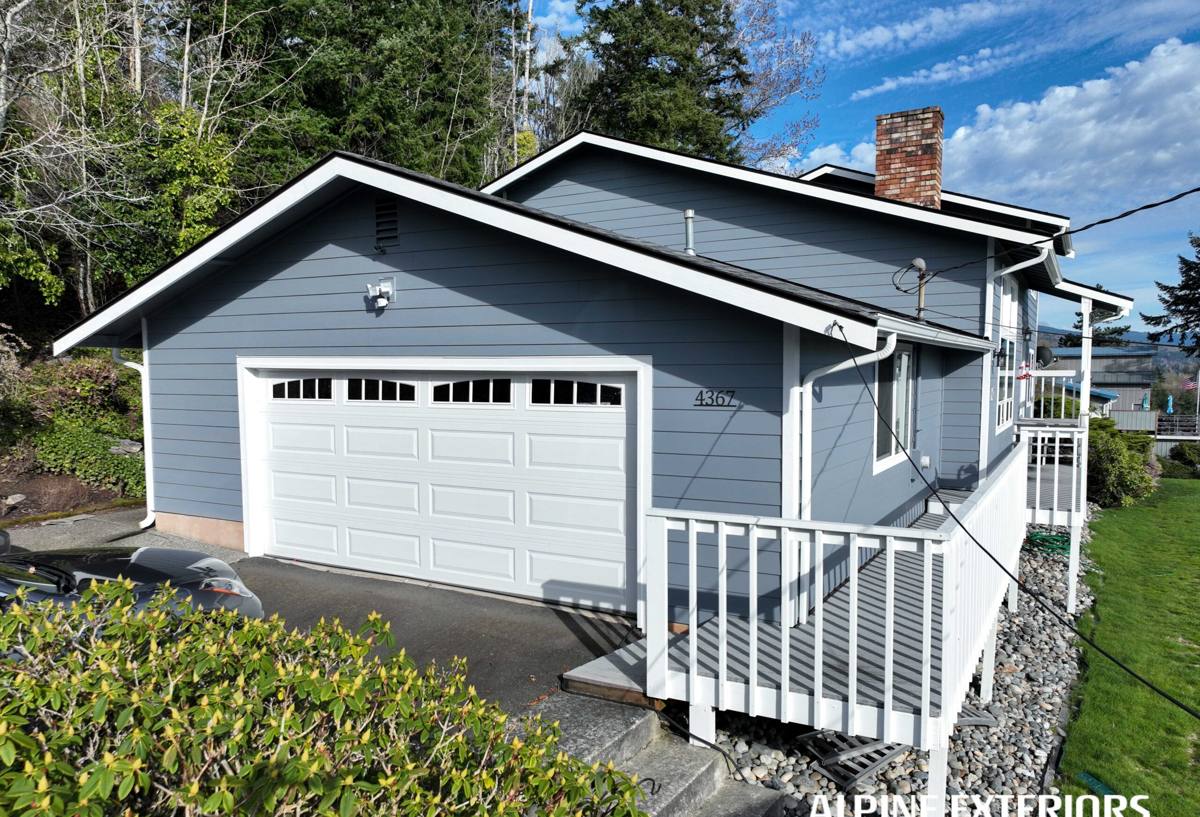
How the Local Climate Actually Damages a Deck
It helps to understand the mechanism, not just the symptom. Wood and even composite decking don't fail because of a single hard rain — they fail from repeated wet-dry cycling and prolonged saturation in specific spots.
Salt Air and Metal Fasteners
Homes closer to the water see accelerated corrosion on nails, screws, and structural hardware. Once a fastener starts rusting, it loses holding strength and can streak or stain the surrounding wood — a sign we look for even on decks that otherwise look structurally sound.
Driving Rain and Water Intrusion
Bellingham's rain rarely falls straight down. Wind-driven rain gets pushed under railings, into ledger board connections, and into end grain on stair stringers and joists — the parts of a deck that are hardest to inspect without pulling boards.
Moss and Trapped Moisture
A long moss season means organic growth has more time to establish on decking surfaces, especially in shaded or north-facing areas common in wooded Barkley lots. Moss holds water against the board surface long after the surrounding air has dried out, which is what actually causes rot — not the rain itself.
Signs a Barkley Deck Needs Repair
- Soft, spongy, or springy spots underfoot, especially near the house or at stair landings
- Boards that stay dark or damp long after the rest of the deck has dried
- Rust streaking around screws, nail heads, or joist hangers
- Gaps opening up where the deck framing meets the house (ledger board separation)
- Railing posts that wiggle or feel less solid than they used to
- Persistent moss or algae that keeps coming back within weeks of cleaning
- Visible cracking or splitting concentrated on the sun-exposed or rain-exposed side of the deck
- A change in how stairs feel — flex, bounce, or a slightly uneven step
What a Correct Deck Repair Actually Involves
Deck repair gets treated as simple board-swapping more often than it should be. Done right, it starts below the surface.
Structural Inspection First
Before replacing a single board, we check the framing underneath — joists, beams, posts, and especially the ledger board connection to the house, since that's the single most common source of hidden rot on older decks in wet climates.
Ledger Board and Flashing
If the ledger board lacks proper flashing, or the flashing has failed, water has likely been getting behind it for years. Replacing boards without correcting the flashing is a repair that's guaranteed to need repeating.
Fastener Upgrades
Where corrosion is visible, we replace fasteners with corrosion-resistant hardware rated for exterior and coastal-adjacent use, matched to whatever decking material is already installed so metals don't react against each other.
Board and Framing Replacement
Damaged boards, joists, or stringers get replaced with material appropriate to the deck's age and construction — matching dimensional lumber where structural, and matching visible decking as closely as reasonably possible when it's a partial replacement rather than a full resurfacing.
Railings and Stairs
Loose railing posts and worn stair stringers are a safety issue as much as a cosmetic one. We check post attachment to framing, not just to the surface decking, since a railing that's only screwed into a board can look solid and still fail under real load.
Common Barkley Repair Scenarios
| Issue | Typical Cause Locally | What's Involved |
|---|---|---|
| Soft spot near house | Ledger board moisture, failed flashing | Open framing, correct flashing, replace affected joists/ledger |
| Rusted fasteners | Salt air exposure, older non-coated hardware | Fastener replacement, spot-check surrounding wood condition |
| Persistent moss/staining | Shaded areas, long wet season, poor drainage under deck | Board cleaning or replacement, improve airflow/drainage where possible |
| Wobbly railing post | Original attachment only to decking, not framing | Reinforce post-to-framing connection, code-check railing height/spacing |
| Cracked or split stair stringers | Repeated wet-dry cycling, sun exposure on one side | Stringer sistering or replacement, re-level treads |
Repair or Replace?
Not every damaged deck needs to come down. The honest answer depends on how much of the structure — versus just the surface — is affected.
| Factor | Leans Toward Repair | Leans Toward Replacement |
|---|---|---|
| Framing condition | Solid joists and posts, isolated soft spots | Widespread rot in joists, beams, or posts |
| Age of deck | Under 15-20 years, standard maintenance history | Original construction decades old, outdated fastening methods |
| Ledger connection | Flashing intact or easily corrected | Long-term water intrusion behind ledger, multiple failure points |
| Scope of damage | Limited to a few boards, one railing section, or stairs | Damage spread across most of the deck surface and substructure |
| Code compliance | Railing and stair spacing already meet current code | Original build predates current railing/guard code requirements |
We'll tell you plainly which side of that line your deck falls on. If a repair genuinely covers it, we're not going to talk you into a full rebuild — and if the framing is compromised enough that repair would just be a short-term patch, we'll explain why and let you decide with real information instead of guesswork.
Materials: What We Use and Why
For structural framing repairs, we use pressure-treated lumber rated for ground contact or exterior exposure, matched to current code requirements regardless of what the original deck used. For decking surface repairs, the right material depends on what's already installed and what you want going forward.
Matching Existing Wood Decking
When a repair is a partial board replacement on an existing wood deck, we match species and dimension as closely as available material allows, understanding that new boards will weather to match the rest of the deck over a season or two rather than immediately.
Composite for High-Moisture Areas
On decks where the same boards keep failing in the same shaded, damp spots, composite decking is sometimes the more practical fix for that section — it doesn't absorb water the way wood does, which matters directly in a moss-prone, high-rainfall area like this one. We'll walk through the trade-offs honestly: composite costs more upfront and can run warmer in direct sun, but it removes the recurring rot cycle in the areas where wood keeps losing that battle.
Hardware
All structural connectors, screws, and flashing we install are rated for exterior use and chosen to avoid galvanic corrosion against whatever metal is already present in the structure — a detail that matters more here than in drier climates, since it's the difference between hardware that lasts and hardware that starts staining wood within a year or two.
Our Deck Repair Process
- On-site assessment — we inspect the full deck, not just the area you called about, including framing, ledger, railings, and stairs
- Honest scope discussion — what's structural versus cosmetic, and what repair versus replacement actually means for your specific deck
- Written estimate before any work begins, with the reasoning behind each line item
- Repair work — framing correction first, then flashing, fasteners, and surface boards
- Final walk-through so you can see and understand exactly what was done and why
After the Repair: Keeping a Barkley Deck in Shape
- Clear leaves and debris from between boards regularly, especially through fall
- Address moss as soon as it appears rather than waiting for a seasonal deep clean
- Keep gutters and downspouts near the deck clear so runoff isn't draining onto or under it
- Reseal or refinish wood decking on the schedule appropriate to the product, not just when it looks worn
- Check railing posts and stair connections once a year for any new movement
- Watch the area where the deck meets the house — it's the first place a new problem tends to show up
None of this eliminates maintenance, but it does stretch the time between repairs considerably, especially in a climate that doesn't give a deck much of a break between wet seasons.
Why Hire a Crew That Already Works in Barkley
Deck repair done by someone unfamiliar with Whatcom County conditions tends to treat every deck the same, regardless of climate. A crew that works this area regularly already knows where moisture tends to collect on a shaded Barkley lot, what corrosion actually looks like on hardware exposed to salt air off the bay, and how long a repair needs to hold up against a Bellingham winter. That's not a marketing point — it changes what gets flagged during inspection and what gets prioritized in the repair itself.
We also stand behind the work with the same crew and the same standards whether it's a small stair repair or a larger structural fix, so you're not getting a different level of care depending on the size of the job.
If you've got a soft spot, a wobbly railing, or a deck that just doesn't feel as solid as it used to, we're happy to take a look and give you a straight answer. Fill out the form below for a free, no-pressure estimate on your Barkley deck repair.