 Bellingham
 Deck Repair Built for Sudden Valley's Lake and Forest Setting
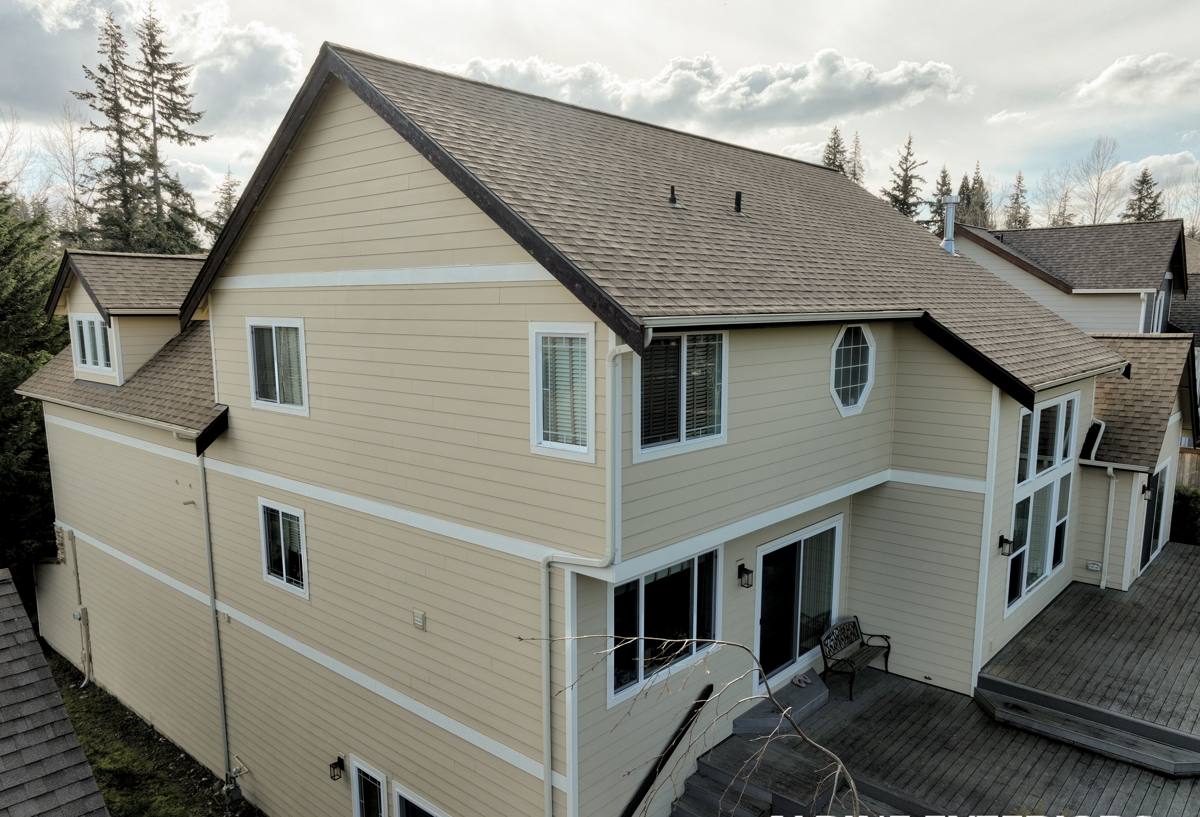
Sudden Valley sits on the south shore of Lake Whatcom, and most of its homes are tucked into wooded, sloped lots with lake or forest views. That setting is part of why people live there — and part of why decks in this community wear differently than decks on a flat, open lot closer to downtown Bellingham. Heavy tree cover means shade that never fully dries out, needle and leaf litter that collects in gaps between boards, and a lot of decks built up on tall posts to get level ground on a hillside. Add in Whatcom County's long stretch of wet months, and you get a specific set of failure points we see over and over in this neighborhood.
This page is about deck repair specifically — patching, rebuilding, and restoring decks that are still fundamentally sound, versus a full teardown. If your deck is solid but showing its age, repair is usually the right call, and it's a lot less disruptive and less expensive than replacement.
Why Sudden Valley Decks Take a Different Kind of Beating
Bellingham and the surrounding Whatcom County lowlands sit close enough to the Salish Sea that the whole region deals with a marine-influenced climate — long wet seasons, low winter sun angles, and humidity that lingers for days after a storm. Sudden Valley adds its own layer on top of that regional pattern: forest canopy that blocks sun and wind from reaching deck surfaces, lake-side humidity, and organic debris that falls onto decks and stays there.
The moss and mildew problem
Shaded, damp wood is exactly what moss and mildew need to establish. Once moss gets a foothold on decking or on the north side of framing members, it holds moisture against the wood around the clock, not just during rain. Over a season or two, that turns into soft, punky wood underneath a mossy surface that looks worse than it is — or sometimes better than it is, which is the more dangerous version.
Elevation and long spans
Because so many Sudden Valley lots slope toward the lake or drop off into trees, decks are often built well above grade on tall support posts, sometimes with long joist spans to reach a usable footprint. That's structurally fine when it's built and maintained correctly, but it means ledger connections, post bases, and beam splices are carrying more load and are harder to inspect from ground level than a typical low deck. Problems here don't announce themselves the way a squeaky low deck board does.
Signs a Deck Needs Repair, Not Just a Pressure Wash
Homeowners often ask us to look at a deck because it "feels a little off," and it's worth knowing which symptoms point to a real repair versus routine maintenance.
- Boards that flex, bounce, or feel spongy when you walk across them
- Screws or nail heads that have backed out or show rust bleed staining the wood
- Gaps opening up between decking boards beyond normal seasonal movement
- Soft or discolored wood where the deck meets the house (the ledger board area)
- Railings or balusters that wiggle more than they should when pushed
- Visible moss or black staining concentrated on the shaded side of the deck
- Support posts that look worn or rotted at the base where they meet a footing
- Stair stringers that feel uneven or have visible splitting
Any one of these on its own might be a minor fix. Several together, especially near the ledger or support posts, usually mean it's time for a proper structural look rather than a cosmetic patch.
What a Correct Deck Repair Actually Involves
A repair that just replaces the boards you can see and ignores what's underneath tends to fail again within a season or two, especially in a shaded, damp environment like this one. A repair worth doing addresses the structure first and the surface second.
Ledger and flashing
The ledger board — where the deck attaches to the house — is the single most common point of hidden rot, because it's where water gets trapped against the house wall if flashing was missing, damaged, or installed incorrectly. Any real repair includes pulling back decking near the house to check the ledger and flashing condition, not just assuming it's fine because the boards above look okay.
Framing and connections
Joists, beams, and posts need to be checked for soft spots, checking (splitting along the grain), and corrosion at the metal connectors. In a wooded, humid setting, galvanized hardware can start to corrode well before the wood around it looks obviously bad. We replace compromised framing members rather than sistering new wood to rotted wood, which just delays the same problem.
Fasteners
Old nail-fastened decks are a common source of the "backing out" problem — nails work loose as wood cycles through wet and dry, and eventually they either pop up as a trip hazard or lose their grip entirely. Repairs typically move to screws, and any structural connections (ledger bolts, post-to-beam hardware) use fasteners rated for the load, not just whatever's compatible with the existing holes.
Decking surface and railings
Once the structure underneath is sound, we address the decking boards and railings — replacing what's rotted or split, resetting loose railing posts, and making sure baluster spacing still meets code if anything was rebuilt.
Wood vs. Composite: What That Means for a Repair
Many Sudden Valley decks were originally built in pressure-treated lumber, and some have had composite decking added on top of the original frame at some point. Repair strategy differs depending on what you have.
| Factor | Wood Decking | Composite Decking |
|---|---|---|
| Repair approach | Board-by-board replacement is straightforward; matching weathered color takes time | Best repaired with matching board profile/color from the same product line where possible |
| Moss and moisture | Absorbs and holds moisture; needs periodic cleaning and sealing to resist moss | Doesn't rot, but moss and mildew still grow on the surface film in shaded, damp spots |
| Hidden rot risk | Higher — framing underneath is also wood and shares the same exposure | Framing underneath is typically still wood, so the same ledger/joist risks apply regardless of the surface material |
| Maintenance going forward | Periodic cleaning, moss treatment, and refinishing extends life significantly | Lower surface maintenance, but periodic washing still needed to prevent mildew buildup in shade |
The framing underneath is the real story either way — composite decking on rotted joists is still a deck with a structural problem, just a better-looking one on the surface.
Our Deck Repair Process
1. On-site assessment
We walk the whole deck, check underneath where access allows, probe suspect wood with a screwdriver or awl rather than guessing from appearance, and check the ledger and post bases specifically since those are the areas most likely to hide damage in this setting.
2. Straight explanation of scope
We tell you plainly what's cosmetic, what's structural, and what's borderline — and what happens if borderline items get deferred another year or two. No pressure to over-scope a job that's genuinely a minor fix.
3. Repair, not just replacement of what shows
Framing and connections get fixed first. Surface materials get matched as closely as possible to your existing deck.
4. Cleanup and a look at long-term maintenance
Given how much moss and organic debris this neighborhood deals with, we'll flag drainage or airflow issues that are accelerating wear — things like gutters dumping onto the deck, or plantings that keep one section permanently shaded and damp — so the repair actually lasts.
Permits and Access in a Gated Community
Sudden Valley is a gated community with its own access procedures, and structural deck work can also fall under Whatcom County permitting requirements depending on the scope of the repair — replacing decking boards is usually routine, but rebuilding framing, changing footprint, or altering railings can require a permit. We handle the coordination on both fronts: getting a crew and equipment through the gate on a schedule that works, and pulling whatever permit the actual scope of work requires so you're not left holding that paperwork.
Why It Matters to Hire a Crew That Already Works Here
A contractor who hasn't worked in Sudden Valley before is starting from zero on things that matter: how the gate and guest access works, how narrow or sloped some of the driveways and lots are for staging materials, and what the typical construction era and framing style looks like on decks in this specific neighborhood. A crew that's already been in and out of the community knows what to expect before they even get on site, which means less guesswork, fewer surprises mid-job, and a faster path from assessment to a finished repair.
Get a Straight Answer on Your Deck
If your deck has soft spots, moss buildup, loose railings, or just feels like it's on borrowed time, it's worth having someone look at the framing before deciding between repair and replacement. We're happy to come out, walk the deck with you, and give you a clear, no-pressure estimate for what it actually needs — use the form below to get started.