 Bellingham
 Deck Repair Built for York's Weather, Not Just Its Wear
A deck in the York neighborhood doesn't fail the way a deck in a dry climate fails. Out here, close to Bellingham Bay, the damage is driven by moisture that never really goes away for half the year, salt-tinged air rolling in off the water, and driving rain that gets pushed sideways into ledger boards, stair stringers, and post bases by our prevailing weather patterns. Add a moss season that can run from early fall through late spring, and you have a deck that's under constant low-grade attack even when nothing looks obviously wrong.
Most deck problems we find in this part of Whatcom County aren't dramatic. They're slow: a soft spot near a downspout, a ledger board that's been quietly absorbing water behind the siding, fasteners that have started to weep rust into the grain around them. Left alone, these small issues turn into structural ones. Caught early, they're usually a straightforward, affordable repair.
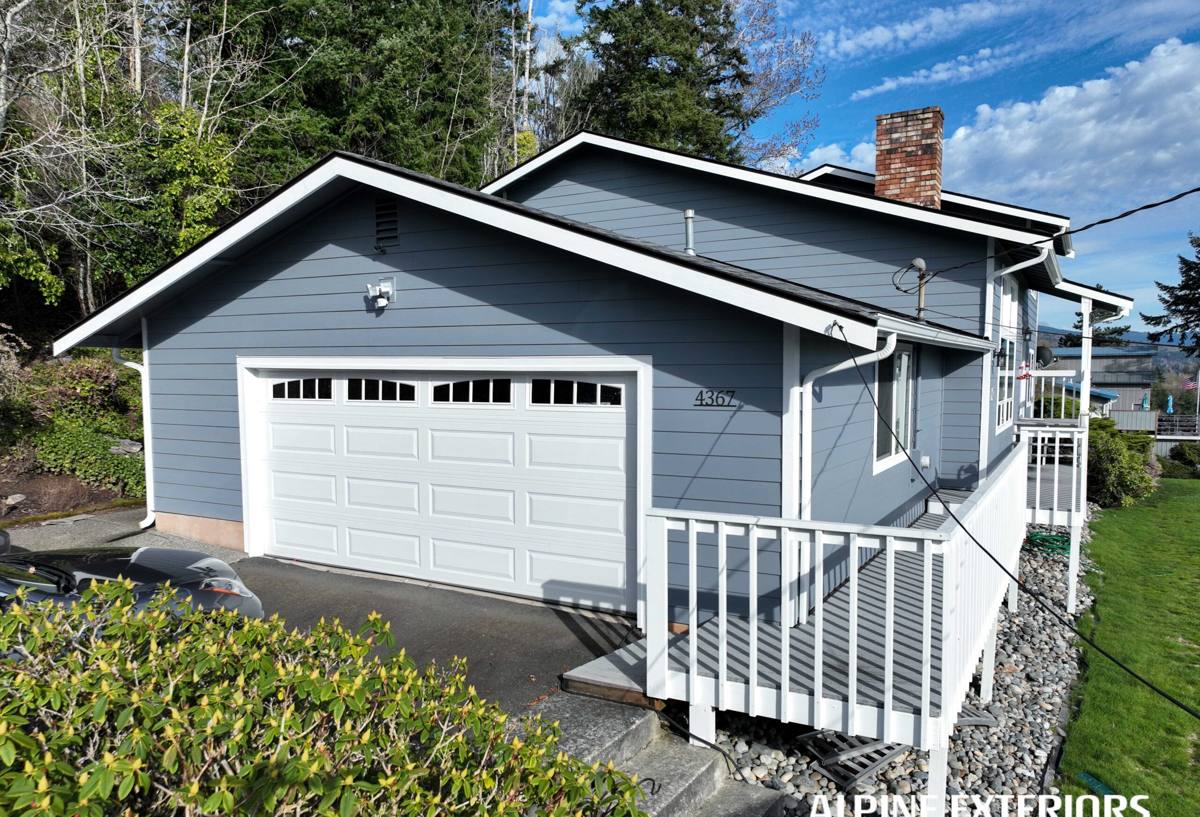
Signs a York Deck Needs Repair
Homeowners often wait for a deck to feel unsafe before calling anyone, but by that point the fix is usually bigger and more expensive than it needed to be. Here's what we'd want you to watch for between now and your next dry stretch:
- Boards that feel spongy, bounce slightly, or have visibly darkened compared to the surrounding wood
- Green or black film building up on stair treads and shaded boards — a normal part of our moss season, but a sign the deck isn't shedding water fast enough
- Rust streaks bleeding out from screws or nails, which usually means the original fasteners weren't rated for long-term wet exposure
- Gaps or movement where the deck attaches to the house (the ledger board), especially after a hard rain
- Railings or posts that flex more than they used to when leaned on
- Visible daylight or soft wood where support posts meet concrete footings or the ground
Any one of these on its own might be minor. Two or three together, especially on a deck that's ten-plus years old, usually means it's time for a closer look before another wet season sets in.
What a Correct Deck Repair Actually Involves
It starts underneath, not on top
A repair that only replaces the boards you can see is a cosmetic fix, not a structural one. Before we touch surface boards, we check the framing underneath — joists, beams, ledger connection, and post bases — because that's where moisture damage actually starts in a climate like ours. Water runs off the surface, but it collects and lingers in the framing, especially anywhere airflow is blocked.
Then the connections
The ledger board — where the deck bolts to the house — is the single most important connection on the structure, and it's also the one most exposed to wind-driven rain in our weather. We check flashing, look for signs of water intrusion into the rim joist behind it, and confirm the attachment hardware is actually rated for the load and the exposure, not just whatever was on hand when the deck was originally built.
Finally, the wearing surface
Only after the structure and connections check out does it make sense to talk about deck boards, railings, and finish. Replacing worn boards on a deck with a compromised frame just delays the real problem and wastes the cost of new lumber.
Materials: What Holds Up in a Marine Climate and What Doesn't
Not every decking material ages the same way this close to salt air and sustained rain. Here's how the common options compare for repair and replacement sections:
| Material | How It Handles Our Climate | Maintenance Reality |
|---|---|---|
| Pressure-treated lumber | Good moisture resistance when properly sealed; needs the cut ends re-treated during repairs | Re-seal every 1–2 years; inspect for checking and fastener corrosion |
| Cedar | Naturally moss- and rot-resistant, but softens over time without upkeep | Annual cleaning and periodic oiling to keep it from graying and absorbing water |
| Composite decking | Handles constant damp well; doesn't rot, but can stay damp longer in shaded, low-airflow spots | Low upkeep, but still needs regular cleaning to prevent moss and mildew film |
| Untreated or old-growth reclaimed wood | Poor fit for repairs here unless fully sealed and detailed | High maintenance; we generally advise against it for repair sections |
For repairs, we'll usually match the existing material unless it's clearly part of why the deck failed — for example, patching a rotted section with the same untreated lumber that rotted in the first place doesn't solve anything.
Our Deck Repair Process
- On-site inspection. We walk the full structure — framing, ledger, posts, footings, railings, and surface — and point out what's cosmetic versus what's structural.
- Honest scope. You get a clear explanation of what needs to be repaired now, what can wait, and what's simply cosmetic wear. We don't pad a repair into a full rebuild if it doesn't need one.
- Repair the source, not just the symptom. If moisture is pooling because of poor drainage or missing flashing, we address that alongside the damaged material — otherwise the same repair fails again in a season or two.
- Correct fasteners and hardware. Everything used in the repair is rated for exterior, high-moisture use — this matters more here than in drier parts of the state.
- Final check for level, secure, and code-appropriate work before we call it done.
Repair or Replace? What Actually Drives That Decision
This is the question almost every homeowner asks, and the honest answer depends on a few specific factors rather than the age of the deck alone.
| Factor | Leans Toward Repair | Leans Toward Replacement |
|---|---|---|
| Framing condition | Solid, dry, no soft spots | Widespread soft or rotted joists/beams |
| Ledger board | Sound connection, no water staining behind it | Water intrusion into the house rim joist |
| Extent of damage | Isolated to a few boards or one section | Spread across most of the deck surface |
| Age of structure | Under ~15 years, built to a reasonable standard | Older, undersized framing, or DIY-built without proper footings |
| Original build quality | Properly flashed, adequate post spacing | Missing flashing, inadequate footings, or code-deficient framing |
Most decks we look at in York fall into the repair category — the framing is fine, but a handful of boards, a stair section, or a railing has taken the brunt of the weather and needs attention. Full replacement is usually only the right call when the structural bones themselves are compromised.
Moss, Slip Safety, and the Long Wet Season
Moss on a deck isn't just cosmetic — it holds moisture against the wood and turns stairs and walking surfaces genuinely slick, which is a real fall hazard on a deck with any elevation change. Because our moss season runs long, a deck that isn't cleaned or maintained through fall and winter can develop a surprisingly thick film by spring. As part of repair work, we'll flag areas with poor sun exposure or airflow, since those spots will keep growing moss faster than the rest of the deck no matter how well the repair itself is done. Sometimes the real fix is a small change — trimming back overhanging branches or adding a gap for airflow — rather than repeated cleaning.
Keeping a York Deck in Good Shape Between Repairs
A repaired deck lasts a lot longer with a bit of routine attention. This is the same list we'd walk a homeowner through after finishing a repair:
- Sweep debris and standing leaves off the deck regularly through fall — trapped organic matter holds moisture against the wood
- Clean moss and mildew off boards and stairs at least once a year, ideally before the wettest months set in
- Check and clear the gaps between boards so water can actually drain through instead of pooling
- Look at the ledger board and any spots where the deck meets the house after heavy rain
- Re-seal wood decking on the manufacturer's recommended schedule — don't stretch it because it "still looks fine"
- Test railings and stair stringers for movement once or twice a year
Why It Matters to Hire a Crew That Already Works in York
Deck repair advice that works in a dry inland climate doesn't always hold up here. A crew that regularly works in York and the surrounding Bellingham area already knows which details actually matter close to the water — how far to keep decking off grade, where flashing tends to fail first, which fastener types hold up against salt-influenced air, and how much airflow a shaded deck section really needs to avoid becoming a moss trap every winter. That local pattern recognition is what keeps a repair from becoming a repeat call two years later.
It also means faster, more accurate estimates — we're not guessing at how Whatcom County weather treats a deck over time, we're seeing it firsthand on jobs throughout the area.
If you've got a deck in York that's showing any of the signs above, we're glad to take a look and give you a straightforward, no-pressure estimate — just fill out the form below.