 Bellingham
 Why Ferndale Windows Need to Be Built for This Climate, Not a Catalog
Ferndale sits close enough to Bellingham Bay and the Strait of Georgia that salt-laden air is a fact of life for anything installed on the outside of a house. Add in Whatcom County's long stretch of driving rain each fall and winter, plus a moss season that can run eight or nine months out of the year on shaded north- and west-facing walls, and you have a climate that is genuinely hard on windows. Not dramatically hard in any single event — this isn't hurricane country — but relentlessly, quietly hard in a way that shows up as rot, fogged glass, and drafts three or four years after a rushed installation.
A window that's "energy-efficient" on a spec sheet from a warmer, drier region isn't automatically the right choice here. What actually matters for a Ferndale home is how the window and its installation handle sustained moisture exposure, wind-driven rain, and the cool, overcast stretches that make up most of our year. That's a different set of priorities than what gets marketed nationally, and it's worth understanding before you sign off on any window job.
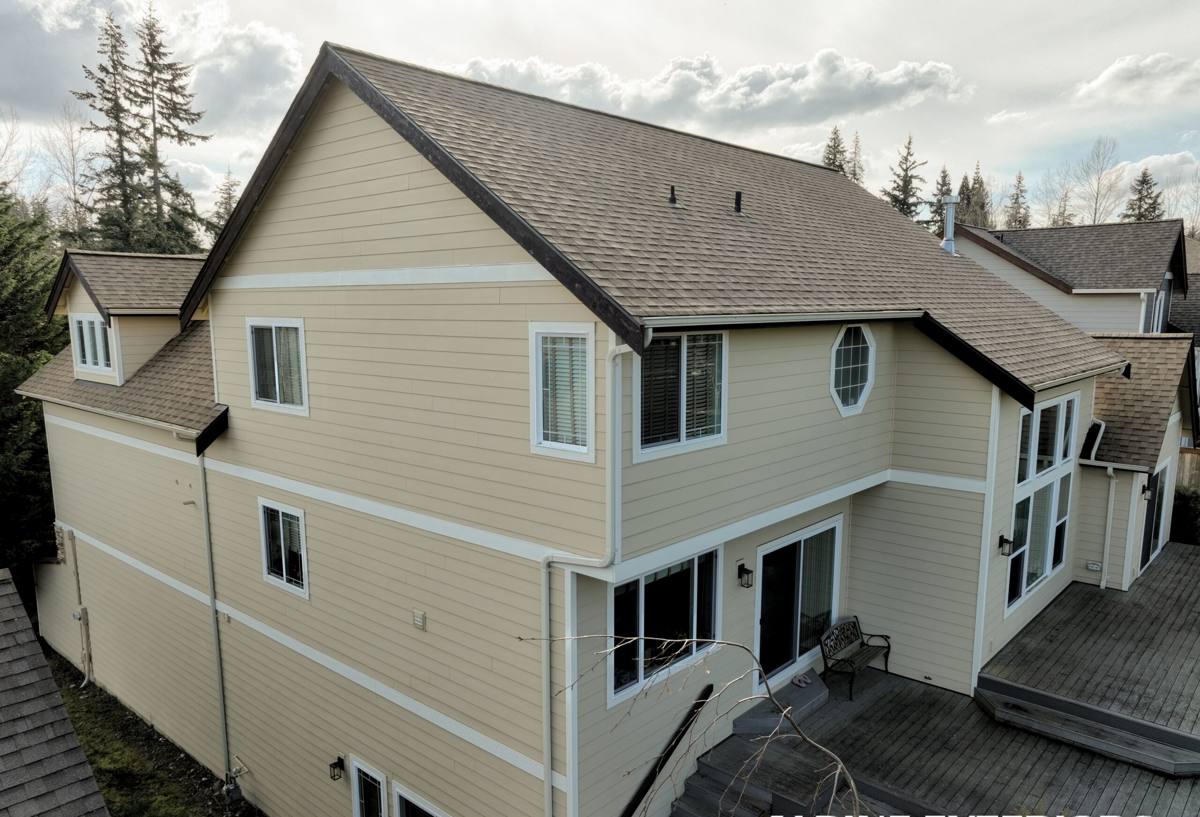
What "Energy-Efficient" Actually Means for a Whatcom County Home
U-Factor Matters More Here Than Solar Heat Gain
Every window carries an NFRC (National Fenestration Rating Council) label with a few key numbers. In sunnier, hotter climates, contractors talk a lot about Solar Heat Gain Coefficient — how much solar heat a window lets in — because keeping heat out is the goal. Around Bellingham and Ferndale, our challenge runs the other direction most of the year: we're trying to hold onto heat during long stretches of gray, cool weather. That makes U-factor (how well the window resists heat loss) the number we weight most heavily when helping a homeowner choose a product, without ignoring solar gain entirely on south-facing walls.
Air Infiltration Rating and Wind-Driven Rain
The air leakage rating on that same NFRC label tells you how much air can move through the window assembly under test pressure. In a climate with regular driving rain off the Strait, a window with a poor air infiltration rating isn't just a comfort problem — wind-driven rain can follow the same gaps that let air through. This is one of the most overlooked numbers on the label, and it's one we check closely before recommending a product for an exposed elevation.
Glass Packages: Double-Pane vs. Triple-Pane
Double-pane, low-E glass with argon fill is the standard, cost-effective choice for most Ferndale homes and performs well in our climate. Triple-pane glass adds meaningful thermal performance and sound dampening, which can be worth it on a north-facing wall that catches wind, or a home near a busier road — but it adds cost and weight, and isn't always the better dollar-for-dollar choice on a moderate, well-shaded elevation. We'll talk through where triple-pane earns its keep on your house rather than upselling it across the board.
The Part Most Window Jobs Get Wrong: Integration With the Siding
This is where our background as a siding contractor changes the outcome of a window replacement. A window is only as good as the flashing and weather-resistive barrier detail around it. In a climate that sees sustained, wind-driven rain, the seam between window and siding is the single most common place a house takes on hidden water damage — and it's often invisible until there's rot in the sheathing or staining on an interior wall.
What Correct Integration Looks Like
- A sloped sill pan under the window opening so any water that does get past the glass drains back out, not into the wall cavity
- Weather-resistive barrier (house wrap) properly lapped over the flanges in the correct shingle-style order — bottom first, sides next, top last
- Head flashing above the window, extending past the sides, to direct water away from the top of the frame
- Kick-out flashing where a roofline meets a wall near a window, so runoff doesn't sheet directly down onto the frame
- Sealant used at the right joints only — over-sealing every gap can trap moisture instead of letting incidental water drain out
A crew that only installs windows and never touches siding can get the window itself right and still leave the surrounding wall assembly vulnerable. Because we work on the siding and the window envelope together, the flashing and barrier details get built as one integrated system rather than handed off between two different sets of hands with two different scopes of responsibility.
Choosing a Frame Material for Salt Air and Moisture
Frame material affects how a window holds up over 15, 20, or 30 years of Whatcom County weather. There's no single "best" answer — it depends on your home's exposure, style, and budget.
| Frame Material | Moisture / Salt Air Resistance | Maintenance | Typical Cost Tier |
|---|---|---|---|
| Vinyl | Good — won't rust or rot, but can become brittle over decades of UV exposure | Low | Lower |
| Fiberglass | Very good — dimensionally stable, resists moisture and salt corrosion well | Low | Mid to higher |
| Aluminum-clad wood | Good exterior protection, but any breach in the cladding exposes wood underneath | Moderate | Higher |
| Bare wood | Requires diligent upkeep in a moist, mossy climate; most vulnerable to rot if neglected | High | Higher |
For most Ferndale homes, we steer people toward vinyl or fiberglass on wetter, more exposed elevations, reserving wood or wood-clad options for sheltered walls or homes where the look is a priority the homeowner has already weighed against the upkeep. This isn't a knock on any manufacturer — it's about matching the material's known trade-offs to what your specific wall actually faces every winter.
Our Installation Process
- On-site assessment — we check existing framing, sill condition, and current flashing before quoting anything, since hidden rot changes the scope
- Careful removal — old windows come out without tearing more siding or trim than necessary
- Sill and opening prep — any soft or water-damaged framing gets addressed before a new window goes in; we don't install over a compromised opening
- Sill pan and flashing installation — built to shed water outward and downward, matched to your existing siding type
- Window set and shim — leveled, squared, and fastened per manufacturer specification, which also protects the warranty
- Insulation and air sealing — low-expansion foam or backer rod around the frame, avoiding over-filling that can bow the frame
- Exterior trim, siding tie-in, and sealant — finished to match the surrounding wall
- Cleanup and walkthrough — including a look at how the window operates and how to maintain it
Signs Your Ferndale Home's Windows Are Already Costing You Money
Windows rarely fail all at once. In this climate, the warning signs tend to show up gradually, and homeowners often adjust to them without noticing.
- Fog or moisture visible between the panes of double-pane glass (a failed seal — no longer insulating as designed)
- A noticeable draft near the frame on windy, rainy days
- Moss or dark staining building up on the sill or the siding just below the window
- Difficulty opening, closing, or locking a window that used to operate smoothly
- Cold spots near windows even when the rest of the room is comfortable
- A heating bill that's crept up without an obvious explanation
Any one of these is worth a look. Several together usually mean the window and its surrounding seal have been letting in moisture or air for a while.
Why a Crew That Already Works Ferndale Matters
Whatcom County covers a lot of different housing stock and exposure conditions — homes tucked into sheltered inland lots, and homes standing more directly in the path of weather coming off the water. A crew that regularly works in and around Ferndale has a working sense of which elevations tend to take the worst of the rain, how local siding types typically interface with window flanges, and what permitting looks like with the relevant local jurisdiction. That familiarity shows up in fewer surprises mid-project and a finished job that's actually built for the wall it's going into, not a generic install.
It also matters for accountability. A local, established crew is easy to reach if a question comes up two years down the road — not a name from an out-of-town crew that moved on to the next region.
What Affects the Cost of a Window Project
We won't quote a number without seeing the house, but these are the main factors that move a project up or down in cost.
| Factor | Why It Matters |
|---|---|
| Number and size of windows | More openings and larger units mean more material and labor |
| Frame material | Vinyl, fiberglass, and clad-wood carry different price tiers, as shown above |
| Glass package | Triple-pane and specialty coatings add cost over standard double-pane low-E |
| Condition of the existing opening | Rot or water damage found during removal adds repair scope |
| Siding tie-in complexity | Matching and re-flashing around certain siding types takes more time than others |
| Access and building height | Second-story or hard-to-reach windows take longer to work safely |
If you're weighing energy-efficient windows for a Ferndale home, we're glad to come take a look and walk you through what your specific house needs — no pressure, no generic pitch. Use the form below to request a free estimate and we'll get back to you to schedule a visit.