 Bellingham
 Decking on Bellingham Bay Asks More of a Deck Than Most Climates Do
Fairhaven sits close enough to Bellingham Bay that its homes deal with a specific combination of weather most inland neighborhoods never see in the same intensity: salt-tinged marine air, rain that comes in sideways on windy days instead of falling straight down, and a moss season that runs long on shaded, tree-covered lots. A deck in this setting isn't just outdoor furniture bolted to the house — it's an exterior structure exposed to the same moisture cycle that ages siding and roofing, except it's horizontal, walked on, and collects standing water and debris in ways a wall never does.
We work decking and siding projects throughout Whatcom County, and Fairhaven is one of the areas where we see deck problems show up earliest. Wood decking in this environment needs constant upkeep to stay ahead of rot and moss, and even well-built wood decks near the water tend to show fastener corrosion, graying, and soft spots years before an inland deck would. Composite decking was developed largely to solve exactly this kind of exposure, but only when it's specified and installed correctly for the site. This page covers what that actually means for a deck going in near Fairhaven.
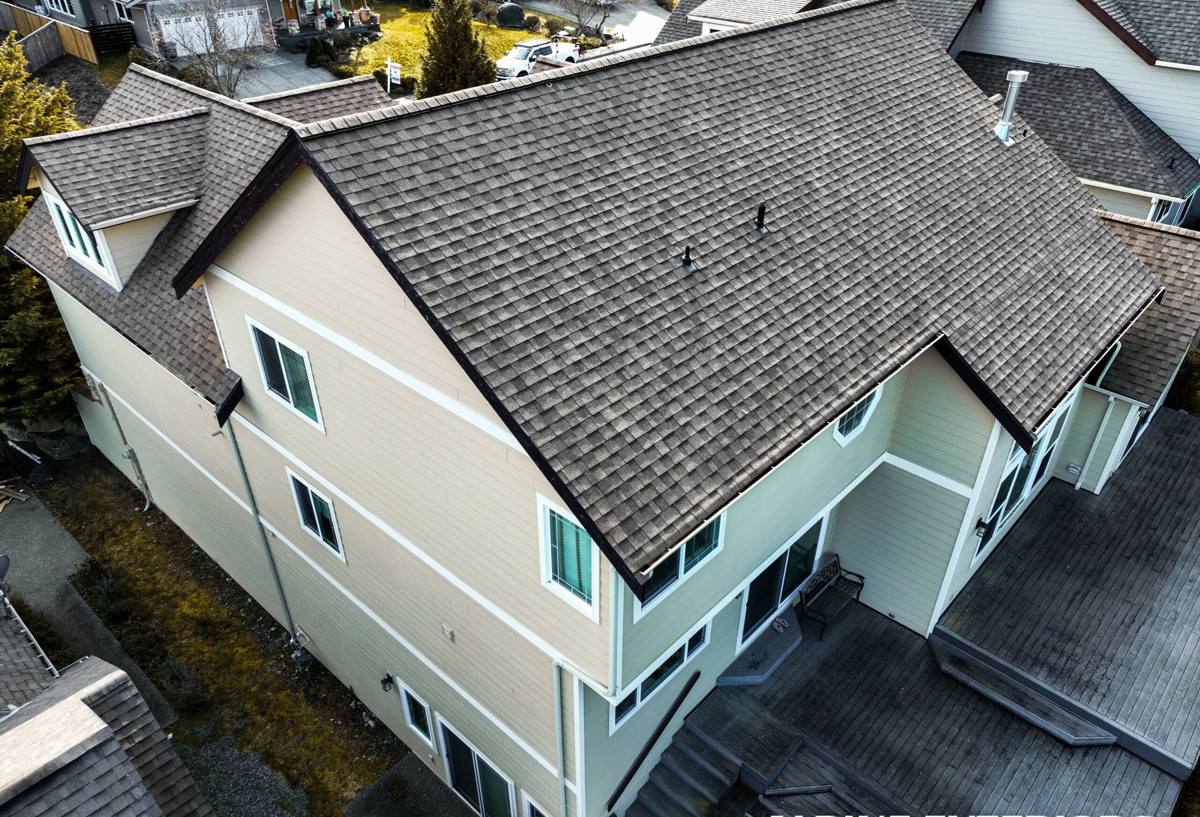
What Salt Air, Rain, and Moss Actually Do to a Deck
Salt-Laden Air and Fasteners
Marine air carries a low, steady level of salt and moisture that doesn't need a storm to do damage — it works on exposed metal year-round. Fastener heads, joist hangers, and any hardware that isn't rated for coastal exposure will corrode faster near the bay than the same hardware would forty miles inland. On a deck, that hardware is structural, not decorative, so this is a durability issue, not just an appearance one.
Wind-Driven Rain and Standing Water
Fairhaven's exposure to open water means rain often arrives at an angle, driven by wind off the bay. On a deck, that means water gets pushed under railings, into board gaps, and against the house at the ledger connection from directions a calmer climate wouldn't test. Decking that doesn't shed water efficiently, or a substructure that traps it, ends up staying wet longer after every rain event — and in Bellingham, rain events are frequent for much of the year.
A Long Moss and Algae Season
Mild temperatures and consistent dampness give moss, algae, and mildew a long growing season here, and shaded or north-facing decks are especially prone to it. Moss on a walking surface isn't just unattractive — it holds moisture against the board surface and turns slick underfoot, which is a real slip hazard on stairs and landings.
Mature Tree Cover
Many Fairhaven lots have mature trees nearby, which means ongoing leaf and needle litter landing on the deck surface. Debris that sits in board gaps or against a rim joist holds moisture in place and accelerates any of the problems above.
Why Composite Decking Fits This Climate — When It's Done Right
Composite decking, whether it's a wood-plastic composite or a fully capped PVC-based board, doesn't absorb water the way solid wood does, doesn't need annual staining or sealing, and doesn't provide the same organic surface for moss and mildew to root into. That makes it a strong fit for a bay-side climate like Fairhaven's. But composite is not maintenance-free or failure-proof, and a lot of what determines whether it performs well here has nothing to do with the board brand and everything to do with the installation underneath it.
What "Correct" Actually Means for This Site
- Substructure and hardware rated for coastal/marine exposure, not standard interior-grade fasteners
- Joist spacing matched to the specific composite board's span rating — composite typically needs tighter joist spacing than solid wood
- A ledger connection that's properly flashed and isolated from the house structure, since this is the single most common source of hidden water damage on any deck
- Airflow and drainage beneath the deck so the substructure can actually dry out between rain events
- Board gapping set correctly for composite's expansion and contraction, not just copied from a wood-deck spacing habit
- Fastening or clip systems matched to the manufacturer's installation requirements, since composite boards can be more sensitive to over-driving or improper fastener placement than solid wood
Composite Board Types: What the Differences Actually Mean
Not all composite decking is the same product wearing different colors. The construction of the board changes how it handles moisture, how it wears, and what kind of upkeep it realistically needs over time.
| Board Type | Moisture Behavior | Maintenance | Best Fit For |
|---|---|---|---|
| Uncapped wood-plastic composite | More moisture-absorbent at cut ends and surface; can stain or mold if not sealed at cuts | Occasional cleaning; cut ends need sealing | Budget-conscious projects away from direct spray/splash zones |
| Capped composite (cap on wear surface only) | Good surface resistance; cut edges still need attention during install | Low; periodic washing | Most Fairhaven decks — solid middle ground on cost and durability |
| Fully capped / PVC-based | Minimal water absorption on all sides, including cut ends | Lowest; occasional washing | High-exposure spots — near the water, full sun, or heavy shade/moss areas |
For most Fairhaven properties, a fully capped board is worth the extra upfront cost specifically because of the marine air and moss exposure — the added moisture resistance at the cut ends and edges addresses the two failure points we see most often on lower-grade composite decks near the bay.
The Substructure Is Where Most Deck Problems Actually Start
Homeowners understandably focus on the decking board itself, since that's what you see and walk on. But the framing underneath — ledger, joists, beams, posts, and footings — is what determines whether the deck stays sound for decades or develops hidden rot within a few years. This is especially true close to the bay, where moisture pressure on the substructure is higher and slower to dry out than in a drier inland location.
Ledger Attachment
The ledger board, where the deck attaches to the house, is the most common point of hidden water intrusion on any deck. Proper flashing here isn't optional trim work — it's the difference between water shedding away from the house framing and water tracking directly into it, unseen, for years.
Joist and Beam Material
Pressure-treated framing rated for ground contact where applicable, plus corrosion-resistant hardware throughout, matters more here than in a low-moisture climate. Standard hardware that would be fine on an inland deck can start corroding noticeably faster with steady bay-air exposure.
Clearance and Drainage
Adequate clearance between the deck framing and the ground or grade below, along with a slight slope away from the house, lets air move and water drain instead of pooling under the structure where it can't dry.
How Our Process Works
- Site visit and assessment — we look at sun exposure, shade and tree cover, proximity to the water, existing structure condition if this is a replacement, and how the site drains.
- Board and structural recommendation — based on that assessment, we recommend a board tier and hardware/fastening approach suited to that specific spot on the property, not a one-size answer.
- Substructure build or inspection — new framing is built to span and hardware specs for the chosen composite; on a replacement, we inspect the existing substructure before covering it with new decking, since covering a compromised frame just hides the problem.
- Installation — decking, fascia, and railing installed to manufacturer specifications, including proper gapping and fastening for long-term expansion and contraction.
- Walkthrough and cleanup — we review the finished deck with you, including what basic upkeep looks like going forward.
Realistic Maintenance for a Bay-Side Composite Deck
Composite decking cuts the maintenance burden compared to wood, but "low-maintenance" isn't "no-maintenance," especially in a moss-prone, marine climate. A little seasonal attention keeps a composite deck looking and performing the way it's supposed to for its full service life.
- Sweep off leaf litter and debris regularly, especially in fall and under tree cover
- Wash the deck surface periodically with mild soap and water to prevent moss and algae from getting a foothold, particularly on shaded or north-facing sections
- Keep gutters and downspouts near the deck clear so overflow isn't adding extra water directly onto the structure
- Check railing posts and stair connections annually for any looseness
- Have the substructure looked at every few years, since that's the part composite decking doesn't protect on its own
What Affects Cost on a Fairhaven Composite Deck
| Cost Factor | Why It Matters |
|---|---|
| Board tier (capped vs. fully capped/PVC) | Higher-tier boards cost more per square foot but hold up better against marine air and moss exposure |
| Substructure condition (replacement projects) | Hidden rot or undersized framing found during demo can add scope once the old decking is off |
| Site access and grade | Sloped lots common near the waterfront can add complexity to footings and framing |
| Railing and stair complexity | Multi-level decks, custom railing, or added stairs increase both material and labor |
| Size and layout | Larger footprints and non-rectangular layouts increase board cuts, waste, and labor time |
We give straightforward, written estimates broken down by these factors rather than a single vague number, so you can see exactly what's driving the price.
Why a Crew That Already Works Fairhaven Matters
A deck built without accounting for bay-air corrosion, wind-driven rain angles, or the shade and moss patterns typical of Fairhaven's lots can look fine for a season or two and still be heading toward early problems. We work this neighborhood and the surrounding Bellingham and Whatcom County area regularly, so the hardware, board selection, and framing details we recommend aren't generic — they're based on what actually holds up in this specific setting over years, not just what looks good on install day.
If you're weighing a new deck or replacing an aging wood deck near Fairhaven, we're glad to walk the site, look at your sun and shade exposure, and give you a straightforward, no-pressure estimate using the form below.