 Bellingham
 Composite Decking Built for Ferndale's Marine Climate
Ferndale sits close enough to the water and low enough in the tree cover that a deck here takes a different kind of beating than one twenty miles inland. Between the salt-laden air rolling off Bellingham Bay, the long stretches of driving rain that define a Whatcom County winter, and the shade-and-damp combination that keeps moss thriving most of the year, a deck built to a generic spec often starts showing problems well before it should. Composite decking, installed correctly for this specific climate, holds up to that combination better than most alternatives — but "installed correctly for this climate" is the part that gets skipped when a crew doesn't normally work this area.
This page covers what Ferndale's weather actually does to a deck, what a correct composite installation involves in response, and why local experience changes the outcome more than most homeowners expect.
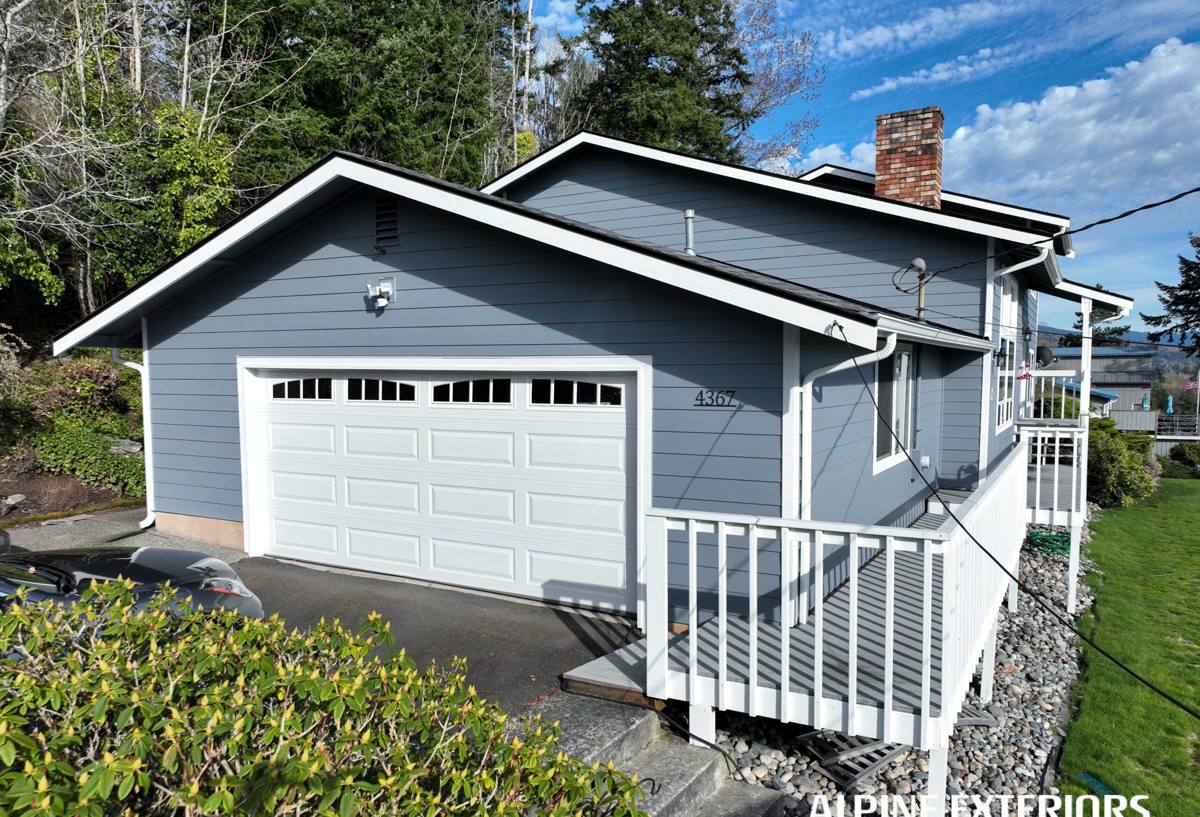
What Whatcom County Weather Does to a Deck
Salt Air and Corrosion
Ferndale isn't oceanfront, but it's close enough to the Salish Sea that airborne salt reaches homes throughout the area, especially with the prevailing westerly winds. Salt air accelerates corrosion in anything metal — fasteners, joist hangers, railing brackets, and screws. On a deck, the hardware fails long before the decking material does if the wrong grade of fastener was used. This is one of the most common shortcuts we see on decks built by crews unfamiliar with coastal-adjacent conditions.
Driving Rain and Standing Water
Bellingham-area winters bring sustained, wind-driven rain rather than short downpours. That matters for a deck because water gets pushed sideways into gaps, ledger connections, and stair stringers that would stay dry in a calmer climate. Decking that isn't sloped, vented, or flashed correctly holds water against the substructure for days at a time rather than shedding it quickly, which is exactly the condition that causes rot in framing and corrosion in fasteners even when the visible decking looks fine.
The Long Moss Season
Between the rainfall, the marine humidity, and the tree cover common on Ferndale lots, moss and algae growth on decking surfaces isn't occasional here — it's a season that runs most of the year, longer on shaded or north-facing decks. Moss on a walking surface isn't just cosmetic; it holds moisture against the board and turns a deck slick and genuinely unsafe underfoot, especially on stairs.
What a Correct Composite Deck Installation Involves
Substructure and Framing
Composite boards are only as good as what they're fastened to. In this climate, that means framing lumber rated for ground contact or exterior use where it's called for, joist spacing tightened to the manufacturer's cold/wet-climate spec (composite can require closer spacing than standard lumber decking), and a ledger connection flashed properly where the deck meets the house — that ledger-to-house joint is one of the most common sources of hidden water damage on any deck, composite or wood.
Fasteners and Hardware
Every piece of exposed and structural hardware — hangers, screws, hidden fastener clips, railing brackets — needs to be rated for the exposure it's going to see. In a salt-air environment, that means stainless or coated hardware rated for corrosive exposure, not the standard galvanized hardware that's fine sixty miles inland. This is a small line-item cost that has an outsized effect on how the deck ages.
Drainage and Airflow Underneath
A composite deck needs air moving underneath it, not just water shedding off the top. That means correct slope away from the house, gaps at board ends for drainage and expansion, and skirting or under-deck systems (if used) that don't trap moisture against the framing. A sealed-up, poorly vented underside is exactly what turns a normal Ferndale winter into a slow rot problem for the substructure, even with composite boards on top.
Board Selection and Capping
Not all composite boards handle constant damp exposure the same way. Fully capped composite boards (a protective polymer shell on all sides, not just the top) resist moisture absorption and moss/algae growth significantly better than lower-grade or partially capped boards, which matters more here than in a drier climate. We spec boards based on how much shade and moisture exposure the specific deck location will actually see, not a one-size answer for every yard.
Composite vs. Wood vs. PVC: What Fits a Ferndale Deck
| Material | Upfront Cost | Maintenance in This Climate | Moisture & Moss Behavior |
|---|---|---|---|
| Pressure-treated wood | Lowest | Annual cleaning, periodic staining/sealing to keep water out | Absorbs moisture readily; prone to splitting and rot if maintenance lapses even one season |
| Composite (capped) | Mid to upper-mid | Periodic washing to clear moss/pollen; no staining or sealing | Low absorption; resists rot; moss grows on the surface but doesn't penetrate the board |
| PVC decking | Highest | Similar washing routine to composite | Effectively no moisture absorption; can be more brittle in freeze/thaw cycling |
For most Ferndale homes, capped composite is the practical middle ground: it doesn't demand the annual sealing routine that wood needs to survive our winters, and it costs less than PVC while performing well against the moisture and moss this area produces. Wood still has a place for owners who prefer the look and don't mind the upkeep, and we'll say so honestly rather than push composite on everyone.
Our Process, Start to Finish
Site Assessment and Design
We look at sun and shade exposure, existing drainage patterns, the condition of any structure we're building on or replacing, and how the deck ties into the house. Shaded, low-airflow spots get flagged early because they'll need different board selection or ventilation detailing than a sunny, open deck on the same property.
Framing and Structural Work
Ledger flashing, joist layout, and hardware selection all get handled to the spec the boards actually require — not a generic deck-building spec. This is the stage where most of a deck's long-term durability in this climate gets decided, and it's the stage that's hardest for a homeowner to inspect after the fact.
Decking, Railing, and Trim
Boards go down with correct spacing and hidden fasteners where specified, railing and trim get installed to match, and every cut edge that needs it gets properly capped or sealed per the manufacturer's requirements — an exposed, uncapped cut edge is a common weak point where moisture gets into a composite board over time.
Final Walkthrough
We walk the finished deck with you, cover the maintenance routine for this specific climate, and point out anything you should keep an eye on going forward.
What Affects the Cost of a Ferndale Composite Deck
| Factor | Why It Matters | Typical Cost Impact |
|---|---|---|
| Board tier and capping | Fully capped, moisture-resistant boards cost more than base-tier composite | Medium to high |
| Substructure condition | Existing framing that's rotted or undersized needs replacement before decking goes on | High if replacement is needed |
| Deck height and access | Taller decks and tight-access lots take longer to frame safely | Medium |
| Railing and stair complexity | Multiple stair runs, custom railing, or grade changes add labor | Medium to high |
| Site drainage work | Poorly draining Ferndale lots sometimes need grading or drainage correction first | Low to medium |
We won't quote a project without seeing the site — a deck going onto solid, well-drained ground is a very different job from one replacing rotted framing on a shaded, damp corner of the lot.
Living With a Composite Deck in This Climate
Composite decking cuts out the sanding, staining, and sealing that wood demands, but "low-maintenance" doesn't mean "no maintenance" here — the moss season alone makes that clear. A simple seasonal routine keeps a composite deck performing the way it's supposed to:
- Sweep off leaves, needles, and debris regularly, especially in fall — trapped organic matter is what feeds moss and algae growth
- Wash the deck surface at least once or twice a year with a deck-safe cleaner and a soft-bristle brush to clear moss before it gets established
- Avoid high-pressure power washing directly on composite boards — it can damage the capped surface; a garden hose and brush is usually enough
- Check railing hardware and fasteners periodically for corrosion, especially anything not rated for coastal exposure
- Keep gutters and downspouts near the deck clear so runoff isn't dumping extra water onto or under the deck surface
- Trim back overhanging branches where practical to cut down on shade and debris that prolong the moss season
Why Hiring a Crew That Already Works Ferndale Matters
A lot of what determines whether a composite deck holds up here isn't visible in the finished product — it's in decisions made during framing and hardware selection that a homeowner has no easy way to verify after the fact. A crew that already builds decks throughout the Bellingham area and Whatcom County has already seen which lots hold water, which yards get heavy moss cover, and which fastener grades actually hold up to a few winters of salt air and rain — rather than learning it on your project. That local experience also means fewer surprises with permitting and inspection timing, and scheduling that accounts for realistic weather windows instead of guessing.
A few things worth asking any contractor before you hire them for a Ferndale deck project:
- Do you spec corrosion-rated hardware for coastal-adjacent exposure, or standard galvanized fasteners?
- How do you handle ledger flashing and drainage on a deck that ties into the house?
- Do you adjust joist spacing and board selection based on sun/shade exposure on the specific lot?
- Can you walk me through how you vent and drain underneath the deck?
- Have you built decks elsewhere in Whatcom County, and can you speak to how they've held up?
Honest answers to those questions tell you more about the long-term outcome than any brochure will.
Get a Straight Answer for Your Property
Every lot in Ferndale handles sun, shade, and drainage a little differently, and the right composite deck spec follows from that, not from a generic template. If you're planning a new deck or replacing one that's showing its age, we're glad to take a look and walk you through what your specific property needs — no pressure, no upsell, just a straight assessment. Use the form below to request a free estimate.