 Bellingham
 Why Ferndale Homes Need a Different Approach to Windows
Ferndale sits close enough to Bellingham Bay and the Strait of Georgia that salt-laden air is a real factor in how exterior materials age here, not just a coastal talking point. Combine that with Whatcom County's long, wet fall-through-spring stretch and the moss and algae growth that comes with it, and you've got a climate that's genuinely harder on window assemblies than most manufacturers' warranty language assumes. Frames, sills, and the flashing details around them take a slow, steady beating from wind-driven rain, condensation, and airborne salt that settles into every seam and fastener.
None of that means Ferndale homeowners need exotic materials or premium upgrades across the board. It means the details — the flashing, the sealant choice, the fastener metal, the way water is directed away from the wall assembly — have to be right the first time. A window that's a fine choice in a dry inland climate can fail early here if it's installed with shortcuts that don't show up until year three or four.
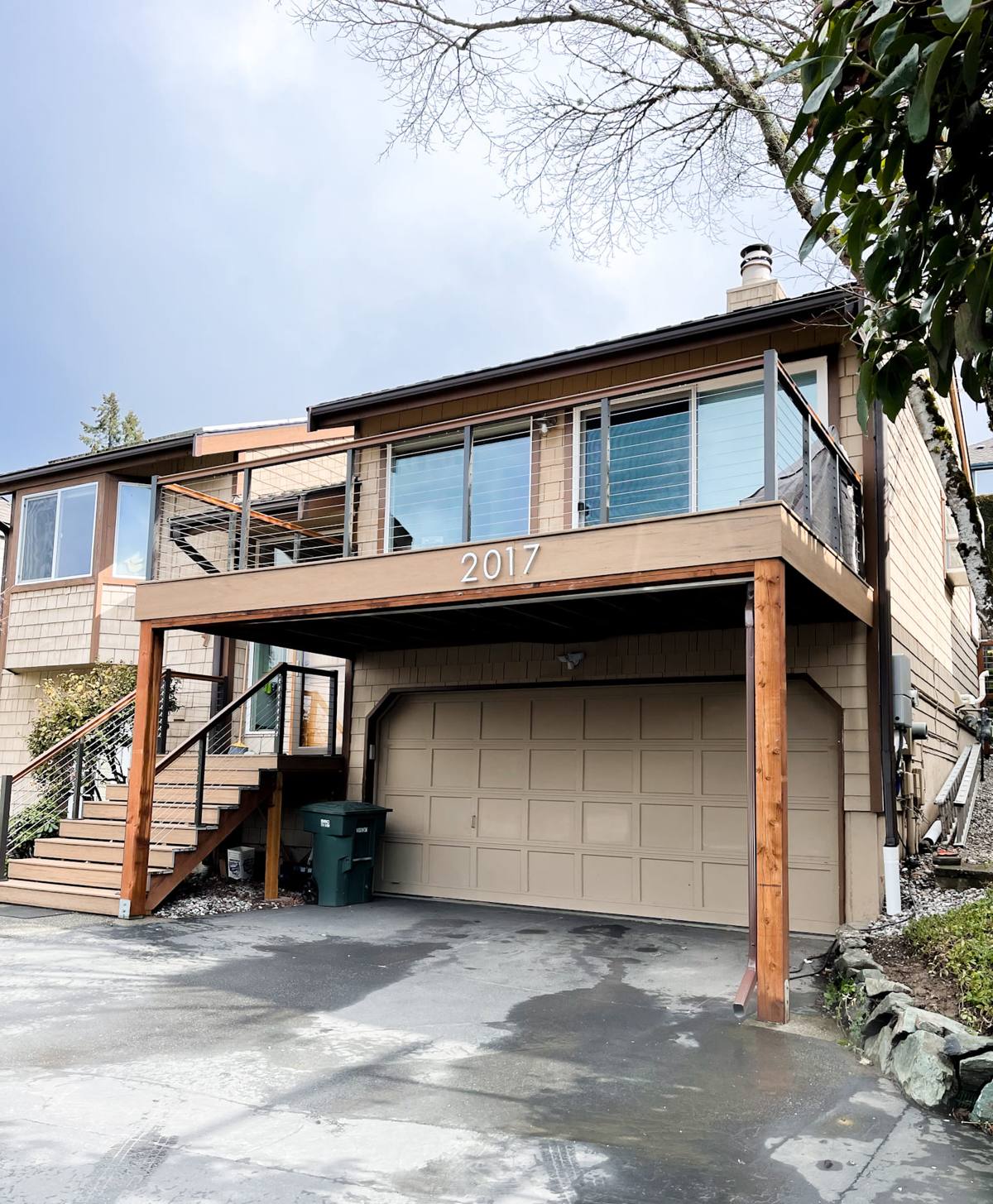
What Salt Air, Driving Rain, and Moss Season Actually Do to Windows
Salt Air
Airborne salt accelerates corrosion on exposed metal — hinges, cranks, screws, and especially lower-grade aluminum cladding or hardware. It also breaks down some sealants and finishes faster than inland-rated products are designed to handle. Homes closer to open water or exposed to prevailing coastal winds see this first, usually on the windward-facing elevations.
Driving Rain
Wind-driven rain doesn't just fall on a window, it gets pushed sideways and upward into any gap in the flashing or trim. Standard "calm weather" installation details that rely on gravity alone to shed water aren't enough here. Every window needs a proper drainage plane, correctly lapped flashing, and sealant placed so water is directed out and down, never trapped behind the trim.
Moss and Algae Season
Whatcom County's mild, damp winters give moss and algae months to establish themselves on horizontal surfaces — window sills, sloped trim, and mulled window assemblies with any flat detailing. Beyond the cosmetic issue, trapped moisture under moss growth keeps wood trim and sill components wet far longer than they'd otherwise stay, which is exactly the condition that leads to rot.
What a Correct Custom Window Job Involves
"Custom windows" covers everything from a single replacement in an oddly-sized opening to a full custom-built unit for a remodel or addition. Whatever the scope, the fundamentals that matter for a Ferndale home don't change:
- Removing the old unit down to the rough opening and inspecting the sheathing and framing underneath for hidden rot or moisture damage before anything new goes in
- Installing or repairing the weather-resistive barrier so it integrates correctly with the window flashing, not just tucked behind it
- Flashing the sill, jambs, and head in the correct shingle-lap order so water sheds outward at every layer
- Using sealants and fasteners rated for coastal, high-moisture exposure rather than generic interior-grade products
- Setting the window level, plumb, and square, then shimming and fastening per the manufacturer's structural requirements — not just "close enough"
- Insulating the gap between frame and rough opening properly, which affects both energy performance and condensation control
- Finishing exterior trim with a slight slope or drip detail on horizontal surfaces so water and moss have less chance to sit
Skipping or rushing any one of these steps is usually invisible on install day and expensive two or three winters later.
Choosing Window Materials for a Whatcom County Coastal Climate
There's no single "best" window material for every home — it depends on budget, the home's style, and how exposed the specific elevation is. Here's how the common options actually perform under Ferndale's conditions:
| Material | Coastal/Moisture Performance | Maintenance | Best Fit |
|---|---|---|---|
| Vinyl | Good — won't corrode or rot, handles salt air well | Low | Most homes, best value |
| Fiberglass | Excellent — very stable in temperature and moisture swings | Low | Larger openings, higher-exposure walls |
| Wood-clad | Fair to good, entirely dependent on cladding integrity and finish upkeep | Higher — finish and joints need regular attention | Homes prioritizing a traditional wood interior look |
| Aluminum | Poor to fair without marine-grade coatings — prone to corrosion and condensation near salt air | Moderate to high | Limited use; we're selective about where we'll recommend it here |
We're upfront when a material isn't a great match for a given elevation or budget rather than selling what's easiest to install. On a home with real salt exposure, we'll often steer a homeowner toward vinyl or fiberglass on the more exposed walls even if wood-clad is used elsewhere, simply because the maintenance burden of wood cladding in salt air is a real, recurring cost — not a defect in the product, just a trade-off worth knowing about upfront.
Sizing and Fit for Ferndale's Housing Stock
Custom windows earn their name when a home's openings aren't standard sizes — common in older Ferndale and Whatcom County homes, additions, or anywhere a previous remodel left an odd rough opening. Custom sizing also matters when:
- An existing opening has settled or shifted slightly out of square over the years
- A remodel changes room use and calls for a different window size or style entirely
- You're replacing a single unusual window (a bay, an arched top, an oversized picture window) without touching the surrounding wall
- Energy code upgrades require a different glazing package than what's currently installed
We measure and order to the actual opening, not a catalog size, which avoids the gap-filling and improvised trim work that shows up when a slightly-wrong stock size gets forced into place.
Our Process for a Ferndale Window Project
1. On-Site Assessment
We look at each opening individually — exposure to prevailing wind and rain, existing flashing condition, any sign of past moisture intrusion, and sill or trim areas already showing moss growth. Exposure isn't uniform across a single house, so the plan for a windward wall may differ from a sheltered one.
2. Straightforward Quote
You get a clear breakdown of material, sizing, and labor — no pressure to upgrade past what actually makes sense for that opening and that wall's exposure.
3. Removal and Inspection
Old units come out carefully so we can check the rough opening and sheathing before anything new goes in. If there's hidden rot or moisture damage, we address it before installing — a new window over a compromised opening just resets the clock on the same problem.
4. Installation to Coastal Detailing Standards
Flashing, sealant, and fastener choices are made for this climate, not a generic national spec sheet.
5. Final Check and Cleanup
We confirm operation, seals, and trim finish, and walk the site clean before we call it done.
What This Actually Costs
Pricing depends on window size, material, glazing package, and how much rough-opening or trim work is needed — a straightforward like-for-like replacement costs meaningfully less than a resized custom opening with extensive trim and flashing rework. Rather than quote a number that won't reflect your home, we price each project after seeing the actual openings and their condition. Homes with prior water damage, non-standard sizes, or heavier trim detailing will run higher than a simple swap-out.
A Homeowner's Pre-Project Checklist
- Note any windows that are hard to open, fog between panes, or feel drafty — these are early signs worth addressing
- Check sills and horizontal trim for moss, dark staining, or soft spots
- Look inside near window frames for peeling paint, staining, or a musty smell, which can point to hidden moisture
- Decide which rooms matter most for energy performance versus which are simpler cosmetic swaps
- Ask any contractor you're considering how they handle flashing and sealant specifically for coastal exposure — the answer tells you a lot
Why Local Experience in Ferndale Matters
A crew that only occasionally works this far north can miss how differently exposure plays out house to house in Whatcom County — a window facing open water or prevailing wind needs more careful detailing than one tucked on a sheltered side, even on the same home. Working in Ferndale and the surrounding Bellingham area regularly means we've seen how salt air, driving rain, and moss actually affect installations here over time, not just in theory. That's the difference between a window that looks right on install day and one that's still performing correctly five winters later.
If you're considering new or replacement windows for a Ferndale home, we're happy to take a look and give you an honest, no-pressure estimate — just fill out the form below.