 Bellingham
 Edgemoor's Climate Asks More of Your Siding Than Most Neighborhoods
Edgemoor sits close to the water, tucked into mature tree cover on sloped, often shaded lots. That combination is beautiful to live in and genuinely tough on exterior building materials. Homes here deal with salt-laden air coming off the bay, wind-driven rain that hits walls at an angle instead of just falling straight down, and long stretches of the year when shaded siding barely dries out between storms. Add the moss and algae growth that thrives in that kind of damp, low-light environment, and you have a set of conditions that will find every weakness in a siding product or an installation shortcut within a few years, not a few decades.
We install fiber cement siding on homes throughout Bellingham and Whatcom County, and Edgemoor is one of the areas where the difference between a correct installation and a rushed one shows up fastest. This page is about what that specific combination of salt exposure, rain, and shade actually requires, and how we handle it.
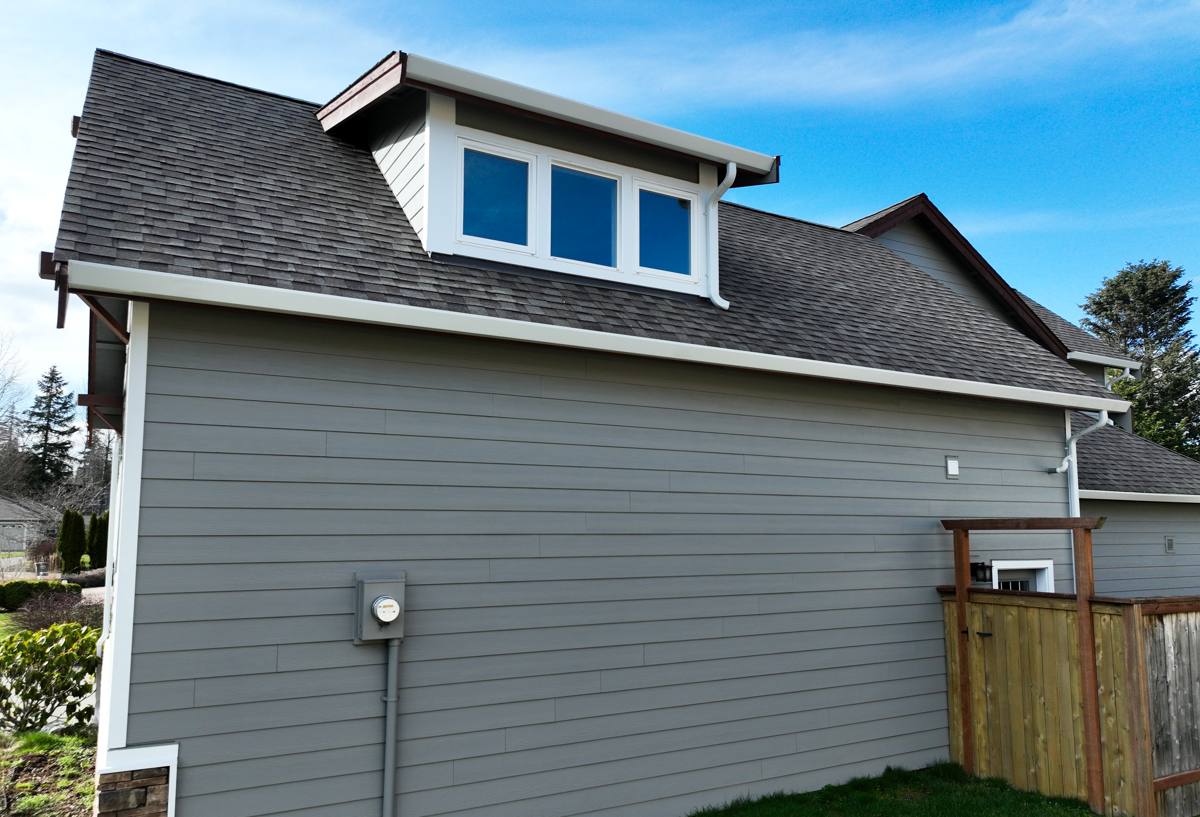
Why We Only Install James Hardie Fiber Cement
We made a decision as a company to install James Hardie fiber cement siding exclusively. We don't install vinyl, LP SmartSide, primed spruce, cedar, or other fiber cement brands. That's not a marketing line — it's a standard we hold because we've seen what holds up on Pacific Northwest homes and what doesn't, and we don't want our name on a product we can't stand behind for the long haul.
Fiber cement is a mix of cement, sand, and cellulose fibers, engineered to be dimensionally stable and resistant to moisture absorption in a way that wood-based and vinyl products aren't. It doesn't rot, it doesn't feed insects, and it's non-combustible, which matters more each year as wildfire smoke seasons stretch further into the Pacific Northwest calendar. James Hardie backs it with a factory-applied ColorPlus finish and a strong transferable warranty, which matters a lot on a coastal, shaded lot where the finish is working harder than it would in a drier inland neighborhood.
HZ5 Engineering for This Climate
James Hardie engineers its siding by climate zone, and homes in Whatcom County fall into the HZ5 category — the line built for cold, wet, marine-influenced weather. HZ5 panels are formulated to resist moisture-related damage and to perform through freeze-thaw cycles without the swelling or cracking that generic fiber cement or lower-grade products can show in this kind of environment. On a lot like the ones common in Edgemoor — shaded, close to salt air, exposed to driving rain off the water — that climate-specific engineering isn't a nice-to-have, it's the reason the product lasts.
What a Correct Installation Actually Involves Here
Fiber cement siding is only as good as the water management system behind it. Most siding failures we get called out to inspect aren't a problem with the panels themselves — they're a problem with what's happening behind them. On a salt-air, high-rain site, that gap between good and bad installation practice matters more than almost anywhere else in the county.
Drainage Plane and Rainscreen
We install a weather-resistant barrier and a proper drainage gap behind the siding so any moisture that gets past the panels has somewhere to go besides your sheathing. On shaded, damp lots this matters enormously — without a way for that wall assembly to dry out, trapped moisture behind the siding becomes a slow, invisible problem that surfaces years later as rot or mold you can't see from the street.
Flashing and Water Management
Every window, door, and roof-to-wall transition is a place water wants to get in. We flash these correctly, lap materials in the right order (so water always sheds downward and outward), and never rely on caulk alone to do a flashing detail's job. Caulk fails. Properly lapped flashing doesn't.
Fastening and Clearances
James Hardie specifies exact fastener types, spacing, and butt joint treatment, along with minimum clearances from grade, roof lines, and decks. We follow those specs to the letter, because they're what keeps the manufacturer's warranty valid and what keeps the siding performing as designed through decades of wet Bellingham winters.
Mistakes We See on Wooded, Water-Adjacent Lots
A few patterns show up again and again on shaded, coastal-adjacent homes when the original installation cut corners:
- Siding installed tight to grade or decking with no clearance, wicking moisture up from below
- Caulk used to seal butt joints and trim instead of proper flashing or manufacturer-approved gaps
- No rainscreen gap, so panels sit flush against the barrier with nowhere for moisture to escape
- Cut edges left unsealed, exposing raw fiber cement to the wet, shaded conditions that accelerate wear
- Trim and siding butted directly together with no expansion allowance, leading to cracking as materials move
Every one of these is avoidable. None of them show up as a problem on day one — they show up two, five, or ten years later, which is exactly why the installation details matter more than the brand name on the panel.
How Fiber Cement Compares for an Edgemoor-Type Lot
Homeowners in this part of Bellingham often ask us to explain, plainly, why fiber cement is worth the higher upfront cost compared to vinyl or engineered wood. Here's the honest comparison for a shaded, salt-air, high-rain site specifically:
| Factor | James Hardie Fiber Cement | Vinyl | Cedar / Wood | LP SmartSide |
|---|---|---|---|---|
| Moisture & salt-air resistance | Engineered for it (HZ5) | Doesn't rot, but warps and gaps over time | Vulnerable without constant upkeep | Vulnerable at cut edges and joints |
| Fire resistance | Non-combustible | Melts, contributes fuel | Combustible | Combustible (engineered wood) |
| Moss/algae in shade | Resists growth; finish holds up to washing | Surface growth, harder to clean without damage | Prone to moss, needs regular treatment | Prone to growth, finish degrades with cleaning |
| Typical lifespan (PNW) | 30-50+ years installed to spec | 20-30 years, fades and becomes brittle | 15-25 years with active maintenance | 15-25 years, edge failure common |
| Upfront cost | Higher | Lowest | Moderate to high | Moderate |
Vinyl and LP SmartSide aren't bad products in every climate — they're just not what we choose to put our name behind on homes exposed to this much salt air, shade, and driving rain. Cedar can look great, but it demands a level of ongoing maintenance that most homeowners don't want to sign up for indefinitely.
Our Process, Start to Finish
We keep the process straightforward and communicate at each stage:
- On-site assessment — we inspect the existing siding, sheathing, and trouble spots (window and door flashing, roof transitions, grade clearance) before quoting anything.
- Written estimate — a clear scope of work, product line, color, and price, with no vague allowances.
- Tear-off and sheathing check — we remove old siding and inspect the wall beneath it for rot or moisture damage before closing anything back up.
- Weather barrier and rainscreen installation — the water management layer that actually determines how the job performs over time.
- Hardie panel installation — fastened, flashed, and gapped to manufacturer spec.
- Final walkthrough — we go over the finished work with you before calling the job done.
Why Hiring a Crew That Already Works Edgemoor Matters
Siding installation isn't one-size-fits-all across Bellingham. A crew used to drier, more open lots elsewhere in Whatcom County can miss details that matter on shaded, tree-covered, water-adjacent properties — where drainage planning, moss exposure, and salt air all factor into product choice and installation sequencing. We work this part of Bellingham regularly, which means we already understand the permitting expectations, the way local lots drain, and the kind of exposure your specific wall assembly is going to face over its lifetime. That's not something you get from a crew running a generic installation checklist.
What to Ask Before You Hire Anyone
Whether you go with us or another contractor, these are the things worth confirming before signing anything:
- Are they a certified James Hardie installer, or working from general fiber cement experience?
- Will they inspect and, if needed, repair sheathing before re-siding — not just cover over it?
- Do they install a proper rainscreen/drainage gap, or fasten panels flush to the barrier?
- Can they explain their flashing details at windows, doors, and roof lines specifically?
- Is the manufacturer warranty transferable, and will the installation actually qualify for it?
Living with Fiber Cement Siding in a Coastal, Shaded Climate
Once it's installed correctly, James Hardie siding in Edgemoor's conditions is genuinely low-maintenance — it isn't maintenance-free. Plan on an annual rinse to keep moss and salt residue from building up, especially on north- and west-facing walls that stay shaded longest. Keep gutters clear so overflow doesn't run down the face of the siding, and keep an eye on caulking at trim joints over the years, since that's the one part of the system that does eventually need touch-up. None of this is heavy lifting compared to what cedar or vinyl ask of you in the same conditions — it's the difference between occasional upkeep and a real maintenance burden.
If you're planning a siding project on your Edgemoor home and want a straight answer about what your specific house needs, we're happy to come take a look. The estimate is free, there's no pressure, and you'll get an honest assessment of your current siding and what a correct James Hardie installation would involve for your property.