 Bellingham
 Decks in Happy Valley: Built for a Different Kind of Wet
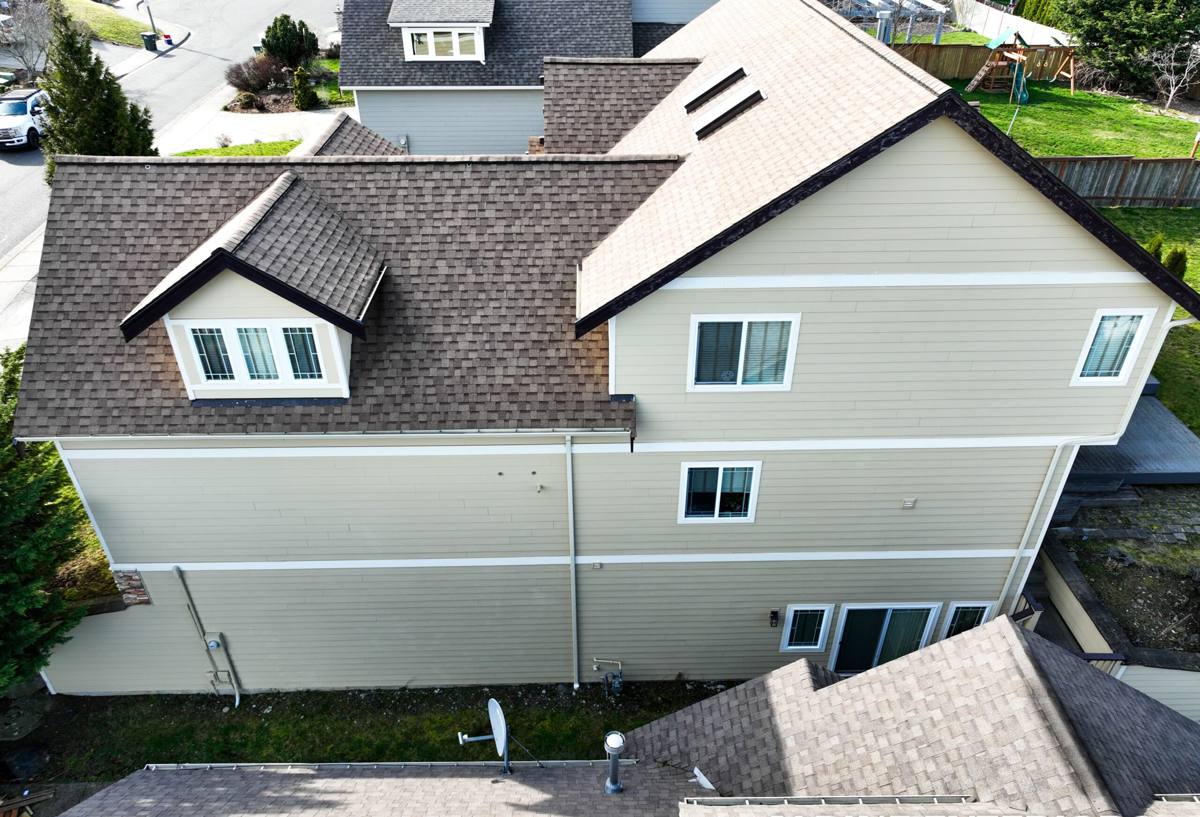
Happy Valley homes sit close enough to Bellingham Bay to catch salt-laden air, tucked under enough tree canopy to stay shaded and damp for long stretches of the year, and squarely in the path of Whatcom County's driving winter rain. That combination is hard on outdoor structures in ways that a generic deck spec sheet doesn't account for. A deck built the same way you'd build one in a dry inland climate will show problems here faster: soft spots at the ledger, black streaking on the boards, moss creeping into the grain, and fasteners that corrode ahead of schedule.
We've framed and finished decks throughout Bellingham and Whatcom County long enough to know which details matter in this specific setting and which are just upsells. This page walks through what a correctly built deck looks like for a Happy Valley property, the trade-offs between materials, and how our process is set up to catch the problems that show up later rather than during the walkthrough.
What Happy Valley's Setting Does to an Outdoor Structure
Mature Tree Cover and Shade
Many lots in this neighborhood carry real tree cover — established conifers and deciduous trees that shade decks for a good part of the day. Shade keeps a deck cooler in summer, but it also means surfaces stay wet longer after every rain and dry out slower between storms. That extended moisture window is exactly what moss, algae, and mildew need to take hold, and it's why decks under heavy canopy need more airflow underneath and more deliberate material choices than a deck sitting in full sun.
Slope and Drainage
Happy Valley's hillside streets mean a lot of homes have sloped or uneven backyards. That's not a problem for a deck by itself, but it changes how footings, post heights, and under-deck drainage need to be planned. A deck built on a slope without a real drainage plan underneath it will trap water and organic debris against the framing — the same debris that feeds rot and moss growth.
Proximity to the Bay
Salt air doesn't have to mean waterfront to matter. Airborne salt travels well inland on Pacific storms and settles on any exposed metal — fasteners, brackets, railing hardware. Over a few seasons, the wrong hardware grade will corrode, stain the decking around it, and eventually weaken connections that are structurally important. This is one of the most overlooked details in deck builds in this part of Whatcom County.
Choosing Decking Material That Actually Holds Up Here
There's no single "right" decking material — there's a right material for your budget, your sun exposure, and how much upkeep you actually want to do. Here's how the common options compare under Happy Valley conditions specifically:
| Material | How it handles shade and moisture | Maintenance | Typical lifespan here |
|---|---|---|---|
| Pressure-treated lumber | Prone to moss and mildew in shaded, damp spots without regular cleaning | Annual cleaning, periodic sealing/staining | 10–15 years with upkeep |
| Cedar | Naturally rot-resistant but still needs airflow and finish upkeep to fight moss in deep shade | Refinish every 2–3 years | 15–20 years with upkeep |
| Composite decking | Resists rot; some early composite products stayed damp and grew algae in shaded spots — modern capped composites shed moisture and clean up much easier | Occasional wash, no sealing/staining | 25–30 years |
| PVC decking | Fully moisture-resistant, doesn't feed mold or rot the way wood fiber can | Wash as needed | 25–30+ years |
For heavily shaded Happy Valley lots, we generally steer homeowners away from uncapped or budget composite boards — in low-light, high-moisture spots they can hold surface moisture longer than a smooth PVC or capped composite board, which just means more algae and moss to scrub off. That's a maintenance and appearance trade-off, not a claim that any product is defective — it's about matching the board's moisture behavior to your specific site.
Getting the Structure Right: Footings, Framing, Fasteners
The decking surface is what you see, but the framing underneath is what determines whether the deck is still solid in fifteen years. In this climate, three details matter more than they would somewhere drier:
Footings sized for saturated soil
Whatcom County's wet season saturates soil for months at a time. Footings need to be sized and set below frost depth and local code requirements, not just "deep enough to look right," so they don't heave or settle as the ground repeatedly saturates and drains.
Ledger flashing that actually sheds water
The ledger board — where the deck attaches to the house — is the single most common failure point on decks in wet climates. Proper flashing and a water-resistant barrier between the ledger and the house band board keep driving rain from working its way behind the siding and into the wall assembly. This is a case where doing it right takes an extra hour and skipping it costs a homeowner thousands in hidden rot repair down the line.
Corrosion-rated fasteners and hardware
Given the salt air this neighborhood sees, we use fasteners and structural connectors rated for coastal or high-corrosion environments — not standard-grade hardware. It costs a little more up front and it's the difference between hardware that's still sound in year fifteen and hardware that's staining the deck and losing strength by year seven.
Design Choices That Work With the Site, Not Against It
A custom deck should fit the lot it's built on, not fight it. On sloped Happy Valley properties, that often means multi-level decks that step down with the grade instead of one large elevated platform, which reduces the amount of exposed under-deck framing that needs to be inspected and cleaned over time. Under heavily shaded trees, we'll talk through gaps in the board spacing and skirting choices that let air move underneath — a closed-in deck skirt looks tidy but traps moisture right where you don't want it.
Railings are worth planning early too. Cable and metal railing systems look clean but need the same corrosion-rated hardware as the framing, while wood or composite railing systems need to match the maintenance schedule of the decking itself.
Our Process, Start to Finish
- On-site assessment — we walk the lot, check slope, drainage, sun/shade exposure, and the house's existing siding and framing where the deck will attach.
- Design and material walkthrough — we go over layout options and decking materials against your budget and how much maintenance you actually want to take on.
- Permitting — we handle the permit process with the City of Bellingham or Whatcom County, depending on where the property sits.
- Footings and framing — footings set to code depth, ledger flashed properly, framing built with corrosion-rated hardware throughout.
- Decking, railing, and finish work — surface installed with the spacing and ventilation the site calls for, railings installed and finished.
- Final walkthrough — we go over the finished deck with you, including what maintenance to expect and when.
What a Custom Deck Runs in Happy Valley
Every deck is priced on its own footprint, elevation, material choice, and site conditions, so exact numbers only come from a site visit. In general terms, here's what tends to move the price:
| Factor | Why it affects cost here |
|---|---|
| Slope and footing depth | Sloped lots often need taller posts, more footings, and more excavation |
| Decking material | Pressure-treated costs less upfront; composite and PVC cost more but reduce upkeep and last longer |
| Ledger and flashing work | Older homes may need siding opened up to properly flash the ledger, adding labor |
| Railing style | Cable and metal systems generally cost more than wood or composite baluster railing |
| Access for equipment | Tight, tree-lined lots can limit equipment access and add labor time |
Keeping a Happy Valley Deck Ahead of Moss Season
No deck in this climate is maintenance-free, but the right build minimizes the work. A basic seasonal routine covers most of it:
- Sweep leaves and debris off the deck surface regularly through fall — trapped organic matter is what feeds moss and mildew.
- Clean the deck surface at least once a year, before moss season sets in, with a cleaner appropriate to your decking material.
- Check under-deck areas and skirting for trapped moisture or debris buildup once a year.
- Inspect ledger flashing and railing hardware annually for early rust or staining, especially after storm season.
- Reseal or restain wood decking on the schedule your material calls for — don't wait until it's visibly gray.
- Keep nearby vegetation trimmed back so the deck surface gets some airflow and light, even under tree cover.
Why Hire a Crew That Already Works This Neighborhood
A deck contractor who mainly works dry, sunny sites will build a technically sound deck that still struggles here — because the failure points in this climate aren't obvious until you've seen a few seasons of Whatcom County rain and moss work on real decks. We've built and repaired decks throughout Bellingham, including homes in Happy Valley's sloped, shaded lots, and that's shaped which materials, flashing details, and hardware grades we default to before a homeowner ever has to ask.
If you're planning a new deck or replacing one that's showing its age, we're happy to come take a look and talk through what makes sense for your specific lot — no pressure, no sales script. Fill out the form below and we'll set up a free estimate.