 Bellingham
 Why Ferndale Homes Need a Siding Plan, Not Just a Siding Product
Ferndale sits close enough to the water and the marine layer that its houses take a different kind of beating than homes further inland. Salt-laden air moves through on a regular basis, driving rain comes in sideways during winter storms, and the long gray stretch from fall through spring keeps exterior walls damp for weeks at a time. Add in the moss and algae that thrive in that dampness, and you have a climate that is genuinely hard on siding — not because any one factor is extreme, but because all of them show up together, for months on end, every year.
That combination is why we treat a Ferndale siding job differently than a job in a drier part of the state. The product matters. So does the house wrap behind it, the flashing details around windows and doors, the gap left at the bottom for drainage, and the fastening schedule. Get any one of those wrong and moisture finds a way in, even with a good product on the outside.
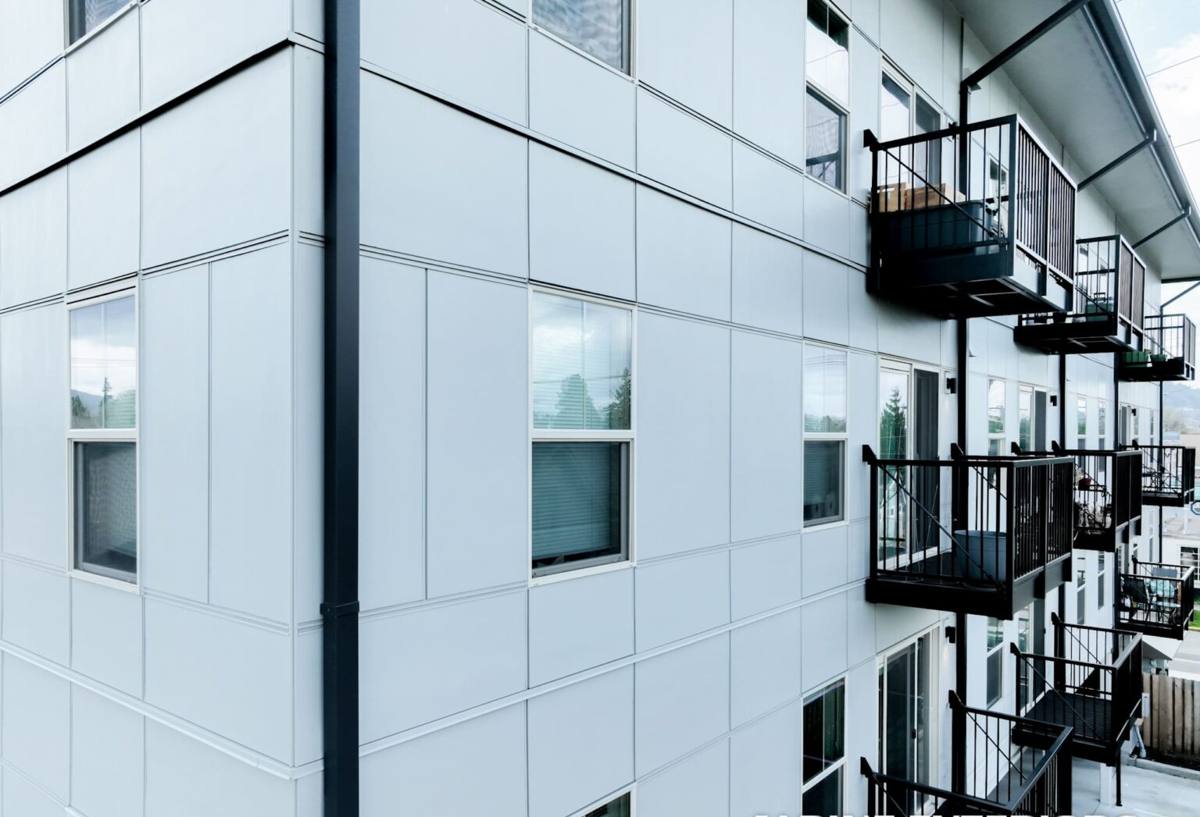
What Salt Air, Rain, and Moss Actually Do to Siding
Salt Air
Airborne salt is corrosive to exposed metal fasteners and trim, and it accelerates the breakdown of lower-grade paints and coatings. Siding that isn't finished with a durable, factory-cured coating tends to chalk, fade, or peel faster in a coastal-influenced climate than the same product would inland.
Driving Rain
Wind-driven rain doesn't just fall on a wall — it gets pushed sideways and upward into laps, seams, and trim joints. A siding system needs a real drainage plane behind it and correctly lapped, caulked, and flashed joints, or water works its way behind the cladding over time.
Moss and Algae
Constant moisture plus shade (common under mature trees in this area) is a recipe for moss and algae growth on north-facing and shaded walls. Porous or wood-based siding gives moss something to grip and feed on; a dense, factory-finished fiber cement surface gives it much less to hold onto, though nothing is fully immune without occasional cleaning.
Why We Only Install James Hardie Fiber Cement
We standardized on James Hardie siding for every home we side, including in Ferndale, and we don't install vinyl, LP SmartSide, or other fiber cement brands. That's not a marketing position — it's a decision based on what holds up in this specific climate over decades, not just years.
- Non-combustible core: Hardie's fiber cement doesn't feed a fire the way wood-based products can, which matters as wildfire smoke and dry-season risk have become a bigger regional concern even in wetter counties.
- Engineered for the Pacific Northwest: Hardie's HZ10 product line is specifically formulated for climates with more moisture and freeze-thaw cycling, which fits Whatcom County's weather pattern better than a one-size-fits-all product.
- Factory-applied ColorPlus finish: The coating is baked on in a controlled environment, cures harder than field-applied paint, and holds color better under UV and salt exposure — which reduces how often the siding needs repainting.
- Dimensional stability: Fiber cement doesn't swell, warp, or rot the way wood-based siding can when it takes on repeated moisture cycles.
- Warranty backing: Hardie backs its products with a strong, transferable warranty when installed to their published specifications — which is part of why correct installation isn't optional for us.
We're upfront that other products have their own selling points — vinyl is inexpensive, LP SmartSide is lighter to handle, cedar has a natural look some homeowners want. But given what this climate does to a house over 20-30 years, we'd rather install one product correctly and stand behind it than offer several and hope one works out.
How James Hardie Compares to the Alternatives We Don't Install
| Factor | James Hardie Fiber Cement | Vinyl | LP SmartSide / Wood-Based |
|---|---|---|---|
| Moisture resistance | High — non-organic core, doesn't rot | Good, but seams and expansion gaps can let water track | Vulnerable if the wood core takes on moisture |
| Fire performance | Non-combustible | Melts/deforms under heat | Combustible (engineered wood) |
| Finish longevity | Factory-cured ColorPlus coating | Color molded in, can fade/chalk | Field-applied or factory paint, repaint cycles typically shorter |
| Moss/algae resistance | Dense surface, less to grip | Smooth but can still host growth in shade | More porous surface can hold moisture |
| Typical repaint interval | Longer — factory finish holds up | Rarely painted, but fades permanently | Shorter, depending on exposure |
What a Correct James Hardie Installation Involves
The material is only part of the equation. A Hardie install done to spec in a wet, coastal-influenced climate needs several things to line up:
- A properly lapped and sealed weather-resistive barrier (house wrap) behind the siding, with no gaps at seams or penetrations.
- Correct fastener type, spacing, and depth per Hardie's published installation instructions — over- or under-driven nails compromise the warranty and the weather seal.
- A minimum clearance gap at the bottom of the siding (typically off hard surfaces like concrete or grade) so water doesn't wick up into the board.
- Properly flashed and caulked window and door openings, with drip caps that actually direct water away from the wall.
- Correct lap and joint treatment at butt seams, using Hardie-approved caulk or joiners rather than relying on caulk alone.
- Rainscreen or furring strategy considered on walls with heavy shade or limited drying time, to give any incidental moisture a way to escape.
Any one of these done wrong can undercut an otherwise good siding job. This is where hiring a crew that already knows the Ferndale and broader Whatcom County housing stock pays off — they've seen how water behaves on these lots and design the details around it, rather than installing the same way regardless of location.
Our Process for a Ferndale Siding Job
1. On-Site Assessment
We walk the home, check the current siding and any sheathing damage, note shaded/moss-prone walls, and look at drainage around the foundation and grade lines that could push water toward the wall.
2. Scope and Product Selection
We talk through Hardie's plank, shingle, and panel options, the HZ10 profile suited to this climate, and color choices from the ColorPlus palette, along with a written scope of what's included.
3. Tear-Off and Sheathing Check
Once old siding comes off, we inspect the sheathing for hidden moisture damage before it's covered back up — this is the point where problems that have been building for years actually get found and fixed, not papered over.
4. House Wrap and Flashing
New weather-resistive barrier goes on with proper lapping, and every window, door, and penetration gets flashed before a single piece of siding goes up.
5. Installation to Manufacturer Spec
Hardie boards are installed with the correct fastener schedule, clearances, and joint treatment described above — not shortcuts that happen to look fine on install day but fail in year three or four.
6. Final Walkthrough
We review the finished job with the homeowner, point out anything they should know for long-term care, and make sure everything matches what was scoped at the start.
Why Hiring a Crew That Already Works Ferndale Matters
Siding installation isn't just a product question — it's a local-conditions question. A crew that regularly works Ferndale and the rest of Whatcom County has already seen how salt air ages trim, how moss establishes on shaded north walls, and how driving rain finds the weak point in a flashing detail. That experience shows up in small decisions on the job — where to add extra flashing, which walls need more drainage attention, how tight to run clearances — that a crew unfamiliar with the area might not think to make.
It also means faster response if something needs a look after the job is done, and a crew that's accountable to the same community they're working in.
Maintenance: What Ferndale Homeowners Should Actually Expect
James Hardie siding is low-maintenance, not no-maintenance. Here's a realistic checklist for homes in this climate:
- Rinse the exterior periodically (garden hose is usually enough) to clear salt residue and organic buildup, especially on shaded or north-facing walls.
- Check caulking at trim and joints every year or two and re-caulk any cracked or separated areas.
- Keep gutters clear so overflow doesn't run down the siding face repeatedly.
- Trim back vegetation that keeps a wall shaded and damp longer than the rest of the house.
- Watch for moss at the bottom courses or under eaves and address it early with a gentle wash rather than pressure that can force water into seams.
Cost Factors for a Ferndale Hardie Project
| Factor | Why It Affects Cost |
|---|---|
| House size and wall complexity | More corners, dormers, and trim details mean more cutting, flashing, and labor time |
| Current siding removal | Tear-off and disposal of old material adds labor beyond a straightforward re-side |
| Sheathing repair needs | Hidden moisture damage found during tear-off may need repair before new siding goes on |
| Product line and profile | Plank, shingle, and panel styles, plus HZ10 vs. standard formulations, price differently |
| Trim and accessory scope | Fascia, soffit, and trim replacement alongside siding changes overall project cost |
We give straightforward, written estimates after seeing the actual condition of the house — we don't believe in ballpark numbers that don't reflect what's really involved.
If you're weighing a siding project for a Ferndale home, we're happy to take a look and walk you through what we'd recommend and why. The estimate is free, there's no pressure, and you'll get a straight answer about what your home actually needs — use the form below to get started.