 Bellingham
 South Hill's Exposure: Why Siding Takes a Beating Here
South Hill sits up above the rest of Bellingham, which is exactly what makes it a beautiful place to live and exactly why the siding on these homes works harder than siding almost anywhere else in Whatcom County. Elevation means more direct exposure to wind coming off Bellingham Bay, more driving rain hitting walls at an angle instead of falling straight down, and more salt-laden air settling onto exterior surfaces day after day. Add in the tree cover common to the neighborhood's older lots, and you get shaded, slow-drying wall sections that stay damp long after a storm has passed.
None of this is unique to one street or one block — it's the general character of an elevated, bay-facing neighborhood in a marine climate. But it matters enormously when you're choosing a siding product, because the products that perform fine in a dry inland climate often struggle here. A siding material that can't shed water fast, resist moss colonization, and hold its finish through repeated wet-dry cycles is going to show problems years before it should.
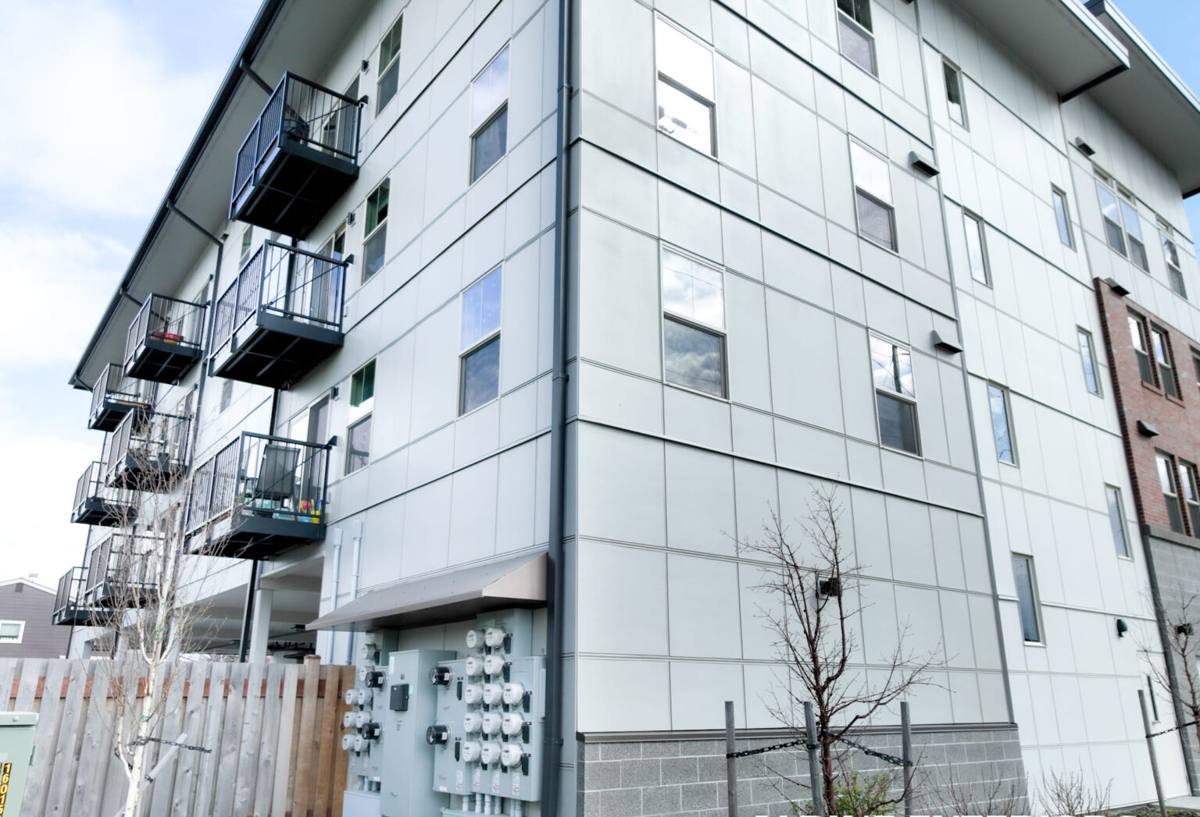
What Moss, Rain, and Salt Air Actually Do to the Wrong Siding
Moss isn't just a cosmetic nuisance. Once it establishes on a north-facing or shaded wall, it holds moisture directly against the siding surface for weeks at a time. On wood-based products — cedar, primed spruce, or engineered wood siding like LP SmartSide — that sustained moisture is what leads to swelling at panel edges, paint failure, and eventually rot at the most vulnerable points: butt joints, corner boards, and anywhere water can get behind the material and not get back out.
Salt air adds a second layer of stress. It accelerates the breakdown of many paint and coating systems, which means a siding product that depends entirely on field-applied paint for protection needs that paint touched up more often here than it would twenty miles inland. Vinyl siding handles moisture differently — it doesn't rot — but it wasn't designed to be a water barrier itself, and long-term UV and temperature cycling in a coastal climate can leave panels brittle, warped, or faded well before a homeowner expects to be dealing with a full replacement.
The pattern we see on service calls in this part of Bellingham is consistent: siding that looked fine for the first several years, then failed quickly once moisture found a way in and had no way to leave.
Why We Install Only James Hardie Fiber Cement
We made a deliberate decision to install one siding system — James Hardie fiber cement — and nothing else. Not vinyl, not LP SmartSide, not Cemplank, not Allura, not primed spruce or cedar. That's not a marketing position, it's a standard we hold because of what we've seen happen to the alternatives in exactly this kind of climate.
Fiber cement is not organic material, so it doesn't feed rot or mold the way wood-based products can, and it doesn't soften or delaminate under prolonged moisture exposure the way some engineered wood products can when a seam or cut edge is compromised. It's also non-combustible, which matters increasingly to insurers and to homeowners thinking about long-term risk. James Hardie backs its ColorPlus factory-applied finish with a substantial, transferable limited warranty, which is a meaningfully different commitment than a product relying on a contractor's field-applied paint job to hold up over time.
We're not claiming the alternatives are junk — vinyl and LP SmartSide are legitimate products used successfully in a lot of climates. Our position is narrower: given what South Hill's rain, moss, and salt air do to a wall over ten or twenty years, we don't think those trade-offs make sense for homes here, and we'd rather stand behind one product we trust completely than offer several we have reservations about.
What a Fair Comparison Looks Like
| Factor | James Hardie Fiber Cement | Vinyl | LP SmartSide / Wood-Based |
|---|---|---|---|
| Moisture response | Does not rot; engineered for wet climates | Won't rot but can warp/gap over time | Can swell, delaminate, or rot if moisture reaches core |
| Moss/algae resistance | Dense material resists colonization; finish sheds water | Can trap moisture behind panels in shaded areas | Vulnerable at cut edges and joints |
| Finish durability | Factory ColorPlus finish, warranted separately from substrate | Color molded in but can fade/chalk | Relies on field-applied paint, needs recoating |
| Fire rating | Non-combustible | Combustible | Combustible |
| Typical lifespan when correctly installed | Decades, often outlasting original owner's tenure | Variable, shorter in harsh coastal exposure | Shorter if moisture management isn't perfect |
Choosing the Right Hardie Line for This Neighborhood
James Hardie makes climate-engineered product lines, and for the Pacific Northwest that means the HZ5 formulation, built specifically to perform in regions with significant moisture and freeze-thaw cycling. That's the line we spec for South Hill and the rest of the Bellingham area — not the version engineered for a hot, dry climate that doesn't face the same wet-season pressures.
Lap Siding vs. Panel Siding
Most South Hill homes we work on suit traditional HardiePlank lap siding, which mimics the look of painted wood clapboard and fits the character of the neighborhood's older housing stock. Some homes with more contemporary lines, or accent areas like gables and porch details, work well with HardiePanel vertical siding or HardieShingle for a textured look. The right choice depends on the home's existing architecture — we're not going to push one look on every house.
ColorPlus Factory Finish
Wherever possible, we recommend ColorPlus over field-painted Hardie primed products. A factory-applied, baked-on finish is more consistent and more resistant to fading and chipping than paint applied on site, and it carries its own finish warranty. In a climate where UV and salt exposure work against painted surfaces, that head start matters.
What Correct Installation Actually Involves
James Hardie siding is only as good as the installation behind it. Fiber cement is not a forgiving product for shortcuts — gaps, poor flashing, or wrong fasteners will cause problems no matter how good the material is. On an exposed, bay-facing lot like the ones common to South Hill, there's even less margin for error.
- Correct clearance gaps at all butt joints, corners, and trim — sized to manufacturer spec, not "close enough"
- Proper flashing and water-resistive barrier integration behind every seam, window, and door opening
- Starter strip installed level and at the correct reveal before the first course goes up
- Fasteners driven flush (never overdriven) at the manufacturer-specified pattern and location
- Caulking only where Hardie's installation instructions call for it — not as a substitute for proper flashing
- Sheathing and framing inspected and repaired before any new siding goes on, not covered up
- Rain screen or drainage plane detailing appropriate to the wall assembly, especially on shaded or moss-prone elevations
Every one of those steps is standard, published guidance from James Hardie — nothing exotic. But skipping even one of them is exactly how a fiber cement job ends up with the same moisture problems people install Hardie to avoid.
Our Process, Start to Finish
Assessment and Measurement
We start by walking the whole exterior, checking existing siding, trim, and — where visible — sheathing condition. On an older South Hill home, we're also looking at how the lot sits relative to sun, wind, and shade, since that tells us which elevations need the most attention to drainage detailing.
Tear-Off and Sheathing Check
Once old siding comes off, we inspect the sheathing and framing underneath before anything new goes up. Hidden rot or moisture damage gets addressed at this stage — covering it over with new siding just delays the same problem.
Installation
Hardie goes on to manufacturer spec: correct gaps, flashing, fastening, and reveal, course by course, with attention to the corners, window returns, and transitions that are the most common failure points on any siding job.
Final Walkthrough
We walk the finished job with the homeowner, check caulking and trim lines, and make sure everything matches what was scoped at the estimate — no surprises at the end.
Cost Factors for a South Hill Hardie Project
Every home is different, so we don't quote broad numbers without seeing the house, but the main variables that move a project's cost are consistent across the neighborhood.
| Factor | Why It Matters |
|---|---|
| Existing wall condition | Hidden rot or sheathing damage found during tear-off adds repair scope before new siding goes on |
| Home height and access | Multi-story homes on sloped South Hill lots often need more scaffolding and staging time |
| Siding profile chosen | Lap, panel, and shingle profiles vary in material and labor cost |
| Trim and detail work | Older homes with more architectural trim take more time to fit and finish correctly |
| ColorPlus vs. field paint | Factory finish has a different cost structure than primed siding painted after installation |
Why a Crew That Already Works This Neighborhood Matters
A contractor who's worked on multiple homes in the same elevated, bay-exposed part of Bellingham already knows where moss tends to establish first, which elevations take the worst of the wind-driven rain, and how older South Hill framing typically responds once siding comes off. That's not something you can fully substitute with a generic checklist — it's pattern recognition built from doing the work here specifically, not somewhere with a different climate profile entirely.
It also means fewer surprises during the project. A crew unfamiliar with this kind of exposure might spec a standard installation and get caught off guard by moisture issues that a Bellingham-based crew would flag on day one.
After Installation: What Homeowners Should Keep an Eye On
- Rinse siding annually, especially shaded or moss-prone elevations, to keep organic growth from establishing
- Trim back vegetation and tree limbs that keep a wall section shaded and slow to dry
- Check caulking at trim and penetrations every year or two and have any cracked sections redone
- Watch gutters and downspouts — misdirected water onto siding undermines even a correctly installed system over time
- Call a professional if you notice soft spots, staining, or a section that stays wet longer than the rest of the house
James Hardie siding installed correctly should need very little from you beyond that — that's much of the appeal versus a product that demands recoating or more frequent repair.
If you're weighing a siding replacement on a South Hill home, we're happy to take a look and give you a straightforward, no-pressure estimate — use the form below to get started.