 Bellingham
 Siding That Actually Holds Up in York
York is one of Bellingham's older, established neighborhoods, which means a lot of the homes here are carrying original siding, a mismatched patch job from a past repair, or a replacement product that was never really built for this corner of Whatcom County. When we talk with York homeowners about their siding, the conversation almost always comes back to the same thing: moisture. Not a single dramatic leak, but the slow, cumulative kind — the kind that comes from being close enough to Bellingham Bay to catch salt-laden air, and far enough into the Pacific Northwest rain belt that "dry season" is a relative term.
We install James Hardie fiber cement siding exclusively. That's not a marketing angle — it's a decision we made after years of watching which products actually survive this climate without turning into a maintenance project, and which ones just delay the inevitable. This page covers what York homes specifically need from their siding, what a correct Hardie installation looks like, and how our process works from the first estimate to the final walk-through.
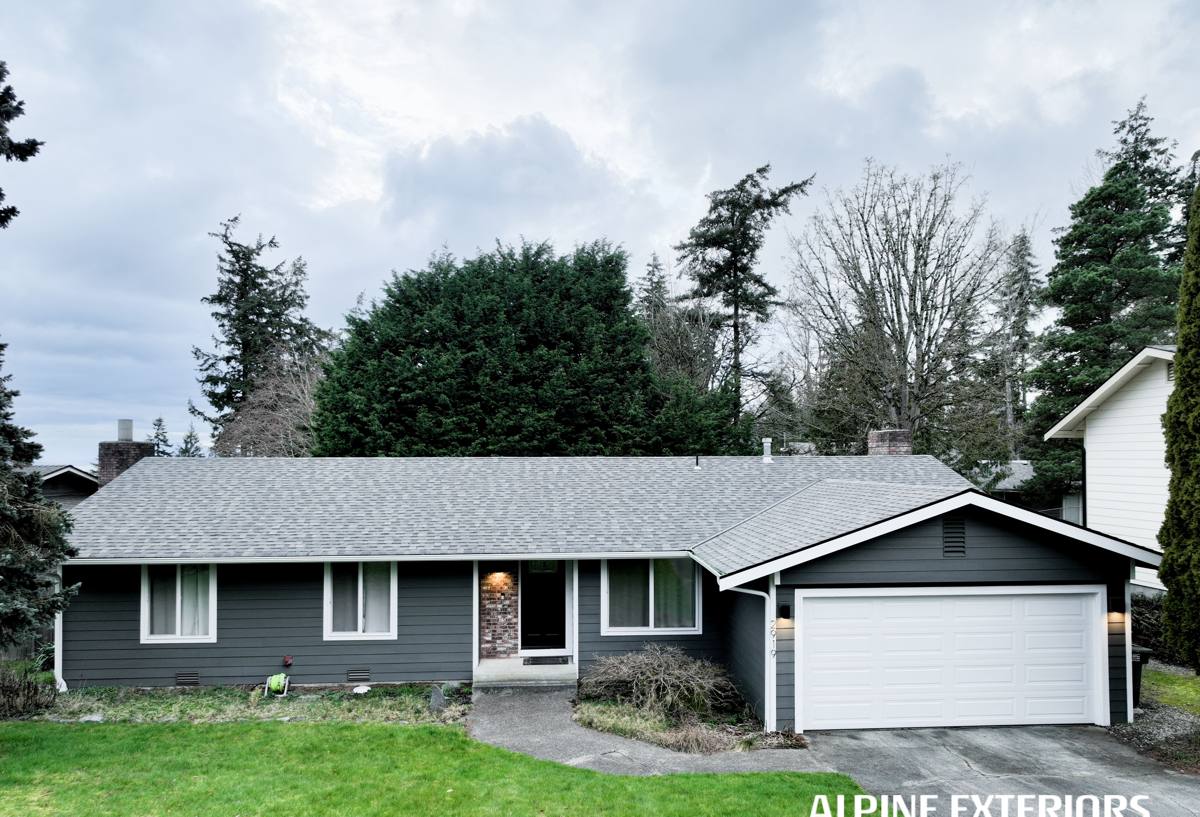
The Bellingham Climate Factor
Every siding recommendation we make starts with the same question: what is this material going to face, year-round, for the next 30-plus years? In York and the surrounding Bellingham area, that means three things working against your exterior at once.
Salt Air
Proximity to the water means airborne salt settles on exterior surfaces even well inland. Salt is corrosive to fasteners and hardware, and it accelerates the breakdown of paint films and less durable siding substrates. Materials that aren't engineered to resist it will show fading, chalking, and surface degradation faster than the same product would in a drier, inland climate.
Driving Rain
Bellingham doesn't just get a lot of rain — a good share of it comes in sideways off the water, driven by wind. That matters more than total rainfall totals suggest, because wind-driven rain gets pushed up under laps, into seams, and behind trim in ways that straight-down rain doesn't. Siding systems and installation details that work fine in calmer climates can fail here specifically because of the wind component.
Moss Season
Whatcom County's combination of moisture, shade, and mild temperatures creates a long moss and algae season — often close to year-round in shaded, north-facing exposures common in older neighborhoods with mature tree cover, which describes a lot of York. Moss holds moisture against a surface long after the rain stops, and on the wrong substrate that constant dampness is what actually causes rot, not the rain event itself.
None of these three factors is unique to York, but they compound here in a way that punishes siding materials with any weakness in moisture handling, fastener corrosion resistance, or surface durability.
Why We Standardized on James Hardie
James Hardie fiber cement is engineered specifically to resist the failure modes that matter most in a climate like this. It's non-combustible, which matters for wildfire-adjacent insurance considerations even on the wet side of the state. It holds its factory-applied ColorPlus finish far longer than field-applied paint on wood or composite products, which matters when salt air and UV are working against the finish every day. And it doesn't rot, delaminate, or feed moss and algae growth the way wood-based or some composite products can when moisture sits against them for weeks at a time.
Just as important: Hardie makes climate-specific product lines. Their HZ5 formulation is engineered for cold, wet, freeze-thaw climates like ours — it's not the same board used in Arizona or Florida. That distinction matters more than most homeowners realize, because a lot of siding failures we see on older homes trace back to a product that was simply never designed for Pacific Northwest conditions in the first place.
What a Correct Installation Actually Involves
The siding board itself is only part of the story. Most siding failures we're called out to repair in Bellingham — including on homes that already have fiber cement — trace back to installation shortcuts, not the material. Here's what has to happen for Hardie siding to perform the way it's designed to in this climate.
Water Management Before the First Board Goes Up
A weather-resistant barrier (house wrap or building paper) goes on first, with all seams properly lapped and taped. Every window and door opening gets flashed so that water is directed out and away from the sheathing, never trapped behind it. This step is invisible once the siding is up, which is exactly why it's the step that gets skipped on rushed jobs — and exactly why we don't skip it.
Rainscreen and Drainage Gap
Given how much wind-driven rain York homes deal with, we install with a drainage gap behind the siding wherever the assembly calls for it, so that any moisture that does get past the outer layer has somewhere to go instead of sitting against the sheathing.
Fastening and Clearances
Hardie specifies exact nailing patterns, fastener types, and minimum clearances from grade, roof lines, and other surfaces. Corrosion-resistant fasteners matter here specifically because of the salt air — the wrong fastener can start failing years before the siding itself would.
Caulking and Trim Details
Joints, trim, and penetrations get sealed with products rated for exterior, high-moisture use, applied at the right points in the sequence — not as a finishing touch to hide gaps.
Skip any one of these steps and you can end up with a home wearing an excellent siding product that still fails early, because the water management underneath it wasn't built to match.
Comparing Your Siding Options
Homeowners in York often ask us to walk through why we'd steer them away from cheaper or more common alternatives. Here's an honest comparison based on how these materials actually perform in a wet, salt-air, moss-prone climate like ours — not on price alone.
| Material | Moisture Resistance | Salt Air Durability | Maintenance | Typical Lifespan Here |
|---|---|---|---|---|
| James Hardie Fiber Cement | Excellent — non-combustible, won't rot | Engineered for it (HZ5 line) | Low — factory finish, occasional wash | 30+ years |
| Vinyl Siding | Can trap moisture behind panels | Fades and becomes brittle faster | Low, but prone to cracking/warping | 15-25 years |
| Primed Wood/Cedar | Vulnerable to rot without diligent upkeep | Finish degrades quickly | High — repainting, sealing | 10-20 years without heavy maintenance |
| Other Fiber Cement (LP SmartSide, Cemplank, Allura) | Varies by product and formulation | Varies — not always climate-matched | Moderate | Varies widely |
We don't install the products in the bottom three rows, and we're upfront about why: in this specific climate, the trade-offs consistently show up as callbacks and premature replacements. That's the whole reason we standardized on one product line we trust to perform to spec here.
Our Process, Start to Finish
Because we only work with one product line, our process is straightforward and repeatable — there's no juggling different manufacturer specs or installation methods from job to job.
- Free on-site estimate. We look at your current siding, your home's exposure (sun, shade, wind direction, proximity to mature trees or the water), and identify any moisture damage that needs to be addressed before new siding goes on.
- Product and color selection. We walk through Hardie's ColorPlus options and profiles that fit your home's style and the neighborhood's character.
- Written scope and timeline. You get a clear breakdown of what's included — tear-off, water management upgrades, trim, and installation — before any work starts.
- Prep and water management. Removal of old siding, repair of any damaged sheathing, and installation of the weather barrier, flashing, and drainage assembly.
- Installation to spec. Hardie board installed per manufacturer nailing, clearance, and sealing requirements — the same details covered above, on every job.
- Final walk-through. We go over the finished work with you directly and make sure you know what routine care (mostly just an occasional rinse) looks like going forward.
Signs Your York Home Needs New Siding
Not every siding issue is obvious from the curb. Some of the most damaging problems in this climate develop quietly. Watch for:
- Persistent moss or algae growth that returns quickly after cleaning
- Soft, spongy, or bubbling spots when you press on wood or composite siding
- Paint that's peeling, chalking, or won't hold a fresh coat
- Visible gaps, warping, or cracked caulk lines around windows and trim
- A musty smell or unexplained moisture inside near exterior walls
- Rust streaking from fasteners — a common early sign of salt-air corrosion
- Siding that was patched piecemeal over the years rather than replaced as a system
If any of these sound familiar, it's worth having someone look at what's happening underneath, not just at the surface.
Why Local Experience in York Matters
Every neighborhood in Bellingham has its own mix of tree cover, sun exposure, and wind patterns, and York's older housing stock and mature landscaping create specific shade and moisture patterns that a crew unfamiliar with the area might not account for. A contractor who already works in York knows to look closely at north-facing walls for moss buildup, to plan around mature trees when scheduling and staging a job, and to account for the wind-driven rain that comes off the bay when detailing flashing and trim. That local pattern recognition doesn't replace following manufacturer spec — it's what tells us where to pay extra attention on your specific property.
It also means fewer surprises during the estimate. We're not guessing at how this climate treats a given product over time — we're telling you what we've actually seen hold up and what hasn't, on homes not far from yours.
What This Means for Your Home
Replacing siding is a significant investment, and it's one most homeowners only make once every few decades. In a climate that combines salt air, driving rain, and a long moss season, the material and the installation quality both matter — a great product installed with shortcuts fails just as surely as a weaker product installed perfectly. Our position is that James Hardie fiber cement, installed to spec with proper water management underneath it, gives York homeowners the best combination of durability, low maintenance, and finish longevity available for this specific climate.
If you're weighing a siding replacement or just want an honest read on what's going on with your current siding, we're happy to take a look. Reach out for a free, no-pressure estimate using the form below.