 Bellingham
 Building Decks That Actually Hold Up in Lynden
Lynden sits inland from Bellingham Bay in the farmland stretch of Whatcom County, but that distance from saltwater doesn't spare it from the region's defining weather pattern: long, wet winters with steady rain that can run from October well into May. Add in cool, humid summer mornings off the Nooksack River valley and you get a climate that's tough on any outdoor structure, decks especially. A deck built the way it might be in a drier state simply won't perform the same way here.
We build custom decks for homes throughout Lynden and the surrounding county, and the design choices that matter most aren't about looks first — they're about how the structure sheds water, resists moss, and survives freeze-thaw cycles year after year. Get those right and the finish work lasts. Get them wrong and you're looking at soft boards, slick surfaces, and rot at the ledger within a few seasons.
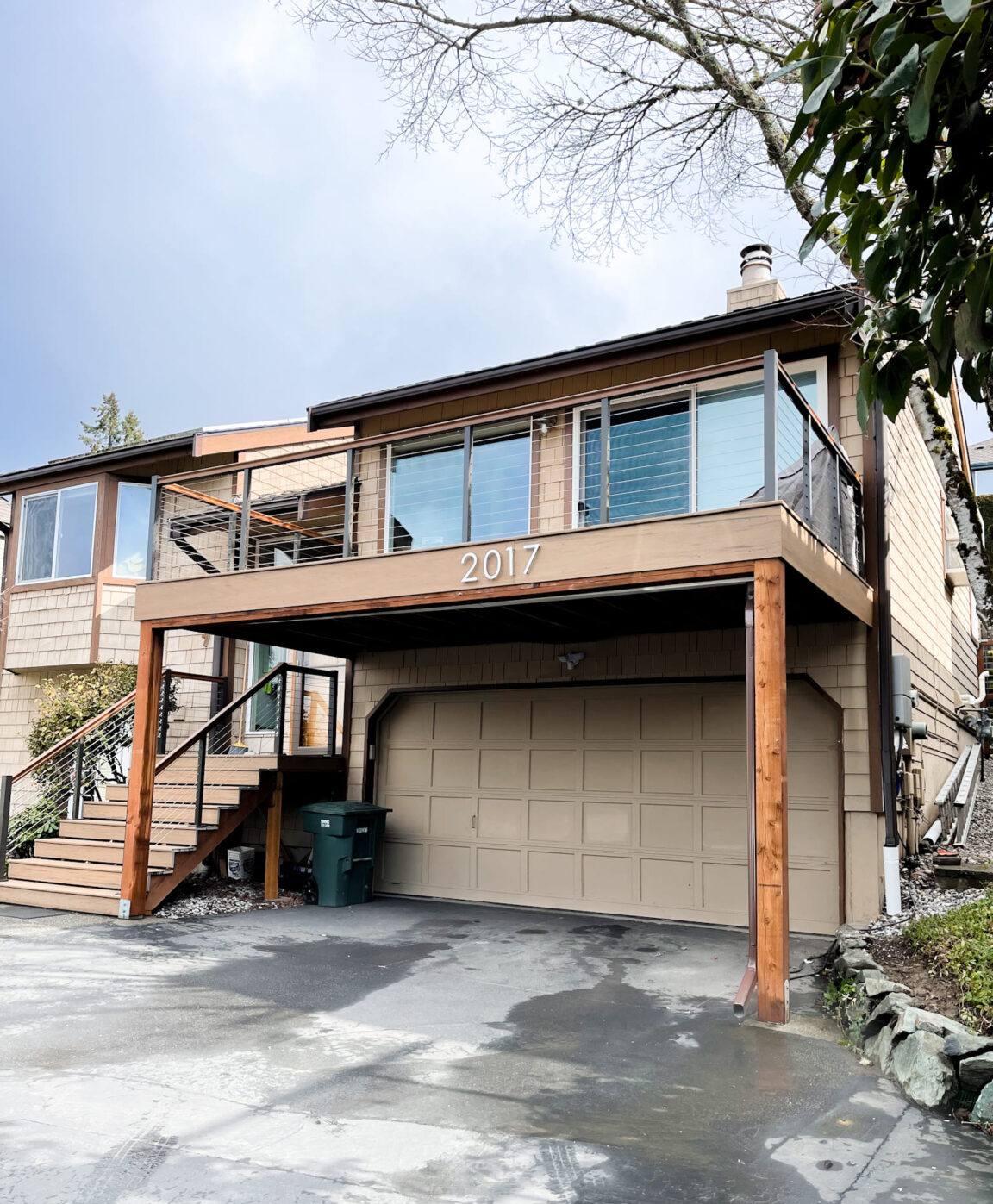
What Whatcom County's Climate Does to a Deck
Coastal parts of the county deal with salt air working into fasteners and finishes over time. Lynden, being further inland, sees less of that — but it gets the same driving rain, the same long stretches of overcast humidity, and arguably a longer moss season because farmland and tree-lined properties around Lynden hold moisture in the air and soil longer than open coastal lots. That combination shows up in a few predictable ways:
- Moss and algae on horizontal surfaces — anywhere water sits instead of draining becomes a moss farm within a year or two.
- Fastener corrosion — standard screws and nails weren't built for this many wet-dry cycles per year.
- Ledger board rot — the single most common structural failure point on older decks, caused by water getting behind the ledger where it attaches to the house.
- Freeze-thaw heaving — Lynden gets real cold snaps in winter, and footings that aren't set below frost depth can shift over a decade of freezing and thawing.
- UV and moisture combined — wood that's wet most of the year and then hit with summer sun checks and splits faster than dry-climate wood ever would.
None of this means a deck can't last decades in Lynden. It means the build has to account for these conditions from the footings up, not just at the surface.
Choosing Decking Material for a Lynden Property
There's no single "best" decking material — there's the right material for how you'll use the deck, your maintenance appetite, and your budget. Here's how the common options actually perform in our climate:
| Material | Moisture Performance | Maintenance | Typical Lifespan Here |
|---|---|---|---|
| Pressure-treated fir/hem-fir | Good if sealed regularly; end grain is the weak point | Annual cleaning, re-sealing every 2-3 years | 15-20 years |
| Cedar | Naturally rot-resistant, still needs finish | Cleaning plus periodic oil or stain | 20-25 years |
| Composite (capped) | Excellent — won't rot or absorb water | Occasional wash to prevent surface moss | 25-30+ years |
| PVC decking | Excellent, fully impervious | Lowest — wash as needed | 30+ years |
We've moved away from recommending uncapped composite in this climate — early-generation composite boards absorb moisture at the core over enough wet seasons and can swell or promote mold underneath, even when the surface still looks fine. That's less about the material being bad and more about matching the product generation to the environment. Capped composite and PVC solve that problem and are what we lean on for clients who want low upkeep.
Real wood is still a good choice for homeowners who want that natural look and are willing to stay on top of sealing. Cedar in particular handles our moisture cycles better than most softwoods, but "low maintenance" was never one of its selling points.
Fasteners and Hardware
Whatever decking you choose, the hardware underneath matters just as much. We use stainless or hot-dip galvanized fasteners and structural connectors rated for ground contact and coastal-grade exposure — cheaper zinc-coated hardware corrodes faster than most homeowners expect once it's been through a few Whatcom County winters.
The Structural Details That Determine Whether It Lasts
A deck's finish material gets all the attention, but the framing underneath is what actually determines its lifespan in this climate.
Footings Below Frost Depth
Lynden's winters bring hard frosts often enough that footings need to be set below the local frost line, not just poured to a shallow depth that happens to hold up most years. Shallow footings are the reason some older decks in the area have developed a noticeable lean or bounce.
Ledger Board Flashing
Where the deck attaches to the house is the single highest-risk point for hidden water damage. Proper flashing — installed so water is directed out and away from the house sheathing, not just caulked and hoped for — is non-negotiable on every deck we attach to an existing structure.
Joist Spacing and Protection
Joists need spacing appropriate to the decking material's span rating, and every cut end and top edge should get joist tape or a comparable moisture barrier before boards go down. Skipping this is invisible on install day and shows up as rot five years later.
Drainage Under the Deck
On low-clearance or ground-level decks, water and moss can build up underneath if grading and gaps aren't planned for. We think through drainage at the design stage, not as an afterthought once the frame is built.
Deck Styles That Fit Lynden Homes
Lynden's mix of larger residential lots, farmhouses, and newer suburban builds means deck needs vary more than in a dense city neighborhood. Common requests we see in the area include:
- Multi-level decks that step down with sloped yards common on larger Lynden lots
- Covered or partially covered decks, which cut down dramatically on the moss and standing-water issues since less direct rain hits the boards
- Wider decks built for entertaining, common on properties with more outdoor space than a typical in-town lot
- Simple, durable rear decks off farmhouses and older homes being updated
A covered deck is worth serious consideration in this climate specifically — it doesn't eliminate maintenance, but it meaningfully extends the life of whatever decking material you choose by cutting direct rain exposure.
Our Process for a Custom Deck Build
- On-site assessment — we look at grading, sun/shade exposure, existing structure condition if we're attaching to the house, and how you actually plan to use the space.
- Design and material selection — we walk through material trade-offs honestly, including what fits your maintenance preference and budget.
- Permitting — most custom decks in Whatcom County require a permit; we handle that process rather than leaving it on you.
- Footings and framing — built to code depth and spacing, with flashing and moisture protection built in from the start.
- Decking, railing, and finish work — installed to the manufacturer's spec, which matters for both performance and warranty coverage.
- Final walkthrough — we go over basic care for whatever material you chose so you know what upkeep actually looks like.
What Drives Deck Cost in Lynden
| Factor | Why It Matters |
|---|---|
| Size and shape | Multi-level or angled decks require more framing complexity per square foot |
| Decking material | Pressure-treated is the lowest upfront cost; PVC and premium composite cost more but need far less upkeep |
| Height and footing depth | Taller decks and frost-depth footings mean more excavation and structural work |
| Railing style | Wood, metal cable, and glass railing systems vary widely in material cost |
| Cover or roof structure | Adding a cover is a separate structural scope but reduces long-term maintenance |
| Site access | Rural and larger lots sometimes add cost for material staging and equipment access |
We give straightforward, itemized estimates rather than a single vague number, so you can see where the cost is actually going and make informed trade-offs.
A Simple Maintenance Checklist for Your New Deck
- Sweep debris off the deck regularly — trapped leaves and needles hold moisture against the boards
- Clean surfaces at least once a year to stay ahead of moss and algae before it takes hold
- Re-seal or re-stain wood decking every 2-3 years, sooner in high-sun areas
- Check railing posts and stair connections annually for movement
- Keep gutters and downspouts near the deck clear so runoff isn't dumping directly onto it
- Inspect the ledger board area yearly for any signs of staining or softness
Why Hiring a Crew That Already Works in Lynden Matters
Building codes, frost depth requirements, and permitting steps vary by jurisdiction, and a crew that regularly pulls permits and builds in Whatcom County already knows the local requirements rather than learning them on your project. Just as important, a local crew has actually seen how decks in this specific climate age — which materials hold up, which fastener choices cause problems five years down the road, and which framing shortcuts show up as callbacks. That's the kind of judgment that only comes from building in the same rain and moss conditions your deck will actually face, not from a general spec sheet.
If you're planning a new deck or replacing one that's showing its age, we're happy to come take a look at your property and talk through options. Reach out for a free, no-pressure estimate using the form below.