 Bellingham
 Roofing in Happy Valley: What the Neighborhood Is Up Against
Happy Valley sits close enough to Bellingham Bay and the surrounding hills that its homes take a specific kind of weather beating. It's not one big event that wears a roof out here — it's the steady combination of salt-laden air drifting in off the water, long stretches of driving rain that comes in sideways more often than straight down, and a moss season that can run eight months out of the year in shaded, tree-covered lots. Any one of those is manageable. All three together, year after year, is what actually ages a roof faster than its rated lifespan suggests it should.
When we install a new roof in this neighborhood, we're not just following a manufacturer's spec sheet. We're accounting for how Whatcom County's climate interacts with the specific mix of tree cover, lot slope, and home age you find in Happy Valley. That's the difference between a roof that looks right on installation day and one that's still performing correctly in year fifteen.
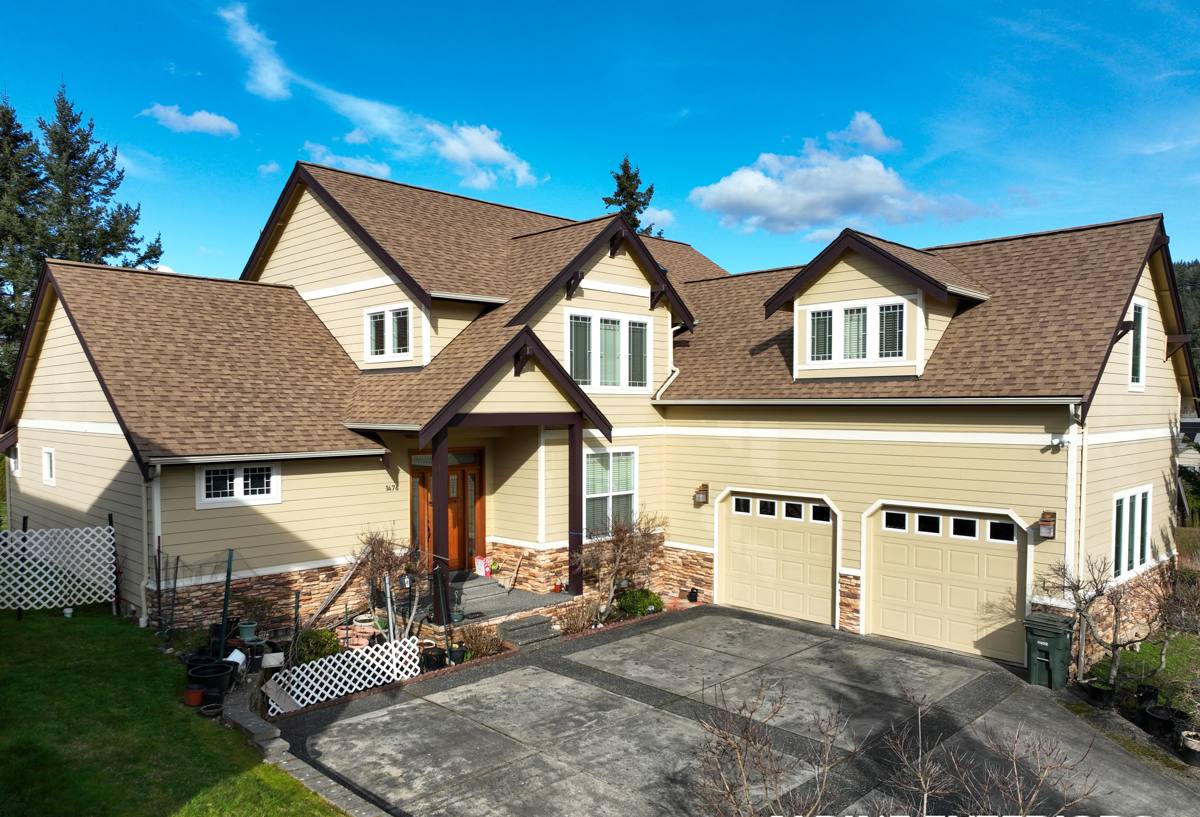
Why Salt Air, Rain, and Moss Change the Job
Salt Air and Metal Components
Coastal proximity means airborne salt settles on every exposed surface, including your roof's metal flashing, fasteners, and any exposed hardware. Standard galvanized fasteners can start showing corrosion well before the shingles around them are due for replacement. We spec corrosion-resistant fasteners and flashing on every install in this area as a baseline, not an upgrade — it's cheap insurance against a problem that's expensive to fix once staining or leaks show up.
Driving Rain and Wind-Driven Water
Bellingham's rain doesn't always fall straight down. Wind off the bay pushes it sideways into eaves, valleys, and anywhere two roof planes meet. A roof that would shed water fine in a calmer climate can still leak here if the underlayment, valley flashing, and ice-and-water shield details aren't done with wind-driven rain specifically in mind. This is one of the most common failure points we find on older Happy Valley roofs during tear-off — not the shingles themselves, but underlayment and valley work that wasn't built for the way rain actually hits this area.
Moss and Shaded Lots
Many Happy Valley properties sit under mature tree canopy, which is great for privacy and shade but means roofs stay damp longer after every rain and get less direct sun to dry out. That's exactly the environment moss needs. Moss isn't just cosmetic — its root structure works into shingle granules and seams, holds moisture against the roof deck, and accelerates wear in the areas it colonizes. A new roof installed with moss-resistant materials and proper ventilation is a meaningfully different long-term proposition than one installed without those considerations.
What a Correct Installation Actually Involves
A new roof is more than shingles nailed over the old ones. Here's what we consider non-negotiable on every full installation, and why each step matters more in this climate than it might elsewhere.
- Full tear-off to the deck — lets us inspect the sheathing for rot or soft spots, which is common on older homes where a previous roof trapped moisture longer than it should have.
- Deck repair or replacement — any damaged plywood or boards get replaced before anything new goes down. Roofing over a compromised deck just hides the problem.
- Ice-and-water shield at vulnerable points — eaves, valleys, and roof-to-wall transitions get self-adhering membrane, not just felt, because these are the spots where driving rain finds a way in first.
- Synthetic underlayment across the field — more consistent water resistance than old-style felt, and it holds up better through the install process in our wet weather.
- Corrosion-resistant flashing and fasteners — standard practice here given the salt air exposure, not an add-on.
- Balanced attic ventilation — intake and exhaust that actually work together, so the attic can dry out between rain events instead of staying damp and inviting moss and rot from underneath.
- Moss-resistant shingle selection where appropriate — copper or zinc-infused granules on shaded lots meaningfully slow moss regrowth compared to standard shingles.
Material Options for Happy Valley Homes
There's no single "best" roofing material for every house — it depends on your home's style, your budget, and how much shade your lot gets. Here's how the common options stack up against this neighborhood's specific conditions.
| Material | Moss Resistance | Salt Air Durability | Typical Lifespan | Best Fit For |
|---|---|---|---|---|
| Architectural asphalt shingle | Good with algae/moss-resistant granules | Good with proper flashing | 25–30 years | Most Happy Valley homes; best value-to-performance balance |
| Standard 3-tab shingle | Fair | Fair | 15–20 years | Budget-driven projects; not our first recommendation on heavily shaded lots |
| Metal roofing (standing seam) | Excellent — moss can't establish on a smooth metal surface | Requires marine-grade or coated fasteners near the bay | 40–50+ years | Shaded, moss-prone lots and homeowners planning to stay long-term |
| Cedar shake | Poor without diligent maintenance | Fair | 20–30 years with upkeep | Homeowners committed to regular cleaning and treatment; we're upfront about the maintenance load in this climate |
We're honest with homeowners about cedar shake specifically: it can look great, but in a climate this wet and shaded, it demands a maintenance schedule most people underestimate before they commit to it. If you want that look without the upkeep, there are engineered shake-profile options worth discussing.
Our Process, Start to Finish
- On-site inspection — we walk the roof (or use a drone where pitch or access makes that safer), check the attic for ventilation and moisture signs, and look at how your specific lot's tree cover and exposure affect the job.
- Written estimate — clear scope, materials, and pricing, with options explained rather than a single take-it-or-leave-it number.
- Scheduling around weather — we plan install windows with Bellingham's rain patterns in mind and stage material delivery so the deck isn't exposed longer than necessary.
- Tear-off and deck inspection — old roofing removed, deck inspected and repaired as needed, with photos of anything unexpected before we cover it back up.
- Underlayment and flashing installation — the part that actually keeps water out, done to the standard this climate requires.
- Roofing material installation — installed to manufacturer specification, which is also what keeps your warranty valid.
- Final walkthrough — we go over the finished roof and the ventilation setup with you before we consider the job done.
Cost Factors Specific to This Job
Every roof price is specific to the house, but a few factors come up consistently on Happy Valley installations:
| Factor | Why It Matters Here |
|---|---|
| Roof pitch and access | Steeper roofs and limited driveway/yard access common on hillside lots affect labor and staging |
| Deck condition | Homes with a history of trapped moisture under old roofing sometimes need deck repair, which isn't known until tear-off |
| Material choice | Metal and moss-resistant shingle upgrades cost more upfront but reduce long-term maintenance on shaded lots |
| Ventilation upgrades | Older homes often need intake or exhaust vents added or corrected, which is worth doing at the same time as the roof |
| Valley and flashing complexity | Homes with multiple roof planes need more detailed flashing work to handle wind-driven rain |
Signs a Happy Valley Roof Needs Replacing, Not Patching
- Granule loss showing up in gutters, especially if the roof is past the 15-year mark
- Persistent moss regrowth even after cleaning, which usually means moisture is being held against the deck
- Soft spots or sagging visible from inside the attic
- Recurring leaks at valleys or roof-to-wall junctions despite repeated patch attempts
- Curling, cracking, or missing shingles concentrated on the shaded side of the roof
- Daylight visible through the roof deck from inside the attic
If you're only seeing one or two of these and the roof is otherwise sound, a repair may still make sense. We'll tell you honestly if that's the case rather than pushing a full replacement you don't need yet.
Why Local Experience in Happy Valley Matters
A crew that's worked this specific pocket of Bellingham knows which streets sit under heavier tree cover, how the terrain affects drainage and wind exposure, and which older homes in the area tend to have deck or ventilation issues from prior roofing work. That familiarity shows up in fewer surprises during the job and a roof that's built for the conditions it'll actually face, not a generic install. It also means we're a known, reachable local business if you ever need warranty service or have a question down the road — not a crew that worked the area once and moved on.
If your roof is showing its age or you're planning ahead for a replacement, we're happy to take a look and give you a straight assessment. Reach out for a free, no-pressure estimate using the form below.