 Bellingham
 Deck Repair Built for Puget's Weather, Not a Generic Climate
If you own a home in the Puget area of Bellingham, you already know your deck doesn't age the way a deck does in a drier part of the country. Whatcom County's mix of salt-laden air off the bay, months of steady driving rain, and a moss season that can stretch from fall through spring puts a specific kind of stress on outdoor structures. A deck repair here isn't just about swapping a few boards — it's about understanding how water, salt, and organic growth work their way into wood and hardware over time, and fixing the problem at the source instead of just the symptom on top.
This page covers what deck repair actually means for homes in this part of Bellingham: what typically goes wrong, what a correct repair looks like, how we approach the job, and why local experience matters more than it might seem.
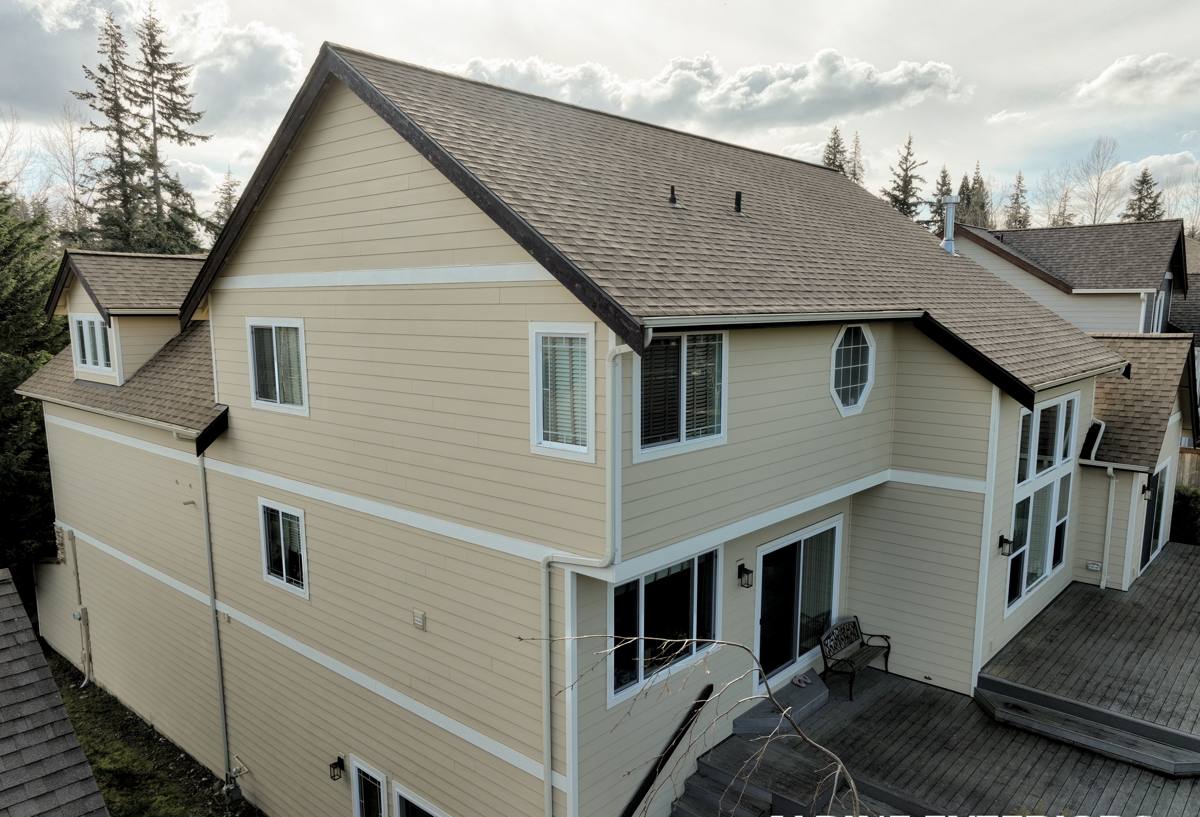
Why Puget-Area Decks Take a Different Kind of Beating
Salt Air and Metal Fatigue
Proximity to Bellingham Bay means airborne salt settles on everything, including your deck's fasteners, joist hangers, and railing hardware. Standard hardware corrodes faster in this environment than it would inland. Once a fastener starts to rust, it loses grip strength long before the surrounding wood shows obvious damage — which is why hardware failure is often the hidden cause behind a deck that suddenly feels "bouncy" or loose.
Driving Rain and Trapped Moisture
Rain that comes in at an angle, pushed by wind off the water, finds its way into places vertical rain wouldn't reach — under ledger boards, behind fascia, into end grain on cut boards. Combined with our long wet season, that means wood surfaces rarely get a full chance to dry out between storms. Moisture that stays trapped against wood or masked under old paint and caulk is the single biggest driver of rot we see on repair calls.
Moss, Algae, and a Long Growing Season
Bellingham's mild, damp winters are ideal for moss and algae growth on horizontal wood surfaces. Beyond looking bad, a moss layer holds moisture directly against the decking boards for weeks at a time, accelerating decay underneath it. Left untreated over a few seasons, moss buildup can turn a simple cleaning-and-sealing job into a full board replacement.
Signs Your Deck Needs Repair — Not Just a Cleaning
Some deck problems are cosmetic. Others are structural and shouldn't wait. Here's what we look for, and what homeowners can check themselves before calling anyone out:
- Soft, spongy, or springy spots when you walk across the decking boards
- Visible gaps, cracking, or splintering along board edges, especially near fasteners
- Rust streaks running down from screws, nails, or metal connectors
- A ledger board (where the deck attaches to the house) that looks discolored, swollen, or separated from the siding
- Railings or posts that wiggle more than a firm push should allow
- Persistent green or black staining that doesn't lift with a light cleaning
- Stairs that feel uneven, or stringers with visible cracking
- Gaps opening up between the deck and the house at the point of attachment
Any one of these on its own might be minor. Several together, especially involving the ledger board or main support posts, usually mean it's time for a proper structural assessment rather than a surface fix.
What a Correct Deck Repair Actually Involves
Ledger Board and Flashing
The ledger board is the single most important connection point on most decks — it's what ties the deck to the house — and it's also the most common failure point in wet climates. A proper repair means pulling back the decking near the house to inspect the ledger and its flashing, not just caulking over a visible gap. If the flashing is missing, damaged, or was never installed correctly, water has likely been getting behind it for years even if the surface looked fine.
Framing, Joists, and Fasteners
Once we're past the surface, we check joists, beams, and posts for soft wood, and inspect joist hangers and structural fasteners for corrosion. In this climate, we replace failing hardware with corrosion-resistant, code-rated connectors and fasteners rated for exterior and treated-lumber contact — mismatched or standard hardware is a common shortcut that fails quietly over a few wet seasons.
Decking Surface and Board Replacement
Individual boards get replaced when rot, splitting, or fastener pull-through is isolated. Spacing and fastening patterns matter here — boards installed too tight for our rainfall don't get a chance to dry, which just restarts the moisture problem.
Railings, Guardrails, and Stairs
Railings take constant hand contact and lateral stress, so any looseness gets addressed at the post connection, not just tightened at the surface. Stair stringers are checked for the same rot patterns as ledger boards, since they sit close to grade and catch splashback.
Repair or Rebuild? How We Help You Decide
Not every deck problem calls for full replacement, and not every deck is worth patching. The right call depends on where the damage is, how much of the structure it affects, and the age of the deck. Here's the general framework we use when walking a Puget-area property:
| Factor | Leans Toward Repair | Leans Toward Rebuild |
|---|---|---|
| Location of damage | Isolated boards, railings, or stairs | Ledger board, main beams, or multiple posts |
| Age of structure | Under 12-15 years, sound framing | Original framing near or past its service life |
| Extent of rot | Surface-level, caught early | Soft wood found in multiple structural members |
| Hardware condition | Localized corrosion | Widespread rust on connectors and fasteners |
| Code compliance | Meets current railing/attachment code | Predates current guardrail or ledger attachment code |
We'll always tell you honestly which side of that line your deck falls on. If a repair will genuinely hold up, that's what we recommend — we don't upsell a rebuild a homeowner doesn't need.
Materials That Actually Hold Up Here
Material choice matters more in a marine, high-rainfall climate than in most parts of the country. For structural repairs, we use pressure-treated lumber rated for ground contact where it's called for, paired with fasteners and connectors specifically rated for compatibility with treated wood chemicals — an ordinary galvanized screw can corrode fast when it reacts with modern treated lumber, which is a mismatch we see often on older decks built with mixed hardware.
For decking surfaces, we'll walk you through the honest trade-offs between wood and composite: wood is less expensive up front and repairs board-by-board easily, but needs regular cleaning and sealing to fight moss and UV wear. Composite costs more initially and resists moss and rot better, but isn't repaired piecemeal the same way — damage to a composite board usually means replacing the full board, and color matching older composite runs can be difficult since manufacturers change formulations over time. Neither is universally "better" — it depends on your budget, how much upkeep you want to do, and how long you plan to stay in the home.
Our Deck Repair Process
- On-site inspection of the full deck structure — surface, framing, ledger, and hardware — not just the visible complaint area
- Honest assessment of what's repairable versus what needs replacement, explained in plain terms
- Written estimate outlining scope, materials, and hardware to be used
- Repair work: framing and hardware first, then decking surface, then railings and stairs
- Final walkthrough so you can see and understand exactly what was fixed and why
We don't cover a soft spot with a new board and call it done. If we find a deeper moisture or framing issue while we're in there, we'll show it to you before proceeding, not after the invoice.
Why a Crew That Already Works in Puget Makes a Difference
Deck repair standards don't change by neighborhood, but conditions do. A crew that regularly works Puget-area homes already has a feel for how this specific stretch of Bellingham handles wind-driven rain off the bay, how fast moss returns on shaded north-facing decks, and which fastener and flashing choices actually last through a full Whatcom County wet season rather than just looking good on install day. That local pattern recognition shortens the diagnostic part of the job and reduces the chance of a repair that looks right for a summer but fails by the following winter.
It also means straightforward logistics — material runs, scheduling around our rainy stretches, and coordinating any permit questions with the local building department, since certain structural deck repairs may require a permit depending on scope.
Keeping Your Deck Sound After the Repair
A good repair buys you years, but a little seasonal maintenance buys you more. In this climate, that means:
- Clearing leaves and debris from between boards before they trap moisture
- Treating for moss at the first sign of green growth rather than waiting until it's established
- Checking railings and stair connections for looseness once a year
- Re-sealing or re-staining wood decking on the manufacturer's recommended schedule, not just when it looks faded
- Making sure gutters and downspouts near the deck are directing water away, not onto it
If you're noticing soft spots, loose railings, moss that won't quit, or you just want a professional set of eyes on a deck you're not sure about, we're happy to take a look. Reach out for a free, no-pressure estimate — we'll tell you straight what your deck needs and what it doesn't.