 Bellingham
 Metal Roofing in Puget: What This Climate Actually Asks of a Roof
Puget-area homes sit under a weather pattern that's harder on a roof than most homeowners realize until they're already dealing with the consequences. Salt-laden air moves in off the water and accelerates corrosion on anything metal that isn't built to resist it. Rain rarely falls straight down here — it comes in sideways on a regular basis, which puts real pressure on laps, seams, and every penetration point on a roof. And the moss season isn't a few weeks in the fall; it's a long, damp stretch that runs from autumn well into spring, giving moss and mildew plenty of time to establish themselves on any roofing surface that holds moisture.
A roof in this part of Whatcom County has to handle all three of those pressures at once, year after year, not just survive one bad storm. That's the standard we hold metal roofing installations to in Puget — not how the roof looks on install day, but how it performs after a decade of this exact climate.
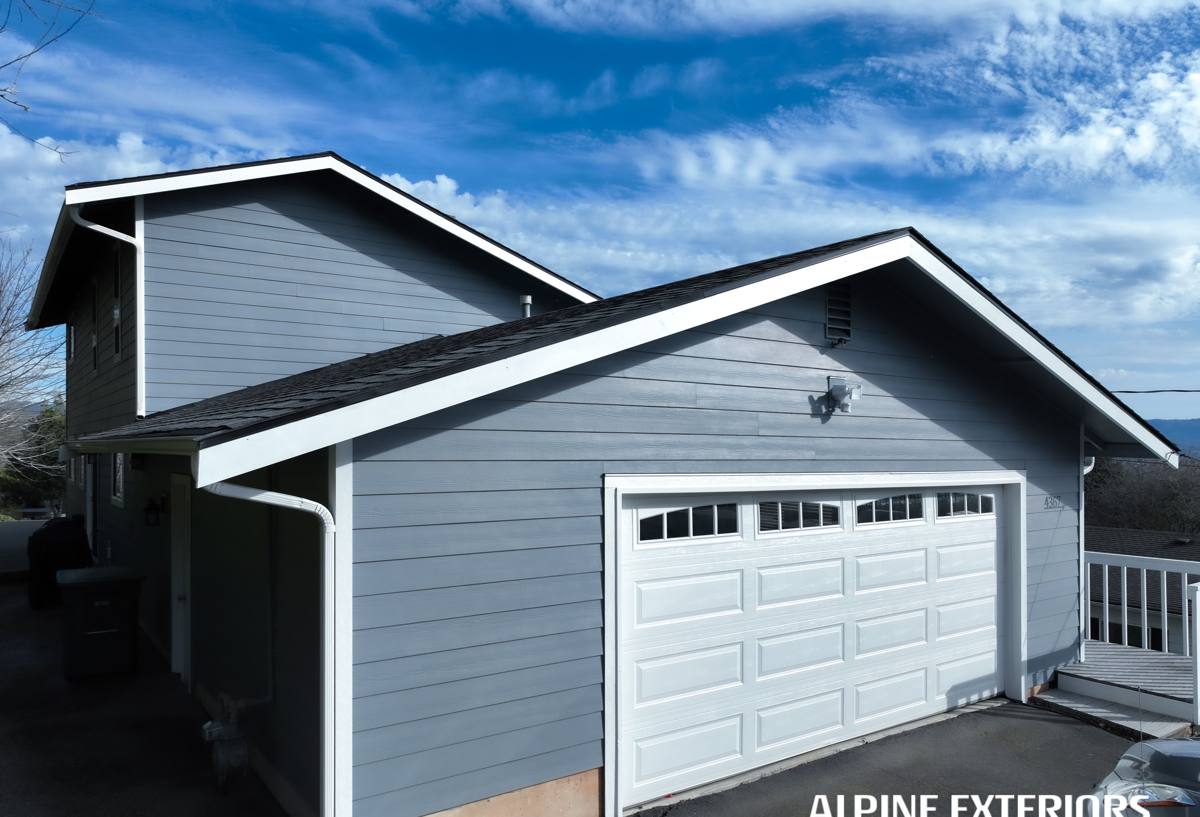
Why Metal Roofing Makes Sense for Puget Homes
Metal roofing isn't the right fit for every home or every budget, and we're upfront about that. But for homeowners in Puget dealing with sustained damp, salt exposure, and heavy moss pressure, it solves several problems that asphalt shingles simply can't solve as well.
Properly coated metal doesn't absorb water the way a shingle's mat and granule surface does, which matters directly in a climate this wet. It also gives moss far less to hold onto — moss needs a rough, porous surface and standing moisture to get established, and a smooth metal panel with good drainage denies it both. On top of that, a correctly installed metal roof typically outlasts asphalt shingles by a wide margin, which matters when you're weighing the upfront cost against how many roofing cycles a home is likely to go through.
None of that means metal is automatically the better choice for every roof in Puget. It's a real investment, the installation is less forgiving of shortcuts than shingle work, and not every home's structure or budget lines up with it. We'll walk through the honest trade-offs with you rather than push metal as a default answer.
The Metal Roofing Systems We Install
"Metal roofing" covers more than one product, and the differences matter in a climate like this one. Here's how the main options compare for a Puget-area home:
| System | How It Handles This Climate | Best Fit For |
|---|---|---|
| Standing seam steel | Concealed fasteners mean no exposed screw heads for wind-driven rain or salt air to work on over time; raised seams shed water cleanly even on lower-slope sections | Homeowners who want the longest service life and the least long-term maintenance |
| Exposed-fastener metal panel | Reliable and less expensive, but fasteners and their washers are exposed to weather and need periodic inspection as gaskets age | Budget-conscious projects, outbuildings, or roofs with simpler geometry |
| Stone-coated steel | Combines a steel panel's durability with a profile that reads more like traditional shingle or tile from the street | Homeowners who want metal's performance without changing the home's visual style |
For most primary residences in Puget, we lean toward standing seam because the concealed-fastener design holds up best against the combination of salt air and driving rain this area sees. But the right system depends on the roof's slope, the home's style, and the budget — we'll go over the real trade-offs for your specific roof rather than defaulting to one product.
What Correct Metal Roof Installation Actually Involves
A metal roof performs the way it's engineered to only when it's installed correctly, and metal is less forgiving of shortcuts than asphalt shingles are. Getting it right in this climate means paying close attention to a few things that matter more here than they would in a drier region.
Underlayment and Moisture Barrier
We install a high-temperature synthetic underlayment beneath the panels, with self-adhering ice-and-water membrane at eaves, valleys, and any low-slope transitions where wind-driven rain is most likely to be pushed backward under the metal. In a climate that sees this much sideways rain, the underlayment isn't a formality — it's the roof's actual last line of defense if any water gets past the panel seams.
Fastening and Panel Layout
Panel spacing, clip placement, and fastener selection all need to account for the region's wind exposure and thermal movement. Metal panels expand and contract with temperature swings more than shingles do, and a system that doesn't allow for that movement will eventually show stress at the seams. We use fasteners and clips rated for coastal exposure rather than standard hardware, since standard fasteners corrode faster in salt-laden air.
Flashing at Every Penetration
Chimneys, vents, skylights, and roof-to-wall transitions are where most roof leaks actually start, on any roofing material. On a metal roof, flashing has to be custom-formed to match the panel profile and properly integrated with the underlayment beneath it, so water is directed out and away rather than trapped against a seam. This is one of the details that separates a roof that holds up through a full wet season from one that develops slow leaks nobody notices until there's interior damage.
Ventilation
A well-ventilated attic keeps moisture from condensing on the underside of the roof deck, which matters in a climate where the air outside is damp for much of the year. We check existing ventilation as part of every metal roofing project and address gaps rather than installing a new roof over an attic that's already trapping moisture.
How Metal Handles Salt Air, Driving Rain, and Moss — Specifically
Each of the three climate pressures Puget homes face calls for a different response in how a metal roof is specified and installed.
Salt air accelerates corrosion on any exposed metal, which is why coating quality and fastener selection matter as much as the panel material itself. We specify factory-finished panels with coatings rated for coastal exposure, and we pair them with fasteners and flashing metal that won't corrode at a different rate than the roof around them — mismatched metals near each other can actually accelerate corrosion through galvanic reaction, so keeping compatible metals together throughout the system is a detail we don't skip.
Driving rain tests seams, laps, and fastener points in a way calm, straight-down rain never would. Standing seam's concealed fastening and raised seam profile is built specifically to shed water that's being pushed sideways by wind, which is a meaningful advantage over systems with exposed fasteners in an area that sees this much wind-driven rain.
Moss needs a damp, porous surface to establish itself, and it's slower to take hold on smooth, properly draining metal than on shingles or wood-based roofing. That said, metal roofs still need clear valleys and gutters — moss and debris buildup in a clogged valley can hold moisture against the panel edge even on a metal roof, so we make sure drainage paths are clean and unobstructed as part of every install and any follow-up service.
Our Process for a Puget Metal Roofing Project
1. On-Site Assessment
We walk the existing roof, check the deck condition underneath, and look at ventilation, flashing points, and drainage before recommending anything. If the existing roof deck needs repair before a new roof goes on, we'll tell you that upfront rather than covering a problem.
2. Honest Recommendation
We'll go over which metal system fits your roof's slope, style, and budget, along with the honest trade-offs against asphalt shingle replacement. We're not going to recommend metal roofing on every project — it's not always the right call, and we'd rather tell you that than sell a system that doesn't fit.
3. Tear-Off and Deck Prep
Old roofing material comes off, the deck is inspected and repaired as needed, and any soft or water-damaged sheathing is replaced before underlayment goes down. Installing a new roof over a compromised deck just hides a problem that will resurface.
4. Underlayment, Panels, and Flashing
We install the moisture barrier, then the panel system, then custom-formed flashing at every penetration and transition — in that order, so each layer is protecting the one that comes before it rather than being an afterthought.
5. Final Walkthrough
Before we consider the job finished, we walk the completed roof with you, confirm drainage is working the way it should, and go over anything you should know about long-term care for a metal roof in this climate.
What a Metal Roof in Puget Typically Costs
Metal roofing costs more upfront than asphalt shingles, and the honest answer to "how much" depends on your roof's size, slope, complexity, and the system you choose. Here's what generally drives the cost up or down:
| Factor | Effect on Cost |
|---|---|
| Panel system (exposed-fastener vs. standing seam) | Standing seam costs more upfront due to labor and concealed-fastener hardware, but typically needs less maintenance over its service life |
| Roof complexity (valleys, dormers, penetrations) | More cuts, seams, and custom flashing increase labor time and material waste |
| Existing deck condition | Rot or soft sheathing found during tear-off adds repair cost that can't always be estimated until the old roof is off |
| Roof slope and pitch | Steeper or harder-to-access roofs require more safety setup and labor time |
| Coating and finish grade | Higher-grade coastal-rated coatings cost more but resist salt-air corrosion longer |
We give a firm, itemized estimate after the on-site assessment rather than a rough number over the phone, since roof condition and complexity vary enough between properties that a generic estimate usually isn't accurate.
Signs Your Puget Roof May Be Ready for a Metal Upgrade
- Shingles that are cupping, curling, or losing granules faster than expected for their age
- Persistent moss growth that keeps coming back after cleaning
- Rust streaks or corrosion around existing metal flashing, vents, or fasteners
- Soft spots on the roof deck or visible sagging between rafters
- Frequent minor leaks around chimneys, skylights, or roof-to-wall transitions
- A roof nearing or past its expected service life, especially with heavy shade or north-facing exposure
Any one of these is worth a professional look rather than an assumption either way — sometimes targeted repair is enough, and sometimes it's a sign the roof is at the point where a full replacement, metal or otherwise, is the more cost-effective path.
Why a Crew That Already Works Puget Matters
A lot of what makes a metal roof hold up here comes down to judgment calls that a generic, out-of-area crew tends to get wrong: how much wind-driven rain a given roof plane actually takes on based on orientation, where moss and debris are likely to collect given the surrounding tree cover, how much coastal-grade hardware a specific project actually needs versus standard fasteners, and how flashing has to be layered so it performs through a full wet season rather than just looking finished on install day.
A crew that works Whatcom County roofs regularly starts to recognize these patterns property by property. That shows up in decisions homeowners rarely see directly — where extra underlayment is worth the material cost, which valleys need wider flashing given local wind patterns, how fastener spacing should adjust for a specific roof's exposure — but absolutely feel in how the roof performs over the years that follow.
If you're weighing a metal roof for your Puget-area home, or just want an honest read on whether your current roof needs attention, we're glad to take a look. Reach out using the form below to schedule a free, no-pressure estimate.