 Bellingham
 Roof Repair Built for Puget's Weather, Not a Generic Checklist
Puget homes take a specific kind of beating. You're close enough to the water to get salt-laden air working on your fasteners and flashing, you get driving rain that comes in sideways more often than straight down, and you get a moss season that runs longer than most homeowners want to admit. A roof repair that works in a dry inland climate doesn't automatically work here. We've repaired enough roofs in this part of Bellingham to know which failure points show up again and again, and we build our repairs around those patterns instead of a one-size-fits-all approach.
This page is specifically about roof repair for the Puget area — not a general overview of roofing services. If you're dealing with a leak, moss buildup, damaged flashing, or a roof that's just past its prime, this is what you need to know before you hire someone.
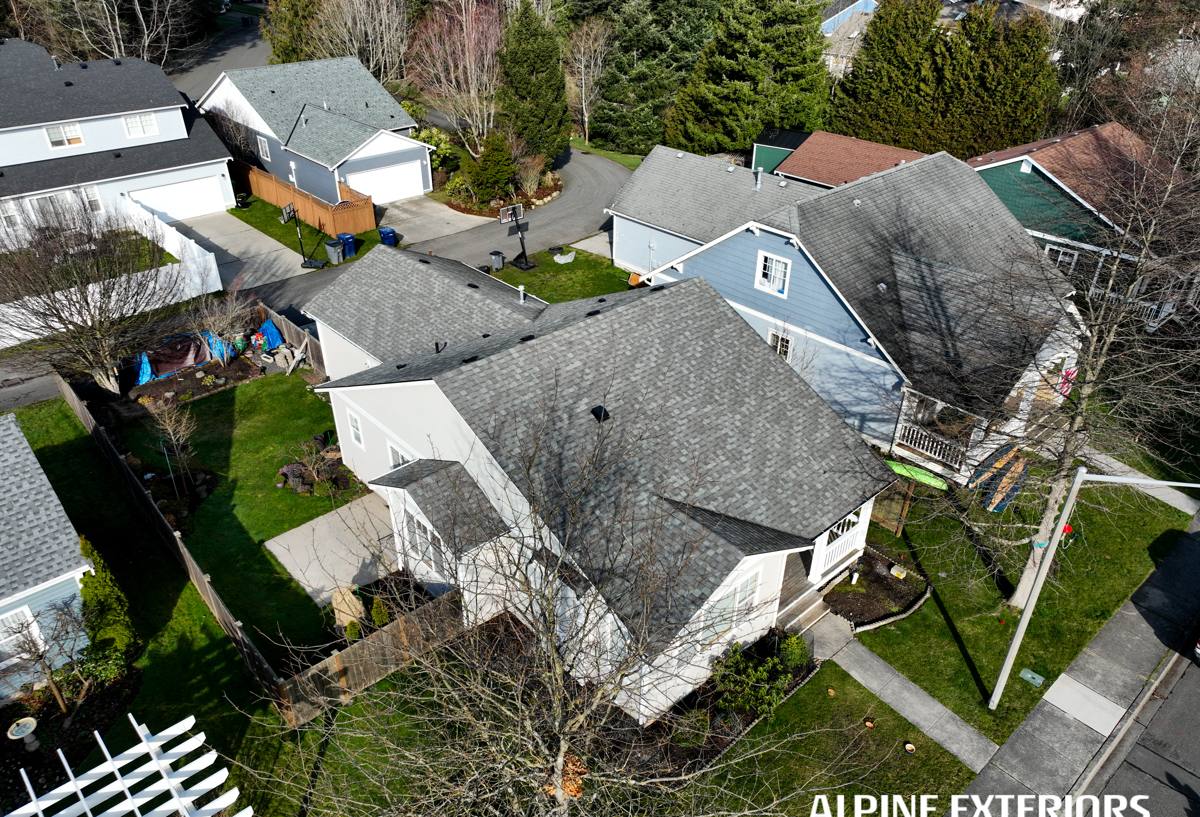
What Whatcom County's Climate Does to a Roof
Three things drive most of the roof repair calls we get in this area, and they compound each other.
Salt Air and Corrosion
Proximity to Puget Sound means airborne salt settles on everything, including your roof. Over years, that accelerates corrosion on exposed metal — nails, flashing, gutter hardware, and any fasteners that aren't rated for a marine-adjacent environment. A repair using standard-grade fasteners might hold for a season or two before the same corrosion problem resurfaces. We use corrosion-resistant fasteners and flashing on repairs in this area as a matter of standard practice, not an upsell.
Driving, Wind-Driven Rain
Bellingham doesn't just get rain — it gets rain pushed sideways by wind off the water. That matters because a lot of "minor" roof leaks aren't from a hole in the shingles at all; they're from water being driven up and under laps, flashing edges, and vent boots that would never leak in a straight-down rain. Diagnosing a leak here means checking for wind-driven entry points, not just obvious damage.
Moss and Organic Growth
Shade, moisture, and mild temperatures are exactly what moss wants, and this area gives it all three for a big chunk of the year. Moss isn't just cosmetic. It holds moisture against the roofing material, lifts shingle edges as it grows, and works its way into gaps where it can hold water long after the surface looks dry. Left alone through a few wet seasons, moss growth is one of the most common reasons we find rot in roof decking that otherwise looks fine from the ground.
Signs a Puget-Area Roof Needs Repair
- Dark streaking or visible moss patches, especially on north-facing or shaded slopes
- Granules collecting in gutters or at downspout outlets
- Soft spots or sagging when walked on (decking may be compromised)
- Water stains on interior ceilings, especially after a windy rain rather than a calm one
- Lifted, curled, or missing shingles near valleys, ridges, or roof-wall intersections
- Rusted or visibly deteriorated flashing around chimneys, skylights, and vent pipes
- Gutters pulling away from the fascia or overflowing during heavy rain
Any one of these on its own might be minor. Two or three together, especially on a roof that hasn't been inspected in a few years, usually means it's time for a closer look.
What a Correct Repair Actually Involves
A roof repair done right isn't just patching the spot where water is showing up inside the house. Water travels along roof decking before it drips through, so the interior stain and the actual entry point are often feet apart. Our process starts with tracing that path, not just treating the symptom.
Inspection First
We check the full roof plane, not just the reported problem area — flashing at penetrations, valley conditions, fastener condition, and the state of the decking underneath if there's any sign of moisture intrusion. In this climate, one visible leak often means we should check nearby flashing and valleys too, since they're exposed to the same conditions.
Addressing the Actual Cause
If moss has lifted shingles, the repair includes safe moss removal and treatment, not just a patch over the damaged area — otherwise the same spot fails again next wet season. If flashing has corroded from salt exposure, we replace it with corrosion-resistant material rather than matching the original spec that already failed once.
Matching Materials Where It Matters
For visible repairs, we try to match existing shingle color and profile as closely as possible. Where an exact match isn't available (common on older roofs), we'll explain the options honestly rather than promise a seamless blend we can't deliver.
Cleanup and Verification
We clear debris and moss remnants from gutters and valleys before we leave, since leftover organic material just restarts the same cycle. Where accessible, we check that water is actually shedding correctly off the repaired area before calling the job done.
Repair vs. Replacement: How We Help You Decide
| Factor | Points Toward Repair | Points Toward Replacement |
|---|---|---|
| Age of roof | Under 15-18 years, roof otherwise in good shape | Nearing or past expected lifespan for the material |
| Extent of damage | Isolated to one section, flashing, or a single leak source | Multiple leak points or widespread granule loss |
| Decking condition | Solid, no soft spots found on inspection | Soft or rotted decking found in more than one area |
| Moss/organic damage | Surface growth without shingle displacement | Moss has lifted shingles across large sections |
| Repair history | First or second repair on this roof | Repeated repairs to the same areas over recent years |
We'll always tell you honestly which side of that table your roof falls on. A repair that's likely to fail again within a year or two isn't a good use of your money, and we'd rather say so upfront than sell you a patch we don't believe in.
Flashing, Valleys, and Vent Boots: The Details That Actually Fail
Most roof leaks we trace in this area come down to a handful of specific components rather than the shingle field itself. Chimney flashing, skylight curbs, valley metal, and rubber vent boots are all points where two materials meet — and that junction is where wind-driven rain and years of salt exposure do the most damage. Rubber vent boots in particular degrade with age and UV exposure and are a common, easy-to-miss leak source that has nothing to do with the shingles around them. When we're on a roof for a repair, we check these components even if they weren't the reported problem, because they're often the next failure waiting to happen.
Gutters and Roof Repair Go Together Here
We mention gutters on a roof repair page because in this climate, they're not a separate issue. Clogged or poorly pitched gutters back water up under the roof edge, which contributes to rot at the eaves and fascia — damage that can look like a roofing problem but actually started at the gutter. Part of a thorough repair visit includes checking that gutters are actually moving water away from the roofline, not just noting that they exist.
Our Process for Puget-Area Roof Repairs
- Inspection and diagnosis — we trace the actual water path, not just the visible symptom
- Honest scope and estimate — repair, or a recommendation for replacement if that's the better value
- Scheduled repair — timed around weather windows since roof work needs a reasonably dry stretch to do right
- Moss and debris clearing — as part of the job, not an optional add-on
- Verification before we leave — checking that water sheds correctly off the repaired section
Why Hiring a Crew That Already Works Puget Matters
A roofing crew that mostly works drier inland areas can still do competent work, but they're not necessarily thinking about salt-air fastener corrosion or wind-driven rain entry points by default — those aren't universal roofing concerns, they're regional ones. A crew that regularly works this part of Bellingham has already seen which flashing details fail here, which moss treatments actually hold up through a wet winter, and which "standard" fasteners don't last near the water. That's not a marketing point, it's just the practical difference between a repair that holds and one you're calling about again in eighteen months.
What a Fair Roof Repair Estimate Should Include
- A clear description of what's actually failing and why, not just "we'll fix the leak"
- Whether moss removal and treatment is included or billed separately
- What flashing or fastener materials will be used, and whether they're corrosion-resistant
- An honest note if decking damage is found and what that changes about scope and cost
- A straight answer on repair vs. replacement if your roof is borderline
If you're in the Puget area and dealing with a leak, moss buildup, or a roof that needs an honest look, we're happy to come out, walk the roof, and give you a straightforward assessment. The estimate is free, there's no pressure to sign anything on the spot, and you'll get a clear answer on what your roof actually needs — just fill out the form below.