 Bellingham
 Why Birchwood Roofs Wear Differently Than You'd Expect
Birchwood sits close enough to the water and the tree cover that its roofs live under a slightly different set of pressures than a roof on the dry side of the Cascades ever sees. It's not one big dramatic threat — it's several small ones, stacked on top of each other, year after year. Salt-laden air off Bellingham Bay accelerates corrosion on exposed metal fasteners, flashing, and vent stacks. Driving rain, pushed sideways by wind off the water, finds its way into laps and seams that would stay dry in a calmer climate. And the tree canopy that makes the neighborhood pleasant to live in also means shade, damp debris, and a moss season that can run most of the year in the right conditions.
None of that means Birchwood roofs fail faster across the board. It means the details that get overlooked in a rushed or generic install — fastener choice, underlayment quality, ventilation balance, flashing at penetrations — matter more here than they would somewhere drier. A roof replacement done for this neighborhood should be specified for this neighborhood, not just for "Western Washington" in general.
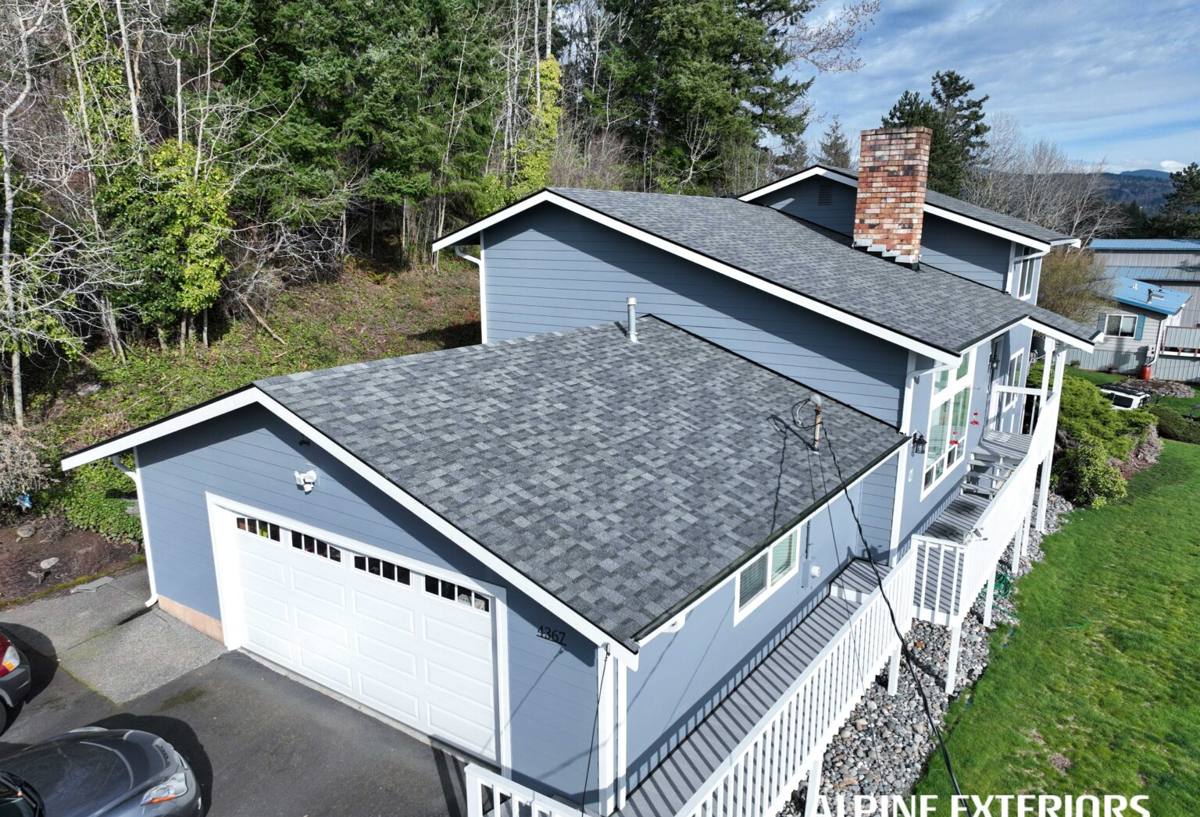
Signs a Roof Needs Replacing, Not Just Patching
Homeowners often call us wanting a repair and end up learning the roof is past the point where patching makes financial sense. A few signals we look for during an on-site inspection:
- Granule loss heavy enough that you can see bare asphalt mat on multiple slopes, not just one weathered spot
- Shingles that are cupping, curling at the edges, or cracking when lightly flexed
- Moss or algae growth that's pushed up under shingle tabs rather than just sitting on the surface
- Soft or spongy decking felt underfoot, or daylight visible through the roof deck from the attic
- Repeated leaks in different spots each winter, rather than one isolated failure point
- Flashing around chimneys, skylights, or vent stacks that's rusted through or was never properly stepped and counter-flashed
If a roof is showing one or two of these signs in isolation, a targeted repair can often buy more years. If it's showing several at once, or the roof is already near the end of its expected service life, replacement is usually the more honest recommendation — and the one that avoids paying for repairs on a roof that's going to need full replacement within a couple of years anyway.
What a Correct Roof Replacement Actually Involves
A roof replacement is not just stripping old shingles and nailing down new ones. Done right, for a home in this climate, it's a sequence where each step protects the next:
Tear-off and deck inspection
Full tear-off to the deck lets us actually see what's underneath — something a roof-over never allows. Any decking that's delaminated, soft, or water-stained gets replaced before anything new goes down. Skipping this step is one of the most common shortcuts in the industry, and it's the one that causes the most expensive problems later.
Underlayment and ice/water protection
A synthetic underlayment provides the roof's real waterproofing layer — the shingles are the wear surface, but the underlayment is what keeps water out if wind-driven rain gets past them. In eaves, valleys, and around penetrations, a self-adhered membrane adds a second line of defense exactly where driving rain off the bay tends to find its way in.
Flashing
New step flashing at walls and chimneys, new counter-flashing, and new flashing at every vent stack and skylight. Reusing old flashing to save time is a shortcut that shows up as a leak within a season or two, especially once salt air has already started corroding it.
Ventilation balance
Proper intake at the eaves and exhaust at the ridge keeps attic moisture moving out instead of condensing on the underside of the deck. In a climate with this much ambient humidity, an unbalanced or blocked ventilation system can quietly rot a deck from the inside even while the shingles above look fine.
Final details
Drip edge at eaves and rakes, properly nailed shingles at the manufacturer's specified pattern (not a speed-nailed pattern that voids the warranty), and a full site cleanup including a magnetic sweep for stray nails.
Material Options: Honest Trade-Offs
Most Birchwood homes land on one of a few material choices. Here's how they actually compare for this climate, not in marketing terms:
| Material | Typical Lifespan | How It Handles Moss/Rain/Salt Air | Notes |
|---|---|---|---|
| 3-tab asphalt shingle | 15-20 years | Adequate, but thinner profile means faster granule loss under moss and moisture exposure | Lowest upfront cost; shortest service life in this climate |
| Architectural/laminate shingle | 25-30+ years | Thicker mat and better algae-resistant granule options hold up well against moss and driving rain | Most common choice we install here; good balance of cost and durability |
| Standing seam metal | 40-50+ years | Sheds moss and moisture very effectively; needs marine-grade fasteners and coatings near the bay to manage salt-air corrosion | Higher upfront cost, lowest long-term maintenance |
| Cedar shake | 20-30 years with upkeep | Attractive but requires regular treatment and cleaning to resist moss and rot in a wet, shaded climate | Highest maintenance burden; we're upfront that this isn't the low-effort option some homeowners expect |
We'll walk through which option fits a specific roof's slope, sun exposure, and tree cover during the estimate — a heavily shaded, low-slope section of roof has different needs than a sun-exposed south face on the same house.
Our Process, Start to Finish
- On-site inspection. We walk the roof (or use a drone where access is limited), check the attic from inside where possible, and document actual condition rather than guessing from the ground.
- Written scope and estimate. A clear breakdown of tear-off, decking allowance, underlayment, flashing, material choice, and ventilation work — not a one-line lump sum.
- Scheduling around the weather window. We plan tear-off days around forecasted dry stretches and can dry-in a roof same-day if conditions turn, so an open deck is never left exposed overnight.
- Tear-off and deck repair. Full removal, deck inspection, and replacement of any compromised sheathing.
- Install. Underlayment, flashing, ventilation components, and the new roofing material installed to manufacturer specification.
- Final walkthrough and cleanup. A magnetic nail sweep, debris haul-away, and a final inspection with the homeowner before we consider the job done.
Why a Crew That Already Works Birchwood Matters
Roofing crews that mostly work drier, more open parts of Whatcom County can still do fine work — but a few things go smoother when a crew already knows this specific neighborhood. Tree-lined lots and mature landscaping often mean tighter staging areas for dumpsters and material delivery, and knowing that ahead of time keeps a job moving instead of stalling on logistics day one. Homes with heavier tree cover need extra attention to ventilation and moss-resistant materials, since a specification that works fine on an open, sun-exposed roof elsewhere in Bellingham can underperform on a shaded Birchwood lot. And a crew that's already pulled permits and worked within the City of Bellingham's process knows what inspectors will actually check, which avoids delays that surprise homeowners mid-project.
None of this is exotic knowledge — it's just the accumulated detail of having done the work here before, instead of learning it on someone's dime for the first time.
What Drives Cost on a Birchwood Roof Replacement
| Factor | Why It Matters Here |
|---|---|
| Roof pitch and access | Steeper pitches and tree-obstructed access slow tear-off and staging |
| Deck condition | Moisture-related sheathing replacement is more common on long-shaded slopes |
| Material choice | Architectural shingle vs. metal vs. cedar changes both material and labor cost significantly |
| Number of penetrations | Chimneys, skylights, and multiple vent stacks each add flashing labor |
| Ventilation upgrades | Adding proper intake/exhaust venting where none existed adds scope but pays off in deck longevity |
| Layers of existing roofing | Multiple old layers add tear-off time and disposal cost |
We give real ranges based on an actual inspection rather than a phone-quote guess — a roof's true cost depends on what's under the shingles as much as what's on top of them.
Simple Maintenance Checklist Between Now and a Future Replacement
- Clear moss and debris from valleys and gutters at least once a year, more often under heavy tree cover
- Have flashing around chimneys and vent stacks checked whenever gutters are cleaned
- Watch for granule buildup in gutters and downspouts — an early sign of shingle wear
- Keep overhanging branches trimmed back to reduce shade, debris, and moss pressure on the roof surface
- Address small leaks immediately rather than waiting for a dry season to deal with them
If you're weighing repair against replacement, or just want a straight read on how much life is left in a Birchwood roof, we're happy to take a look. Fill out the form below for a free, no-pressure estimate — we'll tell you honestly whether you need a full replacement, a targeted repair, or nothing at all right now.