 Bellingham
 Why Windows in Sehome Take a Different Kind of Beating
Sehome sits close enough to Bellingham Bay that salt air is a regular part of the weather, not an occasional visitor. Add in the wind-driven rain that comes through Whatcom County most of the year and a moss season that can stretch from fall into spring, and you've got a set of conditions that will find every weak point in a window system. Homes here don't fail because people bought bad windows on purpose — they fail because a window that was fine for a drier, milder climate slowly loses the fight against moisture it was never built to handle.
Salt air off the bay
Salt-laden air accelerates corrosion on hardware, fasteners, and metal window components. It also breaks down certain sealants and finishes faster than inland manufacturers' warranties assume, which is part of why a window rated fine for eastern Washington can underperform here.
Driving rain, not just rain
Bellingham doesn't just get rain — it gets rain pushed sideways by wind off the water. That matters for windows because it tests flashing, weep systems, and seal integrity in ways that straight-down rain never does. A window that's watertight in a still downpour can still leak under wind-driven rain if the installation detail around it is wrong.
The long moss season
Moss and algae growth around window trim, sills, and the siding-to-window transition is a near-constant maintenance issue in this climate. Beyond looking bad, sustained moss growth holds moisture against wood trim and caulking, which shortens the life of both.
What Actually Wears Out First on an Older Sehome Window
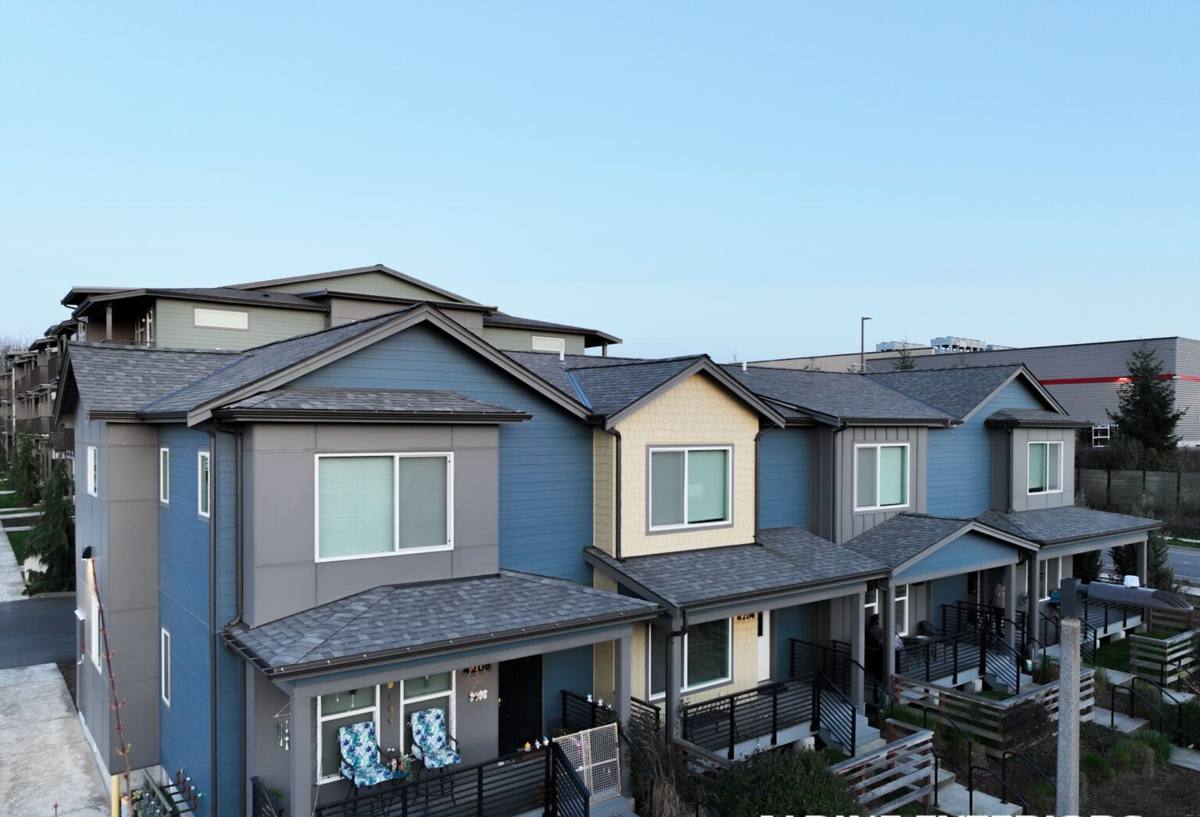
Sehome has a good mix of older bungalow and craftsman-era homes alongside newer builds, and the failure patterns differ. On older homes, the most common issues we see are failed glazing putty or dried-out exterior caulking, wood sills that have absorbed moisture at the corners, and single-pane or early dual-pane units that have long since lost their thermal performance. On newer homes, the issues are usually installation-related — a window that was set correctly on day one but never got proper flashing integration with the surrounding siding, so water finds its way behind the frame over several wet seasons instead of shedding off the face.
Either way, the pattern is the same: moisture intrusion is slow and often invisible until it isn't. By the time you see staining, soft trim, or a musty smell near a window, water has usually been getting in for a while.
Signs It's Time to Replace, Not Repair
Not every window problem means full replacement. But in this climate, a few signs reliably point toward replacement being the more honest answer than another round of caulk and paint.
- Fogging or a persistent haze between panes — the seal has failed and the insulating gas is gone for good
- Soft or spongy wood at the sill or lower corners of the frame
- Windows that are difficult to open, close, or lock — frames have likely shifted or swollen
- Visible daylight or a draft you can feel around the frame when it's windy
- Paint that keeps failing in the same spot no matter how often it's redone
- Moss or dark staining that returns to the same trim area every year despite cleaning
- A noticeable jump in heating costs with no other explanation
If you're only seeing one of these and the rest of the window checks out, a repair or reseal may buy you real time. If you're seeing two or three together, that's usually the frame telling you it's past the point where patching makes sense.
What "Custom" Actually Means Here
We use the word "custom" carefully, because it gets thrown around loosely in this industry. For us it means two specific things. First, the window itself is built to the exact opening — not a stock size trimmed down or packed out with extra framing, which is where a lot of long-term leaks start. Second, it means the installation detail (flashing, house wrap integration, sill pan, sealant type and placement) is chosen for your specific wall assembly and this specific climate, not a generic install method used everywhere from the desert to the coast.
On an older Sehome home, that might mean rebuilding a rotted sill area properly before the new window ever goes in, rather than setting a new window into a compromised opening. On a newer home, it might mean correcting a flashing sequence that wasn't done right the first time. Custom, in other words, is less about the trim options and more about getting the water-management details right for where the house actually sits.
Frame and Glass Options for This Climate
There's no single "best" window for every home — the right choice depends on your home's age, your budget, and how much upkeep you want to do. Here's how the common options stack up for a wet, salt-air coastal climate like Bellingham's.
| Frame Material | How It Handles This Climate | Maintenance |
|---|---|---|
| Vinyl | Good moisture resistance, won't rot or corrode; performance varies a lot by manufacturer quality | Low — occasional cleaning, no painting |
| Fiberglass | Excellent dimensional stability in temperature and moisture swings; handles wind-driven rain well | Low |
| Wood | Best appearance for period-correct homes, but the most vulnerable to this climate without diligent upkeep | High — regular painting/sealing required |
| Wood-clad (wood interior, aluminum or fiberglass exterior) | Combines interior wood look with exterior weather protection; a common middle ground for older homes | Moderate |
On glass, dual-pane with a Low-E coating is the baseline we'd recommend for almost any Bellingham home today. Triple-pane adds meaningful sound and thermal performance and is worth considering on street-facing rooms or homes with higher heating bills, though it comes at a cost and weight premium. Argon or krypton gas fill between panes is standard on quality units and adds insulating value with no maintenance downside.
Why we're selective about wood-only frames near the bay
We'll still install solid wood windows when a homeowner wants to match original craftsman details and commits to the maintenance schedule. But our professional standard is to recommend clad or fiberglass options for most Sehome homes, simply because the ongoing paint and seal upkeep wood requires is harder to keep up with in a climate that gives you fewer dry days to do it.
How We Install Custom Windows in a Home Like Yours
The install sequence matters more than the window brand in this climate. Here's the process we follow:
- On-site assessment of the existing opening, sill condition, and any hidden moisture or rot before a single measurement is taken
- Precise field measurement so the replacement window is built to fit the actual opening, not a nominal size
- Removal of the old unit and full inspection of the framing and sheathing behind it — this is where we catch problems a quick swap would seal in
- Repair of any compromised framing or sill material before the new window goes in
- Installation of a proper sill pan and flashing sequence, integrated correctly with the house wrap or building paper so water sheds outward, not inward
- Setting the window plumb, level, and square, with shimming and fastening per the manufacturer's climate-rated specifications
- Sealing and insulating the gap correctly — not overfilled with expanding foam, which can bow a frame, and not underfilled, which leaves an air gap
- Interior and exterior trim finish work, matched to your home's existing style
- A final walkthrough and operation check on every window before we consider the job done
Why a Crew That Already Works This Neighborhood Matters
Sehome's mix of home ages and its proximity to the bay means the same general install method doesn't apply uniformly across the neighborhood. A crew that's already worked homes in this area knows what to expect when they open up an older sill, understands how wind off the water hits certain lots differently than others just a few blocks inland, and isn't guessing at flashing details for the first time on your house. That familiarity shows up as fewer surprises mid-project and fewer callbacks after the fact — not because of any special trick, but because the crew has already seen the failure patterns specific to this kind of home in this kind of weather.
It also matters for something less obvious: knowing which problems are worth flagging honestly versus which are cosmetic. A crew unfamiliar with the area might either over-sell replacement work that isn't needed or miss moisture damage that isn't obvious yet. Local experience cuts both ways in your favor.
What New Windows Cost — and What Actually Drives the Price
We won't quote a number without seeing the home, but the broad factors that move price up or down are consistent across most projects.
| Factor | Effect on Cost |
|---|---|
| Frame material (vinyl vs. fiberglass vs. wood-clad) | Vinyl is typically the lowest cost; fiberglass and wood-clad run higher |
| Glass package (dual-pane vs. triple-pane, Low-E options) | Triple-pane and specialty coatings add cost but improve comfort and efficiency |
| Condition of the existing opening | Rot or framing repair adds labor before the window itself ever goes in |
| Number and size of window openings | Larger and more numerous openings scale cost directly |
| Custom shapes or sizes | Non-standard geometry (arches, odd widths) costs more than stock sizing |
| Trim and finish work | Matching historic trim profiles takes more labor than standard casing |
Generally, homeowners should expect a wide range depending on how many of these factors apply — a single standard vinyl replacement will run far less than a whole-house fiberglass or wood-clad upgrade with custom trim. We'll walk through where your project falls once we've actually looked at the openings.
Keeping New Windows Performing Through a Whatcom County Winter
Even a well-installed window benefits from a little seasonal attention in this climate. A short annual routine goes a long way:
- Clear moss and debris from sills and trim before it has a chance to hold moisture through winter
- Check exterior caulking each fall for cracking or gaps, especially on south and west-facing exposures that take the most wind-driven rain
- Vacuum out weep holes on vinyl and fiberglass frames so drainage paths stay clear
- Operate every window at least once each season — hardware that sits unused is more likely to seize or corrode
- Wipe down and dry interior sills after heavy storms, particularly on older single-pane-adjacent rooms prone to condensation
None of this replaces a correct installation, but it does extend the life of one considerably — especially in a climate that doesn't give windows much of a break between wet seasons.
Get a Straight Answer on Your Windows
If you're not sure whether your Sehome home's windows need repair, replacement, or nothing at all right now, we're happy to take a look and tell you honestly. There's a free, no-pressure estimate form below — it's a good first step whether you're dealing with an obvious leak or just planning ahead for a home that's been solid for years but is starting to show its age.