 Bellingham
 Roof Repair Built for Sehome's Salt Air, Rain, and Moss
Sehome is one of central Bellingham's established neighborhoods, and a lot of the roofs here have already been through several wet seasons, sometimes several decades of them. When a roof in this part of town develops a leak, a missing shingle, or a soft spot, the right fix isn't always a full replacement. Just as often it's a targeted repair, done correctly, that buys the roof several more good years. This page focuses specifically on roof repair for Sehome homes: what this climate does to a roof over time, how we decide between a repair and a replacement, what a correct repair actually involves, and why it matters to hire a crew that already works in this neighborhood.
Whatcom County's marine climate is not gentle on roofing. Salt air off the Salish Sea, wind-driven rain that gets pushed sideways and upward instead of falling straight down, and a moss season that can run most of the year on shaded slopes all add up to a specific set of stresses. A repair that ignores those stresses tends to fail again within a season or two. One that accounts for them can hold up for years.
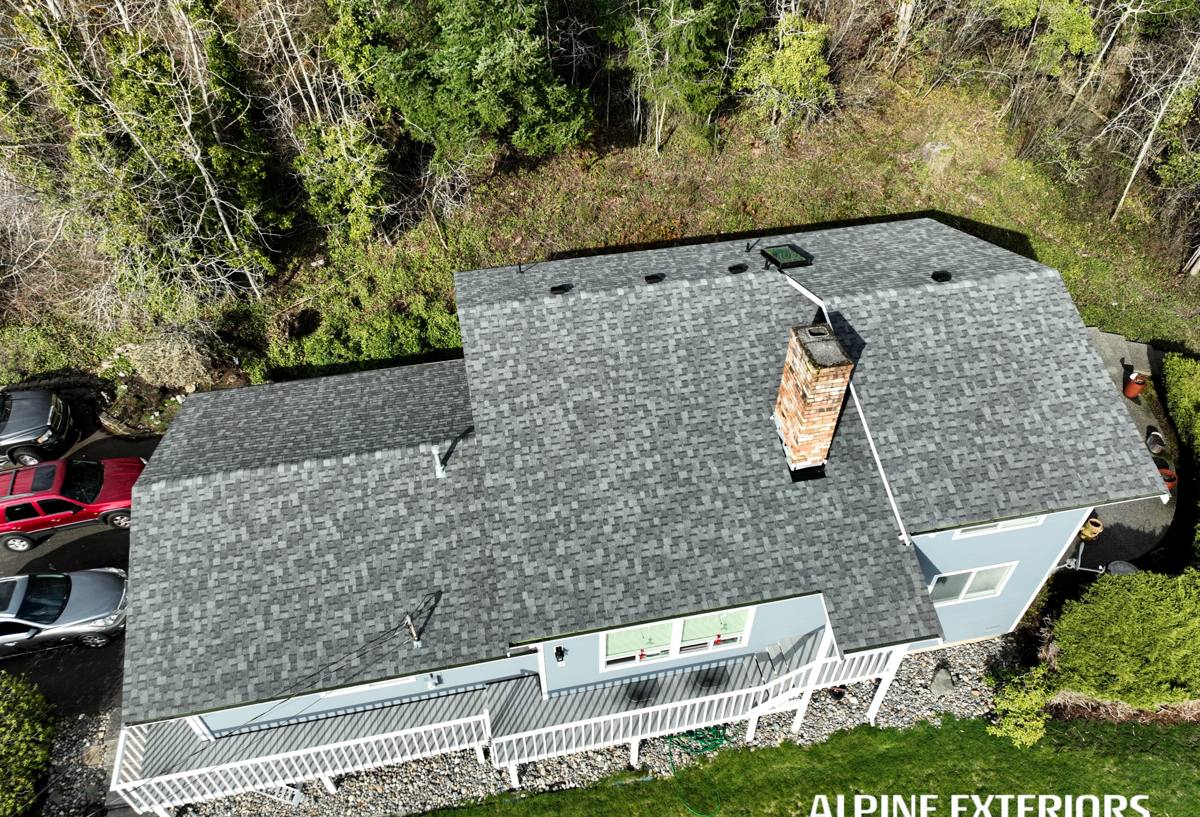
What This Climate Does to a Sehome Roof
Salt Air and Corrosion
Sehome sits inland of the immediate waterfront but still well within the reach of salt-laden air moving through Bellingham off the water. That air works on exposed fasteners, flashing, and any lower-grade metal faster than it would in a drier inland climate. A repair that reuses corroded nails or patches over rusted flashing instead of replacing it is a repair that's already on borrowed time.
Wind-Driven Rain and Flashing Failures
Rain here rarely falls straight down. It comes in on a wind, which pushes water up under shingle edges and into any gap at a flashing joint that a lazier repair might not have sealed properly. Most roof leaks we're called out for in Sehome don't start in the open field of the roof, they start at a flashing detail: a chimney, a valley, a dormer, or a wall-to-roof transition that was caulked over instead of properly lapped and integrated.
Moss, Shade, and Trapped Moisture
Sehome's tree cover and its rise toward Sehome Hill mean plenty of roof planes stay shaded for long stretches of the day, especially on north-facing slopes. Moss and algae take hold there first, and once established, moss holds moisture directly against the shingle surface and works up under tabs and along the granule layer. A repair that clears the moss but doesn't address what's underneath it, granule loss, softened felt, or early rot, is only a cosmetic fix.
Common Roof Repair Issues We See in Sehome
Because Sehome's housing stock includes a lot of older homes alongside newer infill, the repair calls we get here tend to fall into a few recurring categories rather than being random.
- Flashing that has separated, corroded, or was caulked instead of properly lapped at chimneys, skylights, and dormers
- Wind-lifted or missing shingles after a storm, especially on exposed slopes
- Valley leaks where two roof planes meet and debris or moss has built up
- Soft or spongy decking discovered under a section of damaged shingles
- Granule loss and thinning shingles from age, sun exposure, and years of moss cover
- Prior patch jobs, tar, mismatched shingles, or over-caulked seams that were never a real fix to begin with
Older Sehome homes in particular sometimes carry a layer or two of past repairs stacked on top of each other. Part of any honest repair estimate is figuring out what's actually happening underneath those old patches before deciding what the roof needs now.
Repair or Replace? How We Make That Call
Not every roof problem calls for a full replacement, and not every leak can be solved with a patch. The honest answer depends on how much of the roof is affected, how old the roofing is, and what we find once we get a close look at the decking and flashing.
| Situation | Repair Usually Makes Sense | Replacement Usually Makes Sense |
|---|---|---|
| Age of roofing | Roof is well within its expected lifespan, isolated issue | Roof is near or past typical shingle lifespan across most of its surface |
| Extent of damage | Damage limited to one section, valley, or flashing detail | Granule loss, curling, or moss coverage spread across most of the roof |
| Decking condition | Decking is sound once old shingles are pulled back | Soft or rotted decking found in multiple areas |
| Repair history | First real repair on an otherwise well-maintained roof | Several past patch jobs stacked on top of each other with no lasting fix |
We walk the roof and, where needed, pull back shingles around the damaged area before giving you a straight answer. If a repair is the honest recommendation, that's what we'll tell you, even though a full replacement is the bigger job.
What a Correct Roof Repair Involves
A repair that actually holds up in this climate goes past just swapping out the shingles that are visibly damaged.
- Pulling back shingles around the damaged area to inspect the decking underneath, not just patching over the surface
- Replacing any soft or water-damaged decking found, rather than fastening new shingles to a compromised substrate
- Re-lapping and properly integrating flashing at chimneys, valleys, dormers, and wall transitions, not just adding more sealant over what's failing
- Matching underlayment and ice-and-water shield at the repair area to current standards, even if the surrounding roof is older
- Using corrosion-resistant fasteners and flashing metal, given the salt air exposure common throughout Bellingham
- Clearing moss and debris from the surrounding area so it doesn't immediately undo the repair
- Matching shingle color and profile as closely as the market allows, understanding that some variation is normal on an older roof
Skipping any of these steps is usually how a "repair" turns into a callback within a year or two.
Our Roof Repair Process
- In-person inspection: We look at the roof and, where damage suggests it, the attic from the inside, rather than quoting from a description over the phone.
- Honest repair-or-replace recommendation: You get a straight answer about whether a repair is the right call or whether the roof's condition points to replacement instead.
- Written estimate: A clear, itemized scope covering decking, flashing, underlayment, and shingle work, not a vague single-line price.
- Scheduling around weather: Repairs get scheduled with realistic flexibility, since wet-season delays are a normal part of working in this region.
- The repair itself: Damaged materials come off, decking is inspected and repaired if needed, and flashing and shingles go back correctly, not just cosmetically.
- Final walkthrough: We review the completed repair with you and do a site cleanup, including a check for stray fasteners, before calling the job done.
Cost Factors for a Sehome Roof Repair
| Factor | What It Affects |
|---|---|
| Size and location of the damaged area | Labor time and material quantity needed |
| Decking condition once uncovered | Whether the job stays a shingle-and-flashing repair or expands to include deck replacement |
| Flashing scope | How much re-lapping and metal replacement is needed at valleys, chimneys, or walls |
| Shingle matching | Availability of a close color and profile match for the existing roof |
| Roof pitch and access | Staging, safety equipment, and labor time |
| Moss and debris removal | Time needed to clear the area properly before repair work begins |
Exact numbers depend on what we find once we're on the roof, which is why we give a written estimate after an in-person look rather than a phone quote.
Why Hiring a Crew That Already Works in Sehome Matters
A crew that regularly repairs roofs in and around Sehome has already seen how salt air corrodes underspecified fasteners, how wind-driven rain finds its way through a caulked-over flashing joint, and which roof orientations on this neighborhood's sloped, tree-covered lots hold moss the longest. That's practical knowledge that shows up in small decisions during a repair, decisions a crew unfamiliar with this specific climate and terrain might not think to make at all.
It also matters after the job is done. A repair warranty is only as good as the company standing behind it, and a contractor with an established, ongoing presence in Bellingham is one you can actually reach if a question comes up a year or two down the road.
A Practical Checklist Before You Hire a Roof Repair Contractor
- Do they inspect the decking, not just the visible shingle damage, before quoting?
- Does the estimate specify flashing, underlayment, and fastener work, not just "patch and seal"?
- Will they give you an honest repair-versus-replace recommendation, even if repair is the smaller job?
- Do they carry current WA contractor licensing, liability insurance, and workers' compensation?
- Can they point to real, recent local work in or near Bellingham?
- Is their workmanship warranty separate and clearly explained from any material warranty?
Signs Your Sehome Roof Needs Repair Now
- Water staining on an interior ceiling or in the attic, especially near a valley, chimney, or dormer
- Missing, cracked, or curling shingles after a windstorm
- Moss or dark streaking that keeps returning to the same section of roof
- Granules building up in gutters or downspouts
- Visible gaps, rust, or lifted edges at flashing around chimneys or skylights
- A soft or spongy feel underfoot in one area during a routine walk-around
Catching any of these early is usually the difference between a straightforward repair and a much bigger job once winter rain has had months to work on an unresolved problem. If you're seeing any of these signs on your Sehome home, we're glad to take a look and give you a free, no-pressure estimate, no upsell script, just a straight answer about what your roof actually needs. Use the form below to get in touch.