 Bellingham
 Siding Installation for Cordata Homes
Cordata sits in the northern part of Bellingham, close enough to the I-5 corridor that it's become one of the city's newer growth areas over the past few decades, with a mix of newer single-family construction, townhomes, and infill development alongside older properties scattered through the surrounding area. Whatever a home's age, the siding on it is doing the same job: standing between the framing and a Whatcom County climate that doesn't let up for long. Salt-tinged marine air, rain that comes in sideways as often as it falls straight down, and a moss season that can run most of the year on shaded walls all wear on a siding installation differently than they would in a drier inland climate. We install James Hardie fiber cement siding for Cordata homeowners because it's the material we've seen consistently outperform the alternatives under exactly this kind of pressure.
This page is specifically about installation, because the material is only half the equation. A great product put on with rushed flashing or the wrong fastening pattern will fail in this climate just as surely as a weaker product installed correctly will outperform expectations. Getting a Cordata siding job right means treating both halves, material and installation, as equally important.
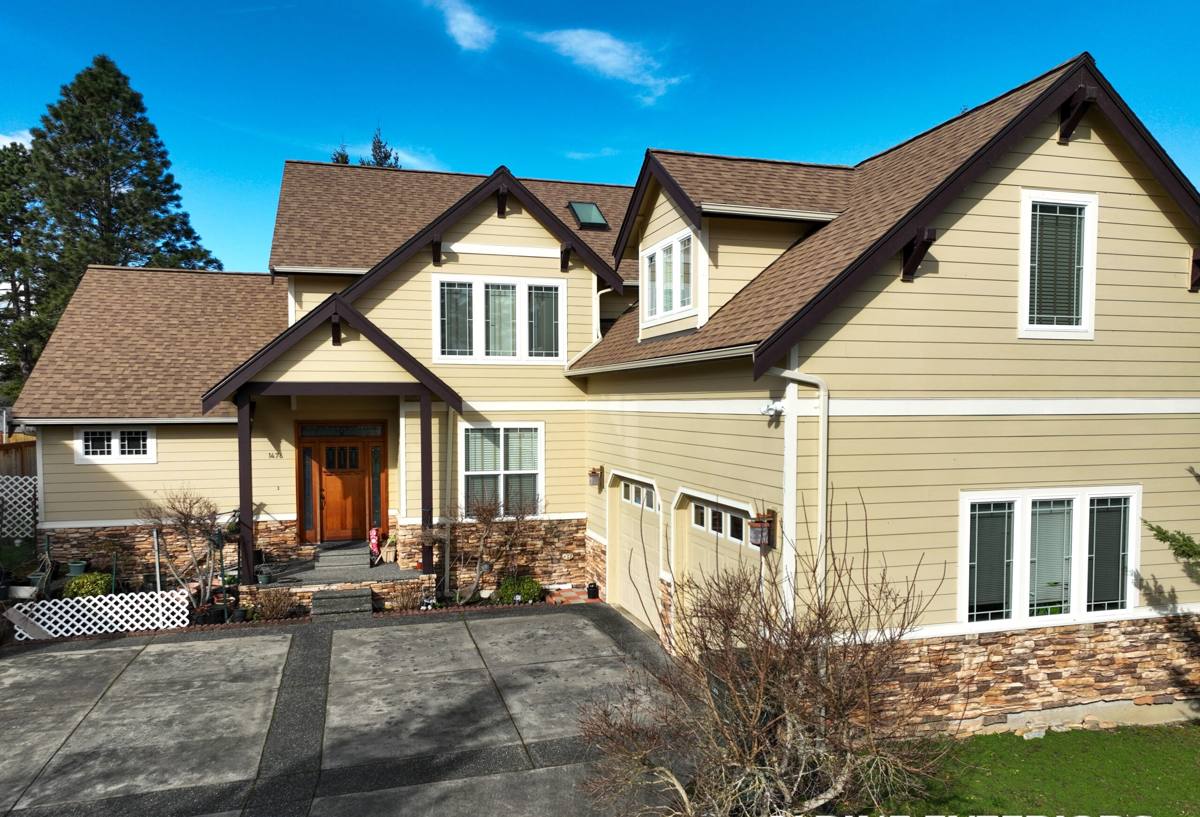
What Cordata's Climate Asks of a Siding Job
Salt Air and Marine Moisture
Bellingham's proximity to the bay means moisture-laden, salt-tinged air moves through the whole city, Cordata included, even on days that don't look stormy. That steady low-grade exposure is hard on fasteners, trim, and lower-grade finishes over time. It's not dramatic damage — it's slow, and it's exactly the kind of wear that shows up first in an installation detail that was cut a little short, like a fastener that wasn't set to spec or a trim joint that wasn't sealed.
Wind-Driven Rain
Like the rest of coastal Whatcom County, Cordata gets rain pushed sideways by wind, not just dropped straight down. A siding installation built around the assumption of vertical rainfall will let water into lap joints, trim seams, and wall penetrations that a properly detailed installation would have shed. This is one of the biggest reasons installation quality matters as much as material selection here — the physics of wind-driven rain punishes shortcuts that would go unnoticed in a calmer climate.
A Long Moss and Mildew Season
Mild temperatures, tree cover, and consistent dampness combine to keep moss and mildew active on shaded and north-facing walls across most of the year in this part of Bellingham. Any installation that leaves a wall assembly holding moisture instead of shedding it becomes a growth surface, and it tends to show up first in the places nobody's looking: behind landscaping, under eaves, on the side of the house that gets the least sun.
Why We Only Install James Hardie Siding
We don't carry a menu of siding brands for Cordata homeowners to choose between on price. We install James Hardie fiber cement, and the reason comes from what we've consistently seen on tear-offs and repair calls across this climate.
- Non-combustible core: Fiber cement doesn't feed a fire the way wood-based siding products can, which matters for household safety and can matter for insurance as well.
- Factory-applied ColorPlus finish: The color coat cures under controlled factory conditions instead of being brushed on at the job site, so it resists fading and moisture intrusion far longer than field-applied paint.
- Climate-engineered HZ product lines: Hardie's HZ5 formulation is built for regions with heavy sustained moisture, which fits Bellingham's marine climate better than a generic national spec.
- Dimensional stability: Fiber cement doesn't swell, cup, or warp the way engineered wood products can after repeated wet-season moisture cycles.
- Strong transferable warranty: Hardie backs its products with one of the more substantial warranty structures in the industry, provided the installation follows spec — which is a real reason installation quality and warranty coverage are connected, not separate issues.
We don't install LP SmartSide, vinyl siding, Cemplank, Allura, primed spruce, or cedar. Those are legitimate products, and other contractors install them well. We made a professional decision that in a climate this consistently wet and salt-exposed, standing behind one system we trust completely, and installing it the same correct way every time, is a better position for our customers than offering a cheaper alternative that shifts maintenance risk onto them a few years down the road.
What a Correct Installation Actually Involves
Tear-Off and Substrate Inspection
On a re-side, removing the old siding is where hidden problems surface: soft sheathing, rot around old fastener penetrations, or moisture that's been tracking behind the wall for years without ever showing outside. A correct installation starts by dealing with what tear-off reveals, not by covering it up with new siding and hoping it holds.
Weather-Resistive Barrier and Flashing
House wrap and flashing are what actually keep wind-driven rain out of the wall assembly — the siding itself is really the second line of defense, not the first. Every window, door, and penetration needs flashing that directs water back out rather than into the wall, and the house wrap needs to be lapped correctly, top over bottom, so water moving down the wall stays on the outside of the barrier.
Fastening Patterns and Clearances
James Hardie specifies exact fastener spacing, type, and placement for each product line, and those specs exist because they've been tested against real wind and moisture loads. Proper clearance from grade, roof lines, and decking also matters — siding installed too close to the ground or to a horizontal surface will wick moisture up into the board over time regardless of how good the material is.
Joint and Trim Detailing
Lap joints, corner boards, and trim seams need to be lapped, sealed, and detailed correctly so water sheds down and out rather than finding a path inward. This is one of the more time-consuming parts of a quality installation, and it's also one of the easiest places for a rushed crew to cut corners in ways that don't show up until a wet winter finds them.
Our Installation Process, Step by Step
| Stage | What Happens | Why It Matters |
|---|---|---|
| On-site assessment | Walk the home, check existing siding, trim, and substrate condition | Gives an honest read on whether the job is a repair, partial replacement, or full re-side before any number gets quoted |
| Written estimate | Scope, product selection, and pricing laid out in plain terms | No pressure to sign on the spot, and no surprises once work starts |
| Tear-off and prep | Old siding removed, substrate inspected and repaired as needed | Catches hidden moisture damage before it gets sealed behind new siding |
| House wrap and flashing | Weather-resistive barrier installed and lapped, flashing set at every penetration | This is the layer that actually stops wind-driven rain from reaching the framing |
| Hardie installation | Siding hung to manufacturer fastening spec, joints and trim detailed and sealed | Correct spacing and clearance is what makes the material perform the way it's engineered to |
| Final walk-through | Site cleanup and a walk of the finished job with the homeowner | Confirms the work matches what was scoped and gives you a chance to ask questions before we leave |
New Construction, Additions, and Full Re-Siding
Cordata's newer growth means we see a different mix of work here than in some of Bellingham's older neighborhoods. Some jobs are additions or accessory structures that need siding installed to match or complement an existing home. Others are full re-sides on homes where the original builder-grade siding, whatever it was, has reached the point where patching no longer makes sense. The installation fundamentals don't change between the two — flashing, house wrap, fastening spec, and joint detailing matter the same way on a small addition as they do on a full tear-off — but the sequencing and how the new work ties into an existing wall assembly does take real judgment. Matching a new section into decades-old flashing details, for instance, is a place where experience shows.
Repair vs. Full Replacement
Not every siding issue on a Cordata home means a full tear-off. An isolated impact-damaged section, trim that's come loose, or a small area that failed around a window can often be repaired and matched into existing Hardie siding without redoing the whole house. But when moisture has clearly been tracking behind the wall for a while, or the home still has an older, non-Hardie product nearing the end of its service life, patching it usually just delays a bigger job while damage keeps spreading out of sight. We'll tell you plainly which situation you're actually in before we recommend anything.
Choosing the Right Hardie Product for a Cordata Home
| Product Line | Best Use | Why It Fits Here |
|---|---|---|
| HardiePlank lap siding | Most standard single-family homes | Traditional lap profile sheds wind-driven rain effectively with proper overlap and flashing |
| HardiePanel vertical siding | Accent walls, gables, modern and farmhouse-style builds | Common on newer Cordata-area construction that leans toward contemporary exterior styling |
| HardieShingle siding | Craftsman-style homes and accent sections | Textured look without the moisture absorption and upkeep of real wood shingle |
| HardieTrim boards | Corners, window and door casing, fascia | Factory-finished trim resists the same salt air and moisture cycling as the field siding |
Color and profile come down to the individual home and the homeowner's preference, but the underlying product family and installation approach stay consistent — we spec what fits the home's actual exposure rather than defaulting to whatever's easiest to install.
Siding Installation Cost Factors in Cordata
| Factor | What It Affects | Why It Matters Here |
|---|---|---|
| Home size and wall complexity | Total material and labor | Newer Cordata homes with multiple gables and dormers have more joints where wind-driven rain can work its way in |
| Tear-off vs. overlay | Labor scope and substrate access | Tear-off exposes hidden moisture damage that can hide under older siding regardless of a home's age |
| Substrate condition | Repair costs before new siding goes on | Trapped moisture behind failing siding can rot sheathing before it's ever visible from outside |
| Trim and color selection | Material cost and finish longevity | ColorPlus factory finishes outlast field-applied paint against salt air and UV exposure |
| Site access and lot layout | Labor time and equipment needs | Newer developments can have tighter lot setbacks that affect staging and material handling |
Real numbers depend on the specific house, which is why we walk the property before quoting instead of pricing off square footage alone.
Signs Your Cordata Home Needs a Siding Installation Looked At
- Moss or dark staining that returns quickly after cleaning, especially on shaded or north-facing walls
- Soft or spongy siding, particularly near the base of the wall or around window and door trim
- Peeling paint, bubbling, or visible warping on siding boards
- Gaps at seams, corners, or trim joints where water can track in
- Nail pops, cracked caulk lines, or trim separating from the wall
- Rising heating bills that may point to a wall assembly that's no longer sealing properly
Roofing, Windows, and Decks Alongside Your Siding
Siding problems rarely start with the siding itself. A roof valley that's lost its seal, a window that was flashed incorrectly, or a deck ledger board trapping moisture against the house can all surface as siding damage even though the siding is just where the water finally shows itself. Because we also handle roofing, windows, and decks, we can look at a Cordata property as one connected exterior system and trace a problem back to where it actually starts instead of installing new siding over a leak that's still there underneath.
Why a Local Crew Matters for Installation Work in Cordata
A crew that installs siding across Bellingham regularly sees how marine air, wind-driven rain, and a long moss season actually behave on real homes over a full year, not just how a product performs on paper. That shows up in practical decisions on install day: where extra flashing attention pays off, which wall orientations stay wet longest, and which details are worth the extra time so a Cordata homeowner isn't dealing with a callback two winters later. It also means we've handled the mix of newer and older construction this part of the city has, so we're not guessing at how a new installation should tie into an existing home.
What to Expect When You Call Us
- An on-site walk-through of your home's siding, trim, and any visible problem areas
- An honest read on whether you need a repair, a partial replacement, or a full installation
- A clear explanation of why we recommend James Hardie for your specific home and exposure
- A written estimate with no pressure to sign on the spot
If your Cordata home is due for new siding, a repair, or just an honest look at what's going on behind an aging wall, we're glad to take a look. Reach out using the form below to schedule a free, no-pressure estimate.