 Bellingham
 Happy Valley is one of Bellingham's established residential neighborhoods, home to a mix of older houses and newer infill construction sitting under Whatcom County's characteristic tree cover. That combination — aging exterior materials, shade, and proximity to Bellingham Bay's marine air — puts real, ongoing pressure on siding. If you've noticed paint failing faster than it should, boards that feel soft at the bottom edge, or green streaking that comes back no matter how often it's cleaned, your siding may be past the point where patching and repainting make sense. This page covers what siding replacement actually involves for a Happy Valley home, what the regional climate demands from the materials and installation, and why we install James Hardie fiber cement exclusively rather than offering a menu of cheaper alternatives.
What Bellingham's Climate Does to Siding
Whatcom County's weather isn't extreme, but it's relentless — and relentless is what wears siding out. Three factors matter most for a neighborhood like Happy Valley.
Salt Air and Coastal Exposure
Bellingham sits directly on Bellingham Bay, and airborne salt and moisture travel further inland than most homeowners expect. Salt-laden air accelerates the breakdown of paint films, corrodes exposed fasteners, and speeds up moisture absorption in materials that aren't engineered to resist it. Over years, this shows up as chalky, fading paint and fastener staining well before a siding product's expected service life is up.
Driving Rain and Wind-Driven Moisture
Storms off the Sound and Strait bring rain that doesn't just fall straight down — it's pushed sideways into wall assemblies, especially on exposed gables and second-story walls. Siding, trim, and the flashing details behind them have to shed that water outward, not let it track behind the cladding. This is where installation quality matters as much as the material itself; even a good product fails early if water is allowed to get behind it.
Moss Season
Like much of Bellingham, Happy Valley sees long stretches of damp, shaded, low-sun conditions for a good chunk of the year. Homes with tree cover or north-facing walls stay wet longer after every rain, which is exactly what moss, algae, and mildew need to take hold. Once organic growth establishes itself on siding, it holds moisture against the surface and keeps the substrate wetter than it should be — a slow, steady drag on the material underneath.
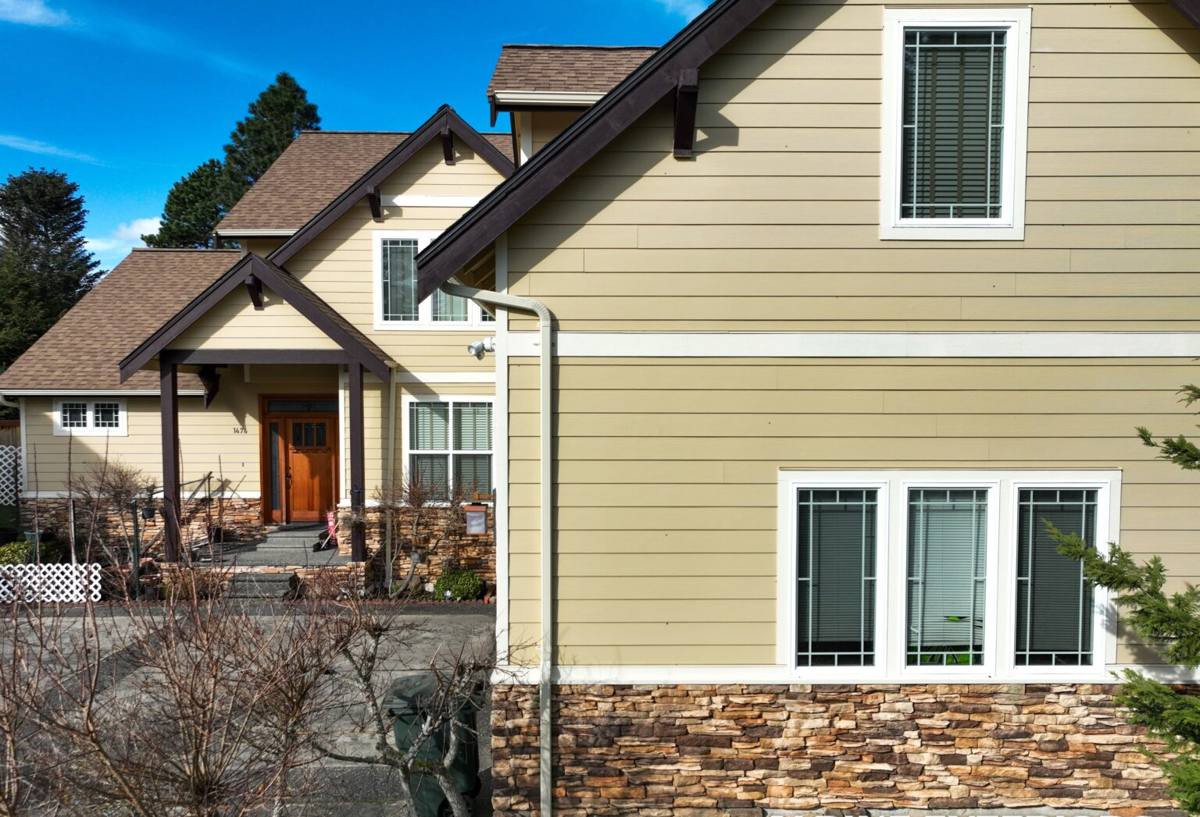
Signs a Happy Valley Home Needs Siding Replacement
Not every issue means a full replacement — sometimes a section can be repaired. But certain signs point to a system that's failing, not just aging cosmetically:
- Soft, spongy, or crumbling boards, especially near the bottom of walls or below windows
- Paint that's peeling, bubbling, or needs repainting far more often than it used to
- Persistent green or black staining that returns quickly after cleaning
- Visible warping, cupping, or gaps opening up between boards
- Soft drywall, musty smells, or staining on interior walls near exterior corners
- Siding that's original to a home built decades ago and has never been replaced
What a Correct Siding Replacement Involves
Siding replacement is a wall assembly project, not a cosmetic swap. Doing it right in a wet climate like this one means paying attention to what's underneath the visible surface, not just what goes on top of it.
Tear-Off and Sheathing Inspection
Once the old siding comes off, the sheathing underneath gets inspected for rot, delamination, or moisture damage — problems that are invisible until the wall is opened up. Any compromised sheathing gets addressed before anything new goes back on. Skipping this step is one of the most common ways siding jobs fail early, because new siding over a wet or rotten wall just hides the problem for a few more years.
Weather-Resistive Barrier and Flashing
A correctly detailed weather-resistive barrier, properly lapped and taped, along with flashing at windows, doors, and any wall penetrations, is what actually keeps wind-driven rain out of the wall — the siding itself is the second line of defense, not the only one. Given how much horizontal rain this region sees, cutting corners here is where most long-term moisture problems start.
Installation to Manufacturer Specification
James Hardie fiber cement has specific requirements for fastening, clearances, joint treatment, and caulking. Installed to spec, it performs the way it's engineered to. Installed loosely — wrong nail placement, insufficient clearance from grade or roof lines, gaps left uncaulked — even the best material on the market will underperform. Correct installation is what turns a good product into a durable wall system.
Why We Only Install James Hardie Fiber Cement
We get asked regularly why we don't offer vinyl, LP SmartSide, or cedar as options. It's a fair question, and the honest answer is that after years of doing this work in this climate, we decided we'd rather install one product correctly than offer several and let homeowners guess which one holds up. Here's the practical comparison that drove that decision:
| Factor | Vinyl | Wood/Engineered Wood (LP, Cedar) | James Hardie Fiber Cement |
|---|---|---|---|
| Moisture behavior | Doesn't rot, but can warp and gap, letting water track behind it | Absorbs moisture; vulnerable to rot and fungal decay if exposed edges aren't sealed | Engineered to resist moisture absorption; won't rot |
| Moss and algae resistance | Textured surface can trap organic growth | Wood grain and seams give moss and mildew a foothold | Dense, factory-finished surface resists organic growth better |
| Salt air / coastal durability | Can become brittle and fade with UV and salt exposure over time | Finish breaks down faster under salt air, requiring more frequent repainting | Non-combustible and dimensionally stable; ColorPlus finish holds up to coastal exposure |
| Maintenance burden | Low, but damage often means full-panel replacement | Regular repainting, caulking, and moisture checks required | Minimal repainting needed with factory-applied ColorPlus finish |
| Fire resistance | Can melt or deform under heat | Combustible | Non-combustible fiber cement |
None of these other products are without merit — vinyl is inexpensive, cedar has genuine natural appeal. But for a climate that combines salt air, driving rain, and long damp shoulder seasons, we've found that fiber cement gives Happy Valley homeowners the best combination of durability, low maintenance, and a warranty structure that actually holds up over the ownership of the home. That's why James Hardie is the only siding system we put on houses.
Our Siding Replacement Process
- On-site assessment — we walk the exterior, check for moisture and rot signs, and evaluate wall orientation, shade, and drainage specific to your lot
- Detailed proposal — a clear scope covering tear-off, sheathing repair contingencies, flashing details, Hardie product line and color, and timeline
- Tear-off and inspection — old siding removed, sheathing checked and repaired as needed before anything new is installed
- Weather barrier and flashing — properly lapped house wrap and flashing installed at all penetrations before siding goes up
- Hardie installation to spec — fastening, clearances, and joint treatment done to manufacturer requirements, not shortcuts
- Final walkthrough — we go over the completed work with you before calling the job done
Cost Factors for Happy Valley Siding Projects
Every home is different, but the same handful of factors drive cost up or down on most siding replacement projects in this area:
| Factor | How It Affects Cost |
|---|---|
| Extent of sheathing or framing damage found during tear-off | Hidden rot repair adds cost but is far cheaper to fix now than after new siding goes over it |
| Home size and wall complexity | More corners, dormers, and roof lines mean more cutting, flashing, and labor time |
| Hardie product line selected | Lap siding, shingle-style panels, and board-and-batten each carry different material and labor costs |
| Trim and accessory scope | Replacing trim, fascia, and soffits alongside siding adds cost but ensures a consistent, watertight result |
| Site access and staging | Mature trees, tight lot lines, or steep grades common in established neighborhoods can affect labor and scaffolding needs |
Why Local Experience in Happy Valley Matters
A contractor who's worked houses throughout Bellingham and Whatcom County knows how a north-facing wall under tree cover behaves differently than a sun-exposed south wall three houses down — and details the job accordingly. That's not something you can standardize from a manual written for a drier climate. It shows up in small decisions: where extra flashing attention goes, which walls need closer moisture inspection during tear-off, and how much clearance to leave at grade given how wet this region stays for months at a time. Homeowners in Happy Valley are better served by a crew that has already seen how local weather treats different sidings over years, not just a sales pitch about a product's specs on paper.
If your siding is showing its age or you're planning ahead for a home in Happy Valley, we're happy to take a look and walk you through what we'd recommend — no pressure, no obligation. Fill out the form below to request a free estimate.