 Bellingham
 Why Siding Wears Differently in the Puget Neighborhood
Homes in Puget sit close enough to the water and the wet Whatcom County weather pattern that siding here takes a different kind of beating than siding on the dry side of the state. It's not one big storm that causes the damage — it's the accumulation. Salt-laden air off the bay slowly breaks down paint films and corrodes fasteners. Driving rain, pushed sideways by wind off the water, finds every gap in flashing and trim. And a moss season that can run half the year keeps siding damp for days at a stretch, which is exactly the condition wood-based products and poor installations can't tolerate long term.
None of this means Puget homes need anything exotic. It means the replacement has to be planned around moisture — the material, the water-resistive barrier behind it, the flashing details, and the maintenance the homeowner is realistically willing to do — rather than around whatever looks good in a catalog photo.
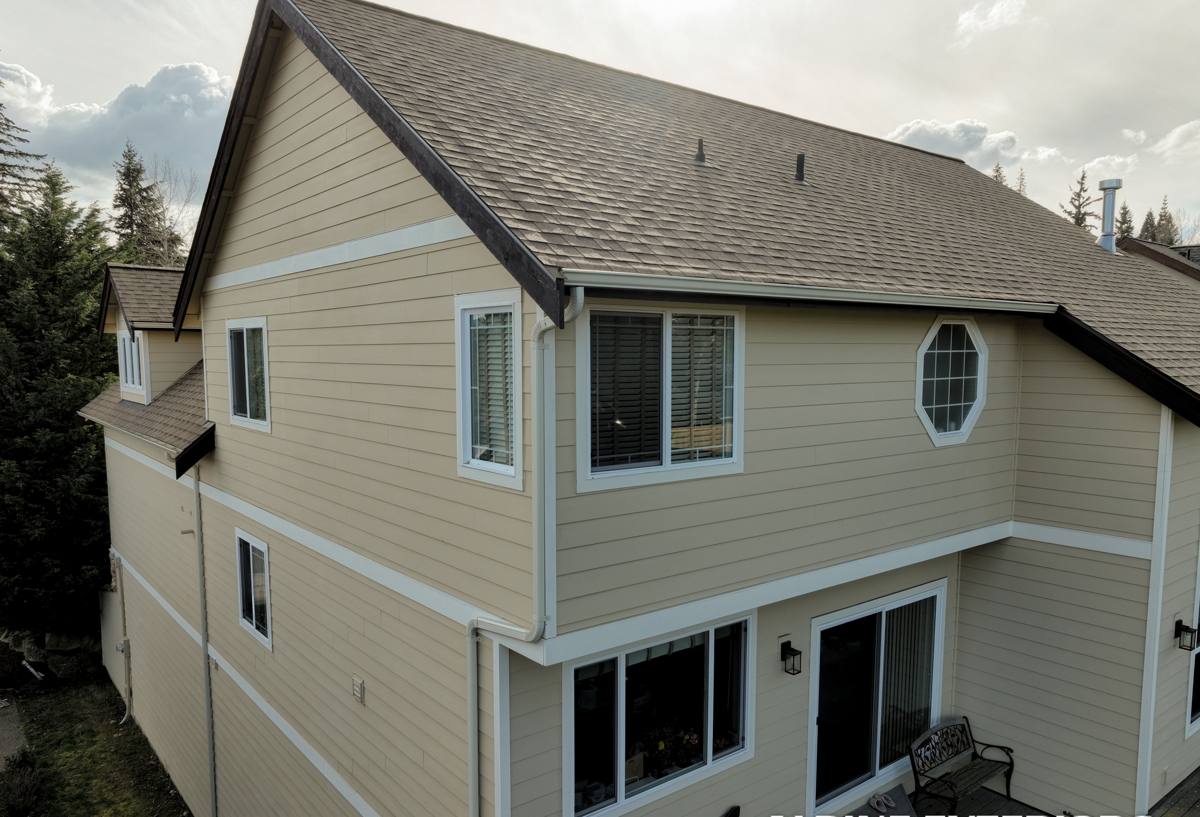
What Siding Replacement Actually Involves
"Siding replacement" gets used loosely, so it's worth being specific about what a correct job includes. This isn't cosmetic panel-swapping — it's a full envelope job when it's done right.
Full Tear-Off, Not Overlay
We remove the old siding down to the sheathing rather than installing new panels over the old ones. Overlaying traps moisture between layers and hides whatever damage is already there. In a climate that stays damp as long as this one does, that hidden moisture doesn't dry out — it just keeps working on the wall.
Sheathing and Framing Inspection
Once the old siding is off, we inspect the sheathing and framing for rot, soft spots, and prior water intrusion — especially around windows, doors, and any spot where the old siding had visible staining or gaps. Any damaged wood gets replaced before anything new goes up. Skipping this step is the single most common reason a "new" siding job fails early.
Water-Resistive Barrier and Flashing
A new weather-resistive barrier goes on correctly lapped, and flashing gets installed at every window, door, and horizontal trim transition — the places where driving rain actually gets in. This layer does more long-term work than the siding material itself, and it's the layer homeowners never see once the job is finished, which is exactly why it needs to be done right the first time.
Correct Fastening and Clearances
Fastener type, spacing, and depth all matter, and so does keeping the right clearance between the bottom of the siding and grade, decks, and roof lines. Get these wrong and you're rebuilding sooner than you should be, regardless of what material you chose.
Signs a Puget Home Needs Siding Replacement, Not a Patch
Some damage can be repaired in place. Other signs mean the siding system as a whole has reached the end of its useful life. Here's what tells us which situation we're looking at:
- Soft or spongy spots when you press on the siding, especially near the bottom courses or below windows
- Paint that keeps failing within a year or two of repainting, even on a properly prepped surface
- Persistent moss or algae growth that returns within weeks of cleaning
- Visible warping, buckling, or gaps between boards or panels
- Rising energy bills alongside noticeably drafty rooms near exterior walls
- Siding that's original to a home built more than 20-25 years ago, particularly wood-based or older composite products
- Any sign of moisture staining on interior walls that share an exterior wall with visible siding problems
If you're only seeing one or two isolated spots and the rest of the siding is sound, a repair may genuinely be the right call — we'll tell you that instead of selling you a full replacement you don't need.
Why This Company Installs Only James Hardie Fiber Cement
We don't install vinyl, LP SmartSide, primed spruce, cedar, or other fiber cement brands. That's a deliberate standard, not a sales pitch, and it matters more in a climate like this one than it would somewhere dry.
Vinyl siding is inexpensive and low-maintenance in the short term, but it expands and contracts with temperature swings, can crack in cold snaps, and isn't the product we'd choose to hold up against decades of salt air and constant moisture cycling. Wood-based composite siding — including engineered wood products like LP SmartSide — performs well when it's kept dry, but it's more sensitive to sustained moisture exposure than fiber cement, and a moss season that keeps surfaces damp for extended stretches is exactly the condition that stresses wood-based products over time. Primed spruce and cedar require ongoing maintenance — recoating, caulking, spot repairs — that most homeowners underestimate when they choose it, and that maintenance burden only grows in a wet marine climate.
James Hardie fiber cement is non-combustible, dimensionally stable, and engineered specifically for climates like this one — Hardie's HZ5 product line is built for harsher moisture and freeze-thaw conditions. The ColorPlus factory finish is baked on under controlled conditions rather than field-painted, which means better long-term color retention and fewer repaint cycles than field-applied paint on wood or composite siding. It comes with a strong transferable warranty when installed to Hardie's specifications — which is also exactly why correct installation, not just correct material, is the part we don't cut corners on.
How the Common Siding Options Compare
| Material | Moisture Tolerance in a Wet Marine Climate | Maintenance | Typical Lifespan |
|---|---|---|---|
| James Hardie Fiber Cement | Engineered for it (HZ5 line) | Occasional wash; factory finish lasts years | 30+ years with correct install |
| Vinyl | Doesn't rot, but can warp/crack with temperature swings | Low, but limited repair options if damaged | 20-30 years, variable |
| LP SmartSide / Engineered Wood | Performs well dry; sensitive to sustained moisture | Moderate; caulking and inspection matter | Manufacturer-dependent, moisture-sensitive |
| Primed Spruce / Cedar | Needs consistent upkeep to manage moisture | High; recoating and caulking on a cycle | Highly dependent on maintenance |
This isn't a claim that the other products are defective — it's why, after years of installing and repairing siding in this climate, we standardized on one material we're confident will still be performing correctly decades from now.
Cost Factors for a Puget Siding Replacement
Every home is different, so we won't quote a number without seeing the house, but the factors that actually move the price are consistent:
| Factor | Why It Matters |
|---|---|
| Home size and wall complexity | More corners, gables, and dormers mean more cutting, flashing, and labor time |
| Condition of sheathing underneath | Rot repair found during tear-off adds material and labor before new siding goes up |
| Siding profile chosen | Lap siding, shingle-style panels, and board-and-batten each price differently |
| Trim and accessory scope | Fascia, soffits, and trim replacement alongside siding changes total cost |
| Access and site conditions | Slopes, tight lot lines, and multi-story walls affect staging and labor |
Our Process, Start to Finish
We keep the process straightforward and communicate at each step so there aren't surprises once walls are opened up.
- Free on-site estimate: We walk the exterior, check for soft spots and existing damage, and talk through material and color options.
- Written scope and price: You get a clear breakdown of what's included — tear-off, sheathing repair allowance, water-resistive barrier, flashing, siding, trim, and cleanup.
- Tear-off and inspection: Old siding comes off, and we show you what we find underneath before closing anything up.
- Weather barrier and flashing: The moisture-management layer goes in correctly before a single piece of new siding is installed.
- Hardie installation: Installed to manufacturer spec — fastening, clearances, and joint treatment done to protect the warranty.
- Final walkthrough: We go over the finished job with you and address anything before calling it done.
Why Hiring a Crew That Already Works in This Area Matters
A crew that regularly works Bellingham and the surrounding Whatcom County neighborhoods has already seen how this specific climate treats siding over time — which details of flashing and moisture management actually get tested by a real Puget winter, and which shortcuts show up as callbacks two years later. That's different from general contracting experience picked up somewhere dry. It shows up in small decisions: how flashing gets lapped at a window in a wall that takes driving rain from the water side, how much clearance gets left at grade given how much rain this area actually sees, and which trim details hold up against a moss season rather than just looking good on install day.
It also means faster, more accurate estimates. We're not guessing at local conditions or learning on your project — we're applying what already works on homes like yours in this same neighborhood.
Ready for an Honest Look at Your Siding
If your Puget-area home is showing any of the signs above, or you're just planning ahead, we'll come take a look and give you a straight answer about whether you need a full replacement, a repair, or nothing at all right now. The estimate is free, there's no pressure, and you'll get a clear explanation of what we find. Use the form below to get started.