 Bellingham
 Windows Built for Silver Beach's Weather, Not Just the Catalog
Silver Beach homes sit in one of the more exposed pockets of Whatcom County, where wind off the water, near-constant damp, and long stretches without direct sun put more stress on a window than most manufacturers' brochures account for. A window that performs fine in a dry inland climate can fail early here — fogging between panes, swelling sashes, or drafts you can feel from across the room by year three. Energy-efficient windows done right for this neighborhood aren't just about a good U-factor rating on paper. They're about a frame, seal, and installation that actually holds up to what Bellingham throws at it season after season.
This page covers what that actually looks like: what local homes need, what a correct installation involves, and why it matters to work with a crew that already knows this stretch of Whatcom County.
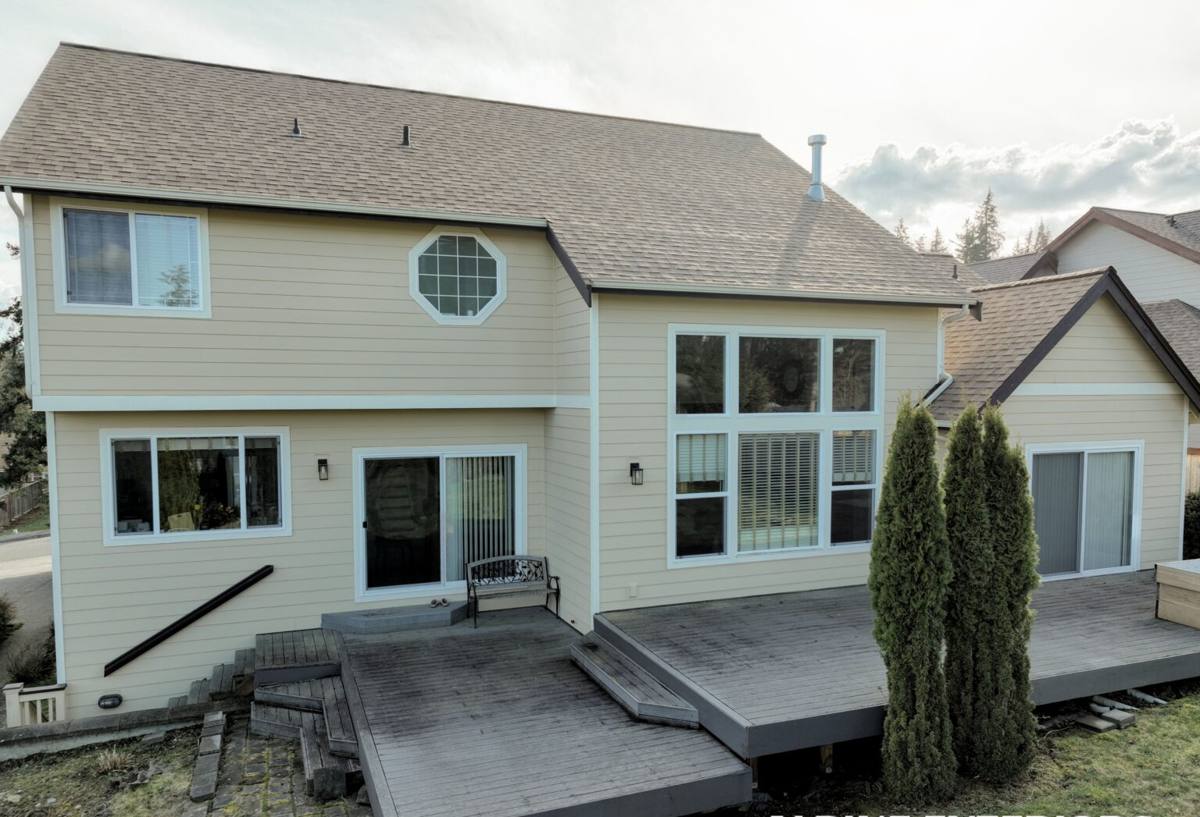
What Silver Beach's Climate Does to Windows Over Time
Salt Air and Moisture
Homes near the water deal with airborne moisture and salt that slowly attacks unprotected metal hardware, hinges, and low-quality seals. Over years, this corrosion is often the real reason a window starts sticking, leaking air, or won't lock flush anymore — not the glass itself, but the small hardware components that keep the window tight.
Driving Rain and Wind-Driven Water
Storms here don't just fall straight down — wind pushes rain sideways into window faces, especially on exposed elevations. If flashing, sill pans, and sealant weren't installed correctly the first time, water finds its way behind the frame and into the wall cavity long before you ever see a stain on the interior drywall.
A Long Moss and Shade Season
Whatcom County's extended damp season means anything organic-friendly — wood trim, older caulk lines, shaded frame corners — becomes a place where moss, algae, and mildew take hold. On windows, that usually shows up first as dark streaking at corners and along the bottom rail, and it's often a sign moisture is sitting somewhere it shouldn't.
What "Energy-Efficient" Actually Means Here
Energy efficiency in a window comes down to a handful of measurable factors, and in a marine climate like Bellingham's, some matter more than others.
- U-Factor — measures how well the window resists heat loss. Lower is better for our cool, wet winters where you're heating more than cooling.
- Solar Heat Gain Coefficient (SHGC) — matters less here than in sunnier climates, but still affects comfort on the rare clear day.
- Air Leakage Rating — arguably the number that matters most locally, since wind-driven moisture exploits any gap in the seal.
- Condensation Resistance — a window that fogs or sweats on the inside during cold, damp spells is telling you its insulating glass unit is under-built for this climate.
A window can carry a strong energy rating and still perform poorly in Silver Beach if the installation doesn't seal it correctly to the rough opening. Efficiency is a product of the window and the install working together — not either one alone.
Signs Your Current Windows Are Costing You Money
Most homeowners don't replace windows because of one dramatic failure — it's a slow accumulation of small problems. Walk through your home and check for these:
- Visible fog or moisture trapped between the glass panes (a failed seal on the insulated glass unit)
- Drafts you can feel near the frame edges on a windy day
- Windows that are difficult to open, close, or lock — often a sign of frame swelling or warping
- Condensation forming on the inside of the glass during cold weather
- Visible wood rot, soft spots, or dark staining at the sill or corners
- Noticeably higher heating bills compared to similarly sized homes nearby
- Noise transfer that seems worse than it used to be
Any one of these on its own might just need a repair. Several at once, especially on a home with original windows, usually means it's time to talk about replacement.
Frame Materials: What Holds Up in a Marine Climate
Frame material is one of the biggest factors in how a window performs over 15-20 years near the water. Each option has real trade-offs — there's no single "best" choice for every home, but some hold up more predictably in this specific climate.
| Frame Material | Moisture & Salt Air Performance | Maintenance | Typical Lifespan |
|---|---|---|---|
| Vinyl | Good — won't rot or corrode; seams are the main watch point | Low — occasional cleaning | 20-30 years |
| Fiberglass | Very good — dimensionally stable in temperature and moisture swings | Low | 30-40 years |
| Aluminum | Fair — prone to corrosion near salt air unless well-coated; conducts cold | Moderate | 20-30 years |
| Wood (clad or unclad) | Fair to poor unless well-maintained — attractive but moisture-sensitive | High — regular sealing/painting required | Varies widely with upkeep |
For most Silver Beach homes, we lean toward vinyl or fiberglass frames because they don't give moisture and salt exposure a foothold the way wood or unprotected aluminum can. That's a maintenance-and-durability call, not a knock on any manufacturer — some homeowners still choose wood-clad windows for a specific look and are willing to keep up with the sealing schedule that requires. We'll walk through the honest trade-offs for your home rather than push one option.
What a Correct Installation Actually Involves
The window unit itself is maybe half the equation. In a climate that drives rain sideways into a wall, installation detail is where most long-term failures either get prevented or built in from day one.
- Remove the old window and inspect the rough opening for hidden rot, moisture staining, or framing damage before anything new goes in
- Repair or replace any compromised framing — never install a new window over a damaged opening
- Install a properly sloped sill pan so any water that gets past the window sheds outward, not into the wall
- Flash the opening correctly, integrating with the existing weather-resistive barrier so water is directed out, not trapped behind the siding
- Set the window level, plumb, and square, then shim and fasten per manufacturer specification
- Seal and insulate the gap between frame and rough opening without over-packing, which can bow the frame
- Apply exterior trim and caulk at the correct joints — not everywhere, since sealing the wrong spots can trap moisture instead of shedding it
- Test operation, locking, and check for square before calling the job complete
Skipping or rushing any of these steps is how a good window ends up with a bad reputation five years later — the water damage almost never traces back to the glass itself.
Mistakes We See in Window Replacements Around Silver Beach
Because this neighborhood's exposure is a bit more demanding than average, shortcuts show up faster here than they might elsewhere in Whatcom County.
- Caulk used as the only water management strategy, with no sill pan or flashing behind it
- New windows installed into rotted or damp framing that was never addressed
- Mismatched frame materials against existing siding, creating galvanic corrosion or trapped moisture at the joint
- Standard installs on wind-exposed elevations that would have benefited from additional flashing detail
- Interior trim reinstalled before the exterior seal was fully cured, hiding early leak signs until damage is advanced
None of these are expensive fixes when caught during installation. They're expensive when they surface as rot or mold years later.
Cost Factors for Silver Beach Homeowners
Every home is different, so we won't quote a number without seeing the actual openings, but the factors that move the price up or down are consistent:
| Factor | Why It Affects Cost |
|---|---|
| Frame material chosen | Vinyl is typically the most affordable; fiberglass and wood-clad cost more upfront |
| Number and size of openings | Larger and more numerous windows mean more material and labor |
| Condition of existing framing | Hidden rot or moisture damage found during removal adds repair time |
| Exposure of the elevation | Wind- and rain-exposed walls may warrant extra flashing detail |
| Glass package | Double vs. triple-pane, and coating options, affect both cost and performance |
| Full-frame vs. insert replacement | Full-frame replaces down to the rough opening; insert reuses the existing frame and is typically less costly but not always advisable if the frame is compromised |
Broadly, a straightforward vinyl window replacement runs a modest per-window cost, with fiberglass and premium glass packages landing higher. The only way to get an honest number is a walkthrough of your actual home, which is exactly what our free estimate covers.
Why Hiring a Crew That Already Works Silver Beach Matters
A contractor who mostly works drier, more sheltered parts of the county will size up a job differently than one who regularly deals with wind-driven rain and salt-tinged air. That local familiarity shows up in small but meaningful decisions — where to add extra flashing, which frame materials to steer a homeowner toward, and how to sequence a job around Bellingham's wetter stretches so the opening isn't sitting exposed longer than it needs to be.
It also means we've seen how different products and installation choices actually hold up in this specific environment over years, not just in a showroom. That's the kind of judgment that doesn't show up on a spec sheet but makes a real difference in how your windows perform a decade from now.
Get a Straight Answer for Your Home
If you're noticing drafts, fogged glass, or windows that just don't work like they used to, it's worth having someone take an honest look before you decide anything. We'll walk your home, point out what's actually going on with your current windows, and give you a clear, no-pressure estimate for what it would take to fix it — free, with no obligation. Use the form below to get started.