 Bellingham
 Why Silver Beach Siding Has to Work Harder
Silver Beach sits close enough to Bellingham Bay that the weather your siding deals with is a step up from what a house a mile inland faces. You've got salt-laden air coming off the water, wind-driven rain that hits walls sideways instead of just running down them, and long stretches of the year when a shaded or north-facing wall simply doesn't dry out between storms. Add the tree cover common on many Whatcom County lots and you get the conditions moss and algae love: cool, damp, and shaded for weeks at a time.
None of that makes siding here impossible to get right. It just means the margin for error is smaller. A siding product or installation detail that would coast along fine in a dry inland climate can fail years early on a bayside wall in Silver Beach. That's the lens we use on every job in this neighborhood — not "what siding looks good," but "what siding and installation approach actually holds up against this specific exposure."
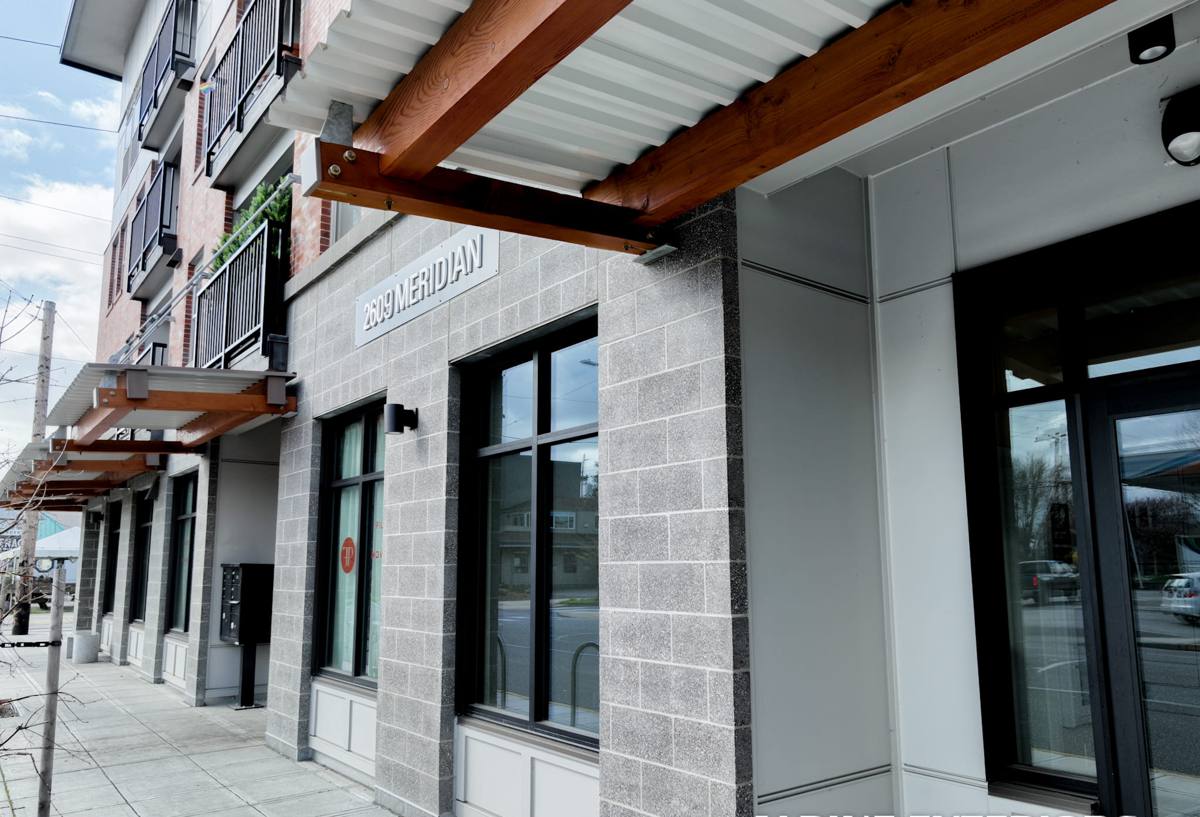
What Bellingham Bay Climate Does to Siding Over Time
It helps to understand the actual mechanisms at work, because they explain why some materials and installation shortcuts cause problems here faster than elsewhere.
Salt Air and Metal Fasteners
Airborne salt accelerates corrosion on any exposed or under-protected metal — fasteners, flashing, trim edges. Over years, corroding fasteners can loosen, stain the siding face, or lose their grip entirely. This is a bigger factor for homes within the first several blocks of the water, which describes a good portion of Silver Beach.
Wind-Driven Rain
Rain that comes in at an angle finds every gap, lap, and seam a straight-down rain never would. Laps that are under-nailed, caulk joints that were skipped or done poorly, and butt joints without proper flashing all become entry points. Once water gets behind the siding plane, it doesn't dry quickly in our climate — it sits.
Moss, Algae, and Prolonged Moisture
Bellingham's moss season isn't a minor inconvenience — it's a multi-month reality, longer on shaded and water-facing walls that don't get much direct sun. Constant surface dampness feeds algae and moss growth, which holds moisture against the siding surface even longer and can eventually stain or degrade a lesser material's finish.
Freeze-Thaw and Moisture Cycling
Whatcom County doesn't see extreme cold often, but it does see repeated cycles of wet-to-cold-to-wet through the winter. Materials that absorb moisture and then experience a freeze can suffer internal damage — swelling, cracking, or delamination — that shows up as visible failure a season or two later.
Why Fiber Cement Is Built for This Kind of Exposure
This is the reason we install James Hardie fiber cement siding exclusively, and it's especially relevant in a neighborhood like Silver Beach. Fiber cement's core is cement, sand, and cellulose fiber — it doesn't absorb and swell the way wood-based siding products do, and it isn't vulnerable to the freeze-thaw and moisture-cycling damage that hurts less water-resistant materials over time.
James Hardie's ColorPlus Technology finish is baked on in a factory-controlled process, which gives it stronger resistance to fading, chalking, and moisture intrusion at the surface than field-applied paint. That matters directly for salt air and prolonged dampness — a finish that's holding up is a finish that's keeping moisture out of the substrate underneath.
Fiber cement is also non-combustible, which is a separate but meaningful benefit for homeowners in this region given wildfire smoke and ember exposure risk that's become more common across the Pacific Northwest in recent years.
What a Correct Fiber Cement Install Requires Near the Water
Buying the right siding product only gets you halfway there. Fiber cement performs exactly as well as the installation behind it — and in a wind-driven-rain, salt-air environment, the installation details matter more than they would on a sheltered inland lot.
- Corrosion-resistant fasteners. Stainless steel or hot-dip galvanized fasteners rated for coastal exposure, not standard-grade nails that will corrode faster in salt air.
- Proper flashing at every penetration. Windows, doors, vents, and any wall penetration need correctly lapped, sealed flashing — this is where wind-driven rain finds its way in if it's rushed.
- Correct clearances. Siding needs to stop short of decks, roof lines, and grade by the manufacturer's specified gap so water has somewhere to go instead of wicking up into the bottom edge of a board.
- A drainage plane behind the siding. A weather-resistant barrier, and ideally a rainscreen gap, so any moisture that does get past the siding face can drain and the wall assembly can dry.
- Correctly spaced and nailed laps. Under- or over-driven fasteners, or laps with too little overlap, are a common source of early failure that isn't visible until years later.
- Sealed joints where the product calls for it. Butt joints, trim transitions, and penetrations need the right sealant, applied correctly — not skipped to save time.
Every one of those steps is a normal part of any fiber cement installation, but on a bayside wall in Silver Beach, skipping or rushing even one of them shows up faster than it would somewhere more sheltered.
Our Process for a Silver Beach Home
Assessment and Exposure Mapping
We walk the home and note which walls take the brunt of wind-driven rain off the bay, which stay shaded and damp longest, and where the existing siding or sheathing already shows moisture damage. This shapes decisions on flashing detail, drainage plane, and product line before a single board goes up.
Tear-Off and Sheathing Check
Old siding comes off and we inspect the sheathing underneath. In a climate like ours, it's common to find some degree of hidden moisture damage behind older or improperly installed siding — we address that before closing the wall back up, not after.
Weather-Resistant Barrier and Flashing
A new weather-resistant barrier goes on, with flashing integrated at every window, door, and penetration, lapped correctly for the direction water will actually travel on that wall.
Fiber Cement Installation to Spec
Hardie siding goes up per manufacturer installation requirements — correct fastener type and placement, correct clearances, correct lap spacing — with coastal-grade fasteners used throughout given the proximity to the bay.
Trim, Caulking, and Final Detailing
Trim, joints, and transitions get sealed with the appropriate sealant. This step is easy to rush and is one of the first things we double-check before calling a job finished.
Walkthrough and Cleanup
We walk the finished job with the homeowner, review what was done and why, and leave the site clean.
James Hardie Products We Use in Silver Beach
James Hardie engineers its siding by climate zone, and the Pacific Northwest falls into a wetter zone designation than much of the country. We select products and installation details accordingly rather than defaulting to whatever's easiest to source.
| Product | Where It's Used | Why It Fits Silver Beach |
|---|---|---|
| HardiePlank lap siding | Most wall surfaces, primary siding field | Engineered for wet climates; ColorPlus finish holds up against salt air and prolonged moisture better than field-painted alternatives |
| HardiePanel vertical siding | Accent walls, gable ends, some modern designs | Fewer horizontal laps means fewer potential water entry points on exposed elevations |
| HardieTrim boards | Corners, window and door trim, fascia | Matches the siding's moisture resistance so trim doesn't become the weak point in an otherwise solid installation |
| HardieSoffit panels | Eaves and overhangs | Resists the sustained dampness that builds up under overhangs on shaded, water-facing walls |
Cost Factors for Fiber Cement Siding in Silver Beach
Every home is different, but a few factors consistently move the scope and cost of a fiber cement project in this neighborhood specifically.
| Factor | Why It Matters Here |
|---|---|
| Wall exposure to the bay | Water-facing and wind-exposed walls need more careful flashing and may warrant a rainscreen approach, adding some labor |
| Existing sheathing condition | Homes with older siding sometimes have hidden moisture damage that needs repair before new siding goes on |
| Shade and tree cover | Heavily shaded walls may benefit from additional drainage detailing to manage moss and prolonged dampness |
| Home shape and trim detail | More corners, penetrations, and trim transitions mean more flashing and sealant work |
| Access and staging | Sloped or waterfront-adjacent lots can affect equipment access and staging time |
We walk every home in person before quoting, because these factors vary house to house even within the same few blocks.
Maintaining Fiber Cement Siding in a Moss-Heavy, Salt-Air Climate
Fiber cement is low-maintenance compared to wood-based sidings, but "low-maintenance" isn't "no-maintenance," especially this close to the water.
- Rinse the exterior periodically, particularly shaded or water-facing walls where salt and organic buildup accumulate faster.
- Keep an eye on shaded, damp areas for early moss or algae growth and address it before it spreads.
- Trim back vegetation that's keeping a wall shaded and slow to dry.
- Check caulked joints and trim transitions every year or two — sealant is the one component that wears out before the siding itself.
- Watch for any staining or streaking around fasteners, which can be an early sign of corrosion worth addressing.
None of this is heavy upkeep. It's the kind of periodic attention that keeps a correctly installed fiber cement system performing for decades instead of just looking fine until it doesn't.
Why Hire a Crew That Already Works This Neighborhood
A contractor who's worked Silver Beach and the surrounding Bellingham Bay-adjacent neighborhoods already knows which walls on a given lot will take the worst of the wind-driven rain, where moss tends to build up fastest, and how to detail flashing and drainage for that specific exposure rather than applying a generic inland approach. They also know the City of Bellingham's permitting process and inspection expectations, which keeps a project moving instead of stalling on paperwork.
That local familiarity is worth more here than in a lot of neighborhoods, because the difference between a siding job that lasts and one that fails early often comes down to details that only show up when you understand the specific climate exposure of a specific street or block — not generic siding knowledge, but Bellingham Bay knowledge.
If you'd like a straightforward look at what your home needs, we're happy to walk the property, point out any exposure or moisture concerns we see, and put together a clear, no-pressure estimate — just fill out the form below to get started.